Category: Week Ahead

  • Giddy euphoria in US markets; US LNG exports; Germany‘s EV dreams & industrial nightmares

    Giddy euphoria in US markets; US LNG exports; Germany‘s EV dreams & industrial nightmares

    Access AI-powered markets forecasts for free with CI Markets Free. Sign up here: https://completeintel.com/markets

    Welcome to the latest episode of “The Week Ahead” with your host, Tony Nash! We’ve assembled a stellar lineup.

    Experience the power of AI in forecasting Markets. Subscribe to CI Markets Free: https://completeintel.com/markets

    [00:00:22.650] – Tony Nash

    Hi, and welcome to the week ahead. I’m Tony Nash. Today we’re joined by Michael Belkin, Tracy Schuchart and Ralph Schulheimer. A couple things we’re going to cover today. Our key themes. Michael is going to talk about giddy euphoria in us markets. Those are his words. I love those words. So giddy euphoria in us markets. Tracy, we’re going to talk through the geopolitical influence of us LNG. How much influence does us have can they exert through LNG? That sort of thing. And then with Ralph, we’re going to talk about Germany. First we’re going to talk about evs in Germany, and then we’re going to talk about some industrial policies and other things that Germany’s had that’s really resulted in them kind of hollowing out some parts of their economy. So, Michael, welcome back. Ralph, welcome back, Tracy, thanks again for coming on. Before we get started, I want to let you know about a new free tier we have within CI markets, our global market forecasting platform. We want to share the power of CI markets with everyone. So we’ve made a few things for you. First, economics. We share all of our global economics forecasts for the top 50 economies.

    [00:01:30.230] – Tony Nash

    We also share our major currency forecasts as well as Nikay 100 stocks. So you can get a look at. What do our stock forecast look like? There is no credit card required. You can just sign up on our website and get started right away. So check it out. CA Markets free. Look at the link below and get started ASAP. Thank you. Michael, you put this note together, I think, last week where you really dig into a lot of the US employment data, and obviously you dig into markets and sectors and individual stocks and all sorts of things. You use the words giddy euphoria in us markets, which I think is great, at least for a section of us markets. And I want to dig into that. But first, I think we really need to look at jobs, which is what you start your piece with, and you look at BLS jobs. And in this cut that we have on screen, you talk about phantom jobs from the BLS, which is interesting. Can you talk us through a little bit of that? We’ve had Mike Green talk about that a little bit, but I’d like to hear it from your perspective as well.

    [00:02:41.430] – Michael Belkin

    Okay, great. So the jobs report, payroll jobs report last week said plus 353,000. And everywhere you see job market, hot blockbuster jobs report, blah, blah, blah, ever. CNBC, it’s unanimous. Like nobody looked at the numbers. Okay. That’s seasonally adjusted. Not seasonally adjusted was -5.6 million. And that’s not an aberration and it’s not a conspiracy theory. But what happens is the way employment works is a lot of people are hired in the last three months of the year for temporary jobs and retail and things like that, and then they’re laid off at the beginning of the year. That happens every year. So January is always down big in the millions. Right. And it was down more this time than last year.

    [00:03:30.130] – Tony Nash

    I just want to understand because that’s a big number, 5 million jobs. Okay. And I think a lot of people in markets put a lot of weight on these numbers that come out, these headline preliminary numbers that come out because they move markets for a few hours or whatever. Right?

    [00:03:48.200] – Tony Nash

    But when you say they seasonally adjusted 5 million jobs kind of into the market, how do you seasonally adjust that? And how does somebody look at that number and go, oh, yeah, that’s normal. Numbers grew. Jobs grew.

    [00:04:02.430] – Michael Belkin

    All right. So they add basically 6 million. So to get from 5.6 to plus three -5.6 to plus 3.353,000, it’s almost 6 million. They pad it again. It’s not a one off like they do that every year. They want everybody to think it’s a smooth cycle. It doesn’t go up and down. But that’s not the way the real world works. Now, going back, if you look at this historically, it usually takes about three or four months for the level of, in the jobs report, payroll jobs report, to get back to the December level. That’s in a non recession year. In a recession year, that’s like 20 01, 20 07, 20 08 or 2020. They don’t get back. So jobs decline and they head down into the economy, goes into a recession. That’s my forecast. So what I do is I have a time series analysis model which is actually similar to what they seasonally adjust the numbers with. It’s based on box Jenkins and Fourier analysis, which I studied at UC Berkeley and then I was at Solomon Brothers prop trading developed this model. Anyways, so my forecast says jobs are going down. And you just contrast that with what everybody’s, it’s unanimous, jobs are great.

    [00:05:18.340] – Michael Belkin

    And then even smart people go through, well, all these jobs were created in this kind of sector and this kind of sector, those are all imaginary, like they don’t exist.

    [00:05:27.570] – Tony Nash

    Well, are they adjusted jobs or are they real jobs? I have a chart from you showing your negative forecast for jobs. We hear about job cuts at meta and it seems to be concentrated in tech. We’ve also heard about a bunch of job cuts at ups and some other places. So these job cuts that we’ve heard about in tech and tech continues to kind of do well in markets. But will we see those go into the broader market, into other sectors?

    [00:05:55.570] – Michael Belkin

    Yeah. So meta is a case in point. Okay, so they cut 20% of their workforce over the last year or so, and their earnings were up 69% or something, right? So I can just see all these people drooling. Oh, boy, this is how to increase my margins. All these other tech companies, it’s a poster child for what to do. But I mean, think about it. When companies are cutting jobs en masse.Right, which is happening

    [00:06:22.810] – Tony Nash

    20% is on mass, right? I mean, it’s not like they’re doing a 3% marginal cut or whatever.

    [00:06:28.270] – Michael Belkin

    But.It’S all these other companies, they’re copycat. So, Snapchat, it’s become the thing to do, right? You lay off people so you can keep your margins up and keep your profits up. That makes the pie smaller. That’s what makes a recession. And it doesn’t happen instantly, but that’s going to be the theme this year, I think. Lots of layoffs in the face of slowing top line revenues. What are you going to do? I think it just drives the economy down again, it’s not instant Quaker oaths or something where it happens overnight, but the force is declining by basically it’s a recessionary, contractionary thing that happens to the economy.

    [00:07:15.450] – Tony Nash

    Hey, I’d like to make sure you know that you can access our AI driven market forecasting tool called CI Markets for free, no strings attached, and it does not require any credit card information. Go to completeintel.com slash Markets to subscribe. Cimarkets is the perfect addition to your analysis toolbox. This free account includes Nikki stocks, major currency pairs and global economics. Of course, we offer much more in our paid account, but this lets you experience CIA markets before making a financial commitment. CIA Markets uses the power of AI to help you make better trading investment decisions. It’s absolutely free. Again. Go to completeintel.com slash markets to subscribe to CI Markets free.

    [00:07:55.320] – Michael Belkin

    We have to mention just stepping outside of AI about earnings and layoffs and stuff. So outside of tech, all these cyclical stocks are going down. So if you look at the Belkin report, I’ve been short air freight containers, packaging, all these paper products, metals and mining. So the cyclical stocks are weakening. They’re underperforming. There’s only been one thing holding the market up, a handful of big tech stocks, and even those are going like it went so going up anymore.

    [00:08:24.650] – Tony Nash

    Let’s get into that in just a minute. Michael, I want to make sure we talk through soft landing first.

    [00:08:30.340] – Tony Nash

    Because I think part of really interesting part of your discussion is on soft landing. And so can you talk us through in what context you say soft landings narratives often precede recessions. So I’ve got a chart up that you sent me about mentions of soft landings. So can you talk us through that? And then let’s also move into the Fed funds rate hike and how that plays into the soft landing narrative.

    [00:08:58.340] – Michael Belkin

    Okay, so if you look at the chart, we’ve got the biggest proliferation of soft landing quotes in media of all time. And the previous ones that were not quite as big as this came right before a recession. So basically, I think the psychology of the market is really messed up. Everyone, the sentiment is unanimous. It’s going to be a soft landing. I think it’s just an insane number, percentage, super high percentage of portfolio managers.

    [00:09:28.720] – Tony Nash

    I see it every day. I see people who are normally skeptics have changed to say, okay, it’s going to be a soft, I don’t know, the shoe is not going to drop. It’s going to be a soft landing. I’ve just seen over the last six months all of these people who are like, looking for the downside, except you, who are looking for the downside just kind of surrendering to the soft landing narrative.

    [00:09:51.940] – Michael Belkin

    Absolutely. So I think what we’re talking about is deviant psychology. So what people think. Okay, so you have to say the market’s always right, right? Well, was it right at the top of the tech bubble? Was it right at the bottom when people were bearish in 2002? Was it right when everybody was bowled up in 2007? Was it wrong at the bottom when everybody was bearish? My point is, you get these extremes of sentiment that you need to fade, and what happens is the psychology changes, and that is what drives the change in markets. A change in psychology where people suddenly, all of a sudden there’s some kind of a shock or something, and all of a sudden people say, oh, wait a minute. And so you see this change in sentiment, and that’s what drives investment flows, flows into different sectors and in and out of the market. So that’s why I think we’re set up a major change in psychology. Not overnight, but it’s coming.

    [00:10:57.110] – Tony Nash

    Right. And so a lot of what’s driving that psychology, it seems to me, is interest rates and so, you know, there has been an expectation, as we saw leading up to the last fed meeting, march rate cut and so on and so forth. And that’s been kind of destroyed for so, you know, we’ve seen it. We have a chart on screen from you showing, know, steepest rate curve or rate rises, all this stuff. So will that eventually erode the psychology we have in the market now?

    [00:11:31.070] – Michael Belkin

    Absolutely. So just to put things in perspective, take a look at this chart. So 525 basis points from March 2022 to now. I mean, it’s been on hold for a while. That’s the biggest Fed rate hike campaign on record. So when they started this interest rate targeting thing, that was greenspan. Before that, it was reserve targeting with Volcker. So going back to the. What’s that? It’s like 40 something years. And so I was delighted to be invited to this Vale symposium last week. I was there with a lot of heavy hitters, investment strategists, portfolio managers. And one of the things that emerged, David Rosenberg was there, and he pointed out that it takes, the average lag between the beginning of Fed rate hikes and a recession is 24 months. Well, guess how many months it’s been now since the Fed started raising rates. 23. So here we are in February. So March is going to be two year anniversary. That’s the average. So basically, people have just kind of swept that under the rug and said, oh, it doesn’t matter. It’s just the fed

    [00:12:38.470] – Tony Nash

    feels good.

    [00:12:41.090] – Michael Belkin

    But it hits with a lag. And we are setting up for basically the blowback, the delayed response from a serious, serious monetary tightening campaign that is going to slow things down. You see it in the cyclical stocks, not so much tech yet, but that’s what we’re setting up for. The oldest saying, marty Zweig said, don’t fight the Fed. Right. So people think that was back in 2022 when the Fed was raising rates. But the lag effect is about to hit. And if there’s one thing, another along with soft landing, the psychology in the market is unanimous. The Fed’s going to cut interest rates. That’s bullish. For know, everybody says, right. Well, that’s not what in, when it’s a recession, when it’s not a recession, if it is a soft landing, yes, you’re right. Stocks take off. If it’s a recession, the opposite happens. So stocks go down with Fed rate cuts because why earnings decline?

    [00:13:46.710] – Tony Nash

    Let’s get there eventually.

    [00:13:48.390] – Michael Belkin

    Yeah, we’re not there yet. I’m actually short bonds now, the model. So I think it’s going to take a few months for this to play out. So basically, I think where I was super bullish on bonds, if you remember back like in October and stuff, when everybody was bearish, my model, I’d been flat on bonds for a month or so. I just entered a short position on bonds. So I think the idea of a fed rate cut campaign was built into forward rates and everybody got too bowled up. So I think we’re going to have. Could bonds go down five or ten points from here? Yeah. So I think for a tactical move, two to three month move, I think bonds could sell off. Even though I’m bearish on the economy, I’m sticking with the model forecast on that.

    [00:14:30.790] – Tony Nash

    Interesting. So let me bring Tracy in. Tracy, we see a pretty tight fed or relatively tight fed, right. And we’ve talked many times about crude prices and things like geopolitical risk and all that stuff, right. And the impact on, say, evs, and we’ll talk to Ralph about that and green energy and, and it seems like there is kind of no cost to geopolitical risk when we’re in a zerp or nerp environment. But now that we’re in a five and a half percent interest rate environment, it almost feels with all this stuff happening in the Middle east and other stuff, that nobody knows how to factor that into things like commodity prices, crude prices, other things. Am I way off there or have people kind of not realized the cost of risk?

    [00:15:37.290] – Tracy Shuchart

    I think absolutely. That’s what you’re seeing right now across the commodity sector, and especially when we’re talking about metals and things that are really affected by the US dollar. Right. We’ve seen a rally in the US dollar, so that’s kind of very difficult for. That’s a very big headwind. Let’s say four metals per existence, for example. But if we look at crude oil, crude oil is actually more correlated to ten year yields than it is to the US dollar. It’s almost over 81% correlated. And so recently we have seen kind of a jump in the ten year. Right. Meaning yields have come down. So that’s also put pressure technically just on the sector. But as far as geopolitical risk is concerned, I think that I could go into the minutiae of that, where we can talk about there’s not a lot of oil tankers that actually pass through the Red Sea, even though they’re not going there, know there’s a lot of products that ship from Saudi Arabia, Qatar, everything kind of east of the Red Sea that uses the Persian Gulf which is a lot of product when you’re talking know gas and oil.

    [00:16:56.990] – Tracy Shuchart

    And so that is part of the reason. But I think know still the markets. I think bonds are applying pressure on the energy markets. And I also think that because there’s not a lot of transit through the Red Sea of oil and products and gas, that that’s also having people kind of dismiss what’s going on. That said, I think the risk is much broader now that we have not only the Israel Gaza issue, we also now have Syria’s back in, Jordan’s back know there’s a lot there and I think the market is highly discounting.

    [00:17:51.670] – Tony Nash

    Okay, so Michael, if we go back to markets in the US, particularly tech continues to be strong despite these rate rises. You’ve been telling us for quite a while that it’s time for a pullback. And in your report you’ve got semiconductors, software, hardware, social media, et cetera, kind of falling in your one to three month horizon. So help us understand when we see the likes of meta rise 20% in a single day last week and we see snap down pretty dramatically after earnings. Granted it’s down to November 23 levels, so it’s not down to historic multi year levels, but it’s still down 35% in a few days. So can you talk to us about where you expect the sector fund flows to move? I mean it’s overwhelmingly in this chart you sent me, overwhelmingly continues moving into tech. So where do you expect that to move?

    [00:18:49.770] – Michael Belkin

    Okay, first of, there’s within tech. The AI plays have been attracting all the attention, right? And there’s very few of those. So it’s Nvidia. Right. So those kind of stocks keep going up. I follow a broad bunch of stocks within the semiconductor software space and a lot of those are acting like dog meat. Okay, so the shorts are actually working, not massively, but things are underperforming. Things like cloud software. So those are sort of like tiger global favorite longs. Those are some of my top shorts right now, semiconductors. Outside of the AI space, demand for automotive, semiconductors and consumer electronics, all that stuff is disaster. It’s not good. So those are still shorts and those are working. It’s not, you look at the tech market, you think everything’s going up. It’s not. Portfolio managers know this. They’re getting squeezed into this small handful of smaller stocks. And the mag seven is down to like mag three or something, right? Amazon and meta and a couple of others. Okay. But anyways, the biggest outflows over the last year has been energy and the biggest inflows have been tech. So my model is saying time for a change.

    [00:20:07.440] – Michael Belkin

    Okay, so the flows are going to reverse. So what’s know. So Sir John Templeton said the time to buy is at the point of maximum pessimism. The time to sell is at the point of maximum optimism. And that’s really held up over time. For know you have to get it. Have my biggest buy signal in the model forecast, three month view at least for going forward. Buy energy, physical energy and also the energy stocks. So etfs, xop, oih, things like that, really depressed. They’re in the doghouse, right? And things that are up a know all the tech etfs. My favorite short is like clou. It’s not very liquid, it’s a cloud software thing. So basically you want to be long energy and short tech. Three month view. That’s what I’m telling my clients.

    [00:21:00.290] – Tony Nash

    That sound about right to you, Tracy?

    [00:21:01.850] – Tracy Shuchart

    I love it. I think its Fantastic. No, actually, we actually talked about that a little bit. So, with Mullen. I absolutely agree with Michael.

    [00:21:17.020] – Tony Nash

    Perfect. Ralph, what are you seeing in terms of just the general impact on markets and fund flows? What do things look like in Europe? Are people still super bullish tech? Are they coming off of some of that? Are they looking more at some more conservative sectors? What does that look like from your perspective?

    [00:21:36.120] – Ralph Schoellhammer

    Well, I think one of the things, and I know that Tracy is going to talk about this in greater detail, and I think it was just mentioned previously as well, what is underwriting would from a european perspective, still impressive resilience of the US economy is natural gas. I sometimes feel that we might not the four of us here in this group, but very often in public reporting, the impact of the shale revolution strikes. And still, as some would underestimate mean. If you look at the numbers, the role of natural gas that it plays in the US economy is astounding. If you take at electricity production and also heating in the chemical industry, in manufacturing, construction, not everything is rosy. Right. I think Albert is not with us. I think he would immediately shoot me down for any kind of optimistic or positive outlook. But I think that really is a huge issue. And this is something that we are currently lacking in Europe. I mean, there was recently a very interesting report in the Wall Street Journal that I find sums it up perfectly, which is the old saying that the United States innovates, the Chinese imitate and the Europeans regulate is probably more true than ever.

    [00:22:43.300] – Ralph Schoellhammer

    This is going to be a problem because I agree with what was said by Mike before, right. That maybe the AI thing is a bit of a hype. I don’t know enough about it to really make a qualified statement. But I think one thing we’re all going to agree on is whatever algorithms in the future are going to do is in order to have a good algorithm, they’re going to need a lot of electricity. Because in order for the algorithm to, I don’t know, distinguish between a cat and a dog, you have to show.Them a billion pictures of a cat and a billion pictures of a dog. And that means that the computer who does it has to be running. And while it’s running, it needs to be cooled, it needs to be supplied with electricity. So it all goes back. I don’t want to voice my inner Luke Groman, but in many ways, it all goes back to energy. In many ways. And this is still. I know I sound like a broken record, but this is still a huge problem in Europe. There are signs of sanity. I think once Germany was the role model. I think now they’re more the outcasts. So there is a shift in a new direction. I’m worried because the EU is like a weird construct. I mean, we have european parliamentary elections in June. So now, quote, unquote, they pretend to be much saner than they usually are. So we’ll see after the election, if they not all of a sudden say so all these little bit kind of winking and nodding at maybe we are okay with more nuclear energy and maybe we should find ways to allow more energy production in European Union, that once these elections are over, that they go back to saying no, well, the primary goal, of course, is the usual green goals, the green new deals, the climate agenda and all these kind of things. Interesting.

    [00:24:14.900] – Tony Nash

    First thing, I don’t believe the european parliament will be sane ever. Second, interest rates are going to dictate that they can’t really focus on green energy. It’s going to be really hard, and we’ve talked about that with you before and Tracy, and going back to the rate rise that Michael talked makes it puts a real cost to trade offs. Right. And it’s going to be really hard to subsidize that stuff at the cost of money that we have now, I think. And that cost, Michael, as you say, is forcing sector adjustments. And so let’s finally look at your earnings expectations. So your s and P 500 earnings index forecast is pretty negative. So can you talk us through what is your outlook on earnings, on quarterly earnings in the S and P compared to, say, where consensus is?

    [00:25:05.890] – Michael Belkin

    All right, so I’m a real lone voice in the wilderness here.

    [00:25:10.050] – Tony Nash

    Not the first time.

    [00:25:11.510] – Michael Belkin

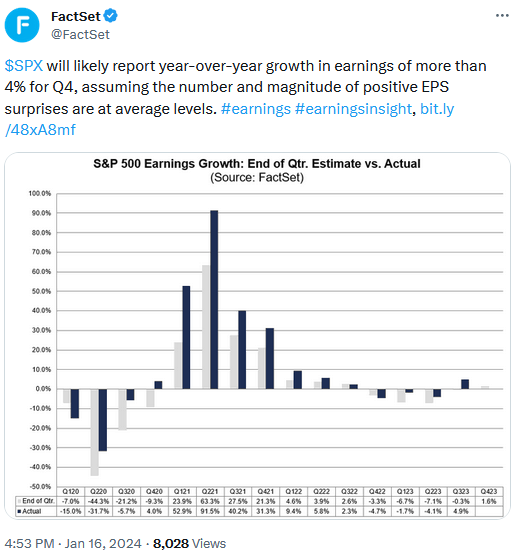
    Wall street consensus is plus 11%. Last time I looked in 2024 earnings. So right now, we’re about halfway two thirds of the way through Q four, 2023 earnings reporting. So we haven’t even started into 2024 yet. Okay. So we’re tracking for about 52 64, according to standard employers operating earnings so far at two thirds mark, which is down, by the way, 7% from the peak. So s and P 500 quarterly earnings peaked Q four, 2021, two years ago. Does anybody know that?

    [00:25:50.140] – Tony Nash

    Yeah, I just want to back up 10 seconds, and I want you to say that again. S and P earnings, how do they compare to two years ago?

    [00:25:58.080] – Michael Belkin

    Down 7% quarterly. So the peak of operating earnings, according to index provider standard employers, was $56.73. Q four, 2021. And that, of course, coincided with the boom of COVID stimulus and all the extra money. So basically, corporations made a lot of money out of inflation. They raised prices, increased demand, and since then, we’ve kind of been dribling down, not collapsing yet. Okay, so basically, Wall street is looking for plus 11% to something like $224. I’m looking for 120. Down 40%.

    [00:26:39.600] – Tony Nash

    40%?

    [00:26:40.800] – Michael Belkin

    Yeah. Which is not ridiculous. It’s come from model forecast. That’s the typical decline in a recession. So there’s nothing conspiracy theory or licking my finger.

    [00:26:53.890] – Tony Nash

    I love that you say 40% isn’t ridiculous. I think that’s great, because I think it helps remind us where we are. Right in markets. And we had Alex Gurjevich on last week, and he talked about deflation and how that could impact some markets. So what that tells me is, are you expecting some deflationary impacts to hit companies ability to make profits and that then has an impact on markets?

    [00:27:26.110] – Michael Belkin

    Yes. But it’s complicated, okay?

    [00:27:29.010] – Tony Nash

    Oh, I know it’s complicated.

    [00:27:30.570] – Michael Belkin

    Definitely complicated. So the inflation decline that we’ve seen, by the way, I was super bearish on inflation when it was 9%. Model said it’s going down to 3%, which is basically what it’s done. That decline is over in the model forecast. So I don’t think we’re going to get any near term relief on things like the CPI next few months.

    [00:27:49.910] – Tony Nash

    You don’t expect a kind of deflation or nothing dramatic?

    [00:27:54.080] – Michael Belkin

    Well, I think the first thing, like, let’s just take it one step at a time here. Row of dominoes. I think, again, the forward rates overreflected. This idea of Fed easing that needs to get pulled out, I think bonds could sell off and actually short sofa and things like that for a trade two to three months later on in the year. Back to the point of your question. Yes. So demand falls, sales fall. The dynamic of a recession is retail sales fall, sales of the product fall, the company starts canceling orders, then the company that makes the stuff for that company cutting back, laying off people, blah, blah, blah, it goes on and on. And that’s deflationary. I think that won’t begin to surface for another maybe six months later in the year. That will become an issue. Right now, I think it’s more the inflation scare is back for a trade, and that kind of pulls the rug out of this idea that the Fed’s going to ease. By the way, one of the last comment on this, one of the best things to emerge from the Vale symposium that I was at was that Lakshman from the ECri Institute was there and he pointed out, I believe he said, that getting back to the idea of a soft landing, when the times that the Fed delayed cutting rates when the economy was weakening, that is what led to the recession.

    [00:29:19.720] – Michael Belkin

    So when the Fed is sort of preemptive and cuts rates, then you can have a soft landing. Not necessarily, but historically that’s been the pattern. But when they hold rates up, that almost ensures that we’re going into a recession, which is what’s think, you know, all this ironically, all these phony great economic stories from the administration, how great it is, vote for us. We’re doing such a great job on the economy, it actually ties the Fed’s hands and it prevents the Fed from cutting interest rates. So it’s actually going to have blowback. Instead of making people want to vote for the administration, it’s going to say, oh, wow, the economy is going down and it’s going to be too late to save it. So I think it’s going to be counterproductive. So phony strong economic story is actually counterproductive and it’s going to send the economy into a recession for sure.

    [00:30:13.200] – Tony Nash

    Wow, that sounds pretty tough. Thank you for that. I mean, it’s awesome. I love getting your view on things, Michael, because you’re right a lot. You have very solid analysis around what you say. You’ve run it through models. It’s tested over decades. And so I love getting your perspective. And it’s different from the, don’t worry, everything’s okay. It’s all going to be soft landing, different this time, all that stuff. Love getting that. So that’s great. Thank you so much for that. I guess one last question, kind of. Your model is generally, I think a one to three month horizon is like your sweet spot. So what is the biggest thing that you expect to happen in the next three months?

    [00:30:57.170] – Michael Belkin

    Okay. Energy goes up again. So that’s my favorite trade, long energy. If you want to be long something, don’t be long. Anything other than that. My longs are chicken longs, consumer staples sector, healthcare sector. But energy is really the number one long idea I have right now.

    [00:31:13.880] – Tony Nash

    Very good. Thank you, Michael. Thank you for that, Tracy. You must love that. So let’s switch over to you. I want to talk about U. S. LNG exports and its role in geopolitics. So you talked about the Biden administration’s LNG export pause earlier this week. And you talked about it last week too, when it was announced and all that stuff. So there was a hearing in the house this week, and you talked about this a little bit in one of your posts. So I guess what I’m really interested here is, is there a geopolitical importance or a geopolitical lever with US LNG exports? The US didn’t export much LNG until 2014, but by 2023, the US accounted for a third of european LNG imports and just over 20% of China’s LNG imports. So not a long time, but the US has become a pretty significant portion of the LNG imports of major economies. So what does that mean to geopolitics in the US’s, say, energy diplomacy?

    [00:32:29.250] – Tracy Shuchart

    Well, first. So US has become the world’s largest producer of oil and gas and the largest exporter. Right. Qatar will pass us because of their expansion program. But let’s just look at this right now. And so this is us energy leadership. And in fact, when Biden first suggested this, or first said that he was going to pause export licenses, we had twelve trade associations across the US, including the largest one, API, who basically said, this hampers us energy leadership, it endangers american jobs, and it also undermines efforts to reduce greenhouse emissions because obviously natural gas is a much better choice than, say, crude oil or coal, for example, to burn. It’s much cleaner. That said, now, when we look at this pause, it will not affect anything up until 2026. And so this is reversible, say, if there was a new administration to come into play, because everything that’s already been accepted till now, the build out to 2026 will still move forward. However, after 2026 are some of the biggest projects, and that’s where the problem lies. But I just want to say this. It’s not like an immediate threat, but it is on the radar as far as geopolitics is concerned, obviously.

    [00:34:15.730] – Tracy Shuchart

    First, let’s look at Europe. I mean, we basically said, stop importing russian gas. We will take care of you. And with this new revelation, Europe’s like, wait, what? You just said that you would be our main supporter and we look like we’re abandoning our allies. It doesn’t look good. In fact, Germany last week came out and basically said, how can we rely on the US if they say that we just changed up our whole energy source? We’ve built out infrastructure, we’re building out new infrastructure for our LNG hubs and capacity to import more, particularly with Germany, because they stopped nuclear. And so now there’s a bigger build out for gas capacity. Right. So that’s kind of shaken up the EU a little bit and led them to kind of question, well. How can we rely on you? So this looks terrible with our allies. It also obviously reduces our footprints in the global energy sphere. I mean, you’re not going to see the Middle east, particularly Qatar, the number one gas producer in the Middle east, stopping. They’re building out the world’s largest capacity out to 2028. I think in general, again, I have to quote API or the trade associations as saying this hampers us energy leadership and our place in the energy scope. I mean, natural gas is not going away. We’ve seen a million contracts over the last two years out to 2040, 2050. These are long term gas contracts. It’s not going away. And whether it comes to fruition or not, again, this won’t really affect projects until 2026. Should we have a new administration or should the bipartisan group that is now having hearings against this? And I want to stress it’s bipartisan. It’s not just the Republicans. We have time to overturn this, in other words, but the message it sends to the global community is bad.

    [00:36:43.620] – Tony Nash

    The message is out there. Ralph, as a European, how does that make you feel? I need your.

    [00:36:54.690] – Ralph Schoellhammer

    It’s a good question. Well, I mean, it makes a lot of sense. I mean, I’m worried as a european, not just because, as Tracy correctly pointed out, I mean, this is not going to have an impact as soon as some headlines seem to indicate. But I’m also worried because it is a terrible signal also, of course, to domestic us industries, particularly in this sector, because they want to make a profit. I mean, this is something I know we tend to forget. But most companies exist because they want to make a profit. So if you don’t allow them to export, that’s going to be a short lived sugar rush for the US economy because prices, we see it with the Henry hub at the moment, right? Prices are plunging in many ways. So gas is going to be pretty cheap for the US. But at some point, you stop investing. Why would you stop investing in more drilling, in more exploration if you can’t sell it abroad? So I think it’s also, as Tracy pointed out, this is a terrible signal. You cannot be the energy leader if you put like a cork into the bottle, so to speak.

    [00:37:46.870] – Ralph Schoellhammer

    Now, from a european perspective, I said this on your podcast many times, Tony. I’m still convinced of this. We’ll see what Tucker Carlsen’s interview with Vladimir Putin will reveal in the next couple of hours. But the Europeans will sooner or later return to at least partially. It’s never going to be as much as it was before, but they will return partially to russian gas as well because pipeline gas cannot be intercepted by the hooties. It’s not depending on a us administration that all of a sudden believes that they have to do something against fossil gas. I think that is still an attempt by the environmental lobby that they want to replace the term natural gas with fossil gas or methane, I think is also something that’s getting more popular because supposedly it sounds scarier. So these battles are still going on. So the energy sector that I find always the most important one in many areas. Tracy has recently posted about coal power plants in India. This is a very unique phenomenon. In the west. We have an ideological, it’s getting weaker, but there’s still an ideological crusade against the energy sector. And I can understand that this is unnerving for many who are active in that particular area of the economy.

    [00:38:52.660] – Tony Nash

    Yeah, that’s great.

    [00:38:54.970] – Tracy Shuchart

    I just wanted to add one thing really quickly, and why I say this decision will likely be overturned sooner than later is that I really think this is a boy for votes. I mean, the Biden administration literally said they want to win back younger environmentalists, and they literally, literally had 20 something social media influencers on exiting TikTok in a meeting with the energy board in the government. I mean, this is who they’re taking advice from.

    [00:39:31.590] – Tony Nash

    Honestly, we’re a two party system in the US. Who else are those guys going to go to?

    [00:39:34.710] – Tracy Shuchart

    They’re not going to go to, all I’m saying. And so I think it’s a ploy to get votes. I think that ultimately this will be overturned after the election. If the Democrats win, I think this will be given to pressure from, again, bipartisan pressure groups within the legislative branch. And this will be overturned. And I think it’s just a ploy for votes. However, that’s a big risk. You’re taking a ploy for votes versus your message to the global community. Not sure that was the best decision to make.

    [00:40:11.490] – Tony Nash

    We sure have done over the last two administrations a lot to erode institutional credibility in the US. Right. And from a geopolitical perspective, in terms of wanting to count on the US, we really destroyed a lot of over the last, say, 1520 years as a geopolitical partner. Right. As the US. So this does nothing to help the US geopolitically. Tracy, I want to ask you about China, because if we’re providing a fifth of nacas to China or lng to China, from my perspective, it seems like, I don’t think us necessarily holds China hostage with that. And I don’t think that would be any intention. But it does make sourcing energy from the US a factor within the China geopolitical. And so, you know, I think about Japan in World War II. I’m not making any serious analogy about Japan and China, but part of the reason Japan was so upset with the US is because the US cut off oil. And so I don’t think that the US would do that again and say, we’re not going to sell you lng, but it does become a factor in that. And I think from China’s perspective, there is always a healthy level of paranoia around that type of stuff.

    [00:41:24.320] – Tony Nash

    Right. So does the US have the opportunity to grow that much? Or do you think China will say, we love your lng, we’ll take 21% of our lng from you, but we’re not going to do a lot more because there’s too much risk in that.

    [00:41:38.640] – Tracy Shuchart

    I think they would absolutely say that. And I think they’re absolutely looking to Russia right now. Right. They’re going to expand the Siberia pipeline. You have siberian two pipeline. And that’s a double edged sword because does Russia become too dependent on China as a buyer? That’s a whole nother issue. We can get into another, you know. Absolutely. I think it’ll force China to look elsewhere. And they will. I mean, you can go to Qatar. Qatar is offering huge discounts right now. Right. We just saw them make a huge deal with India today, I think I posted. And so I think China would most likely say, yeah, we’re good with what we got, we’re cool, we can look elsewhere.

    [00:42:29.480] – Tony Nash

    Right. Okay. So there’s a little bit of a geopolitical lever there, but not a lot because the Chinese are going to stay on their guard. Okay, that’s interesting. I appreciate that. I think we have to look at markets and geopolitics together at times. Right. And so this is really helpful for me to think about this stuff. So, Ralph, let’s move on to Europe, which, I’m sorry, but it’s really easy to bash Europe, right? And so, no offense, it’s not you. I’ll bash on our american political leaders any day of the week, so it’s not your fault. But you talked earlier this week about Germany’s electric vehicle dreams fading away. Can you really help us dig into that a little bit? What were those dreams and what’s making them fade away?

    [00:43:23.910] – Ralph Schoellhammer

    I would just say one thing, Tony. Your president recently said that he talked to Francois Mitteron, who died in 96. So you’re bashing.

    [00:43:34.930] – Tracy Shuchart

    That’s not the only one, right? That’s the only instance lately.

    [00:43:41.250] – Ralph Schoellhammer

    Well, I think what we can observe, the Germans, in all fairness, I always get this criticism that people say, well, Germany is not Europe and Europe is not german. And that’s, of course, true. It is also true that german companies, for various reasons, particularly their car manufacturers, have somewhat slept through the EV revolution. I think that is also fair to say that they kind of could not really translate the advantage they had with the combustion engine into the electric vehicles. But there’s, of course, something else going on, and I think that connects nicely with the geopolitical issue, which is that I think many companies kind of had a business model with evs. And that’s true not just in Germany. That’s also true in Austria. That’s also true in Switzerland. That’s also true in France, where the idea was that they say, okay, the government is pouring so much money into subsidies of all various kinds that they officially talked about their EV strategies because they wanted to milk that cow as long as possible. And I think that is now slowly coming to an end. Germany has a huge budget hold due to a recent ruling by their supreme court.

    [00:44:46.710] – Ralph Schoellhammer

    We see the same in France. We see discussions in Austria, because now governments, a couple of years back, until recently, they subsidized evs. But now they start to realize, if everybody’s moving to an ev, we’re going to lose all these gasoline taxes. I mean, this was also part of the step in Germany because there is a sense that agriculture will not quickly move to battery driven tractors. So they tried to make new diesel taxes for the agricultural sector. But as all of you know, the farmers have not been taking it very well, to put it mildly. And in many ways, just kind of to add on a little bit to this street construction. Highway construction, of course, was for a very long time directly financed out of these diesel gasoline fuel taxes. But now we have this new situation where evs are significantly heavier. So the bearing tear on streets is actually going to be more than it was with the internal combustion engine cars. So you would potentially need more of these taxes to maintain and sustain and keep these roads in shape. Same with parking spaces in Austria and Germany, for example, in the inner city, you can park for free with evs.

    [00:45:51.110] – Ralph Schoellhammer

    Now, as more and more people have evs, this is a revenue source for cities. But even more than that, parking structures are not built for these significantly heavier cars. And that goes twice in Europe. In the United States, people are also driving heavy suvs and pickup trucks and heavy cars that are heavy, even though they’re not evs. But, you know, Americans always mock Europeans for this. But we had the kind of niche boutique small cars, and if they all get replaced with significantly heavier evs, this is going to have, down the road, unintended consequences. So I think this is where the shift is happening. And the other thing is, people bought it, particularly people with higher incomes, because subsidies were really great. You had subsidies on fueling them, you had subsidies on parking. You had certain insurance advantages. So there was a whole package of subs. It wasn’t just that they give you something that as well, that you got a direct financial incentive so that they give you €10,000. If you sold your gasoline, gasoline car and got an EV, there were all other kinds of incentives as well. And they are now slowly to break away.

    [00:46:52.760] – Ralph Schoellhammer

    And of course, now people are reconsidering whether or not they shall buy such a car. Now, one option would have been to say, well, then we’re going to buy all these new chinese cars because they overproduced. But the EU is already working on special tariffs on chinese electric vehicles. So that option, it will still be there, but it will get more difficult. So as things look at the moment, I think the mean this is always, and I know we talked about this on the show many times, sometimes it’s maddening if you listen to analysts. So I’m always glad that Tracy and Micah here to bring a sense of realism into this. People look at a development that’s like this, and then they take a ruler, put it on there and say, okay, if this was the development over the last two years, it’s going to be like this over the next 20 years. And then they draw this line and say, by 2040, everybody’s going to drive.

    [00:47:37.170] – Tony Nash

    An EV extrapolate today and forever.

    [00:47:40.270] – Ralph Schoellhammer

    Exactly. And this is not how it works. And I think this is not increasingly what we see. Plus, of course, another element that we have touched upon on quite significantly is dcvs need electricity, and Germany has currently less electricity production. I think it’s the lowest level since 2002. Listen, if you turn off all your nuclear power plants and promise, and then the promise doesn’t live up to the expectations that renewables will replace it, you have a problem in this area. So we see this already, that electricity prices are going up. And another element that is barely talked about is insurance for evs is getting crazy, right. Once the government support falls away, this is also an additional cost factor. So they are simply getting more and more expensive. And unfortunately, without being too facetious here, the evs are kind of falling down to the same category as wind and solar, right? There were these huge promises made, what they can deliver, and now it turns out that they can’t. Now, don’t get me wrong, in city areas, I’m a huge fan of evs. I can imagine that if you’re an apartment owner in a high traffic area of a town and all of a sudden everybody drives evs, that’s going to drive up the value of a property because there is no fumes, there is no noise.

    [00:48:53.310] – Ralph Schoellhammer

    So this is going to be great. But overall, a country that’s either spread out or like in Austria or Germany, where rural populations still commute significant distances to go to work, this is going to be a problem. And as I said before, this was one of the promises, like so many in that area that have been made in the past that are not being kept. And I think you also see a kind of, that’s more in Poland, but also in Germany as the last point, an emotional mean. People identify with cars, people identify with the car industry in Germany. And the ice bashing over the last couple of years, I think, now has a reaction that says, I’m going to buy a diesel car or a gasoline car simply because that’s german, right? In a sense. So I think at the moment it looks like that’s where the journey is going. Of course, always under the assumption that there is no major massive technological breakthrough that can be easily introduced to the market. I mean, this is what I always say in the energy area, if the Wanda battery that we hear about every two months is actually become a reality at any point in time, well, then all bets are off.

    [00:50:00.510] – Ralph Schoellhammer

    Then things will be different. But for now, we have been hearing the, that battery promise from time to time, I google it. I think it goes now back 20 years. The solid state battery and the salt battery, all these kind of things. And it’s like fusion. They exist theoretically, but so far, I think they’re not ripe for the market. Okay.

    [00:50:19.900] – Tony Nash

    So there’s real trade offs to be made and subsidies. People are tired of subsidies, it sounds like. And I guess generally in Germany, the business environment there has not. It’s deteriorated. Right. So you tweeted earlier this week that the AfD party said that the german government hates Germany. I think that’s the word they use. Or hate their own country or something like that. Can you talk us through that? First of all, who are the AfD for those of us who aren’t in Europe? And second of, like, what does this mean? Is that a mainstream german thought? Do most Germans believe that the government is not friendly to Germans?

    [00:51:05.490] – Ralph Schoellhammer

    I mean, the AfD that you just mentioned, right, the so called alternative for Germany. The alternative for Germany was a party that emerged during the euro crisis in 2008, 2009. And the name derives from a sentence that Angela Merkel said when she said, there is no alternative. Right. Whether it was from migration to the euro, there is no alternative. And then the party kind of came up originally as a kind of economic, libertarian, yet eurocritical party that has now morphed into what in the media would be called a far right party. I think if you take a closer look at their positions or their average positions, in many ways, I would argue they resemble common sense, which I believe is one of the reasons why they are very popular or growingly popular with the electorate. And the other thing, this was their leader, one of their two leaders, Alice Weidel, said that in the german Bundesstag, the german parliament, the current german government hates its own people. And I have to admit, if you look at the numbers, I mean, it is really, really very difficult to disagree with her. What the german government has done.

    [00:52:04.410] – Ralph Schoellhammer

    This is why I think it’s an interesting topic over the last couple of years, the so called ample coalition of the Social Democrats, the liberals and the Greens. It is the destruction of Germany as an industrial superpower. There’s really no other way to put this. I said, I don’t want to be hyperbolic here or be all, but I don’t know any other way to describe it. We talk about a country, and this is an issue we talked about a lot in the past that had paid off, built out world class nuclear power plants, and they turned them off for purely ideological reasons. There was no other reason. The reason is when people say, well, you exaggerate about Germany, I don’t know what to tell you. And you see the same now recently they approved, now, I think ten gigawatts of gas powered electricity power plants, again with this weird thing, in ten years they have to be run on hydrogen. It’s never going to happen. They’re either going to run on american lng or on russian pipeline gas. They’re never going to run on hydrogen. But again, they need to be built first. And the Germans are not as good in building stuff as they have been in the past.

    [00:53:05.280] – Ralph Schoellhammer

    And they have an electricity deficit for the first time since 2002. They are now a net electricity importer and no longer a net electricity exporter. And just to put it on a broader sphere of Europe, Europe doesn’t have that many net electricity exporters. It’s the Czech Republic, it’s Germany, and there’s another one and France, if the nuclear power plants are not in a state of renovation, in a comatose state. But the situation is very dire. I’m not saying the end is nigh because one of the beauties of democracy is that people can vote those in, power out and vote somebody else in. And I think this is increasingly what more and more people plan to do in Europe now. Will these parties then have silver bullets? I don’t think so. But we just recently one of the major and very old german washing machine refrigerator producers, Mile, has now moved production to Poland because that’s the other story nobody talks about. We have a manufacturing miracle in Europe as well, and that is Poland. So if a country pursues the right policies, economic growth is still possible, even know sometimes insane Europe. But what of course is worries.

    [00:54:17.190] – Ralph Schoellhammer

    Germany is still the major economy. The old saying is if Germany catches a cold, if Germany sneezes, the continent catches a cold. That is not entirely wrong. And as I said before, I have historically never seen a government pursuing policies at all costs and obviously against the will of the voters. It’s fascinating to observe, it’s very german, but it’s also very worrisome because of course, if the so called moderates are perceived as working against the interests of the people, then the people will vote for those who are not described as being moderate. But if they feel that they are more in line with their interests, they’re going to give them their vote.

    [00:54:55.460] – Tony Nash

    So is for people doing business in Germany or with Germany. Is there political risk in Germany now or is it just kind of like an inconvenient or uncomfortable discussion to have.

    [00:55:10.470] – Ralph Schoellhammer

    Well, I would argue, contrary to what you read also in german newspapers, I think the only political risk is if the current government would, at the election sign 2025, if the current government would get an additional period or maybe two additional periods. I think from a purely economic perspective, a rightward shift, maybe even including an AfD conservative coalition government, would be the best that could happen. If you look at the economic program of the AfD, that is a common sense, useful economic program. Again, yes, they have. Particularly in the German east. Let’s say they speak in a way that I would not speak. They use a language that I would not use. But I think the same was true in 2016 with Donald Trump and his presidential election. So this idea that if you have a right winger or a right wing party come to power, fascism is the next thing around the corner. This is not how this works. The german institutions are very stable. The german military, the german police is not going to participate in a right wing coup. Again, the same as in the United States. Donald Trump can say what he wants.

    [00:56:11.400] – Ralph Schoellhammer

    He doesn’t have the military, doesn’t have the national guard. He cannot erect a fascist dictatorship in the US. I know it’s a good headline. It’s great clickbait, but it’s not going to happen. But just as is Trump in the US, if you then pursue sensible economic policies, at least in some areas, you can create a boom, or a boom like economy. So, as somebody says, what’s the biggest risk for the german economy? I would still argue it’s the green party and the Social Democrats, because when it comes to the economy, they are insane. I mean, there is no other term to describe it.

    [00:56:43.410] – Tony Nash

    Well, it sounds to me like good old fashioned parliamentary consensus. Right? You’re going to be pulling this way, people pulling that way, and they’ll meet somewhere in the middle. And that’s just the way Europe works generally. I think so. Good. Okay. Well, guys, this has been fantastic. I think, Ralph, I don’t really think that much about Germany, but I need to think more about it. And I think what you talked about with the Mila factory moving to Poland, I had heard about industrialization, deindustrialization, mostly moving toward China. But to hear that things are moving to Poland now as well, I know that’s not new, particularly, but there just seems to be this real exodus from Germany, which is kind of sad to hear.

    [00:57:28.740] – Ralph Schoellhammer

    But this last point, the United States, the comparisons between the US and Europe, sometimes we are more similar than we think we have both in Europe and the US. I think we have a problem of political leadership, but there is still a huge amount of structural advantages. Now, the US have massive structural advantages simply because of the energy. But in Europe you still have a skilled labor force. The problem we have all from Portugal, partially, again, maybe not to Poland, but at least in France. In Austria and Germany, we have created a welfare system that incentivizes or disincentivizes labor in many ways, right? If part time work pays per hour, if you calculate it more than full time work, then people say, why should I work a full time job? If you have people who are 65 and say, I don’t want to retire, I want to continue to work, but the government kind of then sticks their hands so deeply into your pocket that you say, okay, fine, if my option is to make more money, not working or retiring, then earning money and continue to work, I’m not going to continue to work.

    [00:58:31.620] – Ralph Schoellhammer

    But these would be highly trade, highly skilled, highly experienced workers that actually the companies would like to hold. But under the current tax structure, it’s not so easy for them to do that. As I say, I don’t know how this in the US, but if you make 2000 after tax as an employer in Austria, Germany, you cost your employer over 5000, right? So this is with all the Social Security payments and so on and so on and so on. It’s similar in other countries as well. But this is the problem. We have created a structure that disincentivizes skilled labor just as a kind of. As a boomois, a sherry on top. And how is the discussion to say, well, maybe we should introduce the four day work week because then we will be competitive. So there is a lot of insanity going on. I blame law schools, because I think the only people who sit in parliaments these days went to law school and none of them ever went actually to found a business or to work in trade or to work a construction site, because they have this weird idea. I mean, it’s amusing, right?

    [00:59:31.130] – Ralph Schoellhammer

    They say, well, if you only have four work days, you’ll be so motivated that you easily make up for the one day you lost. Really?

    [00:59:37.820] – Tony Nash

    Doesn’t work that way? Sorry?

    [00:59:39.960] – Ralph Schoellhammer

    Have you ever worked on a construction site? You show me that you work more. That might be true. Yeah, that might be true. What is the famous us sitcom two and a half man, where Charlie Sheen was like doing these jingles for advertising. That might be true, right? That you can make more jingles in four days than in five days, but for construction, for police, for healthcare, please show me how a nurse that is working for four days can have the same effect than a nurse working five days.

    [01:00:10.400] – Tony Nash

    This doesn’t work that way.

    [01:00:11.720] – Ralph Schoellhammer

    It’s political insanity. But I think the people below the iceberg and below the waterline are still fairly sane, and I hope that they don’t lose the courage of their own convictions during the next elections.

    [01:00:24.060] – Tony Nash

    I love how you say they’re fairly sane. I think we can say that here in the US, most people are fairly sane. So with that, Michael, thank you so much for joining us. Tracy, Ralph, really appreciate your time. Thank you so much. Have a great weekend and have a great week ahead.

    [01:00:38.640] – Tony Nash

    Thank you.

    [01:00:39.640] – Ralph Schoellhammer

    Thank you.

  • Spiraling deflation?; Coal; Middle East, Venezuela

    Spiraling deflation?; Coal; Middle East, Venezuela


    Access AI-powered markets forecasts for free with CI Markets Free. Sign up here: https://completeintel.com/markets

    Welcome to the latest episode of “The Week Ahead” with your host, Tony Nash! We’ve assembled a stellar lineup.

    Experience the power of AI in forecasting Markets. Subscribe to CI Markets Free: https://completeintel.com/markets

    [00:00:22.010] – Tony Nash

    Hi, and welcome to the week ahead. I’m Tony Nash. Today we’re joined by Alex Gurjevich, Tracy Schuchart, and Albert Marco. We’ve got a few key themes. The first is spiraling deflation, and that’s based on a thesis that Alex has. And we’re going to go into that in detail. We’re then going to talk about coal and us exports and emerging market consumption of coal with Tracy and then with Albert. We’re going to talk a little bit about geopolitics with what’s happening in the Middle east. And we’re also going to talk about Venezuela with some sanctions going back on or coming off or kind of whatever’s happening. So, Alex, thank you so much for joining us. I’m always pleased know people like you or Tracy or Albert will spend time with us, and it’s just impressive that you’ll join us. So I really appreciate it. Obviously, best selling author. The next perfect trade was a fantastic book. I really appreciate. So. So again, thanks for joining us.


    [00:01:20.490] – Alex Gurevich 

    Thank you for having me. I’m looking forward to it.


    [00:01:23.630] – Tony Nash

    Great.


    [00:01:24.190] – Tony Nash

    Okay, before we get started, I want to let you know about a new free tier we have within CI markets, our global market forecasting platform. We want to share the power of CI markets with everyone. So we’ve made a few things for you. First, economics. We share all of our global economics forecasts for the top 50 economies. We also share our major currency forecasts as well as Nikay 100 stocks. So you can get a look at what do our stock forecasts look like? There is no credit card required. You can just sign up on our website and get started right away. So check it out. CA markets free. Look at the link below and get started ASAP.


    [00:02:02.970] – Tony Nash

    Thank you.
     

    [00:02:04.630] – Tony Nash

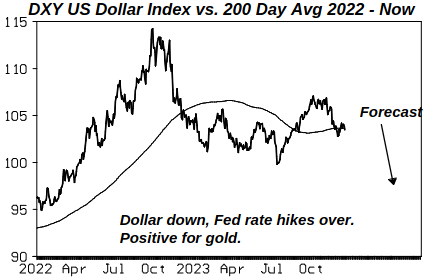
    So you put out a paper last August titled the real rates tsunami, and you outlined your expectation for the path of rates and inflation and other things. And I think that it’s still relevant, of course, especially as we watch the Fed play out their plan. Can you walk us through that paper and what your view is now? Has that changed much?


    [00:02:37.970] – Alex Gurevich 

    Okay, I will try to do it in an abbreviated fashion, so feel free to guide me or ask me questions.


    [00:02:43.720] – Tony Nash

    Okay, great.


    [00:02:46.770] – Alex Gurevich 

    At the core of the heart, what I was talking about is I was trying to understand what I got wrong in the yes, 2021 and yes, 2022. But that also informed me how I started to think about the yes, 2024 and 2025. Like, if you think symmetrically in 2023, I’m thinking both two years back and two years forward.


    [00:03:08.240] – Tony Nash

    Right.


    [00:03:08.890] – Alex Gurevich 

    And two years is actually, by the way, key to everything, because I came to the conclusion that everything operates for the two year leg. We can get more into that, but that makes a lot of sense. That’s how I was thinking about the world. And I realized that one of the mistakes of team transitory, so team transitory was correct. Just to step back after Covid, that there were always supply shocks that will be unwound and where we’ll see the bull whip. And actually we have seen that bullwip. One of the very important realizations I came to, or like I pounded my table on, when we saw slowdown in economy or inflation in 2022. 2023, it had absolutely nothing to do, I will repeat again, absolutely nothing to do with the fed raising rates. It did not and could not have. Fed raising rates did not and could not have had any effect yet what was happening, just a natural unwind of certain post Covid shocks. Now, what I did not count on, what I didn’t fully comprehend at the moment, how pernicious the civilian negative real interest rate of 2021 would be. And it does not matter that it was for temporary reasons.


    [00:04:32.410] – Alex Gurevich 

    But when you have severely negative real interest rates, it leads to further expansion of money supply. People have reasons to build inventory, blow up their balance sheets. Everybody wants to have a big balance sheet. If you have negative real funding rate, if you’re a business, you don’t have incentive to push for high labor productivity, you have no incentive to lay up workers. All of those factors created a very inflationary environment, which became sticky and continued on in 2022. And certain effects we’re still seeing now. So if you think of it to your leg, we’re still in the product of the environment of early 2022, which is the environment with rates only started to go up, which is the environment when inflation was very high. Now, the flip side of that is inflation came down. And people can say inflation came down for various, also transitory reasons, because there was unwind of the supply shock. But for whatever reason, the inflation came down, it created positive real rates environment. And this positive rates environment leads to further deflationary pressures. People have incentive now to contract their balance sheets. They have incentive to increase labor productivity, to start layoffs, to hire less workers.


    [00:05:57.720] – Alex Gurevich 

    It’s a very slow process. It’s a multi year process. It’s not something that happens overnight. It’s not like guacamole. We think high inflation, let’s raise rate by 75 basis points. Inflation print will be lower next month. Same thing when people say if fed starts cutting rates prematurely, it has a risk of rising inflation. Honestly, I’m going to be disrespectful here. I will say this is absolute gibberish. That is gibberish. That is not even like a sentence that makes any sense to me, that cutting rate, because cutting rates now will affect inflation two years from now, it will have nothing to do with inflation. Come up this year or not. This is just, the evidence is overwhelming to that, that you cannot just affect inflation on a month to month basis. You maybe can affect a little bit headline inflation by pushing on commodity prices up and down. You can maybe affect some high frequency economic indicators with a several month lag by changing financial conditions and changing the sentiment, by pushing stock market around. But you cannot really affect what Fed is really looking at core PCE on anything shorter than one or two year horizon.


    [00:07:04.450] – Alex Gurevich 

    And one year horizon will be very optimistic. So that is the core of my thesis. And since you ask him about real rate tsunami specifically, I’m going to share one chart, if it’s okay, and then start criticizing me or whatever. So this is the chart. You’ll see three things on the chart. There is one line, the wiggly line, which goes, can people see people well? Right, yes, wiggly line. This is the headline CPI. Now I use headline CPI, I calibrate it to whatever you want. You can use core pc, core pc deflator, core CPI. It’s all truly, it’s going to look similar no matter what you use. It’s the principle of it. I’m not going to do homework for everybody in terms of what to use and this line, but this is not just two years, this is average over two years, because remember, everything operates with two year lags. And this is the average two year software. So that just shows us the rates. Now those charts, well, familiar, don’t say anything. But what’s interesting is when you took the real rates calculated that way, and this is the yellow orange thing, and as you see, it shows us that right now we’re in an environment when the real, average real rates over the last two years were still close to negative 2% by this chart.


    [00:08:25.910] – Alex Gurevich 

    So when people say the economy has withstood rising rates, again, I will call nonsense on that. I’m not saying, by the way, my thesis is not that recession is inevitable. My thesis is not that inflation will not be able to withstand high rates. My thesis is that it’s entirely premature to even start thinking about whether it has withstood the high rates, because what high rates, real rates, have been on average negative over the last two years. So everything has been stimulative. So, in fact, even this environment, we’re already seeing some moderation of job market and some disinflation. It’s tremendously deflationary in perspective, because when this thing will actually become positive, the deflationary pressure supposedly will dramatically increase. Now, why do I think it’ll become positive? Well, look at the charts. This chart is already not stoppable. Those jaws are closing. And we do know that average software keeps rising. Fed is not going to cut rates to zero next month. Right. So this line is going to keep going up and it’s going to go to like 4% or whatever, depending on how fast the cuts will go. But it will go higher. Inflation, we know, is going down.


    [00:09:45.580] – Alex Gurevich 

    So there is really very little to stop because as high prints fall out of this, two years of inflation and low prints fall out of software, there was no stop to this thing from going. It doesn’t matter even what the Fed policy is now. That’s going to go positive. And that’s when we’re going to start having to start thinking about, okay, now, the average effect of positive real rate can be assessed. And I’m not saying we know what it’s going to be, but my inclination is to think that given what we’ve seen so far, that it will lead to further deflation. And just, again, not to take too much time. The core of my thesis, what I thought about this paper, that the sequence of events, I think is very different. That’s what Isaac Tony was asking. What is different? In the past, the thesis have been that we start with recession, then we get unemployment, then we get deflation. Now with the policy smoothing out, recessions we’re having, and post Covid whiplash, we’re seeing slightly different thing. The disinflation actually came first. Labor market is still robust, as we’ve seen today, particularly. Right? Yeah.


    [00:10:53.470] – Alex Gurevich 

    There are some mixed numbers you can say, like, this is pro, this is a con, January report is volatile. This is what’s happening on joel’s. This is what’s happening with claims, tons of things. But overall, nobody, I will challenge people yet to say that the job market is falling apart. Yeah, for sure. Very tough.


    [00:11:14.470] – Tony Nash

    I want to cover some really basic question. Okay. When you say deflation, when we hear the word deflation, we’re kind of programmed to think that deflation is a bad thing. When you say deflation, does it have a good or bad connotation or is it just a fact? Deflation?


    [00:11:36.590] – Alex Gurevich 

    To me, it’s more of a fact. First of all, I want to be very clear. I’m a trader. I’m not a policy person. When I always say, like, what the Fed should do, it should be taken with a grain of salt. I always think that fed should do whatever is best for my portfolio. I love that perspective because objective functions are very uncertain. I mean, deflation, I think leads to total society outcomes. Deflation probably leads to high wealth inequality. Deflation will probably will lead. And this is my thesis, that it’s not that unemployment will lead to deflation, it will deflation disinflation, which will have to lead to a loosening of job market.


    [00:12:18.830] – Tony Nash

    Right.


    [00:12:19.300] – Alex Gurevich 

    Because people, under pressure of high real interest rates, people will have to raise productivity and maybe hire less people. Not everybody thinks it’s a bad thing. Some people could think it’s a healthier adjustment on the economy, but higher real interest rates, they kind of clean a lot of things and they could do it in a painful way, like they kill zombie companies who roll over their debt. They could just really help us to figure out who is who. So it’s not all bad, but it can also cause pain. And then inflation leads to unemployment and to high unemployment. And high unemployment leads to erosion of consumer confidence. Then eventually it can lead to economic slowdown. So that’s a very kind of unusual path. And I think this, however, since the changes that occurred in policy since 2008, I think this might be the new thing we’re looking for. Like recessions don’t lead to stock market falling, for example.


    [00:13:23.680] – Tony Nash

    Okay.


    [00:13:24.930] – Alex Gurevich 

    And unemployment might not start with a recession, but might start with actually deflation first.


    [00:13:29.840] – Tony Nash

    So your order of things is deflation, jobs, then recession.


    [00:13:35.970] – Alex Gurevich 

    If recession happens, which is not much, it might not even happen because by the time we have deflation and then job losses, the Fed can cut rate so much that they will have no recession.


    [00:13:46.920] – Alex Gurevich 

    And right now, when people are saying, like, recession, I was like, what recession? Why would consumers stop spending? There is a great job market and positive real wage growth. Why would people not be spending? And if we have consumers spending, why would we have a recession? I don’t see it yet.


    [00:14:04.190] – Tony Nash

    Right.


    [00:14:05.390] – Tony Nash

    That’s interesting. Albert, what do you think about that in terms of that order of events?


    [00:14:11.230] – Albert Marko

    No, he’s right about the order of events. I mean, layoff is the key thing. We’ve talked about this for a long time. Wait for layoffs to happen to start triggering things. And I do think that initially I was on the pro, recession is going to happen, so on and so forth. But as the data has been trickling in and policies have been enacted. I don’t really think that we’re going to see a real recession just because things are so under control from the Fed’s perspective now. Deflation? Yeah, it’s coming. I have a dispute on the timing of it, because right now there’s no real deflation in the United States except for the commercial real estate market. I mean, look at China. However, China is in serious deflation, but that helps the US maintain its inflationary policies. The US has too much wealth versus manpower capacity in the economy, and additionally, fund flows are all supportive of north american markets, since a large chunk of East Asia is just uninvestable to passive investors. If I look at the data, we had rates jacked to 5% and wages are still growing 5% to 6%. So wages were secularly depressed in the US for years, and now it’s time for them to recover.


    [00:15:28.980] – Albert Marko

    And this is probably one of the policies that Janet Yellen and Leila Brainard has laid out for the time being. So until I see a change in the political intent of wages and whatnot, it’s hard for me to see a deflationary event in the next twelve months. After twelve months, it’s a different world, different thing. And I think that Alex’s thesis is going to play out over the next one to three years, in my opinion. So what do I know?


    [00:16:05.030] – Alex Gurevich 

    I’m okay with one to three years horizon. Yeah. Do I have to say? My signals and kind of cycle indicators do predict peak deflationary pressure somewhere towards the end of 2024. But if it turns out to be like, you’re more of your timeline, I would not feel too wrong.


    [00:16:25.580] – Albert Marko

    Yeah. My only issue is it’s just Janet Yellen and Lail Breinard and the Biden administration, they have their hands on policy right now, and it’s been intent on keeping the markets of the economy looking rosy.


    [00:16:40.500] – Alex Gurevich 

    And my opinion, it’s all, what can they actually do now?


    [00:16:47.010] – Albert Marko

    Not much anymore, but that’s my point.


    [00:16:50.360] – Alex Gurevich 

    I don’t think they’re really like, fiscal policy is kind of fixed, it’s fairly expensive, but not the way it was in 2020. Right?


    [00:16:58.710] – Tony Nash

    Yeah.


    [00:17:00.630] – Albert Marko

    The only thing I could think of is really like, Congress wanting to boost the markets for their own reelection bid. So you’d see subsidies and legislation come out over the next six months. Short term, temporary garbage.


    [00:17:12.400] – Tony Nash

    But that’s targeted, right?


    [00:17:16.490] – Alex Gurevich 

    This is actually. You probably know about this more than I do. Wouldn’t the Congress be somewhat locked pre election in terms of extreme fiscal policies, it would be not in the interest of challenging parties to put very big bipartisan plans out.


    [00:17:34.550] – Albert Marko

    It depends because it depends. In the past you’d be absolutely correct. But in the last election and this one that’s gearing up, I do see a lot of policy and some legislation looking to help the US workers and basically just give people free money. I mean, this latest piece of legislation gives people like $8,000 if they have a kid just to file taxes. These inflationary policies that they have is just, they’re troublesome to me and they just don’t care. They don’t care what happens in a year. That’s my only issue.


    [00:18:09.310] – Alex Gurevich 

    Well, one of my theories is that fiscal expansion might be not so inflationary when it’s not accommodated. Because if the Fed is not buying. So if you spend deficit and sell more bonds and more bonds, but the Fed is not buying them and not lowering rates, then somebody has to buy them. So they crowd out other investments. They either have to bring in foreign capital and that will be capital surplus and then has to go up. Or though people talk about it’s all confusing because people might buy them but then hedge the currency. It’s confusing, but somehow in the big picture. Or they have to end up with end users because they cannot all end up on banks balance sheets because of tightening of banking regulation. Right.


    [00:18:52.810] – Albert Marko

    Yeah.


    [00:18:53.520] – Alex Gurevich 

    So they have to go somewhere and some people will buy those instead of doing something else with their money.


    [00:19:00.410] – Albert Marko

    Yeah, no, valid points. Valid points. The only thing I do have, I was discussing something with a partner of mine and he brought up a good point, is like what if Yellen, her idea is using only two and three year bonds and having the fed purchase them. They’re talking about duration of all these things.


    [00:19:19.040] – Alex Gurevich 

    But right now they’re not purchasing, they’re not selling. Tightening. Like if you would see quantitative easing, for example, if you combine fiscal expansion and quantitative easing, you could see this kind of inflationary mechanism going. This is very theoretical. I actually don’t.


    [00:19:35.180] – Albert Marko

    Yeah, of course.


    [00:19:36.100] – Alex Gurevich 

    And I don’t have deep conviction. This is my kind of working assumption. And what I’ve seen is that fiscal expansions don’t actually seem to lead so much inflation impact if they’re not accommodated because then rates go up because the bonds have to clear. Like if the Fed is not buying them, somebody has to. All the bonds have to clear.


    [00:19:57.230] – Albert Marko

    Yeah, you’re correct. And you actually mentioned that earlier, except for commodities. And I say that’s one of the areas that I’ve focused on intently is commodity inflation probably rising, everything else. You’re absolutely spot on.


    [00:20:12.950] – Tony Nash

    So I think it’s fascinating that we’re talking about deflation so casually. I love it, because again, there’s always this lining of deflation being a terrible thing, and I love that we’re just talking about it. Yeah, it’s probably going to happen, and this is the order of what’s going to happen. Tracy, we talk about commodity prices. Do you see room for further kind of suppression or decline in commodity prices? Because we’ve seen huge geopolitical events and not much has happened with crude and net gas and other things. So what do you see on the commodity side with this kind of environment that Alex is talking know right now?


    [00:20:57.220] – Tracy Shuchart

    I think that this kind of environment is what investors are looking at right now. Right. And why they’re kind of scared to get into the commodity sector and not to mention what’s happening in China right now. I mean, we’re seeing a massive slowdown. I don’t care what they say their GDP is, we all know those are all fake numbers. And there’s a massive slowdown in the property sector, a massive slowdown in the manufacturing sector, and you can’t have domestic travel, I. E. Trains, planes, automobiles, et cetera, make up for what is happening in the big sectors of this industry, which I think is largely ignored. But that said, looking at China, I will have to say that I think the market is looking too much on China. I think we’re too dependent on China and looking at China for commodities data, China is doing bad, poorly economically speaking. Then we need to sell commodities. But there’s a lot of up and coming markets. And we’ve talked about this before, Tony, where I think know we’re going to see increases in India, we’re going to see increases in Africa, we’re going to see increases. And we’re already starting to see those increases, particularly in fossil fuels and metals, in those industries that are going to kind of make up for the China shortfall.


    [00:22:27.720] – Tracy Shuchart

    And so I think the market, in one respect, I think that we have to look at China because they’ve been the major driver of commodities for 20 years now. But I think it is time that investors start looking outside of China, maybe because I don’t think they’re going to be the main driver anymore, even though they’re still a huge country and a large consumer.


    [00:22:52.190] – Tony Nash

    Yeah, I think I remember when I was at the economist, I don’t know, ten or 15 years ago, and people were asking us, so what’s the next China? And for a decade, it was still China. What is the next China? Well, I don’t know. I mean, it’s going to be hard. That’s a once in a lifetime thing, and so it’s going to be really hard to create another China. And although they export deflation from a demand perspective, an investment perspective, not having another China, I think that strengthens thesis. Where does that demand come from? And we have all this installed capacity, but where does it all go? Because we have population declining in Northeast Asia, we have population declining in Europe. We have population declining in Russia. We have population growing in the US, but we don’t have population growing in a lot of other parts of the world, aside from, say, India and Indonesia, I think.


    [00:23:50.330] – Tracy Shuchart

    And Africa.


    [00:23:51.710] – Tony Nash

    And Africa.


    [00:23:55.930] – Tracy Shuchart

    I think it’s almost better that it’s diversified and that we’re not looking to one country to kind of fortify what we look at demand, particularly in natural resources, since that’s my primary focus.


    [00:24:12.190] – Tony Nash

    Alex, you said India is the next China. I hope India is the next China. I’m not convinced that. And know I love India. I’ve met with senior officials there. I’ve been there many times. I’ve done a lot of work there. I’m not convinced that India has the institutional capacity to do that. And I think foreign investors have been spoiled by. And this is the old anecdote of arrive at the airport, drive to the factory, and it’s a beautiful drive. The rest of the town can look terrible, but the drive from the airport to the factory is a beautiful drive. India hasn’t really got that down. And I think when foreign investors who are accustomed to investing in a place like China, where it’s a beautiful drive, when they go to India and you land in Mumbai and there’s four year olds knocking on your taxi door to ask for money, that sort of thing, it’s really hard for people to.


    [00:25:21.510] – Albert Marko

    Yeah, yeah, but Tony. But Tony, India has advantages over China in terms of legal system and the finance system. It’s more trusted than the Chinese would ever be. I mean, they’re based on anglosphere laws and regulations and whatnot. They’re more tied in with the western world than China. China, they can just confiscate everything you own and prevent you from leaving the country.


    [00:25:43.230] – Tony Nash

    As an investor, yes, but in India, you can be in a court case for 50 years, regardless. In India, you’ll have arbitration in Singapore or in London or something like that for whatever can be decided in a place like Singapore, they’ll continue to do that, but you’ve still got layers of kind of payoffs that need to happen and other things in India. But Alex, I am hopeful. I remember when, I think it was flextronics 15 years ago, made their first investment in Chennai and everyone was hopeful. That was India’s big breakthrough on electronics manufacturing, and it just pretty much fell flat. And now we have other things happening. I think Tata with the nano, what they did, what, ten or 15 years ago, really helped indian manufacturing and supply chains. But I’m just not quite there yet. Again, I’m a big fan. I want it to happen, but I’m not necessarily quite there yet on seeing supply chains in India be as robust as China was even 1520 years ago.


    [00:26:42.690] – Alex Gurevich 

    That’s fair. I also think that when people think of what I’ve always argued, when people kept saying that China is doing in some ways unique, though, because I think China is unique in a way that China, what China did in the end of 20 century, beginning of 21st century, is what it has done several times over its several thousand years of history, which is reason to economic dominance or close to economic dominance in the world. Had a very big chunk of world population who had very good technology and innovative kind of approach, had a very organized authoritarian state make a bid to become a global power and failed at that bid.


    [00:27:32.670] – Tony Nash

    Yep.


    [00:27:33.350] – Tony Nash

    And I think that last thing you.


    [00:27:34.950] – Alex Gurevich 

    Said is China did it several times in the history. So in some ways, the counterargument to what I said, India is the next China, which is saying, like, India is not the next China. India is the next India. The next China is China.


    [00:27:49.040] – Tony Nash

    Yeah, that’s a great point. Can I ask you something, Alex? A little bit. A little bit off topic, but we see this China Russia relationship, and I’ve said for years, because I did work in China for a long time, I don’t believe that the Russians and the Chinese trust each other. And I don’t think that’s an enduring relationship. Do you think those sides can really trust each other? And do you think that’s an enduring relationship?


    [00:28:16.990] – Alex Gurevich 

    First, full disclosure, it’s outside of the area of my expertise.


    [00:28:20.990] – Tony Nash

    Okay, but just your personal view.


    [00:28:26.050] – Alex Gurevich 

    I probably have the same skepticism as, you know, historically, like, you know how there are those books like this kind of geopolitical theory, geography, destiny, and typically us and Russia, natural allies. And Russia’s natural opponents are Turkey and China.


    [00:28:50.970] – Alex Gurevich 

    Russia’s natural allies are us and England. There was only one time, I think, when England and Russia, for example, found themselves on the opposite side in the crimean war.


    [00:29:03.090] – Alex Gurevich 

    And every other time they were basically on the same side.


    [00:29:07.020] – Alex Gurevich 

    Us and Russia found themselves on the same side every single time, except for some proxy wars that can’t really count. And there are geographical reasons for that.


    [00:29:19.010] – Tony Nash

    Okay, yeah, that’s very interesting. I want to ask you one kind of last thing that you mentioned in your paper. You said that AI could be seen as deflationary. Can you talk us through that? You talked us through some of this job stuff. Can you talk us through how AI can be deflationary?


    [00:29:36.170] – Alex Gurevich 

    Well, we’re in the early stage of singularity. We don’t know yet how the singularity, which, by the way, has already happened, will spread. And there is this whole thing that has been happening throughout human history that they will come up with some new technology and people will be like, oh, this will lead to job loss, but reality, every new technology just led to restructuring of job markets. So they got rid of stable hands, but now they have car mechanics. Right?


    [00:30:09.270] – Tony Nash

    Right.


    [00:30:11.170] – Alex Gurevich 

    So drivers of car, whatever, people of sales, sailboats now work on whatever fossil fuel driven boats. Right. It’s the same. What I’m saying. Like any kind of advancement, technology led to actually rising levels of standards of life and created new job opportunities. This revolution could be a bit different because every single time, what happened is that the technology would replace the most manual, the least intellectual part of work, letting people do the more intellectual part. So making humans actually express more their human capacity. But this is kind of a displacement from the top. Like, there was an interesting presentation. I thought about that. Right now, the jobs most displayed by AI are not actually the highest paid jobs, not the lowest paid. Like, if you need some simple legal documents, like, I’ve already used AI to draft legal papers for me without. And saving a few hundred dollars here and there on lawyers.


    [00:31:19.950] – Alex Gurevich 

    It’s not super critical. Chat GPT will draft you any legal template. I also use it continuously now for second opinions on medical questions. I will still go to a doctor, but if I want to get a second opinion, I use Chat GPT, and it gives very reasonable second opinion usually. Right. So it’s displacing those, really. It’s not displacing gardening. Like, I mean, Chat GPT cannot landscape your garden.


    [00:31:48.260] – Tony Nash

    Exactly. Yeah, it’s very interesting.


    [00:31:52.130] – Alex Gurevich 

    Cannot give you a massage yet. Right. It’s not doing anything in that area, right?


    [00:31:56.210] – Tony Nash

    That’s right. Sorry, Albert.


    [00:31:58.890] – Albert Marko

    No, he’s right. I mean, the AI is definitely a disinflationary threat. I mean, 80% of finance jobs are just robot calculators, 70% of lawyers are just robot readers. It’s easier to replace those type of people, but I guess you can replace them with Walmart welcomer positions later on.


    [00:32:16.410] – Tracy Shuchart

    Go to tech school, kids. Go to tech school. Become a carpenter builder.


    [00:32:21.600] – Alex Gurevich 

    Yes.


    [00:32:22.650] – Tracy Shuchart

    You can’t be replaced by AI.


    [00:32:26.430] – Alex Gurevich 

    To replace physical labor by AI, they will have robots. But that technology is far away, and it’s not easy to implement because hardware is very hard to implement and it’s very hard to make it cheap. It will get there, but it might take the case. While displacement of intellectual professions happens within months, it’s just such a different timeline.


    [00:32:51.350] – Tony Nash

    I have a son about to enter high school, and one of the tracks that they have that he can specialize in is welding. And as silly as it sounds, we’ve thought about trying to convince him to take some welding classes because so much other stuff can be automated.


    [00:33:08.460] – Tony Nash

    And so we haven’t convinced him yet, but it is a real thought that we’ve had so that he can learn, have a trade to fall back on as other stuff is automated. Who knows, right?


    [00:33:18.420] – Tracy Shuchart

    Well, don’t you remember back in school, when I went back school, we had shop classes. We learned how to work with. I mean, that was like our required class.


    [00:33:28.900] – Tony Nash

    Tracy, I was Woodshop student of the year in 7th grade. Say that proudly.


    [00:33:37.950] – Alex Gurevich 

    I will say officially, I was absolutely hopeless at shop. So nothing would have to do with. I would totally not survive in the society when you have to rely on dexterity of your hands or kind of your practical intuition. I am absolutely hopeless.


    [00:33:53.460] – Tony Nash

    Yeah, but you’ve got an amazing mind, Alex. So you make up for being.


    [00:33:58.190] – Alex Gurevich 

    I’m under pressure. I mean, AI replacement, it’s something that I have to really seriously worry about.


    [00:34:04.620] – Tony Nash

    But that’s the reality of where we are. Everyone who’s a white collar worker should be worried. If they’re not worried, they’re not aware of what’s out there in technology.


    [00:34:15.320] – Tony Nash

    I’m worried. Albert’s worried, Tracy’s worried, you’re worried. We should all be worried a little bit. Otherwise we’re unaware.


    [00:34:24.950] – Alex Gurevich 

    Yeah. It’s nice if you have capital, because what happens that AI only makes your capital have more value? Because capital means access to computational capacity, whether it’s a form of digital assets or whatever. But computational capacity will be key. If AI does everything right. That’s right. Then you need energy to fuel computational capacity. The energy efficiency, increase of energy efficiency will never catch up to the need for computation. So we’re going to need more and.


    [00:34:58.460] – Albert Marko

    More energy for that, which is interesting.


    [00:35:01.970] – Tracy Shuchart

    I’ve been writing about that, which is.


    [00:35:04.310] – Albert Marko

    Interesting because when AI starts flipping the script on renewable energy because it’s not efficient enough, there’s going to be all sorts of political problems happening.


    [00:35:12.470] – Tony Nash

    That’s a great segue. Let’s talk about cheap energy. Thank you very much for that. Before we get started, I want to let you know about a new free tier we have within CI markets, our global market forecasting platform. We want to share the power of CI markets with everyone. So we’ve made a few things for you. First, economics. We share all of our global economics forecasts for the top 50 economies. We also share our major currency forecasts as well as Nikay 100 stocks. So you can get a look at. What do our stock forecasts look like? There is no credit card required. You can just sign up on our website and get started right away. So check it out. CA markets free. Look at the link below and get started ASAP.


    [00:35:55.290] – Alex Gurevich 

    Thank you, Tracy.


    [00:35:56.440] – Tony Nash

    Let’s talk about coal for a little while. You had a couple of tweets about coal this week. We’ve discussed the problems with wind and solar companies over the past few months. As interest rates have risen while us coal consumption has fallen, us exports are rising. So we’ve got the tweet on screen. Is this coal headed to emerging markets or developed markets? What are we seeing in this data?


    [00:36:19.790] – Tracy Shuchart

    It’s mostly heading to Asia, obviously. And so emerging or semi emerging, I’d like to separate because I think know there’s kind of a difference if we’re looking at Pacasia or India, but yeah, most of that’s going to Asia because obviously they have made their plans very clear. They are emerging markets, they want energy security and they want cheap, reliable energy. I mean, if you look at Pakistan, Pakistan hasn’t even been able to afford that gas for a couple of years now and it’s been a persistent problem for them. And so you have to understand that these nations, they need energy security. That’s all they care about. And even India, which is. I’ve heard a lot of things. Well, India’s are. Why is India buying from Russia? Because they’re an ally of the US. Well, first of know, India is focused on their own energy security. For one and two, their relationship with Russia runs deep in its counterbalance to so in the region. So we really couldn’t say anything about that. But if we’re looking at coal. Yeah, absolutely. We’re seeing coal exports because if you look at our numbers, 2007 is really when we peaked at our coal usage.


    [00:37:54.490] – Tony Nash

    You mean in the US, or globally?


    [00:37:56.500] – Tracy Shuchart

    In the US. Okay, in the US. And that was mainly for electrical power. And since 2007, we’ve literally declined almost 60%, which is why I think it’s been a rapid decline over a very short time. We don’t use that much coal at all for any more electrical. And I would say it’s completely negligible in manufacturing. It’s nearly nonexistent anymore.


    [00:38:27.350] – Tony Nash

    Clean coal never happened. The alleged clean coal from the 2008 election never happened.


    [00:38:34.100] – Tracy Shuchart

    Yes, but companies have largely moved away from that domestically. Why not? Why not use nat gas? It’s a whole lot cheaper than coal, actually, and we have a ton of it, so let’s sell it overseas. And I think one of the reasons we haven’t really seen the big pushback from, say, environmental groups on exports like we have seen on LNG just recently, is because of the rapid decline in usage. And they’re just not really paying attention to it because it’s no longer a significant source of energy in the US anymore.


    [00:39:14.760] – Tony Nash

    Okay. It’s exports. And we still have. China is still 70 plus percent power generation by coal, is that right?


    [00:39:23.690] – Tracy Shuchart

    Yes, absolutely.


    [00:39:27.110] – Tony Nash

    For all the solar and wind and everything else we hear about China developing, they’re still over 70% coal driven for their power generation.


    [00:39:36.220] – Tracy Shuchart

    Of course. And what you have to understand when we hear all of these, you know, they’ve increased solar know, x percentage, and you have to understand what a low percentage they were coming from. So it makes it sound huge when you’re coming from such a low denominator.


    [00:39:56.560] – Tony Nash

    Okay, so you mentioned India. I want to go a little bit deeper into India. Modi is looking to coal to shore up energy security as indian power generation is growing by double digits. So going back to is India the next China or whatever, their power generation is growing really fast. So are these coal numbers from India? This is based on a tweet that you put out. Are these coal numbers from India just a blip or do you see this as more of kind of a medium term kind of intention for them to continue growing, using coal to have reliable, cheap electricity?


    [00:40:34.980] – Tracy Shuchart

    Yeah, I think it’s a medium term thing. I don’t think it’s anywhere part of their long term goals, but I think it’s a cheap interim, easy fix for them. Right. Because they already have plants, they can build that out really easily. They also becoming a really big buyer of LNG and a really big buyer of crude oil. And so I think that when you’re facing such a rapid deployment of energy and you need this for electricity, and you need this to run everything. You’re going to go to your. Go to. What’s the easiest thing that we have means available, then that’s what they’re going to go to. And they’re going to build out those plants. Do I think that they have plans for that forever? No. And they are building out some solar and some wind. But again, that’s not baseload possible.


    [00:41:35.470] – Tony Nash

    And going back to Alex’s deflation thesis, it looks to me, because interest rates have risen, so the alternative power, the cost of alternative power development is much higher, and so people are substituting with much cheaper generation sources.


    [00:41:57.030] – Tony Nash

    So that is, at least in terms of headline, that is deflationary. Is that right?


    [00:42:03.030] – Tracy Shuchart

    Yeah, absolutely. I mean, we’ve already seen. We’ve seen orsted quit plants, quit wind farm projects in the US off the east coast. You had BP literally just say it’s uninvestable in the United States to invest in wind.


    [00:42:20.740] – Tony Nash

    Beyond petroleum is saying that it’s uninvestable. Remember when they tried to go as beyond petroleum a decade ago? Or.


    [00:42:28.830] – Tracy Shuchart

    And so, you know, they’ve divested, and so does Ecuador. Ecuador also divested in wind assets of the know. It’s pulling on their balance sheets, it’s pulling down their numbers. It’s not only just rising interest rates, there’s also supply chain problems. You got to deal with China most of the time for a lot of your resources, and it’s just become a huge problem with them and a big drag on their balance sheets. And it’s just at this point, not profitable to sit in these assets. And we have to understand that these companies are here at the behold and are beholden to shareholders that are looking to them to perform well.


    [00:43:16.130] – Tony Nash

    They need to get margins somehow.


    [00:43:17.320] – Alex Gurevich 

    Right?


    [00:43:17.550] – Tony Nash

    So they’re trading down in their feedstock costs. Alex, did you have something to add?


    [00:43:22.030] – Alex Gurevich 

    Well, I have two thoughts. One of them is like something I’m using. Several years ago, I went to a science fiction convention. Yes. I go to science fiction conventions regularly. And one of the presentation was on the economics of terraforming Mars. And one of the key points of this presentation is. So in order to do terraforming projects, you need zero interest rates to begin with, because terraforming projects are so low that any kind of investment yield on such a long project only makes sense in a zero interest rate environment.


    [00:43:56.080] – Alex Gurevich 

    So that’s kind of an inter. Like. It’s one of the conclusions was immediately derived.


    [00:44:00.780] – Alex Gurevich 

    Because on any kind of positive real rates, 3% positive real rates, no. 100 year projects ever made sense. But another thought about energy. I have kind of going back to my AI thesis, if you allow me to stay a little science fiction, because it’s Friday and people want a little entertainment. Think about this. You set a group of people who are hungry, and they’re smart and productive and industrious and kind of scrappy. They’ll find food. They’ll start figuring out, okay, where can we hunt? Where can you plant food? What can I do? Now? AI is hungry, and food that needs is energy. No matter how you slice it, AI will start looking for energy. So now we’re having the rise of the greatest, most efficient, most scrappy intelligence, which will start looking for energy. And in my opinion, all paths lead to fusion. Because in the end, even fossil fuels will not satisfy, like neither wind power nor solar panels nor fossil fuels. They will not satisfy the hunger of AI. They will have to turn to nuclear energy. And if they find that nuclear fission is not enough, they’re going to have to eat fusion.


    [00:45:16.490] – Tracy Shuchart

    I’m all for it. Just tell me when it comes to fruition. I’m 100% for that. I mean, I love the idea. I just hope that we can discover that in time. But absolutely, I think that’s why we’re also finding a nuclear interest in the west that has been long disregarded, particularly after Chernobyl. And, you know, we’re talking about building out these huge data centers that are going to need power and we just don’t have it.


    [00:45:53.520] – Tony Nash

    Very interesting. Okay, thanks for that. Let’s move on to geopolitics. Albert, I’m really interested in the impact of this. The US approved new strikes on iranian targets on Thursday in retaliation for deaths of us military members. We’ve got the story on screen. Obviously, its proxy has been provoking the US and Yemen, Iraq, Jordan. So none of this is unexpected. But is it surprising that the response has taken so long and that the deliberation has been so visible? I have to believe that the US has kind of some existing list somewhere priorities, or else why would they have an intelligence service? So why did this take so long albert?


    [00:46:37.870] – Albert Marko

    Well, it’s taking so long because it’s the Persian Gulf area. I mean, it’s the mean. They can sit there and strike a couple proxies and erase a few of them, but what’s that really going to accomplish, especially if everybody in Congress is talking about Iran being behind it? All right? I mean, you can’t go and attack Iran because oil will be $300 the next morning and they’re not stupid. They know this. They’re keen to the realities of this. They’re taking their time. And honestly, as much as I’m critical of the Biden administration, it’s probably the right thing to do, is to take your time and just be more calculated and understand that there could be a wider conflict that you just don’t really want to get into going into 2024, especially with an oil hovering here at $72. Is it right now? Yeah, $72 right now. We could easily surge it. So it’s probably the correct thing to do. But they do need to have a serious response, and the time is ticking away.


    [00:47:42.150] – Tony Nash

    And also, refinery utilization is below 90% or whatever this month. Those crude prices will translate to higher gasoline prices really quickly if that crude price spikes up.


    [00:47:55.830] – Tony Nash

    So what are the next steps, Albert? I mean, we talked a couple of weeks ago, and we thought this will be a few months that the US will be involved in Yemen and kind of in the region. And of course, there may be a longer tail on it, but in terms of, say, kinetic action, it’ll be a few months. Do you still hold that view, or do you think this becomes a much more entrenched regional, say, medium term effort?


    [00:48:18.420] – Albert Marko

    No, I still hold that view. I think that the Biden administration is going to have to lean on the Chinese to put pressure on the Iranians. I’ve said this before, put pressure on the Iranians and even have the Russians put pressure on the Iranians to settle things down for a while. It’s just too much. The Houthis taking shots at ships, iranian proxies in Iraq killing Americans. It’s just too much. And there’s a lot of trade that has to go and don’t want to see any kind of problems going forward, so they’re going to have to. If I was the Biden administration, I would be on the phone with the Chinese immediately and tell them to lean on them. Lean on the Iranians.


    [00:48:58.970] – Tony Nash

    Do you think that’s already happened?


    [00:49:00.890] – Albert Marko

    Oh, yeah, for sure. I mean, they’re not that dumb. They’re not that stupid. I mean, I think we saw that a couple of days ago that they said the Chinese were starting to make calls to their reignings to settle things down. Without question, that would happen already.


    [00:49:15.780] – Tony Nash

    Yeah. I think the coordination is. It seems to me that the coordination is happening with the National Security Council rather than with state.


    [00:49:26.870] – Albert Marko

    No, not with state. State’s nothing but a postal service. They’re completely dismissive of State Department.


    [00:49:33.750] – Tony Nash

    Okay, so with the chinese playing ball, this could be a couple months or something and hopefully it’s over before driving season hits or something like that.


    [00:49:44.890] – Alex Gurevich 

    Right.


    [00:49:46.250] – Tony Nash

    Okay, let’s also look at Venezuela. I know it’s kind of a minor story, but there’s been some news on the wires this week that the US is ordering business to wind down their transactions in Venezuela because of some election reforms that Maduro won’t do. So how much of an impact does this really have? I mean, the Middle east is a bigger geopolitical issue when it comes to crude prices. Does that have a major impact? Are we taking a lot of crude from Venezuela? Do they have the capacity to export to the US?


    [00:50:20.000] – Albert Marko

    Not really. I mean, this is more of a Tracy question, but I was talking to some of the oil guys and they told me there’s nine blccs still sitting there in port that have yet to make it to the United States. Right? I mean, we all knew that Maduro was going to go back on his word for this democratic election. I mean, it’s just silly, right? It’s just absolutely silly. And the things that I don’t understand why anyone doesn’t talk about, especially in geopolitical world, is the iranian connection in Venezuela, specifically Kaibo. They’ve been siphoning money and sending it back to the. You. Why don’t you take a look at that and start discussing that problem. But the reality is Chevron has to keep their waivers and their sanction waivers intact and that’ll go forward even though that the deadline in April will come and go. Right. And no more american companies are allowed to contract there. Chevron is going to be excluded from that. They still have their waivers and american refineries will be getting supply from chevron into the refineries there in North America.


    [00:51:25.300] – Tony Nash

    Okay, so tell us a little bit about Maricibos since nobody’s talking about it.


    [00:51:29.610] – Albert Marko

    Well, Maricibos, back in the, was it the 90s or mid 90s or. No, late 90s, early 2000s when Chavez came to power, he actually invited all the iranian linked groups that were in the tribal region of Paraguay, Uruguay and Argentina and shifted them up to Venezuela. Well, they took over and started siphoning narcotics, arms, oil trade and so on and so forth and shipping that money back. I mean, if you can go to the streets of Maricabo and you can see all the lebanese and iranian influence on the streets there, it’s plain as day. They even put one of the iranian narco terrorists as vice president of Venezuela about two years ago. He was for like six months. I mean, he’s a well known narco terrorist. So this is nothing new, especially to the intelligence community. Just media doesn’t want to cover it for whatever reason.


    [00:52:23.860] – Tony Nash

    Right. Wow. Okay. Well, guys, thank you so much. I can’t believe how much we covered today. Thank you so much for your time. Alex, thanks so much for joining us for the first time. We really appreciate it. Appreciate it, guys. Have a great weekend. Have a great week ahead.


    [00:52:37.160] – Tony Nash

    Thank you.
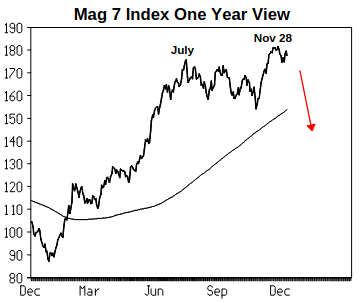
     

    [00:52:37.910] – Albert Marko

    Thank you.
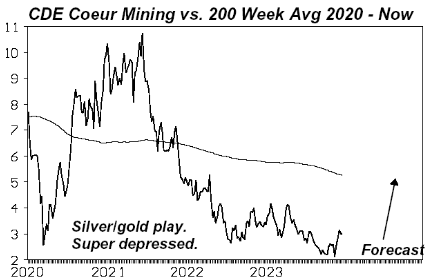
     

    [00:52:39.090] – Alex Gurevich 

    Thank you.
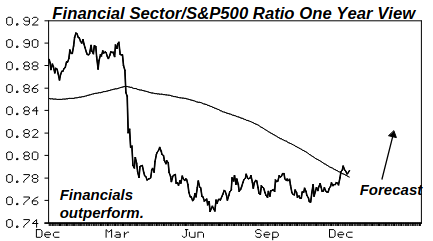


  • What happened in China?; Why did silver rally?; Fed & QRA

    What happened in China?; Why did silver rally?; Fed & QRA

    https://youtu.be/t-DkDxpAKtY

    Access AI-powered markets forecasts for free with CI Markets Free. Sign up here: https://completeintel.com/markets

    Welcome to the latest episode of “The Week Ahead” with your host, Tony Nash! We’ve assembled a stellar lineup.

    Experience the power of AI in forecasting Markets. Subscribe to CI Markets Free: https://completeintel.com/markets

    Transcript

    [00:00:22.090] – Tony Nash

    Hi, everyone, and welcome to the week ahead. I’m Tony Nash. Today we’re joined by Albert Marco, Vince Lancey and Blake Morrow. We’ve got a few key themes. The first one, when I went out to ask about this show, the first response I got back from Twitter was, what the hell happened in China this week? So that’s the first thing we’re going to cover. The second is, why was silver rallying? This week we’re going to talk to Vince about silver and gold. And then with Blake, we’ll talk about the Fed and the QRA. CI Markets has been recognized as one of the top stock forecasting tools for 2024 by Techopedia, a leading tech authority. Why? Because it predicts future price movements with a 94.7% accuracy rate. It covers over 1600 assets with weekly re forecasts of stocks, etfs, currencies, commodities and major equity indices. It has an easy to use interface optimized for web and mobile, and pricing plans to fit your needs, including a free option. Stop playing guessing games with your investments. Take control of your portfolio with CI markets. Learn more about CI Markets today@completeintel.com. Slash markets let’s get right into it, Albert.


    [00:01:33.830] – Tony Nash

    We’re playing kind of the where’s Albert this week. So I like your background. That looks really good, and I think you’re a great guy to answer the question, what the hell happened in China this week? So we had a pretty big turnaround in China in the equity markets. We’ve got a chart for Shanghai Composite on the screen. Of course, the Hong Seng did even better than the Shanghai composite. The central government just talked about putting a few hundred billion dollars into the markets. They didn’t actually do it. They greenlit corporate share buybacks to prop up markets. They reduced the Triple R, the reserve requirements so banks can push more cash out into the economy. And of course, we saw that pretty dramatic turnaround in equity markets. So all of this got markets back to where they were about two weeks ago. CNY gained a little bit. It’s off. Blake, maybe you can talk through some of those dynamics. But the question is this, what does this all mean? What did they do? Right, Albert, and what do you think they should have done that they didn’t do?


    [00:02:38.850] – Albert Marko

    What they should have done is a different animal altogether. But what was happening was the narrative was just becoming overwhelming for the chinese economy of systemic collapse of the chinese system from top to bottom. And they had to step in and guarantee, I know that they haven’t done it yet, but close to $300 billion is probably going to be levered up to five to ten times that to prop up the economy. And their entire gambit was to just change the narrative. They didn’t want those headlines that China was collapsing. They’re going to have to step in, for sure. They’re going to step in. There’s no question about that. And it was all to prop up the Hong Kong markets, really. They don’t really care about Shanghai, the mainland or whatnot. But this was specifically to prop up.


    [00:03:30.310] – Tony Nash

    The, you know, we’ve seen all these over the past probably six months. We’ve seen all these year on year comparisons. X is up triple digits in China for trade or double digits or whatever, year on year. And everyone knows the year before things were closed and these year on year things in China haven’t really matter all that much because they were closed for a year and a half or whatever. So I think what I’m seeing in things like global trade, the trade numbers actually don’t look bad, but things in China, we’re seeing deflation, we’re seeing really a lot of bad news. Politically, things are kind of sketchy. They’ve had two of their central committee members just kind of disappear over the last six months. So can money injected. I’m saying that diplomatically, Vince, can money being injected into markets solve that uncertainty? Or is this just kind of a first step? Like, have they just started and there’s a long term plan? Because we’ve been hearing about chinese stimulus for three years now and this is really the first. Aside from some kind of stupid rail investment or whatever, this is really the first tranche of cash that we’ve seen.


    [00:04:43.210] – Albert Marko

    Well, I mean, politically, G is taking advantage of the situation right now, getting rid of his opposition party members that are causing him issues or potentially going to cause him issues. I mean, that’s what anyone really in leadership would do to take advantage in this type of scenario. Yellen has her foot on their throats at the moment and she’s been hitting the sell button on China and keeping the dollar elevated. And rates being up close to 6% is almost the abyss for the chinese market. So they’re definitely playing the defensive. They’re trying to prop up the CNY, they’re trying to prop up the economy. Is it enough? No, absolutely it’s not enough. They’re absolutely going to have to keep going on for the next four to five years. This is not going to be a one year pop and it’s going to fix everything. This is going to be five years down the road of them doing multiple, staggered steps of stimulus to get the economy back in order.


    [00:05:44.320] – Tony Nash

    Yeah. I mean, if we want to make an analogy to the US, imagine if the secretary of state just literally disappeared five months ago. And imagine if the defense secretary just literally disappeared, right? And all of a sudden there’s some new junior person in their place. Right? and so the political uncertainty in China is huge. We saw massive shifts in chinese money into japanese and us etfs over the past two weeks. Right, and so the chinese investment itself is not showing support for the chinese markets. I was in China in June of 2015 when markets fell apart. And at that point, chinese mainlanders were encouraged by the government to put their money back in markets. They did it based on faith in the CCP. I don’t see that happening this time.


    [00:06:35.390] – Albert Marko

    No. And the outflows from China have propped up the bond market and the US equities. I mean, it’s been just absolutely staggering of how much money has left Asia and even Europe and flowed into the United States. And this was all calculated by Janet Yellen. I mean, she knows what she’s doing. She’s been the Fed chair. She’s got her fingers on all the buttons at the treasury. They know that if China starts taking off inflation, it’s going to be another problem right now. And I’m sure our guests will talk about silver and commodities, because that’s a big key part of it. If China is firing on all cylinders, commodities are going to skyrocket again. Lithium. Copper.


    [00:07:14.330] – Blake Morrow 

    Albert, I want to jump in here just because talking about commodities for the markets that I follow, especially like the australian dollar. Copper. Unresponsive to all the actions for us traders in the currency space and the commodity space, we look at it as like a shotgun approach. Yeah, maybe this might have been more of a bigger slug, I guess, that came out of this shotgun shot. But still, you can see the muted response that we’re getting in commodities and currencies. And I think you guys draw a really strong correlation, which should definitely be noted, between the Nike, the market’s definitely shunning China in favor of the Warren Buffett, Berkshire Hathaway trade of Japan, even Germany, and a lot of european equities. And us equities, they’re all beneficiaries. But then again, if we do see China turn the corner a little bit, which I think it’s too early to tell, maybe that takes a little bit of the air out of some of the other markets around the globe.


    [00:08:26.610] – Tony Nash

    Can you talk to us a little bit about CNY dynamics, it really hasn’t moved much.


    [00:08:31.360] – Blake Morrow 

    No, it hasn’t. I don’t focus on the CNY as much as my european counterparts do because my colleagues that traded. Because as a us based trader, it’s prohibited for a lot of brokers to be involved. But it’s a lever that China uses and one of the other things that if they want to really kind of kickstart their economy a little bit, they’ll weaken the CNH a little bit more. But we are up at dire levels because as Albert pointed out, this is more of a confidence, I think, topic. So if you start to see the CNH really come under pressure because the PBOC pulls that lever, next thing you know, yeah, it might help the chinese economy a little bit, but to what extent does it hurt sentiment, equities and sentiment in general? I mean, there has not been a time, I can’t really recall a time that I’ve seen a singular market so just shunned upon right now. Like you are seeing in China, right?


    [00:09:44.590] – Tony Nash

    Yep.


    [00:09:46.250] – Vince Lanci 

    Can I go ahead?


    [00:09:47.560] – Blake Morrow 

    Yeah.


    [00:09:48.990] – Vince Lanci 

    The two statements, blake’s comment about the muted effect on commodities as well as the emerging market. Currencies, commodity currencies, and the comment about them being too safe. I guess what I’m trying to say is in the past when they changed the reserve requirements, I had seen commodity currencies and commodities do better than chinese stocks. It’s one data point, but this time chinese stocks, as low as they are, responded very appropriately. I’m wondering if the whole lack of buying of commodities compared to stocks this time is not a comment on China saying what China’s leadership saying. We need people to buy stocks and stop buying pet rocks like gold. So anyway, I think the lack of confidence in China’s economy has been one of the reasons they’ve been buying gold at the retail level anyway, or at the individual level, and they need to change that or they’re going to have a deflationary crisis. And I just think both those things are.


    [00:11:04.790] – Tony Nash

    Those are all great points. I think the Hong Shang was up between four and 5% this week. It’s still down like 20% over the last six months. Shanghai composite was up two point something this week. So we’ve seen a turnaround, but we haven’t seen a dramatic turnaround. Right. We haven’t seen a 15%. It’s not as if they’ve kind of backed up the truck, put in trillions of dollars. I think they’re being very careful fiscally because they do have to balance a huge amount of government debt that China has and, well, they can, but they’re very careful not to print right away. But my worry is, and if we look at the, you know, they’ve made arrr move, is that beginning, middle, end? Where do you guys think we are on that?


    [00:11:59.190] – Albert Marko

    Well, I mean, going back to what Blake said, we are only in stage one of a long game here of what China has to do to get back on track. It’s going to be years on down the road until anything meaningful really happens with the chinese economy. Of course, we’re going to get stock market pops up and down because that’s just the nature of the stock market globally at the moment. I mean, normally you would see, like Vincent said, commodities would just rip on any kind of chinese news, but that’s just not the case anymore. So, I mean, it’s going to be a nuanced approach from this point on.


    [00:12:32.210] – Vince Lanci 

    Maybe if we stop buying chinese made laundry furniture, I mean patio furniture, they’ll stop buying commodities to make them. Maybe that’s what’s going on, right?


    [00:12:42.210] – Tony Nash

    Could be. I think it’s really interesting this week we’ve seen so many Asia equity analysts say, hey, China is a huge value right now. You need to get in and nobody’s buying it. I don’t know if anybody’s buying it, but I don’t see.


    [00:12:54.580] – Albert Marko

    No, there are, Tony, there are big funds buying it clandestinely at the moment they’re starting to get in because honestly, if you look at a systemic collapse of China, they’re not going to let that happen. The US nor China will allow that to happen. So at some point it’s a decent play, long term to get into China. Long term. Long term. I’m not saying next six months, but next two, three, four years. Absolutely. You would be wise to put a position on.


    [00:13:23.070] – Tony Nash

    Yeah, my biggest worry here has been that $278,000,000,000. The market looks at it and shrugs. And that’s kind of what we’ve seen. Right. And the problem with filling holes in markets is that if you don’t put enough in, they just get bigger and bigger and bigger and hungrier and hungrier. So is there a danger of that, of we open next week and markets just kind of yawn at the $278,000,000,000 and all of a sudden China has to scurry to put out a bigger number sooner?


    [00:13:52.410] – Albert Marko

    Well, I think we have to wait until the actual mechanism of what China is going to use to do that. I know they’re going to be using offshore funds and accounts and lever it up. So we really have to wait until the data comes out because I assure you it’s not going to be just 278,000,000,000. It’ll probably in the trillion, over the trillion range.


    [00:14:10.930] – Blake Morrow 

    I also read, and correct me if I’m wrong, if you heard something different, that there’s a lot of calls being made to institutional, chinese institutional clients that stop shorting the market. Only be on the long side kind of throwing those warnings out, which is I find really interesting. But the sentiment is interesting. I’ve always found it my quarter century of trading the markets, a very interesting dynamic in the markets because sentiment, you could almost use the analogy, it’s like inflation. It’s that genie that you can’t get back in the bottle sentiment. When it’s sour, it’s sour. It takes a lot to turn. And you could look at the polar opposite of the US economy right now and the optimism that people feel and regulators understand what that is. And I think Xi has a very good understanding of that sentiment and why he’s trying to turn it.


    [00:15:10.050] – Tony Nash

    Great, okay.


    [00:15:11.250] – Tony Nash

    Hey, I’d like to make sure you know that you can access our AI driven market forecasting tool called CI markets for free, no strings attached, and it does not require any credit card information. Go to completeintel.com slash markets to subscribe. CI Markets is the perfect addition to your analysis toolbox. This free account includes Nikki stocks, major currency pairs and global economics. Of course, we offer much more in our paid account, but this lets you experience CIA markets before making a financial commitment. CIA Markets uses the power of AI to help you make better trading investment decisions. It’s absolutely free. Again. Go to completeintel.com slash markets to subscribe to. CI Markets free. Let’s move on to precious metals. Vince, you put out a piece earlier this week on silver. Okay. On Tuesday you’re talking about why you bought silver this week. I know it’s retreated as we’ve headed into the end of the week, but I’ve got a gold silver chart on screen. A lot of this has to do with China, which is really interesting to me. Can you talk us through why you got in, what levels you looked for and what are you looking for going forward?


    [00:16:19.050] – Vince Lanci 

    Sure, I’m happy to do that. First of all, it’s a short term trade. It’s not a macro trade. It was more like a win for one day, win for a week and then just keep running with it. If it continues to win. It stopped winning yesterday as far as I was concerned. But we’ll get to that. The thing with silver and gold is they’ve completely diverged in the public eye. Looking at the china demand for gold, looking at the BriCs demand for gold, looking at using gold as an alternative to the treasury or maybe a little bit of a hedge for the treasury as a reserve asset, that increase, well that’s kind of left silver in the dust. That’s the first leg, right? Silver is not precious enough and it takes a lot more space to store it if you are having to deal with something like that. And so that’s one leg that gets kicked out on silver and this is all going to lead to why I bought it actually. And the second leg that gets kicked out on silver is very flow oriented. The last 1015 years of behavior in precious metals have been silver isn’t good for anything.


    [00:17:32.590] – Vince Lanci 

    As a silver bug I have to see what the enemy says. But the reality of it is if you’re pitching an investment or a trade, if you’re saying risk off, you buy gold. If you’re looking at metals, right? If you say risk on, you buy copper because it’s an economic metal, right. And this is manifested out of China as well. For years, every time they throw a little stimulus out there, it’s like buy steel, buy iron by copper, and then eventually you buy silver. So that’s the pecking order in precious metals on the economic side.


    [00:18:07.690] – Tony Nash

    Never heard it put that way. That’s great, thank you for that. I’ve never heard it put that way.


    [00:18:12.350] – Vince Lanci 

    Cool, thank you. So that’s how I used to trade it because I would. Whatever, oh, copper’s up. I’ll buy silver if it’s during Asia. If copper was up during the US, I would sell silver. It’s like a time trade, but bringing it back to why I actually bought silver, the commodity trading advisors, the CTAs, they tend to move in groups like a herd, and they frequently lose money on short term moves. And when they make money, it’s on big term move, long term moves. I would call them momentum. Most of them are momentum traders and they sell weakness and they buy strength. And right about the time people started talking about recession, your commodity trading advisors in the US started putting their clients into shorting oil, shorting silver, shorting copper and shorting aluminum. Those that did trade aluminum, and they do that. It’s kind of interesting because it’s so facile, but it works. Instead of selling their stocks, they hedge the economic exposure by selling commodities. And oil trended lower. They made money, silver trended lower. Despite gold’s strength coming out of China, silver was constantly beat upon and copper trended lower despite calls for a super cycle and what have you, which will come eventually, just not when we’re looking at it.
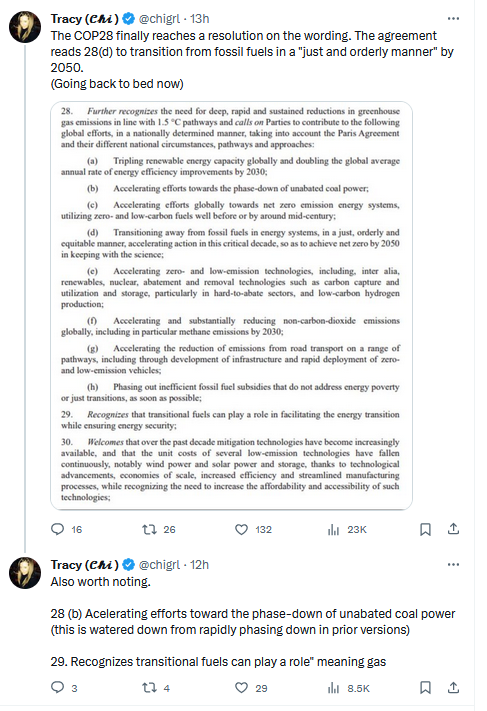
     

    [00:19:41.310] – Vince Lanci 

    So when the markets get thin or when there’s not a lot going on, now you have a big cohort of shorts and silver and oil. I’ll put silver, oil and gold in this triangle here, right? So everyone at the CTA level, whether it be small managed money or medium sized managed money, is looking at gold having been shorted twice and gotten killed in a little bit of a shortcoming rally when the Ukraine war started and then getting killed when the Hamas Israel war started. They’re staying away from it, or they’re long. That’s their hedge. Right. Meanwhile, they’re, you know, silver, I think I’ll short that. So they’ll short that as well, economically. And when there’s nothing going on and people start talking about the Fed easing, where the Fed cuts, stocks go up and silver stops going down, oil stops going down, copper stops going down, and then one day you just see all those commodities have like a little bit of a v shaped bottom. Oil, silver. Well, oil wasn’t v shaped. Oil, silver, and the grains. Gold is nowhere, right? And they start to move up. And at that moment, I know from historical perspective and from analysis that I look at that the CTAs, which are the first to move, right, they’re the first to move.


    [00:21:06.820] – Vince Lanci 

    They’re buying silver, they’re buying oil, they’re buying copper, they’re buying grains, and they’re probably selling gold, posing the whole thing out. And for three days, that worked out very nicely. And then the market paused today. So that’s why I bought it. Right? That’s why I bought. I thought, okay, maybe the Fed’s going to ease. I’m long stocks, I’ll buy silver. I kind of the opposite of what they do. And it worked for a couple of days, and then it just kind of flatlined on the flows that I saw. And I said, okay, ctas have covered, but they don’t have any money to put into it. And we talk about markets that climb walls of worry. Gold is up, stocks up over the last three years, and there’s just no, so much money on the sidelines in stocks, and yet stocks are up. And when you look at gold, it’s like, well, the macro investor speculators, they don’t even care about gold anymore, and yet gold is up. There’s such a lack of participation in silver on the american side, except for all the lunatics that think silver is going to go to the moon tomorrow, which they’re friends of mine, so I’m going to defend them, and I’m probably one of them, but I try and keep a lid on it for times like this. Nobody buys silver on the follow through. So I got out of my lungs today and I actually shorted a little bit of gold because I think China is going to get filled on their buying underneath.


    [00:22:34.410] – Vince Lanci 

    So that’s it. I think in the short term it could continue to go higher, but it won’t be because of what I saw. I wouldn’t know what drives it higher in the longer term, I think if stocks drop, silver gets hit more. If stocks drop, gold gets hit. If stocks drop, oil should get hit. But oil is its own animal right now. It seems it’s got its own thing going on. So longer term, I’m very constructive on silver, but that was a trade that just came and went.


    [00:23:04.650] – Tony Nash

    We’re just looking for the catalyst. Right, I’m sorry, catalyst. We’re looking for the long term catalyst. So, Vince, you sent me a Goldman chart. Can you walk us through this? You’ve already covered some of this, but can you walk us through this Goldman chart? And then can you walk us through what some of the catalysts might be? And I’m also curious, what happens if we don’t see a rate cut in March?


    [00:23:27.970] – Vince Lanci 

    Yeah. Okay. The chart that you’re putting up there, I think it’s basically a graphic depiction of what I described, and it confirmed what I had thought. The chart describes several things, but it’s basically a year of performance. And the dark blue part of the body, forget the wicks above and wicks below. I forget what they’re called. But the dark blue body represents how long, if you go up on the chart and how short investors get in these assets. And if you look on the left, you see oil there. And what we’re focused on for this conversation is this green star. The green star shows you that, generally speaking, of all the money that investors, that CTA investors, these are small and medium sized at best. This is a sentiment indicator. Actually, when you think about what Blake was talking about, this is a sentiment indicator. The oil people had been extremely bearish and short out the wazoo. Conversely, if you go to the right side of the chart, you’ll see that they’re also long gold, and that’s because of the war. What have you, SVB, bank or whatever the reason. And then you look at silver and you say, look at silver.


    [00:24:47.030] – Vince Lanci 

    Silver on the far right is they’re extremely short based on how that star is positioned. And silver is behaving in the minds of the normal person. Silver is like copper. It’s behaving like copper.


    [00:25:01.020] – Tony Nash

    When they diverge like that, how long do they usually diverge like that?


    [00:25:05.490] – Vince Lanci 

    Gold and, oh, they can diverge like that for months. And that’ll happen when the market is dominated by fed behavior, right? So if we’re just talking about domestic politics and rates and fed stuff and everything is fine in neo keynesian world, well then you’re going to see buy gold, sell silver, buy gold, sell silver, and they won’t even buy that much gold. They’ll just happily sell silver because every time they’re buying stock, they’re raising capital using something else. But when there’s a global geopolitical problem, doesn’t have to be a war. You had like Brexit was an example of one, Brexit was another one more recently. The guilt when they had the problem there with that mini budget. I forget what the actual. But anyway, what ended up happening there was, what ends up happening is everyone’s long gold and short silver and they’re just happy. And then one day they wake up and silver is $0.50 higher and they say, oh, maybe we should cover that. And so then they cover it. And so basically when the market is focused on american economics, that will stay stretched for a long period of time. But when an event happens, like the Ukraine war, for example, they all bought gold and they all sold silver at that moment.


    [00:26:28.830] – Vince Lanci 

    And then a month later, gold kept going up, so they ended up buying silver. So those are your interesting domestic versus geopolitical, that’s what changes the don’t.


    [00:26:38.450] – Blake Morrow 

    I don’t have a mean, aside from being, I come from the camp, I don’t like shorting precious metals. I like to own precious metals like physical, right? I try not to trade them on the short side. If I’m going to trade them, I like to be on the long side. But why? Just because I have my technical views and I actually think silver is going lower. Just throwing that out there.


    [00:27:03.900] – Blake Morrow 

    I know I might be both, but why did silver outpace gold so excessively during the COVID lockdowns?


    [00:27:17.390] – Vince Lanci 

    Yeah, well, during the COVID lockdowns, that was a special situation. The situation.


    [00:27:26.380] – Blake Morrow 

    You can say that again.


    [00:27:27.860] – Vince Lanci 

    No, but actually it’s directly Covid related. I mean, you’re basically right. This is kind of bizarre. And as a physical person, I think you’d appreciate this. There was an artificial problem, and it manifested more in silver than in gold. Then here’s what happened. It’s actually nice little story. The late George Giro and I were talking about this during COVID A lot of the flows in the US are, if you want to buy metal on the Comex, let’s say you’re going to take delivery on the Comex, right? If you’re going to take delivery on the Comex, what really happens is you buy it on the Comex, the bullion bank does an ARB, an EFPR, right? And they buy it on the Comex, and they end up taking delivery in London. They send it to a refiner to change it to Comex specs, and boom, it comes over here. If you’re the US mint, that’s what you’re doing. You have to buy domestic, so you buy Comex, and the bullion banks are just like they’re doing their arb, their little EFP, and then the London bullion market gives them the metal, they refine it there, and then it comes back here.


    [00:28:26.870] – Vince Lanci 

    I don’t know, it’s blanks or whatever, even Spider man coins, who the heck knows, right? But that’s what happens during COVID and it happened for both sides, meaning gold as well as silver during COVID And I actually watched this like I actually had it on a map of it. Most of the refiners, most of the, there’s other words, smelters or what have you, they’re in northern Italy, in Switzerland. And so during that timeframe, in the Lombardi region of Italy, Lombardi was hit ridiculously hard during COVID They shut them down. You know what it was? It was regulatory arbitrage. You can see this, right? So you had these specs, I’ll use the gold one because it’s easier to understand. The gold bar in London is 300oz. The gold bar in the US is 100oz. They were not fungible, you couldn’t take. So during that time, you take the 300 ounce bar, you take it over to northern Italy, you have it broken into 3100 ounce bars, and you send it over. They were all shut. So, for a very short time frame, and you’re a trader, so you’re going to appreciate this for a very short time frame.


    [00:29:39.170] – Vince Lanci 

    In the US, we had a venue short squeeze, so everyone wanted Comex gold and Comex silver, preferably silver. Why would they not take London? Because of the regulatory differences. And for a time frame, you could not take delivery of London silver and London gold in the US. And they fixed that by creating a swap contract. But for a time frame, you had deep backwardation in the Comex front, months to one year out, 5% spread. And then you had spot in London trading below because there was no one working. So that’s what happened then.


    [00:30:17.340] – Blake Morrow 

    Interesting. Yeah.


    [00:30:18.490] – Vince Lanci 

    And of course the whole kicker about the economics, the money going into the hot, but that’s what happened. And in fact, if you look back at history, if you look back at history, it was just fascinating because I was like, oh, look at that backwardation on the Comex. Silver and gold must be in the moon in London. Where is it? Plenty of silver here. Why don’t you send it over there? Can’t do that. You guys won’t take it anyway, so that’s what happened then.


    [00:30:47.150] – Blake Morrow 

    Oh, thanks. That’s interesting to know. I know one of my partners at Forex analytics was all over silver, around $15, just buying the living Jesus out of it. And I was like, anyway, okay, great to know.


    [00:31:00.930] – Vince Lanci 

    Thank you. That was the kicker. He was right for a different reason. I’m sure that was the kicker. Look, the silver market is a broken market. I’m going to say this about paper, and I’m not even going to get into the paranoid conspiracy stuff. What I mean is the contract is so big that you can’t buy a fifth of a contract. There’s no one who trades the micro. And so you accumulate, and then you’ve got a problem. It’s made for producers. Speculators are hung out to drive very frequently.

     

    [00:31:32.120] – Blake Morrow 

    There. Got it.


    [00:31:36.270] – Tony Nash

    That’s great. Okay. A lot of detail there. Watch this.


    [00:31:41.310] – Vince Lanci 

    To digest my first time, I had to. I want to be asked back. And so you can say, vince, you’re really cool. Thanks for coming.


    [00:31:49.750] – Tony Nash

    Of course, of course. Speaking of being asked, doc Blake, I’m always impressed when someone as respectable as you comes back on our program. So thanks for making your performance. I really appreciate that.


    [00:32:00.070] – Blake Morrow 

    Thanks for having me and I appreciate the comments. Thank you.

     

    [00:32:02.890] – Tony Nash

    You told me that you’re watching Fed and QRA next week, and I think we’re all watching Fed and QRA next week. We saw Christine Lagarde speak this week at the ECB. They’re holding rates. I think there’s an expected cut in April or something.


    [00:32:20.340] – Blake Morrow 

    Right.


    [00:32:20.660] – Tony Nash

    So Europe is a mess. I’m not really sure I really trust what they say, but I think they’re trying to do all they can to manage their market. So Europe is Q two in terms of a cut. Are you looking for similar messaging from the Fed next week?


    [00:32:39.810] – Blake Morrow 

    I’m not actually first of all, I have to take a step back and say, what does the Fed have to gain by doing that?


    [00:32:50.500] – Tony Nash

    The Fed.


    [00:32:51.290] – Blake Morrow 

    And you take, like Chairman Powell, he’s really good at telegraphing and giving the market what it wants. That’s, that’s, that’s a whole nother animal. But I’ve talked a lot with a lot of different macro analysts about financial conditions, and financial conditions have eased quite a bit for a lot of the United States and a lot of businesses, a lot of individuals. And you could actually even see the pending home sales today was just bonkers. Right. So the problem that you’re going to have, if you’re the Fed, is that you have to make sure you cap those expectations a little bit or the function of getting inflation sustainably below their 2% target is going to be a little bit more difficult. So I think if I was the Fed chair, I’d have to push back a little bit on expectations just to keep the market from getting too frothy. A lot of people might say that stocks are frothy right now. I mean, we are at all time highs. And you can’t ignore the fact where we’re at right now. And there is a thing called trickle down effect. Yes, the top 10% or 5% of americans own the majority of the stock market.


    [00:34:15.250] – Blake Morrow 

    But if I feel wealthier, I’m going to spend more at this restaurant and it’s going to trickle down. And there is something to that. And it does ease conditions a bit. So I think the Fed’s got to walk a fine line. I don’t think they’re going to give us a whole lot. I think the bigger deal is going to be the quarterly refinance announcement, quarterly requirement announcement, QRA, the acronyms. And it’s late in the week. For me, the QRA is going to be more of the kicker that happens, actually, the morning of the FOMC and the markets, they got a bit of a gift. I was talking to one of my, they got a bit of a gift this last quarterly announcement in November that on top of the Fed, on top of Waller, who became a little bit more dovish. Now, if you think about where we’re at right now, and I was talking to one of my colleagues, a gentleman by the name of k man, he made a great point that Janet Yellen was know on the wires yesterday, she sounded pretty upbeat. She’s the lever puller, if you, you know, she could very easily tweak the QRA a bit because she’s feeling a little bit better.


    [00:35:29.660] – Blake Morrow 

    About where we’re at. I don’t know if that’s necessarily going to be the case, but that’s going to be something that I think is going to be closely watched from that allocation of notes and going back over to bonds. And I don’t know if there’s going to be a change there, but I think the whole market is very queued up into it. And with the Fed, there’s a lot of risk. If you own stocks at these levels, you have to be nervous about next week. And I think if you own risk in general. One other thing I want to point out is the dollar is holding up exceptionally well in this current environment. So with that being said, I think currency traders, myself included, and I happen to have both short and long dollar exposure at the moment, but more long dollar exposure at the moment. On balance, I think if you’re short dollars, you’re going into next week a little nervous. And I think that the Fed and the QRA is going to have a lot to do with what happens not only in the currency market, but what happens in yields and what happens ultimately in equities as well.


    [00:36:39.870] – Tony Nash

    Yeah, I want to dig into that a little bit. First, let’s step back to the Fed for a it seems to me that you think that the Fed rates are going to be pushed or the rate cuts are going to be pushed back further than people. Vince said. If you don’t have a March rate cut, it could impact markets. Seems like you’re thinking the Fed’s going to cut after the thing, but tell me where I’m wrong on that. And second, you’re not QT. Are they going to ease off QT? Are we going to see it accelerate, stay at the same rate? We’re not going to hear about it anymore. What’s going to happen there?


    [00:37:15.290] – Blake Morrow 

    I don’t see why they would change the rate of QT right now. Why? Because the market’s not broken at the moment, so why change the pace of that? But as far as rates go, as far as expectations go, I think what we’re going to see next week is we’re going to see a little bit of a shift. The market has been pretty, it’s been the talk of the markets for the last couple of months, and about market expectations, know what the Fed thinks? I think they have to bring those expectations down a little bit. But what I have to also add is equity markets and risk in general, you can call it, has been very nonchalant about adjusting their expectations regardless of what the Fed says. Looking at the US economy. And a lot of the talk about soft landing. I mean, how is the Fed supposed to allow expectations to continue to be inflated like this for a great cut in this current environment without making financial conditions even looser and making their job a little bit more difficult?


    [00:38:32.610] – Tony Nash

    PCe came in above expectations, housing came in above expectations, markets are rallying. Why do you need a cut right now? I just don’t understand why we keep hearing about cuts if all of this stuff is happening.


    [00:38:45.880] – Blake Morrow 

    Well, because people think that the trajectory is going in the direction where inflation will eventually be below 2%. I look at, they’ve taken their revolver, I use a gun analogy, they’ve taken their revolver and they expended all their bullets, you know, years ago, bringing rates down to zero. They’ve currently loaded their whole chamber up now, and they could expend a couple of bullets, maybe prematurely, preventatively, if you will, because they’re looking into what’s going to happen, what potentially could happen in 2024. 2025. That would be the argument. I don’t know if I necessarily buy that argument. That’s why I think the Fed’s going to be fairly reserved in doing know, I like to use analogies. Quite a. You’re when know, running a marathon, and I’ve used this over the last six, eight months, you’re running a marathon and you’re trying to get to the very end of the marathon. Your last mile or two is going to be the most difficult, and that’s the fight against inflation. Naturally, it was coming down. Naturally, as we approach that 2% target, it’s going to be a little bit more difficult for the Fed. They’re not going to help themselves any further by not putting a cap on interest rate cut expectations, in my opinion.


    [00:40:08.350] – Tony Nash

    Right. Okay. And speaking of rates, as we look at the QRA, I’ve got marketable treasury debt on the screen. What do you expect? I mean, I expect going into an election year, Yellen is just going to expand. Her comments on Thursday seem to indicate we’re going to have a lot of fiscal this year to aid the administration. How aggressive do you think the forward look is with that QRA?


    [00:40:40.030] – Blake Morrow 

    Well, first of all, I don’t want to just give you answers, just to give you answers. I’m not one that’s going to follow all the debt issuance, but I will tell you that as far as I know, and everybody else will tell you probably in the comments down below, there’s a lot of issuance coming forward. There is now the QRA is going to be what that balance looks like.


    [00:41:03.480] – Vince Lanci 

    I’m sorry, can I ask you a question, just to clarify so we don’t have to go back, when you say coming forward, do you mean it’s coming up or coming up forward on the yield curve? Okay.


    [00:41:12.820] – Blake Morrow 

    No, like all the issuance that’s coming out.


    [00:41:15.290] – Vince Lanci 

    I mean, how much new issuance, right?


    [00:41:17.210] – Blake Morrow 

    Yeah, new issuance is coming out. So as a result, we have to keep in mind that it is coming. And you’re right, it’s going to continue to expand. What the ratio is, is what the market is going to be focused more on. So like I said, I’m not a bond expert, but I do understand the fact that the Fed continues to auction off long term maturities and the takeup has been good. Bond auctions have been pretty strong despite a lot of people thinking they won’t be.


    [00:41:54.420] – Vince Lanci 

    I have a question about the Fed. Can we circle back to that 1 second?


    [00:41:57.420] – Tony Nash

    Sure. Absolutely, Tony.


    [00:41:58.300] – Vince Lanci 

    Or should I just wait a little bit, go for know, like, I feel like the market, this is a question I don’t have an answer to. So it’s not rhetorical in any way. When he seemed to come out as very dovish that first, know, a couple months ago when stock started to take market, the market interpreted that the initial comment was, everyone’s got a narrative in the story was, he doesn’t want to be seen as impeding Biden. It’s an election year. I personally don’t think they’re easing in. So that’s, that’s, I thought QT would maybe taper off, but that’s my bias. No, easing QT might taper off. That’s what I thought. But when he did that, and the markets really rallied and they started coming out, fed speakers started coming out, talking a little bit tougher, slowed it down a little bit, I couldn’t help but wonder. Your comment was essentially, he’s walking a line. The last mile or so are hard, and I guess he’s trying to let the animal spirits out without letting them rush out too hard. But how would this be different if we didn’t have an election year, if it would be different at all?


    [00:43:24.830] – Vince Lanci 

    I feel like. Is he doing anything to make sure he doesn’t appear biased in any way, shape or form?


    [00:43:34.770] – Blake Morrow 

    Well, first of, is JPAL political? I’m going to tell you this much. If I was JPAL, I wouldn’t want to face who I think I’m going to be facing coming up in about nine months. So he’s dealt with President Trump before. He’s probably going to be dealing with him again. And I have to imagine that I would assume and again, assumption that the Biden administration is not as forceful with JPAL as a Trump administration would. He’s, I think he’s actually genuinely trying to do what’s best for the people.


    [00:44:16.690] – Vince Lanci 

    I don’t mean that I wasn’t being conspiratorial at all. I think so as well. I’m just trying to figure out if there were an election, would he not have talked nice before he got tough? I mean, look, I’m kind of threading needles here. I’m just kind of feeling like the market was so adamant for mtes that if he didn’t say something like that, it would have been like he was hurting Biden. And we don’t think he wants to hurt Biden, of course. But I’m just looking at it like it just seemed like such a departure for him after having gotten through SVB, SNB, and all these other problems, for him to just say, you know what, we might ease rates when really inflation isn’t under 2% yet. The six month outlook trajectory is definitely under 2%. But why would he do that? That’s what I understand.


    [00:45:02.440] – Blake Morrow 

    Yeah. And I don’t know when you’re talking about inflation, first of all, why he came out the way as dovish as he was. It was a bit of a head scratcher for us, trading the markets.


    [00:45:17.090] – Vince Lanci 

    A rare tactical error, I thought.


    [00:45:19.080] – Blake Morrow 

    Yeah. And the other thing is, I hear all these debates, especially in the mainstream financial media, if you listen to Bloomberg or CNBC and they talk about people on the street, that they don’t feel like inflation is under control either. That’s because the average person doesn’t understand inflation. People don’t understand. They, they think prices go up, they come back down, but people don’t understand that prices go up and they stay up. Inflation is the rate that prices are going higher versus everybody’s like, oh, my cost of my bread has gone up to whatever it is, $4 a loaf versus $3 a loaf. So it’s eventually going to come back down to three. And that would be inflation is coming down, but that’s actually deflation. And that’s something that’s very rarely seen. So the problem that we are dealing with at this moment with inflation is people have these unrealistic expectations as Americans, just in general, because we’ve never dealt with inflation. For the majority of Americans, you can talk to anybody who’s 65 and older and they understand what real inflation is. But for us that are under the age of 60, which I’m in my 50s, we don’t know what it’s like.


    [00:46:38.450] – Blake Morrow 

    And most Americans don’t know what it’s like.


    [00:46:42.290] – Tony Nash

    I’m going to push back a little bit on that. I mean, we’ve had average 24% inflation since pre Covid. So I’m not saying you’re wrong. I really do think people do understand things hurting their pocketbook. Right.


    [00:47:01.370] – Blake Morrow 

    No, I agree.


    [00:47:02.220] – Tony Nash

    Germany, 1920, of course.


    [00:47:04.630] – Blake Morrow 

    But the disconnect is when prices don’t come down. Right. That’s going to be the disconnect. And I think that’s what’s going to eventually bite the US. Consumer sentiment in general is going to be when prices don’t come down over a long period of time. And then you have the Fed that can’t reach that 2% inflation goal and then rates aren’t coming down and then consumer sentiment starts to turn sour. That’s where it all feeds together. And I think that hits somewhere in this 2024 year.


    [00:47:38.660] – Tony Nash

    Actually, no, I’ve never understood about the inflation discussion is gasoline prices go up and they go down. They go up and they go down. We never really hear about deflation in gasoline prices.


    [00:47:49.130] – Blake Morrow 

    No.


    [00:47:49.700] – Tony Nash

    And so I hear these deflationary arguments, and what that means to me ultimately is that corporate profits collapse. Right. And as corporate profits collapse, wages are pulled back and other things. Right. So there is that follow on effect. But we have something that all of us buy every week, unless you’re on public transport in some big city or whatever, and there’s deflation in gasoline all the time. And it’s never really, I mean, this stupid discussion about gas prices falling is like a tax cut, which is ridiculous. But we never hear people saying, oh, there’s deflation in gasoline.


    [00:48:28.390] – Blake Morrow 

    No, they don’t, because it’s the ultimate variable that’s moving around so quickly for most people, not even Americans. This is like globally, consumers, no matter where their benchmark is for what gas prices are, it’s the one that makes you feel better. Right. If I was just spending $100 to fill my gas tank and now I’m spending 65, that’s a huge savings to me.


    [00:48:54.990] – Tony Nash

    It’s a tax cut.


    [00:48:56.280] – Blake Morrow 

    Yeah, it’s a tax cut. There we go. Right. And that’s why for a lot of people to bet against prices coming down during an election year, it’s a tough bet. It’s a tough trade. Right. Because if you’re a politician and you’re the Biden administration. Yeah. You want prices to come down because you want people to say, hey, prices have come down. I feel better. I’ll vote for you again.


    [00:49:24.020] – Tony Nash

    Your July 4 barbecue is $0.14 cheaper.


    [00:49:27.290] – Blake Morrow 

    Right. Exactly. It’s crazy. But what I think is going to be a big shock for not just Americans, I think the global consumer is that prices for most things, they’ve risen and then they’ll stay higher. And if you look back in history and you go back to way back in the, could buy this for five cents and now it’s eighty cents. Well, there’s a reason for that.


    [00:49:57.070] – Tony Nash

    A lot more money now, right?


    [00:49:59.230] – Vince Lanci 

    You’re old. That’s the reason.


    [00:50:01.710] – Blake Morrow 

    We’re old.


    [00:50:03.070] – Tony Nash

    Okay, guys. So we have a lot to look forward. I think what you’re saying with Fed and treasury, and I don’t want to put words in your mouth, but we’re kind of at a point of uncertainty. Right. There are a lot of expectations in the market, but it doesn’t necessarily look like there’s the catalyst to change things one way or the other. Is that in general a takeaway from.


    [00:50:24.330] – Blake Morrow 

    What you’re just, I’ll just add this, and I’m sure Vince wants to chime in here, this is a very pivotal week for the market. And I think people underestimate the gravity of how big this next week is for the markets in general. Whether you’re talking about risk stocks, china, monetary policy expectations, the dollar, precious metals, as Vince has been alluding to, this is going to be a very pivotal week for the markets. And this is not one to sleep on. This is not one where you’re going to go rearrange your sock drawer. You want to be in front of your computers managing what you trade.


    [00:51:06.680] – Tony Nash

    That’s right. Exactly. Vince, any closing thoughts on the week coming up?


    [00:51:10.810] – Vince Lanci 

    Well, I don’t have anything to add to that. That’s pretty much it. You have a lot of events converging in March, and I think Fed policy will, Fed’s in a reactive situation, I believe right now. So they may want to or not want to ease. They may want to or not want to taper QT, but they need to wait. The data has been kind of choppy. This week was strong, but the data in general has been up and down. So maybe they’re just going to stay the course until they get a distinct trend in the economy weakening with the inflation weaker.


    [00:51:48.910] – Tony Nash

    Yeah, and I think staying the course was going to disappoint a lot of.


    [00:51:53.330] – Blake Morrow 

    To, I forgot to mention this and just bringing it up. One thing that we have to also keep in mind, the FOMC is an open market committee. It’s a committee where he’s looking for a know decision one way or the, you know, going back to Vince, you asked about the Fed and why the Fed chair was so dovish. A lot of that thought back then and I’m just thinking about it now, but I wanted to throw this in there is because he wanted to appease a lot of the doves that were in the FOMC. And I think he’s done that and I think the market has responded to it. Obviously, in retrospect now I think he’s going to have to rein that in a little bit and be a little bit more hard stance and maybe a little bit more hawkish.


    [00:52:47.410] – Vince Lanci 

    I didn’t think of it that way. So it helps to think of Powell as representing the committee. Yes, he may disagree with the committee, but he’s got to represent the committee.


    [00:52:55.570] – Blake Morrow 

    Yes.


    [00:52:56.360] – Vince Lanci 

    Behind closed doors he’s probably saying, told you.
     

    [00:52:59.110] – Blake Morrow 

    Are you freaking? You know, he’s probably doing a lot of that. And I’m sure. And remember, when we get the FOMC meeting minutes, they do give us what we want to hear or what they think the market wants to hear, not necessarily what you.

     

    [00:53:14.220] – Tony Nash

    Highly edited. Heavily edited.


    [00:53:16.250] – Blake Morrow 

    Yeah.


    [00:53:17.020] – Tony Nash

    Guys, thank you so much. This has been really informative. I really appreciate your time, all your thoughts, and I just hope you have a great weekend and a great week ahead.


    [00:53:25.040] – Blake Morrow 

    Thank you very much for having us.


    [00:53:26.130] – Tony Nash

    Thank you.


    [00:53:26.720] – Blake Morrow 

    All right.


    [00:53:27.810] – Vince Lanci 

    Thank you. Have a good weekend.


    [00:53:29.430] – Tony Nash

    Thank you.


  • The Fed, equities, and geopolitics Iran acting out and Red Sea

    #GlobalMarkets #Geopolitics #Inflation

    Access AI-powered markets forecasts for free with CI Markets Free. Sign up here: https://completeintel.com/markets

    Welcome to the latest episode of “The Week Ahead” with your host, Tony Nash! We’ve assembled a stellar lineup featuring Tavi Costa, Albert Marko, and Tracy Shuchart.

    📈 Tavi on The Fed, Inflation, and Geopolitics: Tavi takes the lead, unraveling the intricacies of the US stock market’s divergence from emerging markets. Get ready for a deep dive into the impact of inflation on earnings and a critical look at the Federal Reserve’s monetary policy. Tavi also shares insights on commodity prices, injecting a touch of sarcasm on the potential actions of the Fed.

    💥 Albert on Iran’s Aggressive Moves: Albert steps up to discuss Iran’s recent bold actions, including attacks in Pakistan, Syria, and Iraq. Explore the motivations behind Iran’s sudden assertiveness and the potential outcomes of these strategic moves.

    🌊 Tracy on Red Sea Issues: Tracy guides us through the complexities of Red Sea issues, examining the stability of crude prices and potential triggers for a spike. Dive into the impact on the shipping industry, including insurers’ adjustments and airfreight companies considering alternative routes.

    Experience the power of AI in forecasting Markets. Subscribe to CI Markets Free: https://completeintel.com/markets

    Transcript

    Tony Nash

    We’re joined by Tavi Kosta, Albert Marko and Tracy Shuchart. We’ve got a few key themes. The first, Tavi is going to talk to us about the Fed equity outlook in geopolitics. Albert’s going to talk to us about Iran. They’ve had some cross border skirmishes, and we’re trying to figure out if Iran is acting out. And then Tracy’s going to talk to us about the Red Sea. Why aren’t crude prices moving? What’s happening with freight supply chains and all that stuff?

    Tony Nash

    Before we get started, I want to let you know about a new free tier we have within CI Markets, our global market forecasting platform. We want to share the power of CI Markets with everyone. So we’ve made a few things for you. First, economics. We share all of our global economics forecasts for the top 50 economies. We also share our major currency forecasts as well as Nikkei 100 stocks. So you can get a look at what do our stock forecasts look like? There is no credit card required. You can just sign up on our website and get started right away. So check it out. CI Markets Free. Look at the link below and get started ASAP. Thank you.

    Tony Nash

    So, Tavi, thank you so much for joining us today. I know you’re in Brazil and it’s really not easy to coordinate schedules with you. So thanks again. Really appreciate this. I want to look at one of the tweets that you put out earlier this week looking at the Fed fighting inflation. And in this you talk about three inflationary waves of the 1970s. And I’d really like to kind of understand the context, kind of what do you think that means for the situation that we’re in now and how do we handle this going forward?

    A screenshot of a graph

Description automatically generated

    Tavi Kosta

    Well, first, thanks for having me again. Well, I think there’s a lot of importance of analyzing what’s happening with inflation because of the behavior in markets that we may see unfolding due to those changes. It is of my view that 2021 and 2020 marked a significant change in the investment cycle. And I believe we’re now seeing structural forces in the inflation front that will mark the different regime in terms of cost of capital, in terms of cost of debt, in terms of even how we value assets. And so those structural forces to me are relevant. Number one is what we call the pillars of inflation. Those are, deglobalization comes first. I mean, that’s probably the most important one. I think a lot of analysts and Wall street in general is seeing some of those. Let’s see the Red Sea events and some others as kind of isolated events, and they’re not. I believe they are all interconnected in a big way. We’ve seen some of those big changes today in terms of even geopolitical problems relative to countries that we haven’t seen in decades now starting to become more problematic. That’s one of them. And we’re seeing the reshoring of developed economies and others that are causing the demand for commodities.

    Tavi Kosta

    And not only that, but also the reliance of the Chinese economy and other authoritarian regimes is being reduced in a big way. The second, I think, pillar of inflation has to do with what government developed economists have been doing, which is the reckless amount of fiscal spending. I mean, even if we look back in the 1970s, we certainly didn’t see this level of government spending and support that we’re seeing. And even if you exclude things like interest payments and other entitlement payments and so forth, there’s still a really significant portion of the spending that is very inflationary. Number three would be what’s happening as well with the labor markets. Labor markets for the first time that I can recall since the 70s probably, we’re seeing finally the cost of living being so high that it’s causing folks to actually demand higher wages and salaries. And that’s just something that evolves over time. And as we’ve seen, one aspect of this that there is room to grow is the fact that a lot of corporations are still paying their employees some of their lowest portions in terms of employee compensation relative to profits we’ve seen in history.

    Tavi Kosta

    And so there’s certainly room for not only protests and other issues heating up here that will become more and more widespread. And then I would point out to one thing that has been to me a main focus, which is the chronic under investments in natural resource industries that we, I think Tracy also covers that very well. And it’s related to the fact that supply of commodities and natural resources, those industries have been neglected for so many years now, if not decades. And that is creating a problem with especially the corporations and management of those firms being extremely conservative at not creating new projects and new developments of mines and other projects and other resources. That is creating also the limited supply of those things moving forward. And so if you ask me, I think this is the beginning of a hard assets environment where you want to be invested in resource rich economies and resource rich even companies that produce those assets over time too.

    Tony Nash

    Okay, so there’s really a lot to pull apart there. But just looking at your last bit. So first of all, you really validated a lot of what Albert’s been saying for the past couple of years and a lot of what Tracy’s been saying for the past couple years. And what I’m hearing you say is the Fed may be saying that we’ve conquered inflation, but we actually haven’t. There’s more to come. So when you talk about investing in resource rich economies, you recently talked about us stock market valuations versus the rest of the world, especially emerging markets. So what are the factors behind the divergence in those markets? And what of those markets that are, say, underrepresented? What’s appealing about those markets?

    A screenshot of a social media post

    Tavi Kosta

    Well, first of all, I think there are some decades resource businesses are usually terrible companies, especially in the mining space where I, and most of those companies make no money. They’re very capital intensive and they’re highly dilutive. They burn a lot of capital. But there are some specific decades that are very interesting to own them, and they usually are linked to inflationary decades. So if you looked back in the 1910s, the all those three decades actually coincided with periods where inflation was running hotter than usual. And so, yes, you see the operational costs and other things rising at those periods, but the hard assets overall tend to really outperform even the cost structure, but also other assets like financial assets overall. And so that is one very important aspect. And the other thing has to do with why they have been neglected for so many years to not only. Well, they’re not really growth companies, and that has been one part of the market has probably attracted most of the capital we’ve seen in the last decade or so. Technology has been a big portion of. Well, and that has to do with, I think with the cost of debt being so cheap, allowing investors to not focus in bottom lines and profitability.

    Tavi Kosta

    I think somebody, maybe David Einhorn, made a point about we should measure how many, the frequency of analysts actually listening to earnings calls nowadays. I mean, you’ve probably seen, there’s a good chart of CFA level two people. The volume of those have been drastically declining. It’s just another way of seeing how fundamental analysis is just over. I mean, no one really does that. And I am of the view that we’re going to go back to that. We see decades that are like that and the same will go for mining. So why do I think those things look appealing? Because historically, when those companies start being extremely conservative, that’s the time you want to start getting exposure to it. And there are many ways you can measure that. My favorite one is looking to aggregate capex, and you can see that across not only the overall commodity space of producers, but also specifically in different parts of the commodity industries like agricultural commodities, energy, or you can look into the mining space and even break down into the metals as well. And what you’re going to find is that, yeah, overall, most of those companies have been extremely conservative, and it’s just hard to believe that that’s not going to drive the prices of things in general moving a lot higher.

    Tavi Kosta

    And I’ll point out to one more thing that I think is very relevant. I am of the view that gold is going to make new highs. And not only that, but we enter a new cycle and we can get into the reasons for that. But I’ve never seen a gold cycle that doesn’t coincide with a commodity cycle. And so to me that’s really what it comes down to. It’s just another way of betting on the idea that precious metals will enter a cycle. And if that happens, we’re probably going to see other commodities follow along.

    Tony Nash

    Okay, let’s talk about that, because I want to understand your gold thesis. Can you tell us why you think gold is going to run up?

    Tavi Kosta

    Well, I think there’s two pools of capital that really move the markets in general. There’s the 60 40 portfolios, the pension funds and all those kind of more idealistic investment strategies. And then you have the other side of it, which is central banks. And those are very relevant. And we have to understand where are those guys allocated and where they’re likely to move towards. So let’s separate the two. One of them is what is called the 60 40 portfolios. I mean, that has been the most successful way to be invested probably in the last 20 years or so and maybe 30 years. But now with this new investment cycle, I believe we’re entering where we’re seeing changes of correlations and so forth. I think we’re going to start favoring other assets. And to me this is the first time in 45 years that the downside volatility of gold versus treasuries is actually in a way where gold is less volatile than treasuries. And so I would think that those funds running those types of analysis will start favoring gold as at least a portion of that 40% of their portfolio in safe havens. And so it starts seeing that moving from zero to five to percent ten on the gold side.

    Tavi Kosta

    I think that would be a very significant and meaningful dynamic of flows into the space. The second one is central banks. Well, central banks, if you look at the history of them, the way you do it, at least the way I do it, is looking at their assets and the composition of their assets throughout history. And you can go back all the way to the 70s or even further, but what you find is that gold used to be a really big portion of their balance sheet assets in the past. And to be more specific, back in the late 70s, after the gold standard ended, we actually went to a period where central banks were accumulating gold, believe it or not, and their central bank assets actually peaked at the end of the beginning of the about 74% of their international reserves. So central banks have different priorities. They own things not because of a risk perspective. They own things because they want to create stability to their monetary systems. And so they need something credible. And so since then, treasuries and other sovereign institutions or sovereign instruments got really cheap, and so they accumulated those assets it makes sense.

    Tavi Kosta

    So on the back of that we had the success of six to 40 portfolios, the declining of interest rates, the improvement of growth stocks. And so everything is kind of linked to that significant change. And so now we’re starting to see the beginning of purchases of central banks. And you may say, wow, that’s pretty significant. Those are record amounts of purchases. But what is really significant is the fact that they are just 20% of their central bank assets today in gold allocation. So what if we go back to the median, which is about 40%, which is double from where we are today, and I think that’s very plausible. So coming from those two parts of the market, I would say that that can be a very important segment, or I should say attraction of capital to this industry. And not to go on a lot further, but there’s more to this. But I’ll keep it short.

    Tony Nash

    It’s a great overview. Just a quick question about gold and Albert and Tracy. I want to bring you guys in in a second, but I feel like there’s, on some level, at least from retail, there’s almost a substitutional factor between, say, gold and crypto. Crypto was kind of used as that counter dollar Deval asset. And now that we have crypto or say bitcoin spot funds coming out, that sort of thing, will that take away from the gold market as kind of a counter dollar deval, say asset for retail to hold? I know you were just talking about central banks, but I’m talking kind of that marginal, say retail or portfolio investor, will they see the crypto or bitcoin ETFs as a substitute to gold?

    Tavi Kosta

    Look, I think the reason for the gold being so unfavorable across the retail investors has been the fact that it just hasn’t performed very well. And a lot of people like to just ignore the metal because of that factor. When to me, as a contrarian, I love that factor. It’s exactly why I don’t go to a restaurant or a bar and I talk to a person and they’re telling me they’re buying claims of properties looking for gold and silver and copper. No, they talk about crypto assets and other things. And so to me, it’s a totally a contrarian opinion. I think there’s no marketing that is better than making money. And the fact that we haven’t made a lot of money in gold certainly is unfortunately a negative situation. And so do I think that will change? Yes, I do think that will change. I don’t think you’re going to get rich buying gold. I’m never going to say that. But I think there is a symmetry to buying assets that are linked to gold that are likely to be performing way better than the metal itself. That to me is what is very attractive about the space.

    Tavi Kosta

    And as we see people actually being successful and making every gold cycle, there’s a new period of new billionaires and successful investors that emerge. And I’m trying to be one of them. And that’s certainly my goal. And I think there’s a lot of other people creating credible vehicles that will do the same. And I think that that will attract the capital from the retail. You know, the fact that retail is not very interested to me is actually probably a positive factor instead. But

    Tony Nash

    Interesting.

    Tavi Kosta

    Yeah.

    Tony Nash

    Tracy, you follow precious metals and miners. What’s your thought on gold appreciation?

    Tracy Shuchart

    I think the bigger question here, just kind of jumping on to your question on the bitcoin gold thing. I think the bigger question here is do we think that these bitcoin ETFs are going to hurt or help the underlying asset? I think that’s a more interesting question than does the bitcoin trade hurt or help the gold trade, in my opinion.

    Tony Nash

    And I guess for me, a bigger question regarding related central banks is CBDC versus gold. Is that something that offsets the underlying value of gold? I mean, I don’t know how realistic that is for, say, the Fed, but obviously it’s a discussion point and I’m just not sure about it because I really don’t know. Albert, what are your thoughts on gold?

    Albert Marko

    What are my thoughts on gold? If we’re talking about trading it in a range between 1700 and 2300, I would absolutely agree.

    Albert Marko

    You should have it in your portfolio and diversify. Hoping that it goes to three, four, five, 6000 is just pure lunacy in my world, right. I’ve been told from treasury secretaries that they’re going to cap it at 3000. They’ll never let it because it affects the US dollar. When you’re sitting there trying to fight someone like the Fed or the treasury, especially in a commodity like gold, you’re never going to win.

    Tony Nash

    Right.

    Albert Marko

    But like I said, he’s right. Gold sitting there at 1718 1900. Why would you not have your portfolio allocated in an asset? Which is clear that for whatever reason the central banks are know buying gold for their portfolio, they’re clearly doing. It’s whether as Tavi was saying, or whether I believe, because it’s arbitrage for dollars in the long run. So doesn’t matter which argument you make, they’re certainly doing it right. So onto the other point about investing in commodity rich countries. Absolutely. We’re in a cycle where commodities are becoming much more hard to get. The supply chain disruptions are problematic. The only concern I have is when you start investing in those countries, you really have to look at the politics behind who’s leading those countries, because some of them are left leaning, some of them are right leaning. The left leaning countries tend to favor climate change and environmental policies that sometimes is contrary to mining and whatnot. So that’s the only tidbit I’d throw in there with that.

    Tony Nash

    Yeah, that was actually my next question to Tavi is if we look at that chart that he has on kind of the premiums across stock markets, the market value to GDP and more of those countries that you look on the right. My question is around geopolitical risk. How do you factor geopolitical risk into investing in these countries, not just those that have precious metal mining, but also the ones that are on the right that aren’t necessarily hit the valuations, that haven’t necessarily hit the valuations that are, say, a median valuation.

    Tavi Kosta

    Well, it’s an important question because the risk is not taking away of the trade at all. As we know, markets will prioritize different things at different times. And right now, certainly the risk of the political side has been, I think, the largest thing that has been causing this big difference in valuations of companies in the mining space specifically because I can speak a little better about that. Know, one thing that you can see today is the fact that if you buy, let’s just say a project and mining project in Peru versus in Canada, you’re going to pay a much higher premium in Canada. For obvious reasons. But the thing is, because of ESG issues and other things, for you to put that project into production in Canada will take you 15 years, while you can do that in Peru. Depending on the project, depending on the situation, you can maybe get that into production in three years. And so I’m not joking. I mean, we have a project in Bolivia now that is actually going to get into production hopefully in about three years. And government has been very supportive. Why? Because they know they need people to be employed, so they want the projects to go ahead.

    Tavi Kosta

    And so when do we start actually shifting the prioritization from markets, giving a premium to the political jurisdiction rather than maybe the speed of getting a project into production? I think that we’re going to see some of that shift. I personally think that that’s going to be an important one because I want to own more projects that will actually get into production in this cycle, not the next one. Because buying an exploration project, you only going to get into production in 15 years from now. So why even bother? So that to me is an important aspect.

    Tony Nash

    Interesting.

    Albert Marko

    That’s really difficult to do. I commend you on that one, especially trying to find something that’s going to be productive in the next two, three, four years. That’s tough.

    Tavi Kosta

    Yeah, it all depends on the idea, right. This project I’m talking about has infrastructure already ready to go. They spent over $2 billion in infrastructure and found a discovery. And the discovery now is the big discussion, can we get this discovery into production? And so you need permits, you need all sorts of things. You need to build some infrastructure there as well because it’s 40 km away. And if you’re trying to do that in Canada, boy, good luck. It’s going to take you a while to get those permits and approvals and you got to talk to the natives and all those things in Bolivia, you might be able to get there much quicker, especially if you don’t have to build a lot of infrastructure. So this is a very specific case that I’m talking about, but that certainly is one to consider. There are other projects like the ones we’re looking at that are in similar positions.

    Tony Nash

    Yeah, you have to be hyper aware of the politics on the ground in these cases. Right. So I don’t think we can underscore enough the importance of geopolitics, especially in the environment of higher interest rates. Right. When that cost of capital rises, the downside of geopolitical risk is much more painful. So let’s switch to us equities for a minute. Tavi, given where us stock valuations are. What’s your outlook on earnings? We saw massive earnings growth with inflation in 2021, especially in early 2022. As inflation grew, so did margins for companies because they could push stuff onto their customers. With inflation abating, where do you see earnings coming from? Are we at the point in the cycle where earnings growth comes from cost and staff cuts? Does that stuff become the focus?

    A screenshot of a graph

Description automatically generated

    Tavi Kosta

    Boy, if that happens, I don’t know how the population will keep moving because the widespread labor strikes to me are a big portion of all this. And I’m going to start actually putting out some stats on this because I don’t think people are doing enough. The point of how much corporations are getting paid relative to how much the labor market is getting their share. And so that’s going to change. I think that’s going to create an even more inflationary problem. But to your question, look, I’m not of the view that we’re going to see a soft lending. I’ve been of the view. I’m not going to say. I think most of the managers that are writing 2022 that absolutely nailed 2022 had issues in 2023, and the same guys that nailed 2023 had a terrible 2022. And so who do you know that did well in 2022 and 2023? I mean, that’s very rare to see because most people fall into one of the two categories. They’re either inflationary or deflationary. And you can strapolate those moving forward. The deflationary likes technology and some other things, and the others like value stocks and commodities and other things like that, I’ve been of the view that this profusion of macro indicators suggesting that we’re going to see a recession will eventually happen.

    Tavi Kosta

    And when I say eventually, I think six months, twelve months is probably very plausible. I think it’s going to happen. And so if I’m of the view of that, and I don’t think there’s a lot of big themes in the short side that look attractive. I mean, the dominance of mega cap companies, is that something that will continue? I don’t think so. I highly doubt we’re going to see that this entire year. I think that that’s going to be fading. There are issues with companies maturing debt in 2024 and they have to reissue that debt, along with the government that has $8.2 trillion of debt, has to be reissued. What’s the resolution of all that? We all know the average interest rate right now is 3%, but interest rates itself is at what? I don’t know. Interest rates are below four. The majority of them are above four or 4%. So talking about that, it’s going to be a big change in interest payments and margins that will get squeezed. And then you extrapolate that in corporations it could be even worse. And so yield curve inversions, deeply inverted. Now steepening. Well, how many times have we seen that in the past?

    Tavi Kosta

    So I’m not the one who is going to bet against history. And maybe history is wrong and all these indicators are wrong and we don’t even see a lending, maybe we’re going to see actually a booming economy. And I’m completely off here, but I think there’s. Yeah.

    Tony Nash

    All of these things sound like headwinds for earnings. Do we see a return to earnings growth in 24 or do we see flat earnings for the next several quarters? Because I’m just not sure where that earnings growth comes from. Albert, what do you think on that?

    Albert Marko

    I don’t know why it matters. I mean, they’re using seven stocks to pump the market in bonds. What does it matter? I mean, I agree with them to a point. Things don’t look really that great historically. You’re looking at most likely a recession. I just don’t buy the recession talk for 2024 for only one reason, is there’s an election in the US for that reason alone, and they’re willing, and they’ve shown that they’re willing to pump money into the economy, into the markets. They’ve done it multiple times in the past. And from what Yellen’s actions are, I don’t see it stopping now. Twelve months from now, completely different story. That’s a completely different era. And the situation changes after that. But for the next six months.

    Albert Marko

    I think they’ll probably launch the market close to 5000 or 5300 or something stupid.

    Tony Nash

    Tavi, what do you think?

    Tavi Kosta

    Can I ask a question?

    Tony Nash

    Go ahead.

    Tavi Kosta

    I find an interesting point because I thought about that too. I mean, this is an election year and so forth, and the Fed to me was a total political shift. What happened recently, I can’t explain. Well, what exactly happened when inflation is where it is right now and anyways, and it’s decelerating and there’s no point there. But the year of 2000, the year 2008 was also, both of them were peak of the market in eight was a very terrible market. Both were election years. How do we put so much weight on the fact that it is an election year when history shows that actually there were some really brutal years during election?

    Albert Marko

    There’s a key difference, though. Back then, China and the Europeans were not complete zombies like they are today. They’re dead right now. So all that money, all the inflow coming into the US markets is helping, is helping the US stock exchange. There’s no question about that. Flies into bonds, it flies into the equities. It goes everywhere. There’s no one right now to hold us accountable of what misdeeds we’re doing. Back then, you could have said, okay, well, I’m going to take my 30% or 40% of my portfolio and put it into China, or I’m going to put it into the European economy. Can’t do that right now. That’s one of my main contentions is that part alone, it really stops any kind of argument. It’s like, okay, well, then where’s the money going to go at this point? Who’s going to stop the political actions of Janet Yellen from this point on?

    Tony Nash

    That’s fair. And if we look at Tavi’s chart from earlier, a lot of those European countries are relatively overvalued as well. Right? So if you want to stay relatively safe, do you want to put it in Europe? Well, it looks overvalued. Do you want to put it in Japan? Well, you have the currency risk and you have, according to Tavi’s chart, overvalued. Right.

    Tony Nash

    So I think it’s a good point.

    Albert Marko

    You also have a very politicized Fed and treasury at the moment. Obviously, like Michael Green was saying the other day, the treasury secretary is an appointee of the president and pushes aims. No question about that. But the other thing is, a lot of fed members were ousted last year for more liberal minded MMT in the frame of Lael Brainard’s MMT type economy. Right. So this is why I think that this is a new regime. They don’t care what happens in a year.

    Albert Marko

    They think they have full control, which I completely agree with Tabi, historically, you can see that that doesn’t really play out very well in the long run, but because of, there’s nowhere else for money to, right, And they have almost full control politically at the moment. I just can’t see them allowing a recession to happen only for political optics. Sure, the data can say this and that in a few sectors and whatnot, but they manipulate the BLS, they manipulate the CPI numbers. So for me, they can do whatever they want and they’ll make some kind of chart to make it look like we’re not in a recession, even though 90% of America is already in a recession as it is.

    Tony Nash

    Tavi, what do you think about that?

    Tavi Kosta

    Well, I think I’m happy to be wrong on the recession call if that means precious metals and other hard assets will do much better because the Fed and other institutions are stimulating the economy just because of elections. That would be good for copper, that would be good for zinc, that would be good for a lot of things.

    Albert Marko

    100% because they’ll lower the dollar to help the market up. If they lower the dollar, God knows what commodities are going to do.

    Tony Nash

    Yeah, and I think you guys are kind of saying the same thing. You’re saying you don’t expect a recession in 24 and you’re both saying maybe in twelve months this stuff happens. And I think at least we’re in.

    Albert Marko

    A different timing issue, whether it’s six months, twelve months, 18 months, that’s all it is because we’re on the same wavelength that commodities are the definite to play here.

    Tavi Kosta

    The beauty of starting the year, sorry to interrupt, but the beauty of starting the year is that you can see all these calls for 2024. And if you think about that chart, the very first chart that you’re referring to that shows the waves of inflation that I think it’s a critical chart to think about. One of the things that is overwhelmingly the consensus view right now is that inflation is over, that it will decelerate. Just look at the two year yields and what’s been happening with the rate cuts price in, in the markets right now. Most of those things, I think, reflect maybe some sort of recession play as well. But the recession thing, the thing is, the recession thing is from a sentiment standpoint, it’s not as attractive as the inflation reacceleration. The inflation reacceleration to me looks much more of a play because there’s room for that, for people to have that view. Right. It’s 100 people that have the opinion.

    Albert Marko

    Yeah, completely agree with that. That is much more better of a play than it is to play with recession, which is way more political right now. But the secondary inflation wave absolutely is a great play right now.

    Tony Nash

    Tracy, what do you see there in the secondary inflation?

    Tracy Shuchart

    Well, absolutely. I’ve been very vocal over the last month, actually starting in December, late December, that I thought this problem in the Red Sea was going to lead to a bigger disaster than everybody thought that it would. And it’s played out pretty much as I predicted. And I think that right now we’re not seeing these effects in the numbers yet as far as extra fuel consumption, extra insurance rates, extra.

    Tracy Shuchart

    Let’s not get into too much of Red Sea stuff now. I don’t want to spoil the third, but. So you’re saying Red Sea will be a driver of a secondary wave of inflation?

    Tracy Shuchart

    Absolutely. And I think that hasn’t shown up at the data yet, but it will a few months down the road. And this could be a very big problem, not only for the election, for the government, but also for central banks.

    Tony Nash

    Right.

    Tavi Kosta

    Tracy, can I ask two questions to you, if you don’t mind? Tony? Just I think critical here, and it’s not Red Sea related, but one of them is how much do you think is sustainable, this increase of energy, or should say oil production in the US specifically? And the second question is how much of a war premium is currently priced in, in oil prices today?

    Tracy Shuchart

    I think.

    Tavi Kosta

    Two different questions.

    Tracy Shuchart

    Well, I’ll do the easiest one first. There is no war of premium price in, well, prices right now. Nobody is expecting it. And that’s partly in the fact that we’re not seeing hooties lob missiles at Aramico facilities anymore. And so if that should happen, which I do not think it would happen, that obviously would be driver for oil prices to move higher. So I don’t think that geopolitical risk is factored into the market right now. The market’s pretty, being pretty relaxed about it because really no oil facilities end or no oil production has been hurt at this point, even though we are finally starting to see tankers avoid the Red Sea. But that’s kind of a new development. And then the first question was, what was the first question?

    Tavi Kosta

    Oil production in the US.

    Tracy Shuchart

    Absolutely. I think that oil production in the US, I think. Can you cut out that part until I say oil production in the US? Oil production in the US. Let me start over terrible today. And to answer to your first question, I think oil production in the US is set to slow. I think expectations are very high. I think that 2023 came as a surprise to most markets because even though we had declining ducks and we had declining rig counts, oil production continued to move higher. But what we are getting from the. So I think this is a two part thing. I think, one, what we’re getting from these wells is getting gassier and gassier. That means lighter and lighter. That means stock. That is really, you can only use for chemical production, petrochemicals and things of that nature. That’s what kind of, we’re kind of getting out. And what I think that we also saw is that with this wave of consolidation in the industry and we’re seeing all the big majors start to suck up all these smaller companies. What they’re doing is they’re sucking up production. So what we saw is these smaller companies try to produce as much as they can to look as attractive as they can for an acquisition, and as a result, we’re seeing some major big deals over the last year, and it’s expected to continue. That trend is expected to continue within 2024. And so that’s kind of what I mean by all these majors are not expected to grow production. None of them are saying we want to grow production in the US. They’re buying production growth, if that makes sense at all. I think that is part of the reason that oil production continued to rise in 2023, much to most people’s surprises, because we have these smaller companies really trying to produce as much as they possibly could to be attracted to these majors.

    Tony Nash

    Yeah, I mean, if these guys are disincentivized for doing capital investment, then of course they just have to buy the assets that are already developed. Right? The smaller assets. I mean, it’s a way of backing into it instead of doing it greenfield. As they’ve done in decades before. So in hindsight, it looks natural, but looking forward, it would have been kind of a hard thing to expect that thing.

    Tracy Shuchart

    Absolutely.

    Tony Nash

    I think. Okay, great. This has been fantastic, Tavi. I’m going to move on to some geopolitical issues with Albert.

    Tony Nash

    Hey, I’d like to make sure you know that you can access our AI driven market forecasting tool called CI Markets for free. No streams attached, and it does not require any credit card information. Go to completeintel.com/markets to subscribe. CI Markets is the perfect addition to your analysis toolbox. This free account includes Nikkei stocks, major currency pairs, and global economics. Of course, we offer much more in our paid account, but this lets you experience CI markets before making a financial commitment. CI Markets uses the power of AI to help you make better trading investment decisions. It’s absolutely free. Again, go to completeintel.com/markets to subscribe to CI Markets free.

    Tony Nash

    Albert, we saw on Tuesday, we saw that Iran launched some attacks against Pakistan.

    Tony Nash

    Pakistan retaliated midweek. Earlier in the week, Iran launched attacks against Syria and Iraq. So what’s happening here? Why is Iran suddenly acting so aggressively? And what outcome do they know?

    A group of people standing in front of a missile

Description automatically generated

    Albert Marko

    Honestly, it’s just theatrics, deception more than anything else. I mean, the Iranians didn’t actually attack Pakistan military installations themselves, right? And the Pakistanis also didn’t retaliate versus the IRGC directly themselves. They just threw some lobster missiles back and forth at some proxy militant organizations, nothing more. This is nothing more than hyping up the whole Houthi Red Sea issue to probably drive up oil prices at the be. There’s no threat of expanding regional war with the Pakistanis and the Iranians, which is absolutely absurd since both of them are within the sphere of influence of Moscow.

    Tony Nash

    And Beijing.

    Albert Marko

    Yeah, and Beijing to a lesser degree, though. I mean, the Beijing. Beijing is a trade partner, whereas the Soviets actually supply them with defense equipment and whatnot. Right. And advisors. And it’s a different dynamic. I would associate more influence on Moscow than I would in Beijing in this part of the. Yeah, you know, I don’t see much of anything coming of know.

    Tony Nash

    Zuran is kind of portrayed as kind of this puppet master in the Middle east of the Houthis and know, Syria and other places. Are they really?

    Albert Marko

    Well, yeah, they are. I mean, they supply arms, weapons, narcotics, trade through multiple areas of the world through the Middle east. And they fund a lot of the proxies and operations out of there. There’s no question that they’re definitely a player. Most of this is just testing the United States’ resolve, the west’s resolve in the region and to, you know, we’re don’t. To show the entire muslim world, hey, we’re know, don’t discount us. We’re not, you know, like I said, as some kind of grand scheme of undermining the entire west.

    Tony Nash

    I just don’t get it. I just don’t get kind of, especially this week’s tactical movements by Iran. Maybe it’s to prop up the oil price, but. I know this sounds kind of crazy, but would they coordinate that with Pakistan beforehand and say, hey, we’re going to take out these militants on your side and then you can take out these militants on our mean.

    Albert Marko

    Yeah, of course.

    Tony Nash

    In the west.

    Albert Marko

    You think they. Oh, yeah, of course. The IRGC and the ISI, I’m sure they have connections, you know, winking a nod. We’re going to throw missiles over here. Don’t be surprised. Yeah, we’ll respond with missiles over there. Don’t be surprised. Of course you’re going to have that communication. You’re not going to just do something surprise in the middle of the night because that can lead into a serious conflict.

    Tony Nash

    Okay, so there’s really nothing to see here.

    Albert Marko

    Not really.

    Tony Nash

    And we’ll get into the Red Sea in a minute. But that is really backed by Iran. That’s not really backed by Russia, is that.

    Albert Marko

    I mean, obviously, I’m sure the Russians would have some sort of notice about what’s going on over there, but realistically, it’s the IRGC of Iran that’s pushing the Houthis to do these sort of things. I mean, the Houthis get total funding from them, so they can’t just sit there and do something all willy-nilly without approval.

    Tony Nash

    Right. Okay, interesting. So that segues perfectly into Tracy’s red Sea segment, and both you guys jump in here as needed. But Tracy, you know, we’ve all seen what’s happening with the Red Sea and the Houthis and the US kind of bomb strikes and all this. You know, crude prices really haven’t budged since mid December. So why we saw European gas prices plummet this week. Why have they not budged? And what would make them spike at this point?

    A graph on a screen

Description automatically generated

    Tracy Shuchart

    Well, I think as far, and I’ve been saying this for a week now, weeks now, this is a shipping and insurance issue. So if you were invested in container ships at the start of this, you did really well. They’re starting to back off now, but they spiked this. Oil prices did nothing. Natural gas prices did nothing. Globally, we’re oversupplied on LNG and natural gas. I don’t expect that to subside anytime soon. As far as a long term investment prospect, I think that some of these individual companies are attractive. But as far as actual futures markets, net gas is just not attractive right now. And then if we look at oil prices again, the Houthis aren’t lobbying missiles again at Aramco facilities as they once did. That spiked oil price at $7 in a day. Right. And tankers until the last week or so have been largely unaffected and have been able to traverse the Red Sea with no problem at all. And you have to understand, because Iran has ships traversing the Red Sea in oil products as well, the Saudis are staying out of this for the most part. They’re not getting involved, which means there’s not that tension between the Houthis and Saudis right now and the Emiratis. So there’s not that threat that they’re going to be lobbying this little city. So there’s oil facilities. And so I think that’s why oil has been largely ignoring this right now because there really hasn’t been a direct threat at this point.

    Tony Nash

    It’s really notable to me that the Saudis and the Emirates have been really quiet on this. I think it’s really fascinating, especially given that the Saudis and the Emirates were involved in Yemen for so long for over a, I mean, there’s a story, because there’s not a story there, there’s just something going on, right.

    Tracy Shuchart

    No, I agree, absolutely.

    Albert Marko

    Yeah, this is, this is what we’ve been saying, Tony. Listen, I’ll be the first one to throw up the flags, the red flags, and say, hey, there’s a real conflict happening right now. But I mean, the Saudis just completely dismissed it, right? They don’t want to get involved. The US is going to. I mean, they had to act because of the shipping lanes and whatnot. But nobody else is really taking this seriously. Listen, this was a serious problem. Oil would be at $95 right now without question. And because the market hasn’t moved on it, I don’t think anybody’s taking this seriously.

    Tony Nash

    Well, you’re not even seeing brentured or Dubai or any of those grades spike up.

    Albert Marko

    No.

    Tony Nash

    Nothing consumed in Europe, right?

    Albert Marko

    Nothing.

    Tony Nash

    No action in WTI. That’s not a surprise. But you’re not seeing spikes in brentured or any of the Dubai grades or anything like that. I mean, it just doesn’t really make that much sense to me given the geopolitical aspects.

    Tracy Shuchart

    I feel like. Can I just say, I think there’s.

    Tony Nash

    Absolutely. Yeah.

    Tracy Shuchart

    I think there’s probably some backdoor deal where the IRGC, Saudi Arabia, basically they said, you know what, we’re not going to hurt your tankers. Don’t worry about it. Everything’s going to be know. I think there’s some political backdoor deals and why. Perhaps we’ve seen the Saudis and the Emirates kind of quiet about it because I’m sure that there was a lot discussed regarding oil when this first happened and why it’s been mostly container ships again, I said up until this last week.

    Tony Nash

    Yeah, well, we did see that trip. I think it was the Iranian foreign minister to Riyadh about three or four weeks ago. So is a backdoor deal plausible? Yeah, it’s plausible. It’s definitely something that could be in the works or having been agreed already. Tracy, you mentioned insurers, and we saw insurers adjust Red Sea rates weeks ago, but we’re now seeing exclusions for us and UK vessels. What does that mean? 

    Tracy Shuchart

    Well, you know, obviously that’s not good. They don’t want to touch us, UK vessels or anything. That’s going to Israel. That’s also going to be a very big problem for Israel, which is massively importing country. They don’t produce much except for some agricultural goods and some NatGas.

    Tony Nash

    But a lot of software.

    Tracy Shuchart

    Ans cyber security. That’s going to be a huge problem for Israel as far as getting good to their country. And it’s a very concerning problem for the US and the UK, which keep poking the bear know, I think that it just doesn’t look good. It’s not going to necessarily hurt the US because they can avoid the Red Sea. Merchant ships can avoid the Red Sea. That’s not really a look, it looks bad and it will be a problem for Israel getting goods to their country.

    Tony Nash

    Sure. Okay. So we’re also seeing air freight companies talking about goods potentially rerouting via air to avoid the Red Sea. And you tweeted about this earlier this week. So is that a real possibility or likelihood or is that just airline CEOs kind of pitching their business?

    A screenshot of a social media post

Description automatically generated

    Tracy Shuchart

    Well, this was DHL. There was a DHL thing. And really, I think they were really talking about their container ships. But if I were to speculate, depending on how long this lasts and how much insurance rates go up and how long these and how big these shortages actually get on container shipping rates, I think you’re going to see air cargo do extremely well because you’re going to start diverting what would be on sea onto air eventually. But that, again, we’re not at that point yet, but it’s something to be looking forward to as this kind of drags on. We saw Maersk come out this week and said this is going to be months instead of weeks. And so the longer this drags on, the higher the wait times, the more know, container shortages you’re going to see, which we’re particularly seeing in Asia right now, which is bad news for, you know, I would kind of start looking at air power.

    Tony Nash

    So this plays really well into Tavi’s chart about the three waves of inflation. Right. So, Tavi, we’ve got geopolitical risk, we have potential supply chain risk and other things. So how do events like this kind of accelerate the kind of worldview that you have around those three waves of inflation?

    A screenshot of a social media post

Description automatically generated

    Tavi Kosta

    Well, I think the three waves of inflation is really predicated. Again, it’s figuring out, or at least trying to identify are these forces, there’s always forces in the deflationary and inflationary side, and are they cyclical, structural? I would argue that they are certainly not what we saw in the, what we saw in the 40s. But majority of people, when I show that chart, they immediately say, well, this is not like the 1970s. And when you look back in the, we did see inflation developing through waves. In fact, I just haven’t showed this charts. But if you go to other economies, Germany, France and other Argentina, Turkey, and you look at their inflationary problems, they also develop through waves. And it’s just mathematical how things work. Things get really heat up and then on a year over year basis they decelerate. It doesn’t mean prices necessarily are contracting. They’re just accelerating the growth. And then you bottom at a certain level and you’re starting to see some signs of that. I still think CPI may fall a little more and I think it’s a total lagging indicator. You may see what’s the best way of trading this sort of my view, this overall potential for too much sentiment of further deceleration of inflation, and the problem is over.

    Tavi Kosta

    Well, it’s the fact that if you look at the commodity price, the equal weight of commodity prices, they’ve been on a range, trading on a range for about 18 months and they haven’t done much right, basically. They also haven’t done really bad either. They’ve been kind of going sideways for a while. And so what do I think it’s going to happen? Yeah, I think we’re going to retest the levels that we saw during that Russia invasion problem and probably going to go much higher than that at some point. And that’s what creates the second wave of inflation. So looking at the housing market is probably a huge factor here. I think there’s a reason why Warren Buffett owns home builders. I don’t blame him. I think there’s a total issue with housing inventories. Sorry, I got a notification on my phone. And I actually think that plays into the long term thesis of the inflation problem. I can’t imagine that building homes are not going to create a demand for commodities overall. The reshoring of economies won’t create demand for that. And this is all long term things that will at some point start driving the prices of those assets.

    Tavi Kosta

    And so knowing that the fact that the chronic issues in the commodity space have not been solved, I mean, access for capital is still the same situation. Over the last three years, especially in the mining space, things have been as distressed as they can be. Every company we own that is looking for capital now to raise, it’s all these difficulty of finding investors that are savvy enough that want to put capital into this. And so it’s really hard. And how do we build the next mines and the next supply of things in general? Well, we need capital and so all the capital is going into mega caps right now. Those things have to at some point translate into the markets. And I would think that the second wave of inflation could certainly happen this year. And I would say that it’s probably high conviction that we will.

    Tony Nash

    It’s just interesting to me that this started because of supply chain issues, a lack of supply, and then consumers have been conditioned to these higher rates.

    Albert Marko

    Well.

    Tony Nash

    This is higher.

    Albert Marko

    Well, this is the problem. Right. Tavi is right about pointing out the housing market. Right. It’s a political problem also because they need housing to be affordable and the only way to do that is to lower rates. Well, the moment you lower rates, you’re going to get next secondary inflation and the housing market go berserk. I guarantee you if they cut rates this year like half, like 50 basis points, that you’ll see housing market probably go up 15% to 20% immediately.

    Tony Nash

    Exactly right.

    Tavi Kosta

    And by the way, this is an issue I have with having such a bearish view overall, is because housing market is in a way an economy as well. So I’m not that bearish on the housing market personally. If you look back in the see the ratio of house prices versus the s and P, you’re going to find the house prices actually outperformed the s and p quite significantly during that decade. And if you go back to the was also the same thing. And the interesting aspect of this is, again, it’s a hard asset that outperforms a financial asset during an inflationary era. And do I think that could happen today? Yeah, I just don’t think that within the hard assets realm, housing looks very attractive relative to other things. But I wouldn’t bet against it. I think there’s better things to do.

    Tony Nash

    Interesting. Guys, thank you so much for this. I really appreciate your time. All that you’ve said today and have a great weekend and have a great week ahead. Thank you.

    Albert Marko

    Thanks, Tony.

    Tavi Kosta

    Thanks, Tony.

  • Bitcoin ETFs, inflation and labor data; industrial metals and junior miners; and the Yellen factor

    Bitcoin ETFs, inflation and labor data; industrial metals and junior miners; and the Yellen factor

    Experience the power of AI in forecasting Markets. Subscribe to CI Markets Free: https://completeintel.com/markets

    Welcome to another episode of the Week Ahead! Today, we’ve got a fantastic lineup with Mike Green, Tracy Shuchart, and Albert Marko getting into some of these hot topics.

    🚀 Bitcoin ETFs, Inflation, and Labor Data with Mike.

    Mike breaks down the recent approval of spot Bitcoin ETFs, the surge in Bitcoin prices, and contrasting views from Cathie Wood and Vanguard. We’ll discuss how these ETFs could shake up the crypto landscape.

    Plus, Mike shares insights on inflation and wage growth, exploring whether inflation might take an unexpected turn this year. And of course, we’ll touch on the intricacies of US jobs data and the impact of flawed birth/death adjustments.

    🛠️ Industrial Metals and Junior Miners with Tracy.


    Tracy explores the recent rally and subsequent dip in prices, keeping an eye on the copper futures and the Sprott Junior Copper Miners ETF. Tracy breaks down the factors influencing these markets and what to watch out for in the near future.

    💼 The Yellen Factor with Albert.


    Albert discusses the Yellen factor as he explores recent developments, such as the potential end of negative rates in Japan and Lagarde’s stance on the ECB. Albert raises a thought-provoking question: Are the BOJ and ECB statements influencing the Fed’s dovishness? We’ll unpack the global economic chessboard and how it might impact the USD.

    Transcript

    Tony Nash


    Hi everyone and welcome to Week Ahead. I’m Tony Nash. Today we’re joined by Mike Green, Tracy Shuchart and Albert Marko. We’ve got some key themes today, of course. Late this week we saw the US fire submissive of Yemen over the Red Sea issues. We’re going to jump into that a little bit in Tracy’s section on industrial metals, and we’ll talk a little bit about crude, a little bit about shipping, that sort of thing. But we’re going to first cover bitcoin ETFs, inflation, labor data with Mike. Mike covers everything. So we want to kind of jam a lot in there. With Tracy, we want to talk about industrial metals and some of the junior miners, which she’s been paying attention to. And with Albert, we want to talk about central banks and really the influence of Yellen on some of these, on, obviously the Fed and some of these other central banks.

    Tony Nash


    So before we get started, I want to let you know about a new free tier we have within CI Markets, our global market forecasting platform. We want to share the power of CI Markets with everyone. So we’ve made a few things for you. First, economics. We share all of our global economics forecasts for the top 50 economies.

    Tony Nash


    We also share our major currency forecasts as well as Nikkei 100 stocks. So you can get a look at. What do our stock forecasts look like? There is no credit card required. You can just sign up on our website and get started right away. So check it out. CI Markets free. Look at the link below and get started ASAP. Thank you.

    Tony Nash


    So, guys, exciting evening. There’s stuff going on in the Middle East. It seems like the punchline always ends. Earlier this week, we saw a lot about the bitcoin ETF and the approval of that. First the non approval of it, and then the approval of it. Mike, you and I first spoke about bitcoin, I think, a couple of years ago when the PLA in China was the largest miner of bitcoin. Of course, bitcoin is up, what, 75% since October, which is totally normal for an asset. Right.

    Tony Nash


    We have Cathie Wood saying that the base case for bitcoin is $600,000. We have vanguard and a bunch of other firms saying they won’t allow crypto ETFs on their platform. So what happens with this? Even with a spot bitcoin ETF, does it still stay this kind of fringy, exciting, volatile asset, or does it really come into being kind of a normative type of asset that people invest in? I’m not pro or anti bitcoin here. I’m just trying to really understand what’s the implication of this bitcoin ETF?

    A graph with blue lines
Description automatically generated

    Mike Green


    Well, I think what the bitcoin ETF does is exactly what the bitcoin proponents highlight is that it makes it available to more individuals at lower effort. So those who are very interested in owning bitcoin would have made the effort to put themselves onto coinbase or onto alternative exchanges to obtain it, or they would have mined it. Now, suddenly, it’s easily available in an ETF framework, right? It’s not dissimilar. A lot of people have compared it to the introduction of the GLD ETF that made gold easily available for many retail investors relative to going to a coin store and buying physical gold, or arranging for wholesale delivery in some way, shape or form, or buying miners. Right.

    Mike Green

    And so one of the things that we’ve already started to see is a derating of many of the proxies for bitcoin. Things like the miners, things like MicroStrategy, et cetera, have derated fairly sharply in the immediate lead up to this, even as they benefited from the appreciation of bitcoin. By the way, I think the bitcoin appreciation is more than you’re actually highlighting.

    Mike Green


    That underlying dynamic I think is likely to play out here as well, where if you were buying through a proxy, this now allows you to buy, theoretically direct access to bitcoin. I personally think that this is going to be more of a sell the news type framework. That certainly seems to be what’s playing out. And so it’s adverse for both things like Coinbase and MicroStrategy, as well as bitcoin itself. Candidly. People purchase in advance of an event that’s as easily available and well known as this. I gotta be honest with you. I don’t know that there’s going to be that much dramatic volume that actually transits over to bitcoin. As much enthusiasm as we see on Twitter, et cetera, for bitcoin at this point, the Google search volumes the interest in it. The actual utility of bitcoin has fallen and not substantively changed in any meaningful way over the last couple of years. And so I just kind of see this as a nothing burger. I had a joke where I was going to pull up the scene from Jerry Maguire where Cuba Gooding Jr. Says, you know, people can have the coin, but they can’t have the Quan.

    Mike Green


    I think bitcoin has lost the Quan. I don’t think anyone really cares or really believes that this is the future of finance.

    Tony Nash


    And something I was saying earlier this week is, I don’t understand. If there’s such inherent value in bitcoin, immutable inherent value, then why is everyone pumping it up pre the ETF? I just feel like there’s this expectation that because it’s an ETF, it’s going to multiple x. But if the inherent value is already there, why aren’t we already close to the inherent value?

    Mike Green


    Well, when you talk about the inherent value, I mean, again, it, beyond the question of what is intrinsic or inherent value actually mean.

    Tony Nash


    It has the intrinsic value of a cell in my excel workbook, is what I believe.

    Mike Green


    Yeah, that’s basically what it is. I mean, look, bitcoin itself is the token that is released as payment to the accountants on the blockchain. Bitcoin. Blockchain. That’s it. That’s all it is.

    Mike Green


    And everything else we’re engaged in is secondary trading of those tokens. Now, at some point, under a proof of stake type framework, people might actually value those bitcoins as a mechanism for providing collateral to prove transactions or to underwrite transactions. But that’s not the current configuration, right? I mean, that’s what’s happening in staking or other components, but that’s not what is actually happening in the bitcoin network itself. And so we’re now ten plus years in. And in contrast to something like AI that I use on a daily basis now.

    Mike Green


    Other than speculative trading, I still am not at all sure what anyone thinks we’re getting out of bitcoin.

    Tony Nash


    Yeah, it’s not a currency. I mean, we’ve talked about this before. It’s an asset. It’s not a currency. Right?

    Mike Green


    It is a speculative asset that, in my opinion, remains largely inflated on the basis of a flawed underlying belief system.

    Tony Nash


    But I think you just don’t get it, Mike.

    Mike Green


    Yeah, that’s it. No, well, I haven’t done the work.

    Tony Nash


    And you don’t get it.

    Mike Green


    And I’ve accepted that I’m not going to make it. So I’m just not sure what else can be thrown at me.

    Tony Nash


    Right? Not going to make it. Albert, jump in.

    Albert Marko


    Mean, I don’t even know if I want to jump in here. I’m happy for Mike to take all the blowback that’s coming from all the crypto guys because I’ve taken heat for it for years saying that things are speculative asset and not a reserve currency and all that other Ponzi nonsense that gets spouted out there. And I think Mike is absolutely correct. This is a sell the event type thing. I mean, most likely helping those big clients that hold crypto for exit event.

    Mike Green


    Absolutely.

    Albert Marko


    Yeah. But then the whole bitcoin appreciation to $1 million, like Cathie Wood is spouting out there is a belief system like who’s the next bag holder? And having an ETF takes that away completely for these people. So this is know, I can’t really add on to what Mike said. He’s spot on.

    Tony Nash


    Right. And until bitcoin has a global military presence, it’s really not easy to enforce.

    Albert Marko


    Yeah, but we can make a joke like that. But that’s actually accurate. And on top of that, bitcoin doesn’t even do anything. It needs government systems to transact, whether it’s the Internet, financial institutions, so on and so forth. So it’s not its own entity that’s living outside of the central system. It doesn’t do that.

    Tony Nash


    Okay, good. So again, people who are going to hate what we said about bitcoin, we’ll take it on. We’re not going to make it. We’ve already accepted that. As Mike said.

    Mike Green


    How can you take. Seriously anything coming from a guy who’s drinking coffee, from a little mug that has a little birdie on the handle? Come on.

    Tony Nash


    That’s right. Exactly. Okay, very good. Next, I want to hear a little bit about your inflation outlook, Mike. So earlier this week, you said that demand configuration for the US is not supportive of higher inflation and that wage growth presents headwinds for inflation. So do you think inflation stalls out and potentially goes negative for a short period this year? You had this great Brookings graph you sent out. So what’s your thinking? And kind of, I guess also in terms of maybe the timing, where do we hit that point where the headwinds are strongest against inflation in 24?

    A graph of a graph with pink lines
Description automatically generated with medium confidence

    Mike Green


    Well, so there’s a number of things that are going on in terms of the lagged components in the inflation dynamics. Right.

    Mike Green


    So many people have correctly highlighted the dramatic increases in insurance rates, for example, which are now basically driving all of the increase in transportation services, for example. Those are a distinctly lagged component that’s tied to the dramatically higher costs of vehicles and tied to the higher cost of parts and service.

    Mike Green


    So if I total my car or if I crash my car, the insurance company has to replace it with an equivalent vehicle. If the price of those vehicles is dramatically higher, guess what? The insurance policy is going to have to increase because the frequency of accidents hasn’t changed.

    Mike Green


    If anything, it’s increased as Americans have become nuttier and nuttier over the past few years. And candidly, watching my own Gen Z children drive, I’m terrified for the future of the roads and eagerly awaiting the self driving vehicles. So you’re looking at a situation in which what’s happening today in many of these categories reflects asset price changes that happened last year. And as I look forward to next year, what’s the rationale other than an extreme expression of market power, which candidly is likely to be reversed by a variety of regulatory decisions that basically put pressure on the insurance agencies for doing stuff that’s very distinctly unpopular right now.

    Mike Green


    And I’m not arguing that’s good, but I’m just acknowledging that that’s highly probable. You’re actually looking at a situation where what’s going to cause it to increase by a similar magnitude next year? I can’t really identify why that would happen.

    Mike Green


    In housing, we’re seeing similar components again. The frequency of burning your home down has not changed to any meaningful degree at the same price that the cost of replacing that home has gone up dramatically. We’ve also seen dynamics of concentration, et cetera, some market power components, but it becomes very hard to imagine that we’re going to see anything that looks remotely like what we saw in the past twelve months, in the next twelve months. And so all of those create headwinds. And the thing that I’m talking about in terms of the configuration for inflation is, remember, when a supply chain disruption occurs, you basically need to recover an element of the lost production, right. If I choose to not replace my car because it’s expensive, I will ultimately have to replace that car. I just want to be very clear. I’m not going to replace it one and a half times to make up for that lost component. I’ve just used my old car, or I’ve figured out how to borrow somebody else’s car over that time period. But there is an element of catching up that ultimately has to happen. The configuration I’m referring to is if you have very rapid population or labor force growth, what that means is that demand is going to rise in the interim period, right?

    Mike Green


    So not only are you going to have that catch up, but you’re going to have to match that next part. And that’s what was really unique in the 1970s, was every time you encountered a supply disruption, supply would fall 5%. Demand in terms of the number of people was rising in the neighborhood of three to percent five, which meant that you had to make up 10% as much production in order to just get back to the base case. And that is a very different configuration that we have today, where the population is really not growing at all. In particular, the high consumption labor force components are just not growing in any meaningful fashion. And so the headwinds are dramatically less than people are used to thinking about in terms of the dynamics of inflation. So the flip side, the counter to my argument at this point, is many of the cyclical components, things like oil, et cetera, have been under distinct pressure. Those will likely emerge. There certainly will be times over the course of the year, particularly if we’re engaged in combat with Houthi’s and the Red Sea, et cetera. As Tracy has pointed out in our pre conversation, this is going to slow the transit of oil.

    Mike Green


    It means that more oil needs to be in inventory, which means all else equal, we need more production, et cetera. But those, while they certainly can be a temporary influence, once you start making it around the horn or start making it around the cape instead of going through the Red Sea, once you solve that once, once that inventory is out there and there’s no shortage of OPEC production capability, as you’re well aware, you’ve resolved the problem.

    Mike Green


    It just doesn’t work in quite the same way. And yes, I know that there’s slightly more use of oil tankers this year, longer in transit, et cetera, but we solve supply problems very easily unless demand is taking off, and we just don’t see any signs that demand is taking off in any meaningful way.

    Tony Nash


    Right. Okay. So there are two components. One is the good side, which you’ve talked about with crude and manufacturing, and demand kind of more people in the workforce or whatever. I think the other side is the services side. And that seems to be moderating.

    Tony Nash


    That’s what you’re saying with the wages.

    Mike Green


    Well, you’re seeing them moderate on two fronts.

    Mike Green


    So one is that the unemployment rates for the least skilled in our society are beginning to rise as immigration has picked up dramatically and those jobs are increasingly, there’s increasing competition for those jobs. That’s an important component to it. The second is when you have this type of extreme move in services, you actually start something, or shortages in labor, you start something in motion that you can’t stop once it started. And the only other time, I just want to emphasize the only other time we saw a contraction in services employment. And the ISM services employment is a warning sign, in my opinion. When you see a contraction in services employment, that’s a really bad thing because that has been the underlying growth engine of the US economy for the past 70, 80 years, has been the continued share gain of services in the economy. But people forget that that’s coming off of an extremely high level of what we would call marketable activity beforehand.

    Mike Green


    So we talk about GDP and we think about the sale of washing machines. Well, what did we have before the sale of washing machines? We had services called washer women that would go around and do your laundry for you. What were the 1920s and 1930s all about? They were actually about the introduction of electricity and automation into the home, where many of those services that had been outsourced to low end workers were suddenly productized. And we’re seeing this same underlying dynamic.

    Mike Green


    How many people, I don’t know if anyone on this call has a robotic vacuum, but that’s a big innovation along the lines of something like a dishwasher.

    Mike Green


    They’re now incorporating mopping capabilities, et cetera. Our alarm systems are increasingly not installed by ADP or ADT. I’m sorry. You order them from Amazon and you plug them in. Right. All of these services that we have traditionally thought of as being recession resistant suddenly being replaced by products. I actually think this is a really underappreciated and important feature of the current environment.

    Tony Nash


    I think you’re exactly right.

    Mike Green


    Same thing, by the way. Walk through a McDonald’s. I mean, go to a McDonald’s, don’t eat the food, but go to a McDonald’s.

    Mike Green


    And actually look at the difference versus where it used to be.

    Mike Green


    You now go to a kiosk. You don’t even have to interact with a human being. The labor content in the kitchen, the franchises are gaining versus the local diner because there’s a shortage of workers. There’s been a relative shortage of workers that’s encouraged McDonald’s and Burger King and others to engage in labor saving devices that they can take advantage of but are very hard at this point for the local diner to take advantage of. That’s led to share gain. It’s led to relative price improvement for them versus others. And as those things filter through society, it’s no different than replacing the washer woman with the washing machine. It’s no different than replacing the 37 piece orchestra with a victrola. Right. It’s no different than the radio or the television introducing dramatically more forms of entertainment. But that can be broadcast to everybody else. These innovations roll out very quickly once they hit that threshold and the one that, candidly, everyone’s kind of poo pooing it now, but it’s getting closer and closer. Are things like self driving vehicles?

    Tony Nash


    Oh, yeah, that’ll be amazing once it happens. I mean, I want everyone else to go first, but viable, I think it’ll be incredible. So I hear what you’re saying on the services low end, and I think that’s fascinating in terms of a lot of those low end services workers. I do keep hearing about how, say, retail stores who’ve done self checkout, some of them are going back and not doing self checkout. That seems like a process that needs some calibration rather than a fundamental kind of reversion back to using people. I just don’t know. But I also think about, and I know this has been talked about for a year now, but when I was with larger research firms and I had to hire an entry level master’s educated, say, analyst, and I’d pay them 70 plus thousand dollars a year, most of that stuff can be done through a $20 subscription for some sort of AI platform now, right? And so it’s the low end, say, customer services jobs. It’s also, I think, a lot of the low end white collar jobs that are being innovated. Are they ready to be fully innovated and fully automated right now?

    Tony Nash


    Probably not. But we’re at this point, as you mentioned, where that stuff is plausible now. And it wasn’t just two or three years ago, is that right?

    Mike Green


    Yeah, I think that’s right. I think that’s absolutely correct. And I think, again, this is the inevitable march of technology. Once you create this type of impulse, nobody wants to change unless they’re forced to. Right?

    Mike Green


    And when you encounter the type of disruption that we’ve actually encouraged, it forces people to rethink business models, it forces them to redesign kitchens, it forces them to make choices that are accommodative for a shortage of labor. And they don’t reverse that when the shortage of labor reverses.

    Mike Green


    You don’t turn around and you’re like, oh, you know what? A very real example. The push for the invention of the horseless carriage in the 1870s. It led to the prizes to Carl Benz and others for the creation of horseless carriages was created by the great episodic plague that led to roughly a third of the horses worldwide dropping dead in the streets.

    Mike Green


    When you have that type of event and you end up replacing the horses that are in shortage or creating the technology to replace it, it’s not like suddenly people sat there in 1910 and like, oh, my gosh, look at all the horses around, right? We really should go back to those things, right? Let’s stop using cars and trucks and let’s go do lots of horses. I’m sure people are tempted to do that, but I have yet to see people saddled cowboys on the highways with me. I think people just forget this stuff once it happens, once it’s been sold. It applies to human labor as well as commodities. The cure for high prices is high prices.

    Tony Nash


    Yep, that’s right. Okay, let’s move on to jobs data and NFP and labor data. And I know this isn’t a new topic for you, Mike, you’ve been talking about it for years, but obviously NFP gets a huge amount of attention every month when it comes out. I’ve got a tweet from 2023, but I’ve seen them from you from 2020 and before commenting on, say, the accuracy or misrepresentation of things like birth death adjustments within unemployment data. Can you talk us through that? Kind of on a little bit of a novice level so that people can understand, because we’re hearing about jobs data.

    A screenshot of a social media post
Description automatically generated

    Tony Nash

    We’ve heard about it for the last two years about how things are amazing. And this isn’t a partisan thing because it happened before this administration, but can you talk us through that and how it impacts, say, the unemployment rate and the number of, say, new jobs created, that sort of thing?

    Tony Nash


    Hey, I’d like to make sure you know that you can access our AI driven market forecasting tool called CI Markets for free, no strings attached, and it does not require any credit card information. Go to completeintel.com/markets to subscribe.

    Tony Nash


    CI Markets is the perfect addition to your analysis toolbox. This free account includes Nikkei stocks, major currency pairs, and global economics. Of course, we offer much more in our paid account, but this lets you experience CI Markets before making a financial commitment. CI Markets uses the power of AI to help you make better trading investment decisions. It’s absolutely free. Again, go to completeintel.com/markets to subscribe to CI Markets free.

    Mike Green


    Sure. So what you’re referring to is what’s called the birth death adjustment. This is an attempt by the BLS that was introduced originally, I believe, in 2000 and then reconstituted in 2012 and again in 2020. That attempts to model the new business formations that lead to employment but would not necessarily be captured by survey methodology.

    Mike Green


    It’s hard enough for most of us to figure out who startups are, add on a layer of government bureaucracy. There’s absolutely no chance they’re going to figure out who they are. So they make an assumption that there’s a certain pace of new business formations that’s occurring.

    Mike Green


    There’s all sorts of adjustments that are made. And I encourage people to just be very careful in the treatment of the data. The birth death adjustments are non seasonally adjusted. They need to be applied to the non seasonally adjusted numbers. And even when you do that, it’s not really quite as simple as everybody thinks because every month has its own unique characteristics to it. But you can be pretty safe by looking at something like the trailing twelve month contributions to the birth death adjustment. The second thing that’s really important is to remember that the birth death adjustment, this modeling of new businesses, by definition, doesn’t apply to government jobs, right. Because there are new, new governments being founded. I’m unaware of a 51st state. Puerto Rico is trying to avoid it, but there are no new governments in process. Right? So there is no element of birth death associated with it. And so all of these assumptions are tied to the private sector. And so what we’ve actually seen is we’ve seen a dramatic slowdown in hiring from the private sector. We’ve seen a dramatic decrease in new jobs coming from the private sector, with most of the jobs now coming from public or things tied to, like, medical care.

    Mike Green


    And as a result, it just gets crazier and crazier to be modeling that there’s a constant and continuing increase of new businesses that are happening in the private sector. And this methodology does a terrible job. I actually will just share the chart according to the BLS, right, this is the source of private sector jobs. This is the private sector payrolls numbers x birth death. This is the trailing twelve month net birth death adjustment, which gets rid of the seasonality, as you can see. And one of the features is, post Covid, we supposedly entered into a new era of entrepreneurship, et cetera. But those jobs are now accounting. Those quote unquote, made up, assumed jobs are now accounting for more than half of the private sector job creation.

    Tony Nash


    Everyone’s side gig while they’re working from home.

    Mike Green


    Yeah. And there’s also that second component you do have to be somewhat careful of, which is as an economy weakens and people face deteriorating finances in their household, they seek out a second job. And so we’ve also seen a surge in jobs that are secondary jobs, even for those with full time employment, as they effectively attempt to tap into what remains a robust labor market and improve their individual situation.

    Mike Green


    But as they do that, they increase the supply of labor that’s available, they begin to pressure wages. And that’s really what we’re seeing is that real wages, for all the hoopla about the fact that they turned positive, congratulations really, that’s more tied to falling inflation numbers than anything else. We’re actually seeing nominal wage gains deteriorate fairly significantly, and we’re seeing real wages on an effective basis, adjusting for reduced hours and everything else. Those are basically totally flat.

    Mike Green


    So there is no growth, there is no growth in employment outside of some government jobs. There is no growth in wages. And that’s stagnation. That’s creating an economy that’s heading into a recession. And I don’t think it’s a coincidence. Obviously, this is a relatively short data series, but when you see this crossover, when you see this slow moving, effectively fixed component become the majority of jobs, they’re not really happening is kind of the easiest way to put it. And I think this is a big chunk of the revisions that we’re seeing, et cetera. We also just saw the household survey, and this is actually important. The household survey just saw a dramatic change, a decrease in full time employment and jobs overall that’s tied to population adjustments. It’s not like the survey suddenly went out and like, oh, look at all these people lost their jobs in December. People tend to underappreciate that. But what that actually is, is confirmation of my concern around these components, because when you restate the household numbers or you do the household numbers, they’re not restated in the same way. The revisions are done for the NFP. It basically is just telling us that the employment gains for 2023 were largely fictitious.

    Tony Nash


    Okay, yeah, let’s dig into that a little bit.

    Tony Nash


    We have seen for the last, what, six months? Or is it the last twelve months, the previous prints revised down always. And the way it feels to me is that they’re continuing to shuffle forward, say, 20 to 30,000 jobs. They take it from the past, put it in the future, take it from the past, or take it from the past, put it in the current, take it from the past, put it in the current, and it’s this statistical shell game of moving things forward and then adjusting it down later on. Whether that’s intentional or not, that’s really the way it appears. So why is that happening? If your model doesn’t adjust after a while, you have to figure out what’s wrong with your model, right, rather than just keep continuing to move these things. So what’s going on there? I mean, honestly, to me it appears very manipulative.

    Mike Green


    First of all, I don’t think it’s actually, and Albert could probably comment on this as well, but I don’t actually think it’s intentional. I don’t think that there’s green eye shade accountants in the BLS who are like, boy, I’m really looking to pump up the numbers for Joseph Biden.

    Mike Green


    The methodology is really critical here. So the non farm payrolls is an establishment survey where effectively a form is filled out, submitted electronically by businesses saying, we created x number of jobs.

    Mike Green


    The response rates to that survey have plummeted. They’ve fallen from about 70% pre Covid to today. They’re running in the 30% range. Part of that’s work from home. Part of that’s the fact that people just don’t care as much. Part of that is that there’s no penalty associated with it, so why would I bother? Et cetera, et cetera, et cetera.

    Mike Green


    When you fail to respond to that survey, the assumption methodology is that those who fail to respond to the survey expanded in the same way that those who responded to the survey.

    Mike Green


    So you’re effectively taking what had been a 70% response rate and forecasting 30% to get to that 100%. Today we’re taking 30%. And assuming that everybody else is there, that naturally leads to overstatements, because I’ll just be really straightforward. Who’s more likely to respond to a survey? Somebody whose business is going well or somebody whose business is imploding? And so when you talk about the change in the model, the irony is all of these models use what’s called an ARIMA methodology, which is an autoregressive.

    Tony Nash


    Just a moving average.

    Mike Green


    Correct. It’s a rolling regression, to be very precise.

    Mike Green


    And that’s the equivalent of you are driving your car in a straightaway and you see the turn up ahead, you have to start adjusting for it in advance. But if you’re only using your rear view mirror and incorporating the data as it comes, you’re going to be eternally late for that time.

    Tony Nash


    All they use is Arima. Like, I had no idea it was that simple.

    Mike Green


    It’s really that simple.

    Tony Nash


    Oh, my. So. And for people who don’t follow Mike, I’m sure everyone does. But Mike is very good at pulling out and explaining methodologies. So I’m a nerd about methodologies. I’m less vocal about it because it’s really hard to explain. Mike is very good at understanding these methodologies and explaining them in very understandable ways. So if you’re using government data prints, and I know a lot of government data prints are kind of trade the news, but you have to understand the methodology, and you have to understand the issues associated with those methodologies, I trust very few government data prints. Unemployment, retail sales, consumer spending. These are the worst data prints globally. GDP, of course, the worst data prints globally. But if you are not following Mike, look back on his historical tweets. He’s excellent at explaining the methodological issues associated with government data, especially in the US.

    Mike Green


    Yeah, well, I think that’s. First, you emphasize the right part, especially in the US. The second component is that because I’m not a natural mathematician, it’s important for me to really dig into these things and make sure that I can actually understand what the hell is going on. I think this is one of the challenges. People who are naturally gifted at math, they’ll look at a series like, oh, of course, right. But they often don’t then lead themselves to the question of, well, what does this imply and how does this model differ from the real world?

    Mike Green


    The model becomes the territory as compared to the actual physical territory becoming it. And candidly, just, I think being old, one of the primary skills that you bring, you can no longer bring computational intensity and speed. You can basically just bring a. Yeah, no, that’s wrong. Right. That can’t possibly fit the data sets that we’re seeing properly. And it would be exactly like an ARIMA methodology, as you’re going into a turn at high speed.

    Mike Green


    You know, and you have to adjust, and the ARIMA is telling you it’s basically a straight road.

    Tony Nash


    Right.

    Mike Green


    No, it’s not. I’m looking at it. Right.

    Mike Green


    But the second thing that becomes really interesting, though, is that a lot of the tools that we use for leading indicators, things like what the stock market is doing or what the credit market spread, the credit spreads are doing, those themselves have actually been turned into lagging methodology by virtue of the way we choose to invest in them now. So it used to be that you’d have a legion of individual investors or portfolio managers that were directing most of the assets on a discretionary basis. They’d see the data sets begin to change, they’d see things begin to slow, they’d begin to rotate their portfolios into higher cash allowances and into safety.

    Mike Green


    That became the dominant feature in the market. And as that was occurring, as thoughtful application of those principles was being applied, the stock market was a leading indicator. Today, the dominant flows into stock markets are simply passive allocations from 401K plans. So if you have a job, which is a lagging indicator, you are investing 100% of your normal proceeds into the market, unless you’re in the very rare minority of people who are changing your allocations. And that, in turn means that the stock market has now actually turned into a lagging tool. And as a narrative species, we still haven’t made that adjustment.

    Mike Green


    So we keep saying, well, what is the market pricing in the market’s pricing? Nothing in it has no idea what you’re talking about. There’s nobody at vanguard paying attention to the apple earnings call. There’s nobody, you know, doing any of this stuff anymore. And candidly, the rest of us have become increasingly nihilistic and throwing up our hands. We’re like, none of it makes any sense. Well, that’s because we’re thinking about it as lagging as compared to an increasingly mechanical tool that reflects the flows that are occurring tied to lagging indicators as compared to leading indicators. This is a super challenging and interesting time period, particularly in developed markets. We’re used to thinking about China data as being garbage, but it’s unusual to think about us data as being garbage. And when it comes out, and this is the last thing I would just say on this, Tony, is your suspicion of the like, it’s an unintended consequence of over indexing on the wrong.

    Tony Nash


    I want to go into that for a little bit, and I wasn’t planning to talk about this, but when I was working in China, I was talking to one of the data scientists from Baidu, and he told me that they have a better idea of daily GDP readings than the Chinese government does, than the BLS does. And they were considering developing something around like a daily economic activity reading. So I just don’t understand where we have say, I’m going to hate to do this, but Google or all the people who have all of this data, we could actually have a compilation of daily activity that doesn’t take a bunch of government statisticians. This just comes up kind of automatically segmented. Albert, you’re saying, no.

    Albert Marko


    No, you can do it, but they don’t want it.

    Tony Nash


    No, they don’t.

    Albert Marko


    Why would they want sort of transparency like that when they can use the BLS and coal adjustments and anything else to rally the markets or make growth look like it’s positive? I think Steiner from hedge eye went through how the federal and state government single handedly turbocharged the economy in Q1 last year through cola adjustments and other nonsense like the BLS, like Mike was talking about, accounted for 80% of the growth with Yellen and the treasury being 40% of it, and the reality that growth has been negative 20 last year, and we can go through all these government statistics like Mike was talking about. And start shredding them apart. But the reality is, perception is reality with the markets and these algos and, yeah, these algos and traders are just going to take whatever face value number is thrown at them and they’re going to trade it. That’s just the reality of it. No one cares about revisions. Nobody.

    Tony Nash


    Right. And this is the thing that I’ll just kind of, as a side note, say all the stuff that you’re hearing about company implementation generally of things like AI and machine learning, is just reactive to some of these headline numbers. And a lot of what you’re hearing about, say, enterprises deploying AI, as Mike said with the BLS, they’re ARIMA algorithms, which is just simply a moving average. So very few of these companies you hear about kind of deploying AI are actually deploying real machine learning algorithms. They’re deploying things like ARIMA to decide what their business is going to do. And you can do that in excel. Right now, before we get off of this really bad data, want to. You are notorious for talking about API data. So can you talk to us a little bit about. Because when we talk about, say, market data, that’s market clearing data, right? When we talk about government data, that’s statistically driven fiction. But when we talk about things like API data, that’s supposed to be kind of supply and utilization data. So how is that kind of stuff developed?

    Tracy Shuchart


    Well, I think, well, API, first of all, if you look at API versus EIA, which is the American Petroleum Institute, which is a private entity, compared to EIA, which is obviously government, if you look at the API data, the thing with that data, that why it’s kind of hit or miss is because it’s not mandatory. So it’s just voluntary reporting to a trade union. That’s it. And so if you don’t have time to report that week, you don’t have time to report that week.

    Tony Nash


    Okay?

    Tracy Shuchart


    So that’s where you kind of sometimes get hit or miss. I mean, most people do report to it, but again, it’s not mandatory. That said, it is mandatory to report to EIA. But I’ve been talking about this since, about, since 2020, we’ve seen a huge deterioration in the data because of some of the metrics that they have changed. Right. They had this adjustment and they kept kind of, which is literally a fudge factor. This is how much we plus or minus think we’re off this week because of the increasing amount of NGLs that these wells are producing. And so that number has, and then that number has been wild. Because they really can’t keep track of it. So that fluctuation week to week really is too much of a fudge. Like it shouldn’t be 1015 million barrels a week. And then they just changed the definition again. They fudged it a little bit again in September. And then we’ve seen their demand data has been off by the time they get to their monthly reports. So, guys, I would tell you it’s two months lagging, but the 914 monthly reports are much better as far as data is concerned.

    Tony Nash


    Okay, so a lot of this has to do with whether it’s the establishment data on labor or whether it’s EIA or whatever has to do with response rates, right? So we’re using, say, survey based methodologies that haven’t changed in, say, 2030 years and expecting that to reflect the market today. So again, as people who watch this use government data, use industry association data, other things that are not market clearing, they have to be aware that there are huge flaws in those data sets and in those responses. Now, Tracy, when you said that EIA changed their methodology, do they then do retroactive changes on the previous data sets?

    Tracy Shuchart


    No.

    Tony Nash


    Of course. Mean on some level that makes sense. So, Mike, you were about to add.

    Mike Green


    I mean, I guess I would just say a couple of things, right? When we say that the data is fiction or flawed, it’s a best attempt, but we tend to forget we look at things like averages. You mentioned a moving average, et cetera, and we don’t adjust those for the standard deviations around that.

    Mike Green


    So one of the things you’re seeing all over the place is discussions of the presidential cycle and all these components. The reality is that the variance or the variability of outcomes dwarfs the averages.

    Mike Green


    I can say yes. In Democrat third year or fourth year election years, there’s been outperformance over prior years in terms of the history. But remember, you’ve only got a few of those observations over any meaningful period. When people start saying things like in the data set since 1950. Well, there’s just not that many election years where Democrats were in charge. You just get this incredibly small n, right, which is number of observations, which tells you that the data sets are basically just designed. Like, what people are trying to do is grab your attention with interesting factoids that have no statistical relevance whatsoever. And then we get upset when the data reverses, like, oh, it was manipulated, or it’s just, I’m sorry, that just doesn’t actually mean anything. We’re over indexing on stuff that has no statistical validity.

    Tony Nash


    Exactly. Okay, let’s move on to looking at some industrial metals. Tracy, I want to talk to you a little bit about industrial metals and what’s happening, but first, I want to have a very quick conversation about what’s happening in Yemen right now, what’s happening in terms of impact on crude price and impact on shipping. So can we cover that real quick? We saw crude prices spike overnight. What do you expect to happen in the short term with crude prices?

    Tracy Shuchart


    I think that this has definitely put a near term floor under it, but we have to see how the next days and weeks sort of play themselves out. But for now, it’s kind of put a floor underneath it. We haven’t, certainly didn’t see oil prices spike as much as they did. Say when Russia invaded Ukraine. I think we were up like $7 on the day. We were up $3 earlier. We’ve come back down a little bit, so certainly we’re not getting that kind of a reaction, but I think that this is going to keep at least oil prices elevated. Now, the news that did come out this morning, I think that is more interesting is that by and large, mostly tankers have been transiting the Suez and the Red Sea, and it’s mostly been the container shipping market that has been avoiding it. The big MaRisk and all the big players as far as that’s concerned. But we had INTERTANKO, which represents 70% of the world’s oil and gas tankers, has told its members, know for the first time, warn its members that they should stay out of the Red Sea. Now, of course, it’s just a warning, right now.

    Tracy Shuchart


    It’s not, this is what you must do, but it certainly would make a difference if we started seeing these tankers. By and large, in the amounts that we’re seeing these container ships start rerouting, that will add a whole new dynamic, as in extra fuel consumption, things of that nature that might spook the markets a little bit. And I think that’s part of the reason we’re seeing elevated prices today, not only because of the attack, but because now tankers are being told, we don’t really think you should transit this area. Right. I think that’s probably the bigger news. And again, we’re going to have to see how this all plays out. But keep your eye on the taker market. Certainly even more ships having to go around the cape, adding ten to 30 days, depending on your export hub origination, is going to matter as far as extra fuel consumption.

    Tony Nash


    Interesting.

    Albert Marko

    Yeah, but the extra fuel consumption is actually equal to the Suez Canal toll so there’s not really a cost difference, it’s just a timing. And so that’s what I’d have to add to that.

    Tony Nash


    And so that’s mostly fuel for Europe. Right.

    Tony Nash


    So could we see a midwinter spike in energy prices in Europe?

    Tracy Shuchart

    Well, I think the seasonality really starts about mid February anyway, as maintenance season starts. And that’s generally just this seasonal kind of trend in oil. I wouldn’t count on it since 2020 and oil prices went negative and with COVID and the world economy shut down. So seasonality hasn’t been as regular as it has been in the past. But that is kind of when seasonality does.

    Albert Marko


    There’s also, Tony, there’s plenty of Russian oil floating around Turkey.

    Tony Nash


    Yeah, there is.

    Albert Marko


    The Dutch can buy as much as they want.

    Tony Nash


    Good, good. That’s good to know. Okay, let’s move on to industrial. You know, with rate expectations in the US moderating, we saw industrial metal prices and junior miner valuations begin to rally. I’ve got a chart of copper futures and the Sprott Junior Copper Miners ETF on screen, but we’ve really seen them start to fall off coming into January. Now, of course, today they’re up a little bit, but not as much as, say, crude. When you look at things like industrial metals, what are you looking at right now and how do you look at, say, the junior miners differently than you look at the raw metals prices themselves?

    A graph of stock market
Description automatically generated

    Tracy Shuchart


    Well, I think really when we’re talking about industrial metals, to me it’s really an h two story of this year rather than h one. I think it’s going to be a little touch and go here because I personally don’t think that they are going to cut rates in March. Right. And I think that would be probably second half of the year. I could totally be wrong on that, but I just don’t really see that happening. I think the market is getting too ahead of themselves. But generally when you see rate cuts, that’s generally better for metals and for metal miners because their projects become a little bit more affordable. You have to understand these miners borrow a lot of money to get these projects off the ground. There’s a lot of financing. There’s also cost of carry, storage, things of that nature for the middleman when you’re talking in commodity markets. So that’s a very rate sensitive environment when you’re looking at borrowing costs that are so large. And so when you start cutting rates, I think that’s going to ease a little bit of that burden and of their bottom line. Also, we likely see USD to come off a little bit that’s always supportive or tends to be supportive of metals.

    Tracy Shuchart


    And so I think that’s more of an h two story. That said, if we look at something like copper, I’m very bullish on copper. I think that because of the renewable energy push, because of the mining supply disruptions that are going on right now and not coming back, and because of the deficits in the market supply demand deficits, I think as soon as we see rates come down and the dollar back off a little bit, I think that will be very supportive.

    Tony Nash


    Okay, now how much of your bullish, say, copper story is dependent on demand in 24? Because if we look at Mike’s jobs chart and the indication that a recession is on the way, how much of that is dependent on that innate demand factor versus, say, the EV growth factor and other things.

    Tracy Shuchart


    I think obviously that would weigh heavily across markets. But when we look at commodities generally, even when we’ve had a recession, like take 2008 over 2020, because that was a totally different kind of environment. But if you look at 2008 and you look at the commodity sector in particular, metals and energy bounced back faster than anything else in the market.

    Tracy Shuchart


    Because it’s still relatively inelastic. If you look at the energy sector, people still have to go to work, people still have to take their kids to school or to get the bus, or the nation still has to run, even if you’re. So we definitely see those demand numbers bounce back faster than anything else. And the same with industrial metals because manufacturing still happens and the economy still has to run.

    Tony Nash


    Okay, good. So there’s a baseline there. Okay. And we also saw China PPI numbers way down last night too, or this morning. So as we see those factory gate prices, that probably put some downward pressure on industrial metals as well, I would think, at least in the short term. No? Is that a factor?

    Tracy Shuchart


    Yeah, absolutely. Everybody looks at China when you’re talking about industrial metals just because of the giant manufacturing hub that they are. Right. So everybody looks at iron ore, everybody looks at copper, everybody looks at all the basic industrial metals that you need for manufacturing steel, for construction and things of that nature. And so I feel like everybody counts on China to sort of save the whole complex. But we are seeing demand in other places springing up in other asian nations, for example. And in Africa they’re coming up, and in India they’re coming up. So though we’re seeing losses out of China, we are seeing gains in demand in other countries.

    Tony Nash


    Okay, that’s good to know. Okay, thanks for that. So speaking of potential rate rise in March, Albert, let’s talk a little bit about a very interesting topic around central banks. Let’s talk about the Yellen factor. Okay. So just to cover a couple of central banks first, and then we’ll come back to Yellen. We saw earlier this week some test balloons coming out of the bank of Japan saying they’re going to end negative rates. In Q2, the former policy director said they’re completely ready to end negative rates. So one would assume strengthen JPY, which would be, I guess, interesting. And then at the same time, we had kind of who I think is among the world’s worst central bankers. Lagarde saying that Europe is not in a serious recession, which isn’t really all that comforting since she said serious. So it’s kind of a very nothing to see here moment. And she, of course, said the ECB won’t cut rates until they’re sure that inflation is conquered and all this other stuff. And so I think there’s this assumption that the Fed is really in charge of a lot, not just in the US, but globally.

    A screenshot of a social media post
Description automatically generated

    A black text on a white background
Description automatically generated

    Tony Nash


    And a lot of these other central banks are dependent on the Fed. But we do have a person in the background who seems quite powerful, who knows both the Fed landscape and the US treasury landscape in Janet Yellen. So can you talk us through Yellen’s role, what she’s doing and kind of the power she has not just over the Fed, but over some of these other central.

    Albert Marko


    You know, I like to limit the central banks to the US and Anglosphere plus Japan, because those are the only really important ones, the ECB. Yeah, sure. But right now they’re in a zombie status for their economy. Lagarde talks about a serious recession. They’re in a depression right now in Europe. But aside from, you know, Janet Yellen has dialog with all these central banks, so does Powell.

    Albert Marko


    They sit there and they discuss what policy actions they’re going to throw out there. They don’t surprise one another. Nobody does that, especially in today’s interconnected markets. You can’t think that they act independently anymore. Sure, something could happen overnight and they have to act, react, so on and so forth. But when you’re talking about long term policy, know, the Fed and Yellen will sit there and pick up the phone and talk. I know for a fact they do. I know for a fact that they get information and they prompt the Australian central bank to do so on and so forth with their currency, whether they devalue it or raise rates or so on. And so I mean, Yellen, her desire is to keep the US markets elevated. And right now, it’s purely a political thing. And I know Mike’s going to chime in here a little bit later, but from what I know and plenty of people I talked to, it is purely politics in her eyes. Right. So she’s looking right now to use all of the remaining reverse repo for the election, simply for the election going into Q three. Right now, she’s looking to probably do about $1.2 trillion in bills by Q three, which is absolutely massive.

    Albert Marko


    And the fact that you said that she knows how things work in the Fed and how things work in the treasury, well, she wants to neuter Powell and the Fed and being able to raise rates and offset any kind of market pumps that she has planned. Right now, 1.2 trillion is at least $200 billion more than even the highest estimates that I’ve seen of anybody else. Right. Because the way I understand it works, that she gets her bills Bonanza, and QT is killed because QT is going to end this year. Right. We can talk about what that happens to inflation for 2024, but Mike is right about 2025 and going onwards, that inflation is probably going to taper off in those years. But for the election, I absolutely think that Yellen double pumps this market and gets the narrative that the economy is good simply by using our reverse repo and all these other narratives that she builds through the other central banks globally.

    Tony Nash


    Okay, so what is she spending that $1.2 trillion on?

    Albert Marko


    Honestly, that’s above my pay grade. Right. That really is. I mean, I can tell you what they’re doing. When you talk about the plumbing and the mechanics. Mike probably knows way better than I know that she uses investors in the reverse repo as a prime source of liquidity. Not all of it, but a significant. That’s as much as I know about.

    Mike Green


    I mean, just to offer a couple of mean one, when we talk about it being all political, it’s always all political.

    Mike Green


    Let’s just be really clear. The treasury does not have a policy statement that mandates their behavior. And so when the treasury is pursuing something, it is explicitly pursuing something in the interests of the administration.

    Albert Marko


    That’s exactly right.

    Mike Green


    It’s actually really important for people to understand. There’s nothing nefarious about that. It’s actually very different if the Fed gets involved and begins pumping a political agenda that may or may not happen. And I’m certain that it happens to a greater degree than we’d like to acknowledge. But the simple reality is she isn’t a member of Biden’s cabinet. Her objective is to push Biden’s agenda. That includes getting Biden reelected, in part because the Biden administration sees the election of Trump as one of the most concerning possible outcomes for the US over and above a traditional election type dynamic. Whether that’s correct or not, that is actually above my pay grade.

    Mike Green


    Because that requires looking in the future and something that we can’t just see. The second component is when you talk about what she’s going to spend it on, I actually think we largely know what they are going to spend it on.

    Mike Green


    They’ve already told us the inappropriately named Inflation Reduction act is going to continue to push domestication of supply chains, the investment in critical supply chains component. And that’s been one of the key drivers of the better than expected GDP, is that the US trade deficit has deteriorated or has improved dramatically over the past year or so.

    Mike Green


    So it’s actually like, I do think those things are important for people to understand relative to GDP. We’ve seen an seeing, you know, largely tied to the dramatic increase in oil production in the United States. We’re seeing the know, the US is now the world’s largest oil product producer, bar none. And that’s happening under a democratic administration.

    Mike Green


    The whole drill, baby, drill type framework actually occurred under. So I think it’s important to kind of identify that. The last point that I think you guys are emphasizing, which is the use of the RRP or the incentive to not fully fund, effectively drawing down non bank deposit reserves in order to fund the payments that go out from the US government. That is a liquidity. And from that standpoint, I think it’s important for people to understand that when you use bills or you use RRP as your source of financing, you’re using an asset that carries effectively zero volatility weight, right? So if I use 30 year bonds and somebody goes out and buys a 30 year bond to provide financing for the US government, they have to be very cognizant that the value of that bond can vacillate fairly significantly. That creates uncertainties in terms of asset values. That reduces my incentive to go out and spend those proceeds or to continue to spend, because I’m now like, well, I’m not entirely sure what my asset value is.

    Mike Green


    When you use bills, there’s none of that uncertainty. It actually goes even slightly worse. You don’t even need to put out because bills are discounted mechanisms just make life simple. If I buy a one year bond, yielding one year, bill, yielding 5%. I’m paying ninety five cents, and I’m getting a dollar back in the future that is absolutely cash that is being returned into the system at a lower cost to the system than if I had to fully fund a dollar purchase of a 5% bond, for example.

    Mike Green


    So all of these things matter. I just think we got to be a little bit careful in, like, this is uniquely Yellen or this is uniquely Manukin or somebody else.

    Mike Green


    That’s always the objective of the treasury, to serve at the pleasure of the president.

    Albert Marko


    Yeah. Their liquidity analysis is dubious at best. But the US bubble sucks in so much capital at this point that they may be running out of sources. I don’t know. I mean, $400 trillion is a lot of money. A lot of money to jack.

    Mike Green


    Nobody can do.

    Mike Green


    Just to be clear. But 400 billion, not 400 trillion.

    Albert Marko


    Oh, yeah, sorry. 400 billion.

    Mike Green


    We’ll get there eventually, don’t worry. The Bitcoiners are telling us that

    Albert Marko


    Doing liquidity analysis on 430 billion is not easy.

    Mike Green


    Right. I agree with that. And I also think the other component is. Remember that a lot. This goes back to the narrative type dynamic.

    Mike Green


    When the stock market goes up, we want to explain why.

    Mike Green


    And so all sorts of liquidity, blah, blah, blah. Well, liquidity can be used to fund lots of things, including money under the know you like. Just be aware that it doesn’t always mean exactly what people think it means.

    Tony Nash


    So I want to go back to one thing you mentioned, Albert. You said QT is definitely ending this year. So what, $8 trillion on the fed balance sheet? Something like that.

    Albert Marko


    The fed balance, more like 12 trillion when you take in all the swaps that they got with other banks and whatnot. But on paper. Yeah. It’s 8 trillion. Yeah. You want to use the paper number? Yeah, it’s 8 trillion.

    Tony Nash


    Sure. Okay. I guess normally around 2 trillion, something like that. Or at least has been for the past five, six, seven years, something like that. So 8 trillion is the new norm, is that what you’re saying? On the fed balance sheet?

    Albert Marko


    Yeah. I mean, it’s been elevated, been going up every year. We use excuses now, like Covid and Europe in 2012 and so on and so forth. They’ll find excuses to keep the balance sheet up. I don’t even take that even seriously anymore.

    Tony Nash


    Okay, Mike, what’s your thought on that?

    Mike Green


    I’m hopeful that Albert is wrong, but.

    Tony Nash


    Me, too. I’m on your side.

    Tony Nash


    I don’t know why they couldn’t continue to siphon it off.

    Albert Marko


    You know why? Because this is a purely political nonsense. This is the reason why inflation stays elevated and high is because the political policies get in the way of economic common sense. That’s why. Right. There is nothing that the Biden administration has ever shown me that they are willing to do something economically logical. That’s why. Right. That’s purely my baseline of reasoning behind all this.

    Tony Nash


    I mean, in fairness, we could say the same thing about the last two years of the Trump.

    Mike Green


    Yeah. I was going to say again, to me, you don’t need to assign one party versus another. Right. They both have behaved in economically irrational manners to prosecute their objectives. Part of it is it’s just that we don’t have a good model that actually explains this. I mean, deficits don’t matter. That comes, you know, from the Reagan and Bush administration.

    Mike Green


    You know, when I come back, I want to be the bond market.

    Mike Green


    James Carville with the Clinton administration, there is no political allegiance to any of this stuff. Simple reality is sometimes it matters and sometimes it doesn’t.

    Mike Green


    And it all depends on where you are in a business cycle and where you are in a capacity utilization cycle, et cetera. And that’s very frustrating for people who always want to hear that two plus two equals four, right? Sometimes it does and sometimes it doesn’t.

    Albert Marko


    Mike, I had a question for you. One of the main thesis I had is it doesn’t matter because Asia and Europe are just non existent at the moment.

    Albert Marko


    If we had some kind of counterbalance. Then the United States would have some problems. Right.

    Mike Green


    I totally agree.

    Albert Marko


    Yeah. Because they’re dead. Asia is dead right now. Right. Europe is. I don’t even know what Europe is. It’s just a vacation club. Sure, Japan’s different. Japan’s a little bit different. But I’m saying China itself, China and Europe are completely dead. For that reason, we have no accountability.

    Albert Marko


    Right. We can do whatever we want. I’m not saying it’s good, but in the short term, we can do whatever we want. It’s probably going to bite us in the ass ten years down the line. But for today, who’s going to hold us accountable?

    Mike Green


    I think in general, again, I think that there’s parts of what Albert’s saying that I absolutely agree with. Right. We all know, including myself, the overweight individual, who knows that there’s consequences associated with being overweight but doesn’t want to change their behaviors.

    Mike Green


    You can tell them that on Tuesday. You can tell them that on Wednesday. You can tell them that on Thursday and it’s not going to change their behavior. And for that matter, they’re going to sit there and increasingly be like, stop nagging me.

    Mike Green


    It’s only once they have the catastrophic heart attack and they recognize that there are actually distinct consequences. But at that point, their future as an athlete is finished.

    Mike Green


    There is like no real opportunity there. So there will be eventually a heart attack that hits for exactly the reasons that Albert’s saying. If we continue to make bad policy and basically consume Twinkies for breakfast. But in the meantime, man, Twinkies are tasty.

    Tony Nash


    Yeah, they are.

    Albert Marko


    They’re deep fried Twinkies.

    Mike Green


    Particularly if you deep fry them. Right, exactly.

    Tracy Shuchart


    And then cover them in chocolate.

    Albert Marko


    Yeah, exactly.

    Mike Green


    Right.

    Albert Marko


    Because we got them.

    Mike Green


    And at every stage in that process, somebody’s saying, oh, that doctor doesn’t know what the hell he’s talking about. I’m totally fine. Right. There’s no different with political administrations.

    Albert Marko


    That’s a perfect analogy. It’s like the Twinkie, deep fried chocolate covered Twinkie. Because we have Ozempic. Yeah. That’s not going to stop the heart disease. Right. Make it look good.

    Mike Green


    Well, the irony is that if you combine Ozempic and the Twinkie, right. You now have increased consumption and you’ve introduced innovative new technologies that you can value richly. And if they’re paid for with government deficits, that shows up as phenomenal to GDP growth.

    Tony Nash


    Let me ask you, the Twinkie, Ozempic and testosterone shots since we’re goosing the defense budget.

    Mike Green


    Right. My gut doesn’t look nearly as bad because I’ve pumped up my upper body. Right. Congratulations.

    Tony Nash


    So on that Twinkie note, let’s just end it on a happy Twinkie note. Okay.

    Mike Green


    There we go.

    Tony Nash


    This is great, guys. We could go on for hours. Thank you so much for this. I really appreciate your time, all the thoughts you put into this. Have a great weekend. Have a great week ahead. Thank you very much.

    Tracy Shuchart


    Thank you.

    Mike Green


    Take care.

  • The US consumer & employment; Turkey’s geopolitical aspirations; and Is nuclear overbought?

    The US consumer & employment; Turkey’s geopolitical aspirations; and Is nuclear overbought?

    Welcome 2024 with this brand new episode of The Week Ahead. Joining us for the first time is Neely Tamminga with our regular guests Albert Marko and Tracy Shuchart. Key themes for this episode:

    1. The US Consumer & Employment

      Neely, an expert in consumer trends, joins us to explore the financial landscape with a focus on consumers being overextended, multiple jobholders, and the ability to repay debt. She provides valuable insights into the challenges that consumers face.

      Also, she shares her forecasts for January and February, discussing weaker demand optics and potential layoffs, and helps us understand how the 2024 consumption dynamics might impact consumer confidence in this presidential cycle.

      2. Turkey’s Geopolitical Aspirations

      Albert takes us on a geopolitical journey, especially focusing on Turkey. What are the lesser-known aspects of Turkey’s influence in the Middle East and Africa?

      Albert also helps us explore the impact of Turkish defense exports, and the role of Lira devaluation in geopolitical priorities, and understand Turkey’s key bilateral relationships—Russia, China, Iran, Europe, and the US.

      3. Is Nuclear Overbought?

      Tracy brings her expertise to the table to address the lingering question: Is nuclear overbought? Tracy discusses the long-standing fascination with nuclear investments and the recent surge in hedge funds loading up on uranium.

      Tracy explores the reasons behind this bullish trend, questioning whether nuclear is overbought and what insights these funds might possess.

      Transcript

      Tony Nash


      Today we’re joined by Neely Tamminga, Albert Marko and Tracy Shuchart. We’re starting the new year with a great episode and Neely is going to talk to us about the US consumer and employment. We had that jolts data come out yesterday and on Wednesday, actually. And I’m really interested to see what Neely expects in Q1. We’re going to talk about Turkey. Albert has a lot of experience in Turkey, so we’re going to talk through Turkey’s political aspirations and kind of some of the roles they’re playing in the Middle east with Russia and other places. And then with Tracy, we’re going to talk about nuclear. And I’m really curious. I’ve heard about nuclear for years. I’m just wondering, is nuclear overbought at this point? So I’m sure we’re going to make some enemies by having that conversation, but it’ll be a good one to have.

      Tony Nash


      Hey, I’d like to make sure you know that you can access our AI-driven market forecasting tool called CI Markets for free, no strings attached. And it does not require any credit card information. Go to completeintel.com/markets to subscribe. CI Markets is the perfect addition to your analysis toolbox.


      This free account includes Nikkei stocks, major currency pairs and global economics. Of course, we offer much more in our paid account, but this lets you experience CI Markets before making a financial commitment. CI Markets uses the power of AI to help you make better trading investment decisions. It’s absolutely free. Again, go to completeintel.com/markets to subscribe to. CI Markets free.

      So, Neely, thank you for joining us. I’ve been trying to get you on our show for a while and I’m so grateful to have you here. So welcome.

      Neely Tamminga


      Thank you. It’s an honor to be here truly.

      Tony Nash


      Great. Thank you. So one of your key areas is consumer, and I see you tweet about consumers a lot. You recently posted about consumers being overextended and kind of consumers paying bills with multiple jobholder data. Can you walk us through, I’ve got the tweets up on screen. Can you walk us through how loaded up are consumers and how are you seeing the ability to repay debt in the US today?

      A screenshot of a chat
Description automatically generated

      A screenshot of a graph
Description automatically generated

      Neely Tamminga


      It’s precarious for some, it’s easy for others. And I think that’s what is going to be most revealing for this year. We’re asked all the time, how’s the consumer? And our first response is always, well, which consumer do you want to talk about? And that nuance is something that I think that we’re going to have to retrain the market to think through in 2024. Nuance is going to be where the alpha is, and that’s how we’re guiding our own corporate clients as well as some of our other clients that we advise on the investment side. One thing that immediately comes to mind is that debt level, we definitely have some consumers that feel so stretched that they choose to do buy now, pay later, or some people call buy now, pay never. Right? And it’s still an unproven mode. It’s still an unproven debt. It’s still unproven. And we’ve seen this way back in history before. Talking with another fellow Twitter friend recently, reminiscing, if you can call it reminiscing around, just like when Providian fell apart and the next card fell apart way back in the day. It kind of feels like by now, pay later might be that next wave.

      Neely Tamminga


      So it just depends. It depends on the consumer.

      Tony Nash


      Okay. So just to dig into that a little bit, so obviously, I feel like on social media, we see a lot of people who are probably doing pretty well talking about the consumer in theory, not the consumer in reality, right? And if we look at, say, some restaurant, like a chili’s or something like that, right. These were places not to pick on chili’s, but these were places that through 21 and 22, they could pass on inflation to customers, right? The job market was healthy, so kind of their target market was seeing pay rises, not passive ones, but they were enough to keep up with some of that inflation. And so now we’re seeing those pay rises. Stop. We’re seeing the job switching. Stop. We’re seeing the ability of those companies to be able to pass inflation on to their customers. Stop. And my question, we talk about this fairly regularly, is will there be margin compression coming to hurt those companies, and will there also be demand kind of diffusion, because those customers may not be able to keep up with that consumer spend, given the debt loads that you’re talking about.

      Neely Tamminga


      It’s a great question. And we actually are watching restaurants very closely for signs on discretionary spending here in the month of January. If you rewind, a year ago January, restaurant retail sales were off the chain. They were so strong. And we think it really contributed from two different factors. If you go back, that’s when we saw, like a high single digit cost of living increase among 66 million baby boomer retirees. That easily led to an incremental trip to get their baby back ribs right at Chili’s.

      Tony Nash


      Cracker barrel or whatever. Right?

      Neely Tamminga


      Right. The OG Olive Garden did really well last year in the first quarter, cruise bookings were really strong. I mean, things like this that are very much boomer centric. I’m sure someone’s got a boomer ETF somewhere. Right. And I’m sure it did really well. But overall, what we would say is the other thing was that it was really warm in January last year. Like really warm. So it extended a lot of the ability for those restaurants that might have had outdoor seating. They were able to extend it into that month as well. So we’re watching for the January numbers this year from a comparable perspective. The cost of living increase is closer to a low single digit this year. We all know that doesn’t totally keep up with what the cost of consumption is, right. Know at least the perceived cost of consumption. And we’re kind of curious to see if this is going to be a little bit of the breakage. There is one more thing at play that’s not boomer related per se, Tony, and that’s we’ve had this tiny little quiet, no one’s talking about it, payment pause on the student loans.

      Neely Tamminga


      Even over the last two months, you can see it. We’ve also tweeted about that student loan, student loan repayment. And it’s because some of the payment processors were unable to meet some of the needs and demands of restarting after, what, 43 consecutive months of not paying. We think that there’s easily eight to 9 million people that have just not been paying that might have to go back into repayment in January as well. So there’s a couple of different factors that work against consumer spending and discretionary spending specifically that we could see play out in January. So we’re watching it really closely.

      Tony Nash


      That’s a great point. You have another tweet. I want to talk about luxury in a minute, but you have another tweet where you talked about consumers feeling optimistic and you talk about some reasons why things might be different in the coming year. You’ve covered some of these things. The cola increases, especially in Social Security. ERTC monies were flowing freely. Consumer spending hangover is more substantial post this holiday. Interest rates, early tax refunds in February, all this other stuff. Right. So can you talk us through a little bit of that list and those things? I think each one of them on their own would, I think, cause some concern in markets. But those things accumulated, as you said, with the student loans. I’m not sure that we got like a fourth Q GDP now estimate yesterday. That was just really stellar. And I think there’s this assumption that these things are going to keep moving. I’m not a doomer, but at some point these things cause concern. Right?

      Neely Tamminga


      They do. And I think that’s know, I still go back to Danielle DiMartino Booth had a great interview well over a year ago, and I had the privilege of asking her a question around what is it that you would see that you don’t necessarily fully, what is it that you don’t know that worries you? And she said private credit went to places it didn’t belong or something paraphrased to that effect. And I think the same is true with consumer. You won’t see it till it kind of blows up. I mean, the consumer loves to spend. It’s a dopamine hit. Right. Even if you go back to 2008, I was recently reviewing all the retail sales data right before the Lehman crash. Right. And retail sales were robust. It was really strong the month before Lehman fell apart. And then it wasn’t until you saw the job loss that people started to pull back on spending. So I think the consumer, unfortunately, will just be spending all the way in to whatever this is.

      Tony Nash


      Right.

      Neely Tamminga


      So looking for consumer spending as an optimistic leading indicator is not necessarily historically the right way to go. But you’re right, we’re concerned about a lot of little cuts to the consumer, whether it’s the student loan payments, the lower Cola. People forget that tax refunds came a lot earlier last year in February. So a lot of people were flushed with the optics of cash in February. And they spent it.

      Neely Tamminga


      That’s not going to be there this February, or at least it’ll be comparable. And then heaven forbid we have to actually have higher taxes on the other side of this political season. So we haven’t even talked about what’s going on with the election.

      Tony Nash


      Yeah. Oh, we can talk about that for hours. Let’s talk about luxury for a minute, because Albert talks about luxury quite a lot. And I know he’s outside and it’s windy and people are going to complain about his sound quality on the show. But can you give us your view of luxury? And Albert, can you jump in here? Because know, Albert looks at watches, know luxury watch prices and all this stuff, and gives us observations on what’s happening in Florida at the different luxury stores. What are you seeing in luxury? Like, is it pretty resilient? Are things falling off? What’s happening there?

      Neely Tamminga


      I think I probably see Albert’s posts about it maybe is know there’s that infamous, like the Rolex watch right. Sort of indicators that you, Albert, it probably is. That’s obviously rolling over. But some of the luxury brands, even this fall, were signaling that they were starting to see kind of a slowdown in their business. And I think some people just immediately think like, oh, luxury doesn’t ever slow. And there’s some truth to that. The higher end consumer is fine. I mean, they will spend when they want to spend and how they want to spend it. It’s the aspirational, incremental customer that aspired into that brand that is now gone. And so in some ways, that slowdown of people who had maybe been flush with the employee retention tax credit money and now they don’t have it, it’s that incremental customer going away that you could start to see some things fall apart in luxury core high end consumer, truly high end people who don’t quiet luxury consumers, they’re fine. They’re absolutely fine. I don’t see any issue there. It’s the marginal customer around the brands that we would want to be on watch.

      Tony Nash


      And that’s really where these brands intended provide their additional value. Right. I mean, those core consumers are going to be there regardless, but it’s those aspirational ones. That’s a great point. Albert, what’s your thought on that?

      Albert Marko


      No, she’s absolutely right. Especially in the beginning when she started talking about the nuanced numbers of consumer spending. 10% of the consumers are spending, probably around 40% of the spending. It’s absolutely astronomical right now, and it transfers over to the luxury market. And Neely’s right, those marginal customers are gone. Those people that were flushed with money a year, two years ago, their accounts are dwindling and now they’re just trying to service their debts that they accumulated to combat that. I saw that Rolex and a couple other luxury brands like Blancpain and Brunello Cucinelli rose their prices in Europe 8%. It was just like two days ago, Rolex announced that everything in the UK now is 8% more. So they’re going to slow down their production, whether it’s watches, clothing, luxury cars, they’re going to try to slow down production and raise their prices just to offset it. But, yeah, I mean, the luxury market, although I am bullish for 2024 only because I know there’s an election and there’s going to be money flying around everywhere, but long term, it’s not pretty.

      Tony Nash


      So it sounds like almost a harder market segmentation than we’ve had for the last few years, like when there’s loose monetary policy market segmentation kind of blurs, but now there’s almost some hard edges coming in that segmentation. Is that fair to say?

      Albert Marko


      Yeah, but it transcends everything. It’s just like all the normal applications of what you would do to look at fundamental economics in the markets previously is absolutely not the case after Covid. Now that we’re in a total different time zone, total different era, things are more political than they are economic and financial at the moment.

      Tony Nash


      Right. Okay, great. Now before we wrap this up, I want to talk a little bit about jobs. We had some jolts. Data come out and Neely, obviously with consumption, jobs is always paired with that pretty tightly. What are your views on jobs and layoffs and other things in Q1? Are we going to see some serious slowdown there? Okay.

      Neely Tamminga


      Yeah, I think for. Oh, somehow.

      Tony Nash


      That’s all right.

      Neely Tamminga


      Somehow that went there. Hi.

      Albert Marko


      Okay.

      Neely Tamminga


      For us on jobs, jobs, of course, are always like the classically lagging. Right. It’s not a leading indicator, but there are some interesting things that we’ve been posting about which could be somewhat of a leading indicator. So for example, multiple job holders, some people will push back and say, we’re not insignificantly more in multiple job holders than we’ve been historically. Okay, that’s fine relative to total employed. But you might want to look at multiple job holders per continuing claims. That’s going to tell you something, right? Because it’s delightful. I actually love the consumer. I mean, having led the consumer research practice at Piper Jaffery, which is now Piper Sandler, for many, many years, took a dozen companies public, spent 20 years on the sell side. Right. I love the consumer. It has fueled and funded my future. And the consumer is extremely resilient and they care deeply about paying their bills. Sometimes I think we paint them in a picture that they don’t. They will go work multiple jobs to put food on the table for their family. And so you’ve got to look at that multiple job holders relative to where continuing claims are.

      Neely Tamminga


      Because if they lose that second job, they will not be able to file a claim, typically on initial claims. So initial claims isn’t what you want to look at. You want to look at continuing claims to see will we be able to reabsorb them or not into the job market. And it’s a pretty decent leading indicator, similar to jolts with the quits data. If you look at quits relative to continuing claims, it’s a similar sort of dynamic high correlation with the unemployment rate. If you look at those factors together. And again, that’s been rolling over. So multiple job holders rolling over quits per continuing claim. Rolling over. Unemployment is probably going to move higher not just because of people unable to be laid off and unable to find their job, but we actually have people who are probably coming off the sidelines and expanding that labor force denominator as they unretire in order to pay bills as well. So I think there’s a lot of little things in that, but they’re going to do it so that they can consume, which is why consumption kind of doesn’t fall apart until the economy falls apart.

      Tony Nash


      Right. So would you say it’s notable but not concerning yet? Something like that.

      Neely Tamminga


      Correct. Yeah. We’re not in a camp that’s like, oh, it’s totally tight. No, there’s actually signs that things are loosening if you look at different sort of indicators. The question is for how long and can government fiscal spending support it? A lot of job growth has come from either direct or related government spending.

      Albert Marko


      And that’s another question I have is now you hear the soft landing versus some saying no landing scenarios. And I can’t see that happening in 2024. I still think that the government can float it up until at least after the election. But this soft landing, no landing scenario, it’s not plausible with all this loose money that’s still sloshing around.

      Neely Tamminga


      Albert, I think the one thing I got wrong all last year was the political will to extend. Right? That’s what I got wrong last year. If I were to say, what did you get wrong, Neely? Because we were definitely bears because of the student loan repayment. It’s a big deal. The political will to keep people from paying their student loans is just palpable. And that’s going to continue all the way up until September 2024. It is an election issue again. Yeah.

      Albert Marko


      Without question. It’s not just you. I’ve been in politics for God knows how many decades. Right. And even I was taken aback about how venomly opposed they were to letting the markets show weakness. I thought, okay, for sure, we’re going to have a soft recession or some minimal recession for like a month. They are absolutely not okay with that happening on the run up to this election. That’s just the bottom line.

      Tony Nash


      So the political will to spend other people’s money is pretty strong, is that what you’re saying?

      Albert Marko


      Yeah. You can see it. Of course.

      Tony Nash


      Tracy, can you help us on the consumer side before we jump to the next topic in terms of gasoline consumption, airline travel, these sorts of things, are you seeing softness there? Because we’re not really going to talk much about oil prices. But are you seeing softness in gasoline consumption and crude consumption in the US? Based on some of the things that Neely’s talking about? You’re on mute.

      Tracy Shuchart


      Actually, if we look at oil demand in the US, we really haven’t seen a change yet. In fact, it’s even higher than 2019 levels. And everybody, even the EIA, every year when they do, their short term energy outlook has been underestimating demand. And when they go back and give their 914 report, they have to go ahead and say, we’re sorry. Demand is actually higher than we thought. And so in the US, we’re just not seeing that. But again, when you have to look at gasoline and other demand, it’s fairly resistant to even economic downturns because it’s somewhat inelastic. Yes, people will stop going on vacations and driving on vacations and things of that nature.

      Tony Nash


      Going to Applebee’s.

      Tracy Shuchart


      But you still have to get your kids to school, you still have to go to work. So some of that demand is relatively inelastic. And what we have seen in the US is that we have seen demand continue to rise. And of course, since gas prices have, even though they are higher than, say, in 2016 era, they’re still lower than they were. And so this is also helping spur demand further. So we’re just not seeing that.

      Tracy Shuchart


      But again, like I said, even if we look at the great financial crisis in 2008, oil demand was the first commodity to rebound out of the first of anything to rebound because people went back to work after all the markets shit the bed, pardon my french, but it was the first thing to rebound. So again, I go back to the fact that part of this demand is relatively inelastic. I mean, we’re a big country. Everybody drives to work. Everybody has to put their kids on the bus to go to school or drive them to school. Know, there are just things that we need to do to function as a society in the US.

      Tony Nash


      So what point in election season, if we continue to see lower gas prices, do we hear people say things like, oh, low gasoline prices are a tax cut, which is the biggest joke. Will we hear those words this year?

      Tracy Shuchart


      Of course you’re going to hear that. We heard that forever. That’s not new. You hear that just on interim elections. You hear that from congressmen, senators and even your local congressmen. Of course you’re going to hear that. It’s a tax break.

      Tony Nash


      It’s not, but it is. That’s what people. So, okay, good thanks guys. This on consumption of jobs is fantastic.

      Tony Nash


      About a new free tier we have within CI Markets, our global market forecasting platform. We want to share the power of CI markets with everyone, so we’ve made a few things free. First, economics. We share all of our global economics forecasts for the top 50 economies. We also share our major currency forecasts as well as Nikkei 100 stocks. So you can get a look at what do our stock forecasts look like? There is no credit card required. You can just sign up on our website and get started right away. So check it out. CI Markets Free. Look at the link below and get started ASAP. Thank you.

      Tony Nash


      Fantastic. Let’s change completely to talk about turkey. Albert, you have a lot of exposure and experience in Turkey. You wrote a piece on your cloak and dagger patron called the geopolitical roundup looking at 2024. We talk about us, politics, Turkey, the Middle East, China, multipolarity, Russia, the EU, kind of everything. One of the items that I really thought was interesting was your discussion of turkey.

      Tony Nash


      And I really don’t believe that turkey is well covered by western media for a lot of different reasons. So can you talk us through a few items about turkey? How big of an influence does turkey have on the Middle east and Africa? Let’s cover that one first.

      Albert Marko


      Well, look at a map. All roads go through Turkey, especially through that region of the world. Wheat, oil, gas, all of it goes to the phosphorus, so on and so mean. You know, the Turks and the Russians have always been at odds with one another in the Black Sea, especially the whole Iranian dynamic with smuggling roots, too, there. It’s a complex topic that. Probably not for this discussion, but the Turks are ambitious. Their economy is struggling mightily at the moment, but with cheap Russian fuel, they’re at least keeping their head afloat at the moment with Turkey. Turkey has a lot of problems, right? But their defense sales are booming. Their mission in Africa to establish trade routes is booming. Completely unopposed by Europe and the United States. Completely. And they’re actually working hand in hand with Russians and Iranians in some sectors of the continent. It’s actually quite amazing to me that no one in the media dares touch turkey at the moment. I don’t know why. I don’t know. Maybe because they’re a NATO member and the Biden administration doesn’t really want to broach that topic at the moment. Obviously, all the western countries are opposed to Erdogan, but he only has, realistically two years left before he leaves his illness.

      Tony Nash


      We saw, I guess, what, 1015 years ago, Qatar was putting a huge amount of money in Egypt and parts of Africa and then things that fell apart and then the UAE came in and kind of took over a lot of those investments. So is there some continuity from Qatar to UAE to Turkey? Is Turkey kind of filling in the hole maybe that the UAE had once or are they filling a different need there?

      Albert Marko


      Turkey is actually facilitating an anti west settlement program to incorporate Iranian trade. Right. They’re discussing on trying to stay away from the dollar and doing some little digital settlement program that’s probably going to fall apart. But you can see the ambition there in Ankara’s eyes. They want to be the dominant player. And on top of that, Qatar has been sending cash payments to Turkey. Whenever they get to the point where their economy is about to falter, plain loads of cash just ships right in through Turkey. So there’s obviously an importance there that the whole region sees.

      Tony Nash


      Interesting. So Qatar is helping Turkey to stabilize economically.

      Albert Marko


      Yeah. Because Turkey has military base there with troops in Qatar.

      Tony Nash


      Right.

      Neely Tamminga


      Can I ask Albert a question about this?

      Tony Nash


      Absolutely.

      Neely Tamminga


      If memory serves, wasn’t the big earthquake like a year ago?

      Albert Marko


      Yeah, it was just a year ago.

      Neely Tamminga


      So is that who’s been coming in and helping them rebuild or has there been some kind of natural disaster diplomacy that is not really being spoken of over here too that supports that? I mean, that was pretty disasters.

      Albert Marko


      Yeah. Luckily it was in a rural area of. Yeah, they had a huge amount of people lost, but it could have been a lot worse if it hit Istanbul. But yeah, there is a lot of corporations coming in that are Dubai or Qatar linked. Most likely know, white companies that are just labeled under Qatar domains. And, you know, everybody but the United States seems to want to help Turkey to gain favor. And again, it’s one of these complete failures of us foreign policy that we’ve seen for 30 years.

      Tony Nash


      Okay, great. So kind of moving into that a little bit, you mentioned that Turkey has a base in Qatar. The US also has a base in Qatar. Are there other bases, other major military installations in Qatar?

      Albert Marko


      Relevant ones? Probably not. I mean, I’m sure the Saudis have something there. Even off the top of my head, I can’t even tell you because only ones I would focus on is the US and Turkey at the moment only because Turkey. I’ve been in and out of Turkey doing business for the last few years.

      Tony Nash


      Okay. Interesting. Now, we’ve heard a lot about Turkish lear devaluation and lack of stability in Turkey’s economy. Can you talk to us a little bit about that? Is there hope on the horizon. Is Turkey stabilizing? It’s interesting you mentioned that Doha is sending money into Turkey, which I didn’t know about. So is there hope on the horizon for stability in Turkey?

      Albert Marko


      Yeah, but it’s ten years out really, because the reality is the Lira is just tanking. It’s going to be weak for the next decade. Right. But on the flip side, all business through their banks and on the street is done in dollars anyways. So what are they really hurting? Probably not a lot. I mean, obviously the bottom 75%, nobody cares about them and the government, but the top 25 and the businesses are all dealing with euros and dollars. They don’t really see lira problems.

      Tony Nash


      Okay. So they’re trying to facilitate. Turkey is trying to facilitate transactions in Africa, in Iranian Riyals, but they’re spending us dollars on the street in Istanbul.

      Albert Marko


      Yeah, of course. I mean, the Chinese do the same thing, but on the flip side, they’ll lend out Renminbi and they ask for dollars back.

      Tony Nash


      Okay, let’s also look at what are Turkey’s closest bilateral relationships? I know that they’ve had a troubled past with Russia, but what is that relationship, aside from kind of the oil relationship now, is there a true bilateral relationship there, or is it really just kind of an opportunistic economic relationship?

      Albert Marko


      It’s completely opportunistic. They have issues with Iran, Russia, and the EU and the Black Sea area. It’s all they have mentioned before. It’s always been a problem. It always will be a problem of all four of those players trying to dominate that area. So the only relationships they have, realistically are with long standing with Germany. Although contentious at times, that’s one of the biggest communities outside of Turkey.

      Tony Nash


      Okay. And just for the people who don’t know, you really have to look at Ottoman history and Russian history and a lot of the fighting they did to really understand why that antagonism is so deep seated. So you say Germany and Turkey has a tight bilateral relationship, is that right?

      Albert Marko


      Yes.

      Tony Nash


      Okay. And that’s largely because of the migrants that went from Turkey to Germany in the 1970s and have continued since then.

      Albert Marko


      Yeah. Erdogan has even visited Turkey, Turkish communities in Germany multiple times.

      Tony Nash


      Okay, then what about China? Does Turkey have a good relationship with China?

      Albert Marko


      Yes and no. They view the Chinese with skeptical eyes. I mean, obviously they’re not going to give up their key forts to Chinese outfits like the Greeks did. They’re not that desperate for money at the moment.

      Tony Nash


      Okay. And go ahead.

      Tracy Shuchart


      I have a question. We’re looking at Russia right now, wants to kind of build this very large natural gas hub in Turkey. So what, if any, do you see this being a problem with Turkey being a part of, you know, obviously Russian sanctions know all energy. So do you foresee this being a problem if Russia does decide to have kind of turkey be this big natural gas hub for them?

      Albert Marko


      No, I mean, let’s just be realistic. How do you replace Turkey if you want to have any kind of defense or offensive capabilities into the, this, all this chatter know we should kick Turkey out. It’s not sensical. It’s not going to happen. I don’t care how many LNG ports they build over there in the Bosphorus, whether it’s Chinese, Russian or from Pluto, nobody cares. It’s just the fact of the matter is that they’re always going to be in NATO.

      Tony Nash


      Speaking of that a little bit, Albert, Turkey does have quite a lot of defense exports, especially with UAVs. Do they compete with the Chinese for defense exports in places like Africa?

      Albert Marko


      Of course. But nobody likes the chinese stuff. It doesn’t work. It’s too cheap. It’s not been proven in combat. The Bayraktar’s, which is the turkish drones, are well proven. Great pricing. I think they run for like 20,25 million a piece and it’s hard to beat.

      Tony Nash


      Okay, so I remember last question on Turkey. I remember reading, I don’t know, 20 years ago or whatever, George Friedman wrote this book called the next hundred years and he said that there would be a re kind of assertion of kind of the Ottoman empire through Turkey, and Turkey would be one of the big geopolitical players in this century. Do you see that happening? Can Turkey really get it together to be a major geopolitical player this century?

      A white text on a white background
Description automatically generated

      Albert Marko


      No, not this century or next century. Their economy is, like I said, barely afloat. Their military, although somewhat decent next to their borders. They have no logistical capabilities whatsoever and they have no leverage outside of know being geographically.

      Tony Nash


      Okay, interesting. Okay, very good. Thanks for that. I want to come back to Turkey occasionally because it’s so interesting. And again, I think it’s so misunderstood in the west that I think it’s a really important conversation for us to have. So thanks for that, Albert. Tracy, I want to talk to you about something that is, I think probably going to make me unpopular and may make you unpopular is nuclear. I think the nuclear guys, they’re not quite as adamant as the crypto guys, but they’re probably as adamant as gold guys. So we’ve seen nuclear push up quite a lot lately. I’ve heard people pumping nuclear for years it’s an obsession for people. I think over the past couple of years we’ve seen countries like Belgium and Japan claim that they’ll revisit plants to open nuclear plants. And we saw with the earthquake in Japan this week that because of the safety protocols that were put in post Fukushima, that the nuclear plants were safe during the earthquake, which I think is really a good sign for reopening in Japan. So this week you posted a tweet on hedge funds loading up on uranium, which is interesting, and we’ve heard this story for a long time.

      A screenshot of a social media post
Description automatically generated

      Tony Nash


      We’ve also got a screenshot of the uranium price. The uranium ETF obviously popped up in 21 and 22, and we recently saw a top. So I guess my question is, why are all these funds so bowled up on uranium? Like, is the near term prospect for uranium as positive as many of the people have been pumping for the last probably four years?

      A graph with blue lines
Description automatically generated

      Tracy Shuchart


      All right, well, you have to look back at the history of uranium. It’s been a very difficult trade. It’s had its ups and downs. It’s had its ins and outs over the last 30 years or so. So this is not new for uranium to see this kind of price action. That said, I do think that we’ve hit kind of a new phase or a new nuance in this particular market about that. We can cut that out. All right, let me restart. So I think we have hit this new phase or nuance in this particular area. Now, do I think that prices may in the near term have gotten away from us a little bit? Yes, perhaps. But that’s a good thing overall because what we’re going to start seeing is that a lot of these projects, we are in a deficit. Let’s start with it. We are in a deficit because even though the west has largely shunned since Fukushima and Chernobyl, we have had Asia pick up the slack. And I mean, that’s where most of this demand and most of these new nuclear facilities have been scheduled to either have been started or are under construction or plans under construction.

      Tracy Shuchart


      And so that really hasn’t changed. It’s really been kind of the west having this very negative thing about this. And what really changed this, I think notably this year was COP 28, when nuclear was finally brought into the fold in talking about the green transition, because we haven’t seen that. Right.

      Tracy Shuchart


      We saw in COP 27, we saw natural gas finally brought into the fold, and then finally we saw nuclear brought into the fold. In COP 28, we had over 25 nations kind of sign up saying we’re going to triple nuclear energy capacity by 2050. Now, I would like to remind people this is totally an impossibility, logistically speaking, but the mere fact that they have signed up for this is a very positive sign for the nuclear industry, for the west in particular. And so I think that’s very good. Looking forward. I also think that we’ve been in a deficit, even though we haven’t seen this reflected in crisis, because again, largely the west has disregarded this technology and or shut it down. Like, look at Germany, for example. So I think that we’ve seen a new turning point. Do I think that this market’s going know prices are going to continue to skyrocket higher? I do think there’s room to the upside. Do I think we’re going to see a pullback at some point? Yes, because we have had such an escalation in prices. That said, if you’re an investor, instead of kind of wanting to chase prices, uranium prices higher here, maybe wait for that pullback there, but maybe start looking into junior miners.

      Tracy Shuchart


      Right? Junior miners are miners that I would look at. Miners that are already permitted. Right. They don’t have to go through this hassle. They already have drilled holes, so they already know what they’re looking at. They’re ready to go. Right. As soon as these prices hit, and as soon as we started hitting above, say, 65, we started seeing junior miners say, oh, we can kind of get our projects off the ground now because we can make money at this. And so I think that’s a really underlooked area at this point because we’ve seen CCJ and all the big obvious ones explode along with uranium prices last year, and they did extremely well. But I think in this new phase of things, in these new higher prices, what you’re going to see is you’re going to see the juniors doing more well. And I’m not saying CCJ is not going to do well, but I’m saying you’re not going to see the 80% increase that you did. Probably in 2023, you’ll see a lot less increase. And I think there’ll be a lot more interest in junior minors again, but be very selective of the minors that you’re choosing.

      Tracy Shuchart


      You don’t want people that are. I’m just trying to get my permit now. That’s going to take ten years. It’s going to take billions of dollars. It’s going to be over. You want miners that are literally ready to go.

      Tony Nash


      So that’s great. Thank you for that.

      Albert Marko


      I have a question, Tony, I have a question, maybe a statement. I don’t expect Tracy to answer this, but how much of this investment drive for uranium nuclear is predicated off of the failure of alternative energies, renewable energies hidden lately because we’ve seen wind power fluctuate significantly, we’ve seen solar power problems and supply chain problems and the cost going up. So I’m just curious if you have any insight.

      Tracy Shuchart


      I don’t have exact figures, Albert, but it’s great that you brought that up because I absolutely agree. And the confirmation of this was cop 28 when we finally saw it because we’ve already seen or said this year, right, we saw demons this year and then just yesterday we saw BP and know dump out of wind. And so I think people have seen this coming again. I don’t know the exact percentage, but I would say that a lot is predicated on that. Absolutely.

      Tony Nash


      If nuclear capacity is going to expect it to come online at some point, who is making these nuclear plants? I would assume it’s the French, the Japanese and the Chinese, is that right? Who actually constructs nuclear.

      Tracy Shuchart


      Know, it depends actually South Korea, even Bangladesh, believe it or, you know, it’s a lot of Asian countries know obviously that. China of course. But I think that you’re going to see renewed interest in the US, particularly because the US is talking about banning Russian geranium imports, which accounted for about 25% of our uranium imports. And so if they are going to ban that, then where are we going to get this? So I think there’s going to be a, you can do Australia, you can do Kazakhstan, you can do their other places too. But why not get it from North America, right? Because you have some really great companies that we’re looking at not only in Canada but also in the US that have some great projects on the line.

      Tony Nash


      It’s interesting, over the past few months we talked about kind of the cost of debt associated with building new kind of green projects. And obviously the cost of debt associated with nuclear projects would be different or would be similar. But the lifespan of a nuclear project is quite long, right? You’re talking 50 years or something.

      Tracy Shuchart


      You’re talking decades. I mean, we have nuclear facilities that are 50 years old that we just expanded another 20 years. I mean, so far we haven’t really found an end to them. And those were facilities that were literally built 50 years ago. Technology has obviously advanced further at this point. And again, you have to look at companies. I just want to keep stressing this and I know I have three times already, but you want it to have companies that are already permitted, that have already drilled, that already know what, that literally are ready to go because the other ones are going to take decades really to get the projects off the ground. And that’s being realistic as far as just looking at permitting a loan is concerned.

      Neely Tamminga


      Yeah. I would love to ask Tracy a question about this. I am not an energy expert by any stretch, but I think we do need to bring it back to politics for just a hot minute. Right. And that is executive Order 13990, I think ultimately has been like the line in the sand against fossil fuel drilling and production that President Biden signed into. It was easily, I think, his first twelve executive orders he signed in when he took office. And what happens if we have a contender that moves over from the Democrats to the republican side? Do you think that’s going to be one of the first executive orders that gets eradicated and then all of a sudden the fossil fuel companies are back in business again? I think through from a board of directors perspective, could you green light big capital spending projects in fossil fuels if you have a political will against you? What happens when that political will is eradicated and removed? I’m just kind of curious, your perspective on the political component of that.

      Tracy Shuchart


      Yeah, on the political side of things, I think that nobody wants to go 100% into fossil fuels, politically speaking. Nobody’s going to do that except for, say, Senator Manchin, that he’s West Virginia pole, whatever. But I don’t think that is politically kind of a platform you want to run on. And so I don’t think that we would see a complete 180 on this and it would be all just fossil fuels again because that would be politically going against half the country. It would be politically going against what the entire world or what the entire west is kind of looking at. So I don’t think anybody’s going to run on, I mean, you know, I don’t think anybody’s politically going to run on completely. Let’s forget renewables, right?

      Albert Marko


      Yeah. You would need the Republicans to take majority both in the House, Senate and the White House to be able to push something like that. And even then the numbers would have to be so high that it would stop any kind of veto. So it’s going to be a while before fossil fuels will come back into favor in DC.

      Tony Nash


      Yeah. The other consideration we talked about is that cost of debt and almost the substitutional factor with green power generation. Right. And so as terrible as this sounds, I think it’s really interesting how interest rates have brought some kind of reason back to the alternative energy space, and we’re looking at the return on investment. So nuclear is. So for the people who hate me for what I said about nuclear earlier, nuclear does have a lifespan of decades. So there seems to be really good value for money there compared to some things like wind and some other things that have really been hyped. And I don’t hate wind, but I just am not really sure that it’s there in terms of what do you do with the used blades, all this other stuff that are just really complicated issues.

      Tracy Shuchart


      And the same with solar as well. Look at solar panels. And I understand that there are many companies that are trying to figure out ways to reuse and recycle these products, but ultimately, it’s very hard to separate these metals from each other after they’ve been fused together. And the big startup companies that have already started this kind of have pulled back on this even and said, well, maybe we can’t. Maybe we had two ambitious schools at the beginning. So I think the reality is just starting to set in and it’s not cheaper. If you look at the big countries, Germany, particularly in Europe, their energy prices haven’t come down even as their share of renewable have gone up in their overall energy consumption profile.

      Tony Nash


      Yep. Very good, guys. Thank you so much. We have covered such a range of stuff today. It’s amazing. So we got the first one for the year all done. So thank you so much. Neely, really appreciate you joining us. You’ve brought an amazing perspective on consumers. And Albert and Tracy, as always, thank you so much for your time and all your thoughts and have a great week ahead. Thank you.

      Tracy Shuchart


      Thanks guys.

      Albert Marko


      Thank you.

    1. 2024 growth-disinflation-central banks-dollar; Crude quality; and Yemen-Red Sea shipping risk

      Year-End Sale is here! Get 80% off CI Markets subscription at $99 per year. Promo ends Dec. 31st.

      This 2023 year-end special of The Week Ahead has a lineup of great guests, discussing topics to prepare you for the upcoming 2024.

      1. Brent Johnson on 2024 Growth, Disinflation, Central Banks, and the Dollar:
      We tackle the Fed’s stance; frankly, it’s a bit perplexing. With various opinions floating around, from 275bp cuts to just 2, the big question is, why the urgency if everything seems fine? Brent helps us get clarity on that.

      We’re hovering around 5.5%, and markets are soaring, but what’s the rush? Brent sheds light on why 2024 might be “priced for perfection” and explores potential downside risks, from Fed miscalculations to unexpected Dollar strength.

      2. Tracy Shuchart on Crude Quality:
      Turning our attention to shale, Tracy dismisses the Texas export buzz but gets into a more interesting topic – crude quality. Tracy and Ralph discuss on Twitter the nuances of shale and the importance of understanding crude quality, especially with recent stories about Texas exports for tax reasons. What are the secrets of gassy wells and their impact on the market?

      3. Albert Marko on Yemen-Red Sea Shipping Risks:
      With rockets fired by Houthis, a coalition is formed to protect vessels, leading some shipping companies to bypass the Red Sea and opt for the longer route around Africa. Albert gives us the lowdown on how long this situation might persist, its reasons, and the potential impacts on shipping.

      Join us for these insightful discussions and gain a clearer perspective on the year ahead.

      Transcript

      Tony Nash

      Our year-end sale is here. Get 80% off of CI Markets Premium Subscription for only $99 for the whole year. Get AI-powered forecast of over 1,600 assets across stocks, ETFs, forex, commodities, and economics. With 94.7% forecast accuracy, this tool helps traders and investors like you make smarter decisions and plan portfolios better. This promo ends December 31st. Go to completeintel.com/yearend to learn more. That’s 80% off CI Markets at $99 per year.

      Tony Nash


      Hi, everyone, welcome to the week ahead. I’m Tony Nash. Today, we’re joined by Brent Johnson, Tracy Shuchart, and Albert Marko. As we head into the end of the year, we’ve got a few things we’re going to talk about today. In 2024, obviously, we’re looking at growth, disinflation, central banks, dollar. We’ll talk with Brent about that. With Tracy, we want to talk a little bit about fracking and crude quality and the surge of exports we’ve had out of the US and Texas lately. Then with Albert, we’ll talk to you politics, and we’re looking at the Yemen, Red Sea shipping risk and what’s really happening there and how long it will last. Guys, thank you very much. I know we’re headed into a holiday weekend, so I appreciate you taking the time.

      Tony Nash


      Brent, and again, thanks for joining us again. I want to start with the Fed because we had this meeting last week where everything’s doveish now. I honestly don’t know what to think about the Fed. Are we higher for longer or not? I saw one bank, it’s a European bank, so that helps you to understand, but saying that we’ll have 275 basis points of cuts in the first half of the year. It seems ridiculous, but I think nobody really knows if we’re going to have five cuts in ’24 or two cuts or no cuts or whatever. Bostec was out earlier this week saying that we’ll have two cuts, but we have other Fed presidents saying other things. I think we’re in this mode where I don’t even think the Fed guys are aligned on what they do. I guess what I’m confused by is why is there so much hope for cuts when we’re told that growth is fine? We’re told that inflation is fine. We’re told that retail sales are fine. PCE in Q3 was just adjusted to 2%, so PCE is fine. We’re at a 5.5% Fed rate and markets are flying. Why the urgency now?

      Tony Nash


      I put this tweet up on the screen. Some of the deep sale capital, I don’t know who that is, but they basically boiled this question down and I wanted to prep you for this. So why the urgency now, Brent?

      Brent Johnson


      Well, it’s a very good question, and to be honest, I’m really not sure myself. It was a very fast change of tone from Powell. On late November, early December, he was hired for longer and two weeks later, he says we’re considering cutting rates, basically, and didn’t push back when people challenged him on it. There’s clearly something going on. I’m not quite sure what it is. I have a couple of theories. I think the most prominent theory right now is that it’s political, right? They don’t want to have a recession going into a presidential election. And if we had a big recession right in front of it, that could be bad for Biden, and that could be as a political move or vice versa. There’s other people on the other side are saying if he goosees the economy going into the election, that’s political, too. But I think that could be part of it. I think the other part of it is that potentially they have access to information or they see some things coming that the rest of the market doesn’t. And if they are going to be cutting after so recently saying that’s hire for longer, they must see some bad things on the horizon that nobody else sees or the rest of us don’t see.

      Brent Johnson


      And one thing I would say is I think the market has reacted correctly directionally to the news, but I think the magnitude of the moves have gotten way ahead of themselves. So equities rallying on a doveish pivot from the Fed makes total sense. And this goes all the way back to the previous Fed meeting because they were somewhat dove-ish in that meeting as well. And markets have gone straight up for six weeks. Yesterday was the first significant down day in a really long time. And so to me, everything is priced to perfection right now, and we just live in a very imperfect world. So I agree with the direction. I disagree with the magnitude. And for me, it’s easy to decide what to do right now, and that’s to do nothing and to, if anything, hedge the downside. Because to me, everything’s priced in to the upside already. The other thing I would say is that some of the criticism of the Fed is warranted, but some of it is not. And the thing is, regardless of what the Fed does, they’re going to get criticized. There’s a whole industry that has been created and designed to criticize the Fed regardless of what they say.

      Brent Johnson


      Let’s say they do see some slowdown in the economy coming. At the end of the day, the Fed wants to slow the economy. That was the whole point of the rate hikes to begin with. That is the way they thought that they could tame inflation. But while they want to slow the economy, they don’t want to crash the economy. They don’t want to have a global financial crisis that they cannot control. And so if you take that into effect and you consider how far they went in such a short period of time from 0-5.5 %, and now let’s say that they see some success, they think the economy is going to start to slow, but they don’t want to crash the economy, then it does actually make sense to start before you get to the 2%. He even said that in his press conference, If we don’t start cutting before we get to 2%, then we risk going past 2% and getting into severe deflation, which they don’t want severe deflation. If you think about it like landing a plane, you don’t want to land the plane going full speed. You do want to come in on a smooth path.

      Brent Johnson


      And so maybe there’s some of that going on as well. And the final thing I’d say just on this is that the people at the Fed are not stupid. Now, they may be misguided, they may be out of touch, they may be arrogant, but they’re not stupid people. And so if they are now signaling that no more hikes and probably cuts, there’s probably a reason for that. And I think people should take that into account when they’re buying the all time highs and all these assets. Oh, yeah.

      Tony Nash


      Go ahead, Tracy.

      Tracy Shuchart


      I have a question, Brent. Do you see a scenario which we’re going into an election year? Obviously, there’s a lot of political things going on. Nobody wants the recession heading into this next election. But do you see a scenario in which we have Fed cutting, you have Yellen still issuing bonds, and obviously fiscal spending is not going to stop. So do you see a situation where this could reignite inflation?

      Brent Johnson


      Yeah, potentially. It all depends on why they are now moving to cuts, right? If they are moving to cuts because they are trying to combat this deflation that they see on the horizon, then it just depends. If the deflationary forces outweigh the cuts that they’re doing, then you could still get deflation. But if those deflationary forces don’t show up and they start easing again, it definitely risks the possibility of a further acceleration of inflation. I think that’s the last thing that Powell wants, which is why I feel like there must be some reason that he’s risking inflation reaccelerating. I wish I knew what it was. I don’t. But it’s a very good question. And that’s what’s got me thinking the most is because nobody thought he would go to five and a half % in 12 months, but he did it. And nobody thought that he could do it without crashing the markets, but he did it. I think the reason that he did that is he didn’t want to be another Arthur Burns. I think his legacy is extremely important. He’s already got all the money in the world. He doesn’t need any more money.

      Brent Johnson


      The only thing he has to protect at this point is his reputation. I think that’s a big thing for him. For him to risk inflation reaccelerating, I think he must see something that perhaps the rest of the market doesn’t see.

      Tony Nash


      Yeah. Before Albert jumps in here, I want to say a couple of things. First, I agree with you that although I mock the Fed on occasion, I actually think they’ve done a really good job of getting us into this zone of acceptability. It’s taken longer than a lot of people wanted to, but the magnitude of their actions was actually really fast. I think they could have hugely miscalculated, and I actually don’t think they did terribly. Because these are broad policy decisions they’re making. You don’t really know where it’s going to hit. They actually, I think, did a really good job, despite a lot of their personal defects or whatever. Like you said, they are smart, and they did a pretty good job of landing us where we are. I do think, though, I hear you say the election year, but it is pretty normal to hike in an election year. If we look historically, it’s not a completely abnormal thing. Of course, we didn’t see that in 2020 because we had COVID, right? But it’s not abnormal to hike or for the Fed to adjust monetary policy in an election year. Is that right?

      Brent Johnson


      I don’t think it’s abnormal. I don’t think… No, I think you’re correct. I don’t think it’s abnormal. I just think we live in abnormal times where everything is managed now. From the last, let’s just call it 1980 to 2020, we lived in a world that was globalizing and getting closer and working closer together. For the last four years, we’re now in a world that is fracturing and supply chains are not getting more efficient, they’re becoming less efficient. And we’ve got geopolitical issues that we didn’t have the whole time back then. I just feel like… And as a result and the fact that the debts have gotten so big everywhere. And this is what I don’t think a lot of people realize. There’s a lot of people out there who think that inflation is here to stay and 2020 was a game changer and the government’s response ensures that we’re always going to have inflation. Listen, I can’t say that that’s not true. Maybe we will have inflation going forward. But with the type of system that we have in a debt-based monetary system, you always risk deflationary shocks. Because if the economy is not moving and money is not circulating, you will get defaults.

      Brent Johnson


      And when defaults happen, there’s always the risk that it becomes contagious and it jumps from one place to the other.

      Tony Nash


      Yeah.

      Tony Nash


      I want to talk about deflationary shock in a second. Albert, what have you got?

      Albert Marko


      I mean, I agree with Brent. 80, 90% of what he says is pretty much correct, but going… I’m one of those guys that I like to look at who’s in charge and what have they done in the past. For me, Yellen has been doing the exact same playbook as she did in 2017, where she took the VIX to 9.7%. She had 12 weeks. I looked at the chart, there was 12 weeks of up markets at that time. It was crazy.

      Albert Marko


      Trump at that point with Minuchin, ousted her. They just got rid of her. They didn’t reappoint her for the position, so she was done at that point. But the biggest thing that we should learn this year is the Fed wants inflation. The reserve currency guys don’t do debt jubilee, so they’re using inflation to do whatever soft landing plans that they have in the mix to cut corners off your currency. They had multiple chances to cut inflation all of last year, in which they’ve emphatically passed each time. Now we can debate whether it’s economic problems on the horizon or political strategy by certain members of the Fed and the treasury, that’s something else. But for me, US stocks love 1% GDP growth, which by definition means 65% of the rest of America is already in a recession. I mean, nobody wants to discuss those things. But going into an election year, we’re definitely going to hear more about it. I just don’t see inflation easing up. I’ve talked to quite a few people that are connected up into the Fed, and they’re looking at inflation and starting to worry once again. Cutting rates is a very dangerous game with inflation still problem, in my opinion.

      Tony Nash


      Okay.

      Brent Johnson


      Can I just follow up really quickly? The other thing, again, I think the markets have reacted correctly directionally, but just the magnitude is way too big because you got to remember these dot plans. It’s just what each person thinks at that time. They can change their mind. It’s not a unanimous thing. They don’t all agree on the dots. Again, it is true that if you don’t want to crash into 2% and you want to glide into 2%, then you probably want to start cutting as you get closer to it. But if we don’t see continued movement towards 2% inflation, we’re not going to get all these cuts. In other words, all these cuts are not guaranteed. That’s where I think the market has just gotten way ahead of themselves. I think that while they haven’t necessarily misinterpreted the Fed, I think they have misinterpreted the Fed’s intention to not let inflation just totally run away again. Now, again, it doesn’t mean that that won’t happen. It doesn’t mean it won’t get away from them. But I don’t think that they have just all just pivoted and said, We’re cutting rates no matter what, inflation be damned and we’ll just deal with the consequences later.

      Brent Johnson


      I think they’re trying to get this off landing is what they’re trying to do.

      Albert Marko


      Without question, they’ve said that over and over and over again for two years. There’s no question they’re trying to do that. I think the magnitude of this mood, this is a question for you, Brent, is that you think a lot of it is to do with just the liquidity of the market in this time. Right now is the holidays, nobody’s really there, things can move quickly.

      Brent Johnson


      I think it’s that, but it’s also, again, directionally, I think it makes sense, but the dollar has sold off a lot. And as the dollar sells off, that provides liquidity to the whole world. And that’s why you’ve seen financial conditions ease so much. And part of it is also that everybody’s just front running the Fed. They’re not front running the ECP. They’re not front running the other central banks. And the idea that the Europe, which is already basically in a recession, is going to outhawk the Fed over the next year to me just doesn’t make a lot of sense. And so if we get a bunch of cuts, then what the dollar has done and what the equities has done makes sense. But again, these are all priced in, but they’re not guaranteed. And we could very well be in a situation where Europe is cutting aggressively in order to fight their recession, in which case the dollar probably rises versus the euro. Again, I think 2024 is going to be much more challenging than 2023. And in fact, I think could look a lot like 2022. I think we could have a lot of volatility in the first half of the year.

      Brent Johnson


      And then as we go in towards the second half of the year and the election, things perhaps calm down a little bit. But I think the first six months are going to be very volatile.

      Tony Nash


      Yeah. One of the things that whenever we talk about the Fed and what the rate intentions are is Powell and the Fed have said they want to normalize rates. We had ZERP and NERP and all this other stuff. Five and a half %, to be honest, historically, is not a high rate. If we’re normalizing rates, if we see cuts coming, what is that normal rate? Is it two and a half? We don’t really know the answer to this, but we don’t have, let’s say, the demographic issues that Japan has where they have to have NERC to make up for productivity. We don’t have the demographic issues that Europe has where they have to have low interest rates to make up for a lack of productivity. Similar argument could be said for Korea, China, at least in the next year or so. Five and a half %. I hear people act like these interest rates are extremely high, but really from a historical perspective, are they?

      Brent Johnson


      They’re not high from a historical perspective, but what’s different from previous times in history, where they were at this level, is the level of debt and the level of debt that was taken on at very low rates. What I mean by that is there’s a lot of debt that let’s just say, that was issued sometime in the last 10 years, 5-10 years. It was issued when rates were zero to one and a half %. Now that they’re getting reset with interest rates at five and a half %, perhaps their car payment is going, I’m just making something up. Or their mortgage goes up from a $500 payment to an $1,800 payment or whatever it is. The speed with which rates went up and the speed and the magnitude of the difference of where the debt was initially taken on and where it’s being rolled, I think, is much different than in previous points in history where interest rates are at these same levels.

      Tony Nash


      Right. Okay, that’s fair. Before we get. Into the next-

      Brent Johnson


      I’m going to jump up and turn these shades down because the sun is still coming right in my eyes.

      Tony Nash


      Okay.

      Albert Marko


      That’s something that I don’t see in Nebraska very often.

      Tony Nash


      That’s right.

      Brent Johnson


      That’s right.

      Tony Nash


      Brent, while you’re doing that, I want to ask a question about Japan. Okay. We’ve had all sorts of discussion about the Bank of Japan and them potentially tightening, taking on different tightening activities. But why would the BOJ tighten if we have a Fed that’s loosening? Because that effectively makes them uncompetitive in terms of exports. We’d see the Yen jump dramatically in value. From an export perspective, their competitors are Taiwan, Korea, and China. Those guys are not putting on tighter. They’re not tightening at all. So it doesn’t make sense to me that Japan would start tightening right now. Does that make sense to you? I hear the chatter every day, but I can’t quite put it together why they would start doing that.

      Brent Johnson


      Well, I think part of the reason that they were doing it was the currency fell 30 % in two years, which that’s an absolutely enormous move for a major currency. It’s not totally unheard of for an emerging market currency, but for the let’s call it the second or third biggest currency in the world, that’s a massive move. And then for the first time in literally decades, they were starting to get inflationary pressures in Japan. And so I think there was some pressure. The currency just kept falling, starting to get inflationary pressures. I think there was some political pressure internally to get off of zero and get somewhat… I mean, again, if you even go to half a %, that’s nowhere near normalization, but that’s a big move for Japan. I think that is part of it. But I agree with you, Tony, is that they can’t really strengthen their currency a lot. If they raise rates too much, their entire banking system comes under pressure because their banks, their pension funds, their endowments, all these different local insurance companies, they own trillions of dollars of zero and negative yielding GBs. They would face the same thing.

      Brent Johnson


      They would potentially face the same thing in Japan that the US banks faced last March. Rates go up, the bonds fall. If the banks then have to start liquidating those bonds, those JJBs that are now completely underwater, they could have… They can not out-hawk. They can out-hawk the Fed or some other on a short term relative basis, but they are not going to get to a point where their interest rates are higher than these other central banks because it would just decimate their economy.

      Tony Nash


      We’d have BTFP to the 10th power or something like that.

      Brent Johnson


      Right, exactly.

      Tony Nash


      Okay, so I want to take a look and all of you guys jump in here. But Brent, you say that 2024 is priced to perfection. What do you see as the biggest potential downside risks, and I’ll name a few, but let me just name a few things. Fed miscalculation, unexpectedly strong dollar, which you mentioned in a tweet, I don’t know, last week or something, US commercial real estate, US election related volatility. By that I mean fiscal overspending, political overreaction, that thing. Bank of Japan changing really anything. China real estate, CCP miscalculation, German de-industrialization, Middle East geopolitical risk, oil prices. There’s a lot out there.

      Brent Johnson


      That can- All that stuff. All of that stuff. And that’s the thing is I don’t know what it’s going to be. I just know that there’s all these potential things that you just rattled off. I mean, there’s a couple of dozen right there, and yet the markets are priced as if everything’s beautiful and there’s no potential problems on the horizon. Markets do, they climb a wall of worry. I’m not saying we’re going to have a collapse next year. I’m just saying that everything is priced as if all these cuts are for sure, as if Europe is not going to start cutting rates, as if there’s not going to be any problems in China or Japan, and as if geopolitics is all going to just take a rest and have no more blowups. And I just don’t think that’s the world we live in anymore. And I think it’s more likely than not that we’re going to have some an outbreak of volatility. Now, whether that takes place in the Middle East, which I think Albert is going to talk about, whether it takes place in Japan because they’re messing around their interest rates, whether it happens in the US due to commercial real estate, I’m not smart enough to know that.

      Brent Johnson


      What I do know is assets are all the way back to where they were two years ago. They’re back at their highs. Volatility is almost as low as it’s been, not quite as low as what Albert was talking about with the Ellen five or six years ago, but very low historically. History has taught me when everybody is doing the same thing, that’s about the time that they’re going to get hit upside the head. To me, it just makes sense to be prudent right now. Again, this is not advice, but just as an example. Right now, basically, every asset class is within 10% of where it was January first, 2022. And the VIX is very low. Now we’ve got interest rates at five and a half %. We’ve got geopolitical problems, all these things that you mentioned. You can buy a put on the S&P 500 that is 1% out of the money through June. Six months duration, 1% out of the money, and it will cost you 2% of your portfolio. Let’s pretend that I’m wrong. There’s no volatility in the first half of the year and markets rip another 15, 16%. Okay, so now you’re up 13 while everybody else is up 15 or 16.

      Brent Johnson


      That’s not horrible, right? You still made money. But if we do get some volatility and we don’t have this perfect market that everybody seems to think we’re going to get, and we have a repeat of the first half of 2022 and 2024, and equities are down 10%, 15%, 20%. Now you’re down one or two. I mean, to me, that’s a pretty good risk reward. With assets the way they are right now, I’m much more inclined to buy protection than to put on leverage.

      Tony Nash


      Great. Tracy, of those things that I mentioned, what are you… Or other things, what are you looking at as risks for ’24?

      Tracy Shuchart


      I think commercial real estate is definitely a risk. How that pans out in the market and does that cause a contagion in other areas? I think everybody sees that right now. That’s been an ongoing saga. But how that plays out will be very interesting. Will the treasury or the Fed have to get involved again? As they did in March with SPV Bank failing, are they going to let the commercial real estate market fail entirely? Or these banks that are backing the loans, I should say. I think that’s definitely something to watch out for, but I think that’s a freight train everybody’s already watching, to be honest. I do think that if the government or the Federal Reserve has to get involved on the banking side of the issue, they definitely will. But again, does that cause a contagion in other markets? We’ll have to see.

      Tony Nash


      I just saw a story. I mean, this is pretty common everyday. Some building in L. A, the value is like 50 % of the loan value. And so this is common, right?And so-

      Brent Johnson


      Well, Tony, I’ll give you a good real world. I’m back in San Francisco now for the holidays, and this is a hilarious story. The office that I used to work in when I lived here was in the old Federal Reserve Building in downtown San Francisco. Right. And it was privatized years ago. And in January of 2020, when I was still working there, the landlord of the building or the owner of the building sold literally January of 2020. Think about the timing on that, right? Perfect. And so he timed that perfectly. And now the owner, a couple of months ago, turned the keys back into the bank, just not making any money, can’t meet the mortgage, gave the keys back to the bank. I was going to go into the office, but I didn’t because the bank is now running the building and the heater blew up and they haven’t fixed the heater. So there’s no heat in the bulding.

      Tony Nash


      It’s always HVAC and stuff like that that these guys skimp on.

      Brent Johnson


      Yeah. That’s just one example. Now, does that mean that’s happening to every building? No, but I’m sure it’s not the only one either. My colleagues have already said that when their lease is up, I don’t know if it’s this year or next year, they’re not planning to renew it because they’re mainly working from home anyway or they’re working remotely, and the bank is not doing a great job of managing the building while they have it. Anyway, I just wanted to give that little anecdote.

      Tony Nash


      Yeah. No, this is what we’re seeing. A lot of this has happened because of work from home and people just aren’t filling these buildings to capacity or close to capacity like they had. Albert, what are you looking at for risks in ’24? You’ve been talking particularly about banks, US banks for a month or two. What are you worried about within US banks and what else are you worried about?

      Albert Marko


      A little bit of what Tracy was talking about the commercial real estate and the loans and whatnot. I think from what I hear, Bank of America is in pretty deep trouble. Whether they’re in Solomon or not is quite a question that probably we’re going to have to look at in 2024. Now, do I think they’ll fail? No, because Powell likes to bail everybody out. But any rumors or murmurs of Bank of America, insolvent would definitely cause the market to take notice.

      Tony Nash


      Right. Between big banks like B of A, between the regional banks, between commercial real estate, these are probably the things that you guys are looking at.

      Albert Marko


      Yeah. As layoffs kick in, loans start defaulting, debt starts going higher, credit card debt goes up. I mean, it’s just it’s snowballs at that point.

      Tony Nash


      Well, the other thing is we don’t have the perpetual noise every day of inflation is rising. Companies can’t go out and put a 5% price rise or 10% price rise or whatever like they were doing in ’21 and ’22 and even early ’23. I think I was looking at General Mills. There was something, so announcement from General Mills yesterday, and they were saying, Hey, we can’t change the price by volume anymore because consumers won’t take it.

      Albert Marko


      They had those tailwinds of inflation that helped earnings, but that’s certainly gone. Earnings in the first two quarters of 2024 are going to probably be really bad.

      Tony Nash


      Right. This brings me to a tweet that Brent that you sent out earlier. You said, One thing to remember is you don’t need a flood of new sellers or buyers for the stock prices to begin to fall or rise. You just need an absence of new buyers or sellers to show up. Whether that’s products for General Mills or whether that’s equities, if buyers don’t show up because of these risks or because we’re not getting this perpetual noise that we need to be afraid of inflation, we could see things change pretty quickly, right?

      Brent Johnson


      Yeah. Again, this is why when markets get to an extreme, whether an extreme high or an extreme low, that’s why they typically reverse, right? Markets don’t move in a straight line. I actually believe that we’re going to see equity, much higher equity prices in the years ahead, but I don’t think that we’re going straight higher from here because markets pendulum swing, and it’s when you get to clear to one side, that’s what provides the energy to then swing it back the other way. At the end of October, we do a weekly show with my friend John, and we were talking about how sentiment had gotten pretty low. It wasn’t totally low, but it was close. It wasn’t extreme, but it was getting pretty close to extreme negative. We said it wouldn’t surprise us if the market bounced a few weeks coming out of the Fed meeting because markets don’t go in a straight line. Now, since then, and so we got the two weeks, which I was expecting I was not expecting the subsequent three or four weeks that we have now got. But now markets are up until yesterday. Everything switched yesterday and we’ll see what happens over the next week.

      Brent Johnson


      But markets had gotten more extreme to the upside than they were to the downside as far as sentiment and relative strength and all these different ways to measure where you’re at on the positive or negative had gotten even more positive than they were negative back in October. And so the speed with which things move now, that’s something else that’s a little different. Over the last four years, the speed with which we swing from positives and negatives, I think, has increased dramatically from where we were 20 years ago. Yeah. Everything moves in unison. It used to be that you’d have a sell-off and maybe you’d stay down for two or three months, and then it might take six months to build all that back up. But now you get huge 10 % swings. It’s not that common to have 10 % months in equities. It happens at either. But typically, though, it typically happens in big bear markets because you’re rallying from oversold levels. I just feel like that the swings that we’ve had over the last four years, if you go back and look at the charts, they’re just like big Vs and Ws. There’s not a lot of use in there.

      Brent Johnson


      There’s not a lot of ends and use. I think that’s the world we live in because, again, we’ve gotten to the super debt cycle where the debts are so big that if the central banks and the monetary authorities and the governments don’t react quickly, you’re going to get some very, very bad things happen. I don’t know if that helps move the conversation at all, but I just think that that’s, again, where we’re different now than we were maybe 20 years ago.

      Tony Nash


      Yeah, absolutely.

      Albert Marko


      We’re seeing that in everything, even like oil. I’ve been watching oil a lot lately.

      Brent Johnson


      Yeah, perfect example. Perfect example.

      Albert Marko


      I’m like. How are we having 5% moves on day-to-day basis? This is crazy.

      Tony Nash


      Right. Albert, that is a perfect segue to move to Tracy. Tracy, let’s talk about crude quality and shale. I saw some stories earlier this week about how Texas is exporting a bunch of shale this month for tax reasons or whatever. You said it’s boring, which is fine, but it’s interesting to see those levels. I’m curious about shale and the quality of crude that we can get or that we’re getting from shale. On the screen, we’ve got an exchange between you and Ralph, who comes on the show pretty regularly on crude quality and gassy wells and this thing. Can you talk to us about that and why it’s happening and why it’s important?

      Tracy Shuchart


      Yeah, absolutely. When we’re talking about US shale right now, and we’re seeing all these rig declines, but we’re seeing US shale volumes increase because of better technology and whatnot. I won’t go into the minutiae of how they’re drilling these wells. But what happens is when you do that, yeah, you’re producing more, but what is happening is that what you are getting out of these wells is gas here and gas here. What I mean by that is that you’re producing more natural gas liquids, which is technically not oil. Those are things like natural gas, propane, and other things that you can use for chemicals, but you can’t use that as an oil substitute. Over time, what is happening, because we’re trying to stretch these wells out, these well productivity out, is that what we’re getting out of these wells just happens to be lighter and lighter and can’t be used for necessarily the same things that oil could be used for. In other words, you can’t use it to refine gasoline out of, but you can use it at a chemical company to refine chemicals out of. It’s a different makeup of what these wells are producing.

      Tracy Shuchart


      As they try to stretch this, we’re getting more and more of this type of product.

      Tony Nash


      Okay, so why does that matter? How much of what comes out of a well is used for gasoline versus other chemical products?

      Tracy Shuchart


      I mean, that’s a very loading question because it depends on, is it oil sands? Is it US Shell? Is it deep water? That’s totally going to matter because they’re totally different crew quality. But what that matters is that when we’re looking at these numbers, Shell is a 13 million barrels a day plus right now. Everybody’s like, Oh, Shell is back. They’re producing more than ever. But again, it’s not actual product that you can use for traditional oil-producing products and other. I mean, it’s great for the chemical industry because that means they can buy more and it’s cheap. It’s great for that industry.

      Tony Nash


      I just want to go back. You said if we see that, say, Texas is producing 13 million barrels a day, those barrels are not necessarily… It’s not necessarily oil.

      Tracy Shuchart


      Correct. They count NGLs, which are natural gas liquids, into the entire food production. This is what some people had a problem with EIA and how they were reporting it. They made a little bit of change that just came into effect this last month that basically they segue out the difference between what is actually an NGL and what is traditional oil, so to speak, within the weekly reports now. You can see that number even just over the last month has grown.

      Tony Nash


      Okay. What does that mean for these upstream companies in terms of profitability? If there’s more crude in those barrels, do they make more money?

      Tracy Shuchart


      Well, I think-

      Tony Nash


      Sorry to be so basic.

      Tracy Shuchart


      I just want to know. No, I think how you have to look at this is that… Really, I think it comes down to mergers and acquisitions right now, to be honest with you. If we look at this, we have a ton of big deals that went on this year. I think if you look at the Dallas Fed survey just released yesterday, 77% of all of those producers surveyed said, Yeah, we’re going to expect to see more M&A. You can see this. If you look at what’s the survey of how much do you want to produce, you see all these smaller companies are planning to produce as much as they can. All the majors don’t want to produce anything and are just looking for acquisitions. I think that’s really the dynamic we’re seeing right now is we’re having all these smaller to mid companies trying to produce the heck out of these wells, so they look productful so that they get bought out by the majors. I think that’s what’s happening in the industry as far as production is concerned. I think it all boils down to business right now.

      Tony Nash


      Okay. Why are they pushing to be acquired? Are they largely debt-funded as companies?

      Tracy Shuchart


      Not necessarily, but the deals that are going down right now are huge and way more than you’re making if you’re a small company that’s basically just producing NGLs at this point. If you make your wells look more productive, you get these billion-dollar deals going on. That’s very attractive to you.

      Tony Nash


      Okay.

      Tony Nash


      But there’s no bond- Go ahead.

      Brent Johnson


      The majors are buying them.

      Tony Nash


      Go ahead, Brent.

      Brent Johnson


      Sorry to interrupt. But the majors are buying them. They’re basically buying new revenue, right? Correct. Because they’re not growing themselves, so that’s why they’re okay.

      Tracy Shuchart


      Exactly.

      Brent Johnson


      Yeah.

      Tony Nash


      Great. Okay, that’s good. Thank you for that. I think it’s a lot more complicated than I’m used to seeing. I’m not an energy expert like you are. Sorry for the dumb questions, but I just need to make sure that this is happening.

      Tracy Shuchart


      No dumb questions.

      Brent Johnson


      Can I ask you a question? Can I ask you a question related to that? Is there a… I’m sure there is somewhere… Are you familiar with estimates of how long these shale companies can pump at this magnitude? Is it two years? Is it three years? Is it seven years?

      Tracy Shuchart


      I mean, those estimates used to be a lot shorter, but with new technology, they’re pushing that. It’s like energy, what is it? Gasoline efficiency. We’re just pushing out the miles. But you have to realize most of the tier one acreage is gone. We don’t have… We don’t have a new auction after yesterday until after 2025 because that’s gone. So as far as federal lands are concerned, and so basically, they’re pushing… It’s the pedal to the metal right now. It’s like, let’s get out everything when we can. How long that can last? I can’t tell you for sure, but I can say that it’s not forever.

      Brent Johnson


      In general, it’s lasted longer than a lot of people expect it. Is that right?

      Tracy Shuchart


      Absolutely.

      Tracy Shuchart


      Yeah, absolutely. That’s because of a lot of the new technologies that have come within the industry as well. You have to factor that technology in when you’re looking at these wells. Five years ago, we probably wouldn’t have been where we are today had it not been for… Probably would have already seen a decline in other words.

      Tony Nash


      Tracy, in the state of Texas, where I live, there really isn’t much federal land. It’s almost all private. There’s a small amount of federal land. When you talk about the federal auctions, how much does that impact a place like Texas where there’s a lot of fracking?

      Tracy Shuchart


      Well, it doesn’t necessarily. Most of your federal auctions are going to be in New Mexico, Wyoming.

      Tony Nash


      Colorado.

      Tracy Shuchart


      Colorado, Gulf of Mexico, offshore. That’s where most of your federal lands are coming from.

      Tony Nash


      Okay, very good. Okay, thanks for that. It was hugely informative. Thank you so much for that. Let’s move on to geopolitics. Albert. Okay, everyone’s a –

      Albert Marko


      Boring.

      Tony Nash


      Sorry.

      Albert Marko


      Boring, boring geopolitics.

      Tony Nash


      No, not at all.

      Brent Johnson


      Nothing going on there at all.

      Tony Nash


      There’s nothing going on here.

      Tony Nash


      Everyone’s a Red Sea expert this week, of course. Houthis fired rockets and vessels. You guys know the story. Now the US has a coalition that will protect ships in the area, supposedly. Several shipping companies, particularly Europeans, have opted to go around the Horn of Africa instead of transiting through the Red Sea to go through the Suez Canal. What’s going on here? I’ve heard some ideas that this coalition of European vessel owners is really trying to strong-arm DOD to do some things they don’t want to do, that thing. What’s really happening there and what are the impacts?

      Albert Marko


      Well, I mean, the Houthis, because of the Israeli-Gaza conflict, decided to enter the fray and show the world that they’re an actual force. I mean, realistically, they’re not. They couldn’t really hit Israel as much as they are yapping like dogs that they were going to destroy parts of Israel. So they started taking aim at ships that were destined for Israel. But they don’t really know which ships are going where. You’d have to be an expert with the-.

      Tony Nash


      Or just aim at Zim.

      Albert Marko


      Yeah, exactly. It’s just… It’s one of those things where the Iranians wanted to influence the area, and they used the Houthis as a proxy. I mean, it’s an age-old problem, going back 50, 60 years, where Yemen has been a launch pad for communist insurgencies within Saudi Arabia. So this is nothing new, right? The problem is these ships have insurance requirements, right? And once you enter a conflict zone, those insurance coverages evaporate. So for the ship owners, one, it’s not very safe to try to go through there and God forbid, a ship gets sunk and then you lose everything. And your insurance doesn’t cover it, you’re completely out of business at that point. Realistically, the cost of the Suez Canal passage versus the diesel that they’re using is pretty much even. It’s just a time factor at that point. There’s issues if you’re carrying oil to Rotterdam from the Middle East that the price can sway significantly in that time frame. Those issues are to be assessed by the ship owners. Now, I have a fear that the US might get a little bit brave and start attacking some of the Houthis positions with drones or missile strikes or so on and so forth, which would probably affect the price of oil going into the market.

      Albert Marko


      And the markets would probably sell off new US war. It was quote-unquote. But I don’t really give that more than a 50, 60% chance, but it’s still there. Certainly there.

      Tony Nash


      Their Air Force is like F-4s made in the ’60s or something, right?

      Albert Marko


      I mean, it’s a joke. I saw that tweet and I’m just like, They’re like, Bring it on, America. I mean, we can send some kids to PlayStations, hooked up to DJI drones to take those out. I mean, that’s a joke. Yeah.

      Tony Nash


      Right. So I remember this close friend going around for the past day or so where it’s George Bush from 2001 or whatever talking about the coalition. And then he says, Now watch my golf drive, or something like that, right?

      Brent Johnson


      Yeah.

      Tony Nash


      And it was like the perfect early 21st century American moment. And at that time, a lot of these countries jumped into the coalition, whether they felt forced to or supporting America or whatever. But the sense I’m getting is that the Europeans, although they have claimed to be part of the coalition, they’re not really doing that much.

      Albert Marko


      This is a perfect example of a unipolar world where the dominant superpower of the United States conducts maritime security globally. Nobody else can do that. And you can see that from the-

      Brent Johnson


      I’m glad you brought this up. I’m so glad you brought this up.

      Tracy Shuchart


      Seychelles jumped on this.

      Tony Nash


      Seychelles are the difference-maker in this coalition, right? They are going to-

      Albert Marko


      Yeah. This is why the US is a reserve currency. This is why we are a unipolar world still and for the foreseeable future. There is nobody else that can send ships and rockets and the helicopters and manpower globally to choke points that trade flows through. This is the United States’s world and we’re seeing it right now.

      Tony Nash


      Yeah, but the PLA has thousands of ships, 94 % of which are small fishing boats, right?

      Albert Marko


      Oh, yeah. tonnage matters at some point. Whenever you talk to a real military expert, tonnage matters. When you have 21 aircraft carriers versus 5,000 fishing boats, they’re not going to matter much.

      Tony Nash


      Right.

      Brent Johnson


      Well, I think this is important, I think, for people to think about because I obviously get in a lot of these debates regarding the US hegemony and still a unit of polar power and the US dollar. And I’ll often get the comment that aircraft carriers and Navy Forces are no longer important due to hypersonic missiles and all this nonsense. But here’s the thing. Number one, I don’t believe that that’s true, but let’s just pretend that it is. Let’s just give those people who say that the benefit of the doubt and let’s say that is true and some a large war scenario, they’re sitting ducks. Well, there’s a lot of stuff that goes on that’s not a large war scenario. And the fact is that the US Navy for several decades has kept the shipping lines open from things like the. Remember 10 years ago, Captain Phillips and the Ethiopian pirates? That has helped keep prices down for everyone, not just for the United States. Now, does it benefit the United States? It absolutely benefits the United States. They’re not altruistic in this, but it helps the rest of the world, too. And if the US was not the hegemon and was not doing this, prices would be higher everywhere.

      Brent Johnson


      Insurance rates would be higher everywhere. The lead time to get shipments from around the world would be much longer. And so I think that’s one-.

      Tony Nash


      And insurance would be higher, right?

      Brent Johnson


      The insurance would be dramatically higher. And so that has inflationary effects, right? And so this whole thing that Albert is talking about with the Red Sea, this has the potential to keep rates higher for longer with the Fed. This is how potentially Fed rate cuts might not happen as quickly as are forecasted, or even if the Fed cuts do come, may not have as significant impact on the markets because of what’s going on. In other words, they may have to be cutting in order to protect against deflation-based monetary forces as a result of market selling off because oil spiking and there’s more geopolitical conflict in the Red Sea and the greater Middle East. And so this is just another part of what I was saying earlier is that markets are priced to perfection based on monetary policy, but there’s a lot more going on than just monetary policy. And there’s so many different ways that this can go wrong. It doesn’t mean it will go wrong. It just means I think markets move on expectations and they are now fully expecting the markets are fully expecting several cuts. And if those several cuts don’t show up, markets are not going to be at the same levels they are right now.

      Albert Marko


      They’ve been wrong for two years on this pivot, pause, cut, so on and so forth. So I have no trust on these five, six Fed cut stories out there.

      Tony Nash


      275, basically.

      Albert Marko


      Okay, sure.

      Tony Nash


      Okay. Guys, I want to talk more broadly about geopolitical risk, okay? Because I don’t know that a lot of people understand. When the 2008 financial crisis hit, investment banks just gutted their geopolitical risk desks. Since then, I don’t know of really any major banks that have, maybe credible is too strong of a word, but credible geopolitical risk analysis. A lot of that’s been outsourced to relatively small firms. Am I wrong on this? I don’t feel like we really get a lot of credible geopolitical risk analysis from the banks, from the guys who should be able to price risk. Am I off there?

      Albert Marko


      They don’t. Goldman Sachs has a new geopolitical division. I really haven’t talked to them or seen what they’ve written, but just going on from previous interactions with the financial industry and geopolitical analysis, it’s been truly awful. It stems from them being so polar opposite, where finance guys absolutely do not believe that geopolitics makes a difference up until about six months ago. And now they’re flipping because they’ve gotten blown out in their portfolios and they have to blame something and it’s geopolitical. So now they’re all going towards the geopolitical analysis, but they’re not good. Still not good.

      Brent Johnson


      Well, not only that. You got to remember the investment banks that put out research and the big commercial banks, they’re basically sales pieces. It’s very hard for an analyst at a major firm to come out and say something very negative. It’s not impossible, but it’s not easy. And even when they do try to put out something negative, their higher ups will say, hey, can you smooth this out a little bit? Can you say this a little bit softer? Because at the end of the day, they want people invested. They want people buying things. They don’t want people to hunker down and do nothing, right? And so I tend to agree with your point, Tony. They don’t really have these groups to begin with. But even when they do, you’re not going to get the same unvarnished truth that you would at perhaps an independent geopolitical firm.

      Tony Nash


      And so we’ve got small geopolitical firms largely based in New York or DC or London. I used to be with one of them, and these are not people who have field experience, none. They’re basically, it’s secondary research. They’re largely reading, and I just want to make sure that our viewers understand this, they’re largely reading English language publications in these countries to come up with their assessments. They don’t really know what’s going on. It’s filtered through English language, whether it’s Reuters or some local newspaper or something like that. That’s really what geopolitical risk is today with the geopolitical risk firms that you know that can come out. We don’t need to name names, but the ones that come off your tip of your tongue.

      Tracy Shuchart


      Or even worse, the big think tanks.

      Tony Nash


      In the US. Sorry?

      Tracy Shuchart


      I said, Or even worse, the big think tanks in the US, and I’ll just say that and I won’t name names.

      Tony Nash


      Well, no. I mean, look, the big think tanks in the US, there are not a small number of their leadership who are boards of Chinese companies. They’re government funded as well.

      Albert Marko


      They’re just so bad, Tony. I just had a discussion this morning with a finance guy at a firm up in New York. And he’s furiously texted me because I think they were trying to make a bond position. They’re like, Oh, Lavrov’s plane landed in the United States. The Russian diplomat, the foreign minister. The war is over in Ukraine. I’m like, What the hell are you talking about, man? That’s most likely a taxi ride for the diplomats to go back for the holidays to Russia. That’s not some bond move. You’re completely mispricing everything and making assumptions where you don’t have expertise on doing, and they do that often, and that’s why they’re so bad.

      Tony Nash


      Right. Now, I want to bring us back to crude, Tracy. If we have geopolitical risk rising in the Middle East why are we seeing that in crude prices right now?

      Tracy Shuchart


      Well, first of all, this whole episode is a shipping move. I’ve reiterated that over and over and over again in Twitter because everybody said, Why isn’t oil moving? Because there’s no risk to oil. Unless you see the Houthis lobbying missiles at a Ramco again, there’s no risk to oil. Production is fine in the Middle East. Production is not interrupted. This is not an oil issue. Now, if you want to talk shipping and you want to talk, yes, now we have a shipping issue with not only containers, but also shipping with the tanker in oil and oil products market as well as they’re being diverted around Africa instead. In fact, we’re seeing tankers have been having to be diverted from Panama Canal for months now because of the things that are happening. It’s a shipping issue. You’re seeing shipping rates increase, and that you’re seeing a bounce in the container and the tanker markets. Right now.

      Albert Marko


      This goes back to what Brent was saying, though, with these outsized market moves, and this is what we’ve been seeing, any headline, geopolitical, economic, so on and so forth gets so blown out of proportion. And Tracy is right. This Hutho thing is not a risk to oil. This is ridiculous. They’re not going to start blowing up Iranian and Russian ships and Chinese ships. The Huthis rely on those people. So these outsized moves based on wacky headlines is here to stay, and it’s not definitely help.

      Tony Nash


      To my earlier point, people don’t know how to price this risk because geopolitical risk analysis is so bad. People don’t know how to price risks. You have all of this volatility around these items. Either they underprice and dismiss it, or they overprice it because people are sitting in suburban New Jersey or whatever. They have never been to the region, they have no idea what’s going on, and so they overreact. I know we need to wrap this up, but let’s just get into real nitty gritty on the Middle East for a minute, Albert, on this Yemen issue. The their allies are Iran, Qatar and really Oman, right? I mean, Qatar and Oman are Iranian allies. Is that fair to say?

      Albert Marko


      Yeah, the Russian. Well, yes, for the most part, but they’ve also had long-standing links with the Chinese and the Russians. I’ve even tweeted out that the Chinese have barges sitting offshore that sells arms to the Houthis, and nobody says anything about it.

      Tony Nash


      Right. Then the sitting on the other side of that is really the Saudi’s and the Emirates, right? Just in terms of Middle East dynamics, right?

      Albert Marko


      Yeah, and the israelis, yes.

      Tony Nash


      And the Israelis. Okay. But I doubt the Emirates and the Saudi’s would really say that Israel is their ally. They don’t really say that out loud, do they?

      Albert Marko


      No, it’s common knowledge. The Saudi’s and the Israelis have been defense partners for 30, 40 years. This is nothing new.

      Tony Nash


      Right. And so I think on one side of that, we have chaos, right? Iran and other stuff. And then we have order on one side, which is Saudi and UAE, very orderly societies, Israel, very orderly. So the one I can’t figure out, Albert, is Qatar, okay? Because very orderly place. There’s a massive US base in Qatar. So why are they allied with Iran?

      Albert Marko


      They’re not just allied with Iran, but they’re allied with Turkey on top of that. The little troika there sitting in the Middle East is because they see the Saudi as a threat to their monarchy. So they need to counterbalance that with the Iranians, the same way that the Indians counterbalance China with Russia. That’s just the basic layman’s terms of reason of why they’re aligned with the Iranians. They need a counterbalance.

      Tony Nash


      It’s just balancing out. It’s not that the countries are super empathetic to Iran. They’re just worried about Saudi. They’re enemy, my enemy, that thing.

      Albert Marko


      Yeah, exactly. That and the Iranians are also right across the street there. I mean, it’s not that far away. It’s just down through away. Their gas fields and the water are Yeah, exactly.

      Tony Nash


      Yeah. Okay, very good. Guys, this has been fantastic. Thank you so much for this. We’ve got a lot to think about going into 2024. Have great holidays and have a great week ahead and see you in the new year. Thank you very much.

      Tracy Shuchart


      Happy holidays.

      Albert Marko


      Merry Christmas, everybody. Happy holidays.

      Brent Johnson


      Happy holidays.

    2. Year-End Market Temptations; Rotation – Still On?; and COP28 & Fossil Fuels

      Year-End Market Temptations; Rotation – Still On?; and COP28 & Fossil Fuels

      https://youtu.be/5_O4Ce1Rclc

      This Dec. 18th episode of The Week Ahead is hosted as usual by Tony Nash, with first-time guest Anthony Crudele, joining Michael Belkin and Tracy Shuchart. In this episode, the panel discuss:

      1. Year-End Market Temptations with Anthony: Anthony walks us through the intriguing observation that more traders encounter challenges during the year-end period than at any other time. We dissect the dynamics behind this trend, offering keen insights into market behavior during this crucial period.

      2. Rotation Dynamics in the Market with Michael: Michael takes center stage, discussing the ongoing rotation within the market. Starting with the Dollar’s significant post-Fed meeting decline, Michael provides insights into the depth of this fall. We then explore the current sentiment toward the tech sector and potential factors that might redirect investor focus. For those with an eye on gold miners, Michael explores potential advantages amid the declining Dollar, spotlighting $CDE. He articulates the thesis behind this potential opportunity and discusses the factors that make it compelling.

      3. COP28 and the Market’s Take on Fossil Fuels with Tracy: Tracy leads a discussion on COP28, shedding light on the market’s interpretation of the climate talks. Despite positive sentiments surrounding the event, Tracy provides an alternative perspective based on the wording of the final resolution. Discover how the markets are responding and the implications for investors.

      This episode offers a focused exploration of these three key themes, featuring expert insights and candid discussions. Join us for a deep dive into the forces shaping the weeks ahead. Stay informed and stay ahead of the curve.

      Transcript

      Tony Nash


      Hi. Everyone. For today only, we have an exclusive offer for our week ahead audience. That’s our 12.16 flat sale. It’s 80 % off of a CI Markets Premium subscription. That’s $99 for the whole year. Access AI-powered forecasts for over 1,600 assets across stocks, ETFs, forex, commodities, and economics. Updates every Monday morning with a 94.7 % forecast accuracy, this tool is helping traders and investors like you to make smarter decisions and plan portfolios better. Visit https://www.completeintel.com/1216flash to get this deal. That’s 80 % off CI Markets, $99 a year, today only. Thank you.

      Tony Nash


      Hi, everyone, and welcome to the week ahead. I’m Tony Nash, and today we’re joined by Anthony Crudele, Michael Belkin, and Tracy Shuchart. We’re talking through a number of key themes today. The first is year-end market temptations. Anthony had some really interesting thoughts about things that happen this time of year in market. I want to really dive into that a little bit. Michael Belkin has been telling us for months about a market rotation. I want to talk about that and see is that still on? Then with Tracy, we’ll jump into COP28 and their love of fossil fuels as we found out this week.

      Tony Nash


      Guys, thanks so much for joining us. I really appreciate the time you take. Anthony, it’s great to have you on. Obviously, I’ve watched you for years. I want to talk about markets with you. But first, you had a great tweet this week where you said more traders blow up during this time of year than any other time. I think that’s super important to be aware of. Can you talk us through that?

      A screenshot of a social media post
Description automatically generated

      Anthony Crudele


      It’s the psychology shift. It’s the mindset changes. It’s the I have to do something mindset versus I want to do something. Patients, a lot of times, gets away from traitors during this time of the year. I’m talking specifically, when I talk about traders blowing up, my background, independent traders, I’m talking a lot about the traders out there trying to go out there and make it as an independent trader. Not talking about traitors in their books, just a different world for me. But I think because those traders have that type of pressure on themselves. I remember my first panic attack, anxiety attack was Christmas morning. I woke up and I didn’t have gifts. I was in my early 20s, independent trader, and I didn’t have any gifts for anybody. I just felt this immense amount of pressure come over me. I remember during that month, leading up to that time, I’m trying to make things happen. I think that’s just a consistent theme when you look at independent traders, investors, that they tend to try and do things that maybe they wouldn’t try and do because they try and turn a buck. Everyone feels the pressure.

      Anthony Crudele


      We have had a year where regardless of what the data may say, inflation is still pretty high out there, I think, for everybody in the mainstream. I think that it’s just important to understand that you don’t have to do anything. I think we put majority of the pressure on ourselves as traders. We’re competitors. We want to go out there. We want to do well. We want to perform well. When you also get into this time of the year and why I think a lot of traders blow up, I think not only because of the psychology, but it’s really a different market. I mean, look at this past week. We had biggest options exploration of the year. You’ve got triple witching. We had an FOMC meeting. We had CPI, PPI. We have all of these cross winds coming in at once. You have end of the year flows, seasonality. That really, a lot of times, is going to cause a lot of either one-directional moves and I think a lot of random volatility, I call it, where all of a sudden bigger players come into the marketplace because they have to do something and they have to do something on a different reason than what I talked about with independent traders having to do something.

      Anthony Crudele


      They have to move money around. You’ve got, like I said, all the expirations between the futures markets, options markets. That’s why I think that this time of the year is really unique psychologically, and also in terms of just in trading in general.

      Tony Nash


      Right. It’s interesting you use the word saying that traders are trying to make things happen. I think over the last couple of years, it’s been pretty easy for people to feel like they can make things happen. I’m not sure if that is… I almost feel like we’re at the end of that to some extent. That magic that we had in ’21 and ’22, this year has been a lot harder. As people end this year, I think what you mentioned about having money for gifts or whatever at the end of the year, that’s a real pressure that everyone feels. I think a lot of traders feel like they set their own destiny to some extent. Not really, but I think a little bit of that feeling is there. How do you see people trying to make things happen? What are some of the biggest mistakes people make?

      Anthony Crudele


      I think people just think too much. I think that’s really what it comes down to. I think the mistake that they make in terms of actually going out and trading is that they’re just thinking too much about all these different things I mentioned that are happening in the marketplace right now, and they don’t really take it down to a level of execution. You’ve got so many financial experts out there talking about what’s happening in the market, macro flows versus options flows. I just did a big podcast on this and just all these different cross winds, like I mentioned. I think that traders get overwhelmed by it. Then when they get to the screen, they have all these hidden underlying biases that get in the way of them just trading what’s in front of them. A lot of people will fight the tape because maybe a move is happening. Look how much we’ve rallied and the Dow and Russell. I know the Nasdaq and S&P have rallied as well, but look at those markets. You easily can see people stepping in trying to fade them if they didn’t catch a move or just trying to go in and trying to make a couple of ticks and get in front of a steam train and they give away a lot more money than they really anticipated to.

      Anthony Crudele


      I think the mistake is just overthinking the environments instead of just simplifying and saying, Okay, look, there’s a lot that I don’t understand what’s happening right now, and that’s okay, and come in and just be small and smart. I keep telling our traders and my free Discord, small and smart don’t ruin Christmas.

      Tony Nash


      Yeah. Tracy, you’re in the trenches on this stuff. Talk to us about how do you feel at this time of year? Do you feel additional pressure?

      Tracy Shuchart


      I think mainly because my main focus is energy, generally tends to be pretty predictable as far as seasonality is concerned. Usually, we see a low in oil markets, the second to third week in December, and then we see a rally to the end of the year because of tax purposes, because oil companies’ tax assessment date is on the 31st of December. They try to get rid of as many barrels as possible. It also correlates to when refinery maintenance season is over, so they’re able to ramp up refining. That works out. We see big draws generally from the EIA report, which generally leads to a bias to the upside. I think looking at the energy industry, it’s just a very seasonal market. If I were trading equities, I probably, especially in the futures markets, I think it gets more and more difficult. When you start having the notional value increase every year. I mean, we have what, $4.9 trillion of notional value, notional expiring today. It’s true. That number keeps growing. I think that gets more and more difficult to trade. I think that when you get into these passive flows that just keep growing, it gets more and more difficult because you just have computers and buying because that’s what they’re told to do.

      Tracy Shuchart


      That’s my take on that, mark, on that.

      Tony Nash


      Once like Michael.

      Michael Belkin


      Calculating stuff.

      Tony Nash


      Enabling these computers. Okay, that’s good. Thanks for that. I think obviously be careful, think twice. I like what you say about staying small and all that stuff, Anthony. It’s really good to think about it this time of year. Let’s talk a little about what happened with central banks this week. The Fed, obviously, everyone knows the news about the Fed. The BOJ is obviously a big consideration. The ECB, does whatever they do to enable the hollowing out of European economy. But we saw on Wednesday, Powell presented a very doveish look for it, very doveish. Equities, accept the Nasdaq, equities loved it, small caps loved it, commodities loved it. Is this and all three of you guys, Anthony, let’s start with you, but all three of you guys, is this the end of cuts? Are rates just flat for the next months or whatever? On screen, I have a survey I’ve done looking at when the first rate cut is expected. Half the respondents, more than half the respondents, believe it’ll happen in the second half of ’24 or later. That’s changed. Obviously, shifted a little bit earlier since the Wednesday meeting.

      Tony Nash


      Is this the end of rate cuts? Are we going to see dramatic doveishness with the Fed? Anthony, let’s start with you.

      Anthony Crudele


      You think it’s the end of rate hikes, right?

      Tony Nash


      Sorry, rate hikes. Oh, my gosh. Yes, rate hikes.

      Anthony Crudele


      I know because our minds are already on cuts, right? To be clear, I’m not a macro trader, but what I look at is an overall theme. This was a shift, bottom line. I mean, the dot plots taking for what they’re worth are showing three next year. I immediately went to CME’s Fedwatch tool and I looked to see what they were going to be pricing in through the Fed Fund futures, and they’re looking at six rate cuts heading into next year, I think starting obviously in Q1. Do I think this is the end of rate hikes? If we take the Fed for their word, I think that’s what we’re looking at. The market took that statement and things changed. Market environment changed. Now they rattled the cage. Yeah, I think that we’re at the end of rate hikes.

      Tony Nash


      Okay. Michael, what are your thoughts?

      Michael Belkin


      I remember when I was a kid going to Disneyland, there’s this ride called Mr. Toad’s Wild Ride, where you’re smashing into walls and stuff. To me, that’s like the Fed steering the economy. It’s out of control. It’s blowback. They’re always doing the wrong thing at the wrong time for too long. So if you go back a couple of steps, so we had COVID, they threw an insane amount of stimulus at the economy. Then they said inflation is not a problem, it’s transitory. Then they raised interest rates by 500 or something days of points. And now they say everything’s okay. And maybe asor all of a sudden. Yes, so there was a change, but my work says we’re headed into a recession. And interest rates are going to drop sharply, the economy. So all my economic stuff… I do forecasting, time series analysis, forecast, direction, position, intensity, looking for turning points and things. Industrial production, capacity utilization, retail sales, even though the numbers should look a little bit stronger lately, I think this is a major inflection point and that goes as well for corporate earnings. Basically, I think the Fed is going to be… They’re usually the caboos.

      Michael Belkin


      They decide to change too late after everything’s changed. I think this is incredibly bearish. If you go back to me, this is a moment like 2000, March 2000, or after that. But nothing is ever exactly like anything else. But this is a major inflection point in the economy, similar to late 2007, early 2008 or 2000, 2001. I think there’s going to be big surprises coming from the private sector. Let me put this in perspective. So the Fed started tightening March 2022. So that’s 21 months or something now. The average lag in monetary policy hitting the economy is like 18 months. It’s not brain surgery, but we get a major downturn. Steve Hank, he’s really great on this. He’s a monetary economist at Johns Hopkins. And I don’t follow him real closely, but I totally agree with everything he’s saying. So I don’t think this is a soft landing. I think we’re headed into something more like a crash landing. Not this afternoon or this week or before the end of the year, but generally things are turning down. Interest rates go down. Right now, the market is perceiving that as bullish. Short term traders, Oh, the Fed’s done hiking.

      Michael Belkin


      It’s time for me to buy stocks. That’s so ingrained. It’s like one factor model. But you’ve go back and look at 2000 to 2002, 2003 or 2007, 2009, Fed was cutting rates aggressively. The economy crashed in stocks, the S&P went down by 50 %. So I think the psychology in the market is completely wrong. And I’m collecting all these press clips. One of the things I do in the Belkin Report is press clips. It’s all disastrous. Like recession in Germany, recession in Japan, China, nothing’s working. We get these numbers that they always revised down. They look great in the US at first, then they revised them down a couple of months later. Anyways, I think the Fed is going to be cutting rates, but I think the psychology doesn’t yet reflect that that’s bearish. So there’s going to be this, I think, mental change coming for investors, maybe not before the end of the year, but I just have the opposite read on this that the market is getting at the moment.

      Anthony Crudele


      Can I ask Michael something real quick?

      Tony Nash


      Absolutely.

      Anthony Crudele


      I appreciate your thoughts on this. I do agree with you that at some point this is probably something that turns into a bearish situation. I think when you see what happens at the end of a bull market or a big rally, you see this type of news that accelerates it. I think that’s what we’re seeing here. It almost creates a scenario for a blow-off top. Obviously, with seasonality, end of the year going into the beginning of January where it creates this bullishness. I think that this news is just accelerating that flow, which almost is like a capitulation type top. Part of me thinks, Is this inverted yield curve actually starting to come into play where people are starting to see that… Everybody was talking about how this was going to cause a recession. My question to you is, is that playing a role? Do you think that played a role in what the Fed was looking at? Maybe we’ve overtightened, this yield curve inversion is still there and ultimately there is some fear behind this. That’s why you’re thinking that it could be eventually a bearish signal to the market?

      Michael Belkin


      Yeah, I was actually surprised to see Powell capitulate. I agree. So the market has been saying the yield curve and a lot of this economic data, you can’t read this stuff and not understand that the global economy is headed down. So back to your point about the market making a blow off top. So before each recession, of those major recessions I mentioned in the early 2000s and then 2008 area, the market had made a high right before that. It didn’t make any sense. So it went up and went up for no reason whether news was bad, then it reversed sharply. So I think that’s what we’re setting up for. I think it’s really… So if you’re buying the market here, you believe in buying high. It’s buy high, and I think they’re going to end up selling low. So my model is looking for turning points. I looked for things like buy low, the health maximum, buy low, sell high. So to me, this is a sell high moment. And that’s just for the indexes. But if you look, let me just talk for a second about what’s going on beneath the surface. Okay, so hang on.

      Michael Belkin


      So my top sectors, I do a lot of. Work on the sectors.

      Tony Nash


      Hold on, Michael. Can we get into that in just a minute?

      Michael Belkin


      Okay, in a second.

      Tony Nash


      I want to do that in the next segment, if you don’t mind.

      Michael Belkin


      Sure, no problem.

      Tony Nash


      I do want to continue this Fed discussion, just in terms of things like your process, flexibility and rigidity and your duration. How do those change when we’re in inflection points like this? Tracy, let’s start with you. How does your process change or does it change when you’re in situations like this? Does your duration change when we’re in time frames like this?

      A screenshot of a social media post
Description automatically generated

      Tracy Shuchart


      Absolutely. Well, first of all, I wouldn’t go back and say that Powell’s 180 and doveish dance scared me, to be honest, because that made me think, What is the Fed seeing that we’re not seeing in the data? Clearly, there is a deterioration of the data, but not enough to literally do a 180 and start being that dumbish. That frightened me right away. I also have to agree with Michael that I think we do see some blow-off top. To me, this looks like the end of 1999, heading into 2000, and then when we had that huge drop-off, like starting, say, November 1999, it looks like right now where we may see a little bit of pullback, we may see a little bit of volatility, then we see this blow-off top, and then this market has a real problem to say, starting end of Q1, beginning of Q2. That’s what this market feels like to me. I also think we’re going to have a huge problem because if we look at the inflation situation, I think we are in stagflation. I don’t care what anybody says because inflation is still very persistent. I think that this looks like a 1970s scenario.

      Tracy Shuchart


      What’s going to happen is Powell is going to be faced with a situation where he may have to cut rates, but that’s going to send inflation out the door again, in my opinion. I think that’s what I’m looking at in the market, let’s say, over the next two quarters.

      Tony Nash


      Okay, great. Does-

      Tracy Shuchart


      Great. Thanks.

      Tony Nash


      No, that’s good. I don’t know.

      Tracy Shuchart


      If that answers your question, but that’s really what I’m looking at.

      Tony Nash


      No, I think that definitely addresses. Certainly what Michael said, that we’re going from this… Well, first of all, the Fed isn’t telling us what they’re seeing, I think. There’s something that they’re seeing that really has shocked the leadership and they’re conveying that. That’s a weird 180. It’s a great point. That should worry us. As we see interest rate cuts, obviously, that reduces margins that company… The record margins we’ve had over the last couple of years, that reduces margins for companies as well. Earnings are probably going to be scary, especially for some of these retailers or casual dining or even tech as some of these, say, budgets are pulled in, that thing. It could be scary. But I guess just going back to my last question about your process, when you see what you saw on Wednesday with Powell changing his tone dramatically, how does that change your process? Does your duration get shorter? Does your process change? How do you, Tracy, adjust when you see things like this?

      Tracy Shuchart


      Well, my first thought was this market is going to love this, which it does. My first thought was I need to start buying some protection in February or March because I think that a blow-off top could come. The market’s taking this along the wrong way initially. Atman protection is very cheap right now. That was my first go-to is let’s look at some puts in February, March, and see what’s going on there.

      Tony Nash


      Great. You’re looking at a two-month horizon for something like this to happen.

      Tracy Shuchart


      I would say Q1, Q2. I think that’s going to be a pivotal point. I think that we’ll know by the end of Q2. Being that it’s so cheap right now, so I have protection against a long portfolio, I’m fine with that. If I take a loss on that then.

      Tony Nash


      That’s great. Anthony, how about you? How does your process and duration change, if at all, when something like this happens?

      Anthony Crudele


      Well, for me, I’m primarily a short-term swing trader, day trader. When it comes to that process, it’s really just understanding what is the current environment. Obviously, that has shifted underlying bid in bonds and treasuries, underlying bid in gold, a favor trading the Russell to the long side more than Nasdaq and S&P because of the impact of interest rates, I think, is going to let the Russell outperform those indexes going forward. You have that shift. I also manage my own longer term portfolio, a portion of it, not all of it, because I don’t want it all in my hands because I could sometimes get a little aggressive. But I think overall, I’ve already been in IWM, so I’ve been long, small caps just because I felt that this whole year was really a bull market. I didn’t know eventually that they would catch up. They’ve now caught up dramatically and I own a bunch of tech stocks. I think for my longer term duration stuff, I use this strength to start taking my risk down. I think if you’ve already been long, I think you start taking risk down. It’s funny, this whole year, nobody wanted to call it a bull market and go back to what Michael said.

      Anthony Crudele


      It’s like people are buying high and that’s what happens at the end of big rallies of bull markets. It’s funny, those that have not participated are now in a rush to participate. I always look at that from a long term investor, the stuff that I’ve been in, and like I said, I own a bunch of tech stocks, I own the small caps. I’m going to start peeling that stuff off into the next quarter and just reduce my risk. Because it’s my long term portfolio, I probably won’t be out of everything. But then we’ll wait and see and I’ll let price dictate that. I don’t know when this all of a sudden shifts, but it just feels like right now the momentum is so strong technically. We can argue whether or not fundamentally it makes sense to be buying stocks now because interest rates are coming down. That’s what the market thinks. As a trader, as an investor, I look at it and go, Maybe I ride this tail a little bit, but there will start to be signs when you start to see things start to soften up, and then I adjust from there.

      Tracy Shuchart


      Yeah. We had this article this morning that everybody’s been talking about, there’s a $6 trillion cash word that could fuel more stock gain as the Fed pivots. We’re talking basically they’re saying, buy the high. When you get into this, this reminds me of the mania. Eventually, that mania always reversed the mean, in my opinion.

      Anthony Crudele


      When has that ever worked? When everyone told you it’s now time to buy because all the paths are clear and we’re at all time highs, right? Yeah, it’s going to work for a period of time, most likely, but that period of time, as fast as we come up in price, as fast as we come.

      Tracy Shuchart


      Wise spends.

      Tony Nash


      It’s like twice as fast. Right. That’s why duration is important, right? Anyway, we’re in the middle of a Santa Claus rally, so it’s just let’s-

      Tracy Shuchart


      Yay!

      Anthony Crudele


      I would not be fading it now.

      Tracy Shuchart


      I definitely wouldn’t step in front of this market.

      Tony Nash


      Yeah. Let’s move to Michael. Michael, you’ve talked about rotation for quite some time, and you’ve talked about getting out of tech, getting into things like financials. With the Fed devishness, I’d like to look at a few different things. I’d like to really start looking at the dollar. We saw the dollar start to pull back pretty dramatically on Wednesday, and we’ve got a chartup showing your dollar direction. Can you talk to us about that? Where and why do you expect the dollar to move and over what duration do you expect the dollar to pull back?

      A graph of a dollar index
Description automatically generated

      Michael Belkin


      Okay. So this backward segue into what you’re talking about a second ago, how did the Fed pivot change my feelings or my forecast? So not really too much. So the Belkin report have been saying short the dollar, be long bonds for months. Okay, so that’s been working. And believe me, I’ve been wrong on other stuff, so I’m not boasting here by any stretch of the imagination.

      Tony Nash


      It’s a bit of boast.

      Michael Belkin


      To me, it was like, Oh, hello, where have you been? If you look at the sentiment stuff, so people were buying the dollar against the Yen. They were shorting the Yen like crazy right before this whole thing happened. And then the Yen all of a sudden rallies like crazy. And same thing with bonds. So bonds are up enormously now from the bottom. So the bond market bottom on October 19th. It’s just a couple of months ago, November, December. Right now it’s almost a two-month anniversary, and it’s up enormously. And if I could just go over a couple of what’s happened this week. So let’s just forget about what the indexes are doing, but a lot of what I do is focused on sector rotation.

      Michael Belkin


      So the bank’s KBE ETF is up 8% this week. So the S&P is up a little over 2% at the moment. Gold stocks, GDX, up 5.1%. TLT, that’s the T-bond, is up 5%. So bonds are up twice as much as the S&P. To me, that’s really a key, super critical thing here. Another comparison I’d like to make is from 1987. I’ve been hired into Solomon in 1986. Solomon Brothers, I was in market analysis. I ended up in proprietary trading, being the quantitative strategist for a man unit running the house account on the equity side. I remember in the summer of ’87, seeing the market go up, up, up, up, up, up, up. Greenspan had come in and was raising interest rates and the market went up for no good reason except for algorithmic buying portfolio insurance in those days. Then it peaked in August, sold off in September, came back, rolled over again. And the critical issue there was bonds relative to stocks. So that’s one of the… What I do is I do relative value trade. So ratio things. So long TLT, short S&P 500. So in ETFs that’s TLT SPY. That has outperformed by two % this week.

      Michael Belkin


      And that might not sound to an individual investor, but if you’re a big pension fund or something… So what happened to tie this back into what happened in ’87, we had a huge pension fund, General Motors pension fund, dumped all its stocks going into the ’87 crash and shifted to bonds. A lot of other institutions were shifting their bonds. So the shift by asset allocators out of stocks, which look overvalued into bonds, which look undervalued, that’s happening in slow motion. But just to flesh this out a little bit further. So again, the Belkin model looks to buy low and sell high. And that’s not just in absolute terms, but relative terms. So one of the biggest advances this week is solar stocks. Tam is the ETF. And some of these stocks are up enormously. So these are down… This ties into what Nathan was saying about the Russell 2000. Smaller stocks, some of those have been really depressed and left behind by the market. Those are going up way more than tech. So the biggest declining sector this week is communication services. That’s fang. That’s bag seven. That’s Google and Meta. That’s underperformed the index by almost two % this week.

      Tony Nash


      Let’s talk about that for a minute. Sorry, just to pause there because you have a good chart on that showing basically that you think we’ve hit… We’re pushing down there. I want to put that chart on screen as you’re talking through it. Can you talk through Mag Seven a little bit and where that’s going?

      A graph with a line and a red arrow
Description automatically generated

      Michael Belkin


      Yeah. Sentiment and positioning is critically important. What I do is time series analysis, but I look very closely at sentiment. Some of my hedge fund clients, that’s the biggest thing, they want to know where people are positioned. They’re overly positioned. So they’ll run to the one side of the boat, the boat’s tipping over, and they run to the other side. Mag Seven is obviously the most over-owned thing out there. Everybody and his brother, they’re allowing these things. It looks bulletproof. All the stock analysts, Oh, they’re so great. The earnings are good. So you’ve got to own them. So that’s what everybody owns. And if you look at the top Goldman Sachs, the top longs of hedge funds versus their top shorts, are getting crucified this week. So their top longs are underperforming the market, all these Mag Seven stocks, and their shorts are going up. So there’s this huge squeeze going on beneath the surface. I also like to talk about gold. Is that okay?

      Tony Nash


      Yeah. You have this gold CDE versus 200 average. Can we talk through that as well?

      A graph of a graph showing the value of a gold market
Description automatically generated with medium confidence

      Michael Belkin


      Okay, yeah. So gold is the flip side of the dollar. Okay, dollar goes down, gold goes up. So Belkin Report has been saying, Sell the dollar, buy gold. And gold has been in the doldrums. Nobody wanted to touch it with a 10-foot pole. Went from the penthouse to the shithouse, pardon my French. So all of a sudden it’s starting to come back and it’s really depressed. So I do a retail gold stock report which covers every investable gold stock, not Moose Pasture, not Vancouver, but Hope in a dream stocks, but stocks that have revenues, production reserves. And my number one pick this week and number two in previous weeks was core mining, CDE. That stocks up 20 % this week. So that’s the number one stock recommendation in the Belkin report. And again, I’m not boasting because the market is going up and I’m fighting it. So the things that are going beneath the service of the market is not what you’d think. So bonds outperforming, GDX up five % versus S&P two %. TAN, solar stocks up 12 %. What’s that? Five times as much as the S&P. Bank stocks up 8 %. That’s three times as much as the S&P.

      Michael Belkin


      And then things that are underperforming… Oh, by the way, real estate. So here’s another… I didn’t really mention that, but real estate is up six %, this XLRE ETF. That’s the REIT ETF. It’s up almost three times as much as the S&P this week. So things that are really depressed I think people are rotating out of… And again, back to the idea of asset allocators rotating out of stocks into bonds, I think that’s just starting. And that can be really convulsive. As we witnessed in ’87, our trading floor at Solomon Brothers was convulsed. We didn’t know in going into the ’87 crash, it was the days of paper tickets, order tickets that wasn’t or anything. It wasn’t digital anything. And it was just frozen. Nobody knew that it was… Nobody knew that we were getting filled or what. The whole thing was in a state of suspended animation. I’m not saying we’re going into a… The market is going to go down 20 % in a day or something. But I disagree with the other panelists here saying looking for a top, further out end of first quarter or something. I think we’re in a reversal zone here and the tech stuff…

      Michael Belkin


      You got to remember these Mag Seven stocks are about 30 % of the S&P 500 and about 50 % of the Nasdaq 100. And if these things start going down, this other stuff could go up. But you get this great rotation. But if you’re an index player, forget about it. The indexes are going to be heavy if people rotate out of these big name, high cap tech stocks and they start going down and this other stuff starts going up. So this gets back to like 2,000 rotation. Back when the tech bubble peaked, there was a wonderful rotation into financials and utilities, real estate, consumer staples, defensive high yielding stocks. While tech went down, the Nasdaq went down almost 90 % or something over the next couple of years, and all this other stuff went up for a year or two. I think there’s a great opportunity in rotation, but not in the stuff… It’s the exact opposite of what people have been doing for the last few months, just reflexively buying Magseven stocks over and over and over every morning.

      Tony Nash


      They haven’t lost on it, so it’s not terrible. They haven’t lost on it yet. But Michael, let’s talk. You mentioned financial sector, so let’s talk a little bit about that. You have a chart on the financial sector to the S&P 500 ratio. Keep in mind, the charts that people are seeing, they came out on Monday, I think. The Fed meeting happened on Wednesday. What you’re putting out, pretty prescient given the things that the Fed said.

      A graph of financial sector
Description automatically generated

      Michael Belkin


      Right. So the financial XLF is up three and a half % that so far this week, it’s one % more than the S&P. That doesn’t sound like a lot. So what my model is time series analysis gives direction, position, intensity. I’m looking at a 12-period forward forecast. Right now we’re only in about the first, second inning of financials outperforming the S&P. And if you get the sentiment, people don’t want banks, the banks are failing, regional banks and so on. They got such big losses on their bonds. But now the bonds are rallying. So that’s mitigating the things. I’m not saying buy the world’s worst banks, but generally -.

      Tony Nash


      Helps that duration risk a little bit, right?

      Michael Belkin


      Yeah. But again, the the the bank ETF, up up 8 this this Hello? Am I the only one to even notice that? My clients are big asset asset for the most part. Some huge, almost trillion dollar companies, some of them. And these guys, they have to be fully invested or maybe they can raise a certain amount of cash. So I talk to them and they say, Well, if I’m going to sell something, what do I buy? If I have to buy, I always think they’re So what do I sell or what do I buy? That’s what the Belkin Report tries to do. I’ve been telling them get out of this Mag Seven stuff, rotate into things that are down in relative terms, which is the XLRE, real estate, banks, XLF, KBE, gold stocks, GDX, and also utilities and and staples. Nobody likes.

      Tony Nash


      Great. Okay. It sounds interesting. It sounds like we’re definitely moving away from where we’ve been since, say, 2021, which it’s about time, right? I think a little bit of this stuff is a little bit tired. Glad to see that. What do you guys think about this rotation at the Etrace here? Do you see the same? Maybe not exactly, but we seem to be at the cusp of a rotation. Is that fair to say?

      Tracy Shuchart


      Yeah, I think it’s very interesting. We’re seeing value bid over, say, tech, which I call the pep loves dog bid. Everybody, every time there’s a dip, somebody wants to buy tech. But I think it’s very interesting that we are seeing depressed value stocks to get a bid, coincided with the dubbish fed. What are money money What are these big guys really saying? How will I have them spooked? I don’t don’t know. The money. When you see these rallies in particularly the hard assets, obviously that’s my area of focus. But when you see them in industrial metals, precious metals, energy sector, things of that nature, that generally tells me that there is being a shift and that people with a lot more money than we we do forcing something that the Fed is doing or saying that they’re uncomfortable with at this stage. It also tells me a lot about inflation because what that says says to to is that with these six rate cuts factored into the market from the the CME, that tool, I know that the dot plot’s at three, I think. By the way, what this says to me is inflation is not done done by stretch of the imagination and people are buying into inflationary tending assets such as energy, metals, and whatnot.

      Tracy Shuchart


      Because I think what I fear is that you’ll have rate cuts and it’s too early, it’s too soon, and then we have inflation inflation back like the 1970s.

      Tony Nash


      Yep. Anthony, in terms of are you in terms of rotation? Are you.

      Anthony Crudele


      On board? Well, when I look at tech, like like I said, my longer term portfolio stuff, I own a few of the Magnificent Seven. I’m very heavily weighted right now on Russell, and I just think that the rotation has already begun. You’re seeing everybody rotating into small caps. I thought it was interesting that Michael talked about the solar. I might follow up a question with him on that because I’m curious about it. But I also look at it from a seasonality time of year. I look at where the markets are from a technical basis. Tracy talked about how much on the sidelines sidelines could come in, in, Tracy. You say six trillion, something like that?

      Tracy Shuchart


      Ridiculous. Yes.

      Anthony Crudele


      Yeah. I look at that and go momentum is on the side of the bulls right now. I think that rotation is beginning, but but just don’t see a fallout in these major tech stocks right now. I think that it’s going to take take time, I think that that’s why I’m looking at it more as we rally. I’ll be peeling off risk, not adding adding risk, I’m talking about my longer term stuff over the next quarter just because I think momentum carries through because of time of year and because of just like I said, that money that comes in now because we go back to where we started.

      Anthony Crudele


      This is a sentiment shift, right? Everybody’s fighting that this is a bear market. Not everybody, but a lot of people, a lot of the year. It’s now a bull market. It’s now in the headlines. You’ve now got a lot of retail money coming in. Just in my experience as we’re making highs, highs, all-time highs some of the indexes, it’s hard to see a rotation right now. I’m still in the camp that we will see some blow-off-top, capitulation-isk type move just because the flows are so one-dimensional right now. I I think that don’t see a reason to change my mind, but the tape will prove me right or wrong, nonetheless. I think it’s a time thing is more of the way I look at it.

      Tony Nash


      That’s why we have markets because we have differences of opinion. It’s great. I love that.

      Anthony Crudele


      Can I ask Michael a question real quick about the solar? I’m just curious about it because I think it’s interesting. Michael, from your research when it comes to why the solar stocks are doing well right right I mean, it’s not like oil is is and I know that we’re in an election year, so I’m not necessarily sure how much that plays into the solar as well. But is it really just because maybe interest rates are coming coming because a lot of these solar companies are borrowing from banks banks and that’s just a lower interest rate? Is that what’s triggering it? I’m just curious why that maybe that solar space is something that’s doing so well right now.

      Michael Belkin


      Possibly that’s one influence. I suspect it’s caught up in shorts. It might be a short squeeze because they’re not the greatest companies, right?

      Anthony Crudele


      That’s why. Yeah.

      Michael Belkin


      Yeah. I’m saying buy solar stocks, hold your nose. But these things are up enormously this week. They’re in the Belkin Report. Report. So SPWR, SEDGRUNNOVA, HASI, things like this. I used to be part of this short selling group that would get together every year. I’m still invited, but I haven’t been able to go in the last few years. But these are the companies that stock analysts probably hate. Even though Biden has been throwing enormous amounts of money, solar energy subsidies. So I think maybe that it’s just a a sell-high thing. Things that hedge funds hate that they’ve been selling and shorting that have been been By the way, this is a new position for me, goes back about two or three weeks. These were on my sell and shortlist. The Belkin report is not a broken clock. These were previously sell and underperform recommendations in the Belkin report until a month or so ago. Now they’re working as longs. I think it’s more just like a buy-low, sell-high rotation. It’s looking for things things that down. That’s a normal end of the year thing. So if you’re looking for a fundamental reason, might be hard to find, but it’s just order flow, sentiment, positioning, direction, position, intensity.

      Michael Belkin


      That’s what I do.

      Anthony Crudele


      Yeah. Sorry, Tony. It’s interesting to me because I’m thinking about this. If this is happening overall in the market, I’m just curious what Michael and Tracy think, isn’t that a bullish thing? That’s why it’s hard for me to be bearish up here at all, really, really, because it’s a rotation where I’m seeing the weak stuff getting bought bought up. My experience in bull markets, I’ve seen that be a very bullish signal, at least in the short to medium term. That’s part of why I’m looking at it it This could carry that momentum into what we consider a blow-off type top-ish scenario. I’m not projecting that’s what will happen, but I just think that the action I’m seeing is bullish.

      Tony Nash


      Anthony, you said a lot like Tony Greer right now, and I mean that’s a compliment.

      Tracy Shuchart


      A Well, it’s the everything big, right now.

      Anthony Crudele


      My guy.

      Tracy Shuchart


      Everything’s big right right now. If you look relatively speaking, we are seeing value start to outperform, at least this week, outperform traditional tech tech I think that is just a shift in investor sentiment or money manager manager or a big player sentiment.

      Michael Belkin


      Can I hop in there?

      Tony Nash


      Absolutely.

      Michael Belkin


      With the Magseven being 50 % of the Nasdaq, I think that’s negative for the market. To me, I said this before, but I’ll just repeat, I don’t know if you were around in 2000, but the rotation then was… The S&P held in 2000 after the tech bubble top, but it was all held up by these defensive stocks, the big portfolio manager’s role while tech was crashing. So the Nasdaq was going down while the held held the Nasdaq underperformed. I hate overlaying one chart over another chart, expecting things to happen. That doesn’t usually work out. But you get similarities. There’s things rhyme. I think we’re more in a situation like that where you do not want to be in the the Nasdaq also the the VIX. Talked a little bit about it, but the VIX is insane right now. It’s so ridiculously low. It’s depressed by are funds that sell options. There are a lot of ETFs now that sell options for income. That’s part of it. I don’t know who all the different participants participants are selling volatility. To me, the VIX is a screaming buy. Buy. So means puts are cheap, even calls it.

      Michael Belkin


      But if the SKU is not there, it’s not then the distant ones aren’t so cheap. But basically, when the VIX starts going up, the market starts going down and you get wildish swings. I would say say temporary I’m not telling you what to do, but just in general, the forecast is for the Nasdaq to underperform. So the stuff that everybody’s been buying, I could see the Nasdaq going down while these other things, the Russell, the things you’re talking talking about. Of these other things go up for a month or two, not hugely. It’s not like a massive bull market breakout, but more of a rotation. But definitely I’m not bullish on the Nasdaq. I think it’s really overdone, over-owned. I know these hedge funds are feeling pressure because these stocks are underperforming. If you’re you’re 30 of your portfolio is in these things and you’re getting negative alpha, people are tapping on your shoulder. Your boss is saying, Well, what are we doing? What are we doing with Meta?

      Michael Belkin


      What are we doing with with Google?

      Michael Belkin


      What are we doing Alphabet? What are we doing with Microsoft? I think it’s negative for the Nasdaq.

      Tony Nash


      Okay, since Anthony asked about solar, we just had the COP28 meetings earlier this week, and maybe that’s why everyone’s excited about solar. Who knows? But message we got out of… We had a lot of gushing analysis of COP28 in the UAE this past past week. Seems like every climate warrior was super happy about it. But based on the wording of the final resolution, Tracy, Tracy, it like you don’t necessarily think that there’s a lot of reason for those guys to celebrate. Can you tell us what you’ve observed? I’ve got a tweet of yours on the screen. Okay. I’m sorry. Observed and how markets seem to be reading into the news.

      A screenshot of a social media post
Description automatically generated

      Tracy Shuchart


      Well, I think… Okay, when we have to start, and I just clipped in that that tweet. Just a clip of that specific energy section of it. It’s 28, 29, and 30. I think what you have to read in this market is this whole time, so let’s put it this this way, missed two of the lines to come to a resolution. They went over time into a third before they came to a resolution. The big-

      Tony Nash


      Does that usually happen? Does it usually take that much for these-

      Tracy Shuchart


      Well, no, actually, last COP28, it did over coal, and they decided to leave coal out of it.

      Tracy Shuchart


      It’s happened, but but not like is rare that it’s twice. My argument is everybody was thrilled about this because they mentioned transitioning from fossil fuels. Now, here’s my argument about this whole thing, and that was, I think, think, 28 if you look on that chart, transitioning from fossil fuels. What everybody really wanted in that, what the environmentalists environmentalists wanted that was the words phasing out—so really the oil and gas industry won on that point, even though they all cheered. There are a lot of renditions of that statement, but but it came out something much more watered down than, let’s say, the the environmentalists really wanted. Then we have to look at coal, and that was 28 B. Now, that initial wording started at, we’re going to rapidly, rapidly phasing down. What ended up was, we’re going to accelerate our efforts towards a phase down. I mean, all this language has been very much watered down. What is also really interesting is that if you look at 29, 29 recognizes that transitional fuels can play a role in facilitating energy transition. That means natural gas. Now, natural gas was a big point of contention last year, and they didn’t want that involved at all.

      Tracy Shuchart


      To me, this says, Oh, my God. Well, maybe people are realizing we just can’t jump from fossil fuels to nothing to solar. Sorry, my last points I just have to make is 28E, which is a big win for the the nuclear because it’s been shunned from COP throughout its history, finally got a mention as a fuel. I think that’s exciting for the new era industry.

      Tony Nash

      Yeah, and they talk about the low…

      Tony Nash


      No, it’s a great breakdown. In In they talk about low carbon hydrogen production, which again, is a nod to natural gas. It’s interesting that Anthony mentioned with the solar… His solar question to Michael, he talked about interest rates potentially falling to help out these solar firms. Do you think—and we talked about this a couple of weeks ago on the show—if we do have this 180 pivot from the Fed, well, given where interest rates are, do you think that it was an acknowledgment from COP28 that it’s tougher to transition to these green power generation approaches with interest rates, even at the level they are now, much less whether they either arise or fall, depending on where we are in a year. Do you think this is a nod to how expensive it is to deploy those technologies?

      Tracy Shuchart


      I think it’s a nod to how expensive it is to deploy any technology or any source of energy at interest rates that’s high, which we have to know. This has been a major theme throughout this entire year, starting from the the invasion. India decided we’re still buying Russian oil, we get it cheap. China, we’re still… But everybody was energy security is our focus. We don’t really care what the United States says, what the West says. I think what was a notable shift in this COP28 is they gave with interest rates this high because all of these energy projects are very capital intensive. They require a ton of capital at borrowing rates that are skyrocketing. And so I-

      Tony Nash


      And those countries are running out of fiscal power.

      Tracy Shuchart


      Exactly. You have emerging markets right now defaulting on debt payments. We just saw this with Ethiopia. We’ve seen this in multiple countries in Africa. This is a very tough time, skyrocketing rates, especially for emerging markets that are looking for energy security. In my opinion, this is a long way around of of saying In my opinion, when we look at COP28 this year, I think it’s very interesting that I think that they say they got what they wanted, but I would say this was a big win for the oil and gas in the nuclear industry over any other technology, to be honest with you.

      Tony Nash


      Okay. I also want to ask you about coal. Obviously, China and India and other places continue to build coal plants because people need cheap energy. Are emerging markets. They need need low energy and all this stuff to power their electric cars. If we look at 28 B, and it talks about the phase down of unabated coal power. What is unabated coal power?

      Tracy Shuchart


      What they’re saying is that we don’t want you to keep adding coal plants and using this as your backup plan, which we know China has. China hasn’t stopped building coal coal even though they have built nuclear, they have built out hydro, they have built out all these other technology, solar, wind, etc, etc, they still haven’t scaled down any sort of coal production and or coal energy, electric source of electricity, in other words.

      Tony Nash


      They need the coal to power the EVs.

      Tracy Shuchart


      Yes. I know I caught that that the first time. Yes. I just wanted to. Absolutely, I know. Know. You the same thing with India. You have growing populations. They want exactly what they see the West has. They need cheap energy. They have growing growing This makes perfect sense for them, economically speaking. Of course, they’re not going to stop, and they don’t really care what the West says. To be honest.

      Tony Nash


      It’s really cynical of the West to force this stuff down the emergency markets throughout when the West used this cheap energy to build build our infrastructure infrastructure our our Why are we now forcing these other places to spend huge money on green energy when a coal plant or natural gas plant or whatever is-

      Tracy Shuchart


      They’re using it as a carrot for we’ll give you money for this project if we can shove this renewable project down your throat.

      Tony Nash


      Right. Exactly.

      Tracy Shuchart


      This is where we’re seeing a lot of conflict in Africa right now. I I digress. That’s a whole other subject for another day, but that’s what we just saw in Niger. There’s a lot of conflict going on against the West, a lot of military military happening against Western Western nations. Throwing their views down their throats, so to speak.

      Tony Nash


      I want to ask you one more very specific question. I don’t want to get Anthony and Michael to come in. In 20 and H, they talk about phasing out of inefficient fossil fuel subsidies that do not address energy poverty or just transitions as soon as possible. They’re interested in phasing out fossil fuel subsidies, but there’s no mention of subsidies for, say, green fuels and EVs and all this stuff. They’re happy to continue to subsidize those fuel sources, but you can’t subsidize fossil fuels.

      Tracy Shuchart


      Yes. To be honest, I think that language is also pretty watery. I wouldn’t be surprised surprised to that kicked down. You have to realize this is a bunch of, pardon my language, but a bunch of blowhards that come together to decide the fate of the world. Many of these goals cannot be reached, but they all walk away, pat themselves on the back, say, Oh, we did a good job.

      Tony Nash


      Oh, yeah.

      Tracy Shuchart


      You’re saving them money.

      Tony Nash


      They went to a great hotel in Dubai and had some great meals.

      Tracy Shuchart


      Exactly. At the end of the day, I wouldn’t take any of of these from any COP28 as law. This is how it’s going to be. I expect every year it’s going to rapidly change. Again, this year, the biggest rapid change that we saw was a nod to nuclear and a nod to natural gas, which is a huge 180 from literally the last decade.

      Tony Nash


      Okay. Last question for for then I’ll turn over to these guys. How much of the stance on this statement had to with the fact that it was in the the Do you think because it was in the Middle East, they were more amenable to being friendly to Natgas?

      Tracy Shuchart


      Don’t think so. There’s been 28 COPs. We’ve had 13 of them in oil producing nations.

      Tracy Shuchart


      Some of them more than once. Next year is going to be in Azerbaijan, in Baku. To say that oil and gas gas got a nod just because it was in an oil-producing I would say is I think that’s what they liked. I think that’s the narrative they like to push. But in all reality, 13 other major oil-producing nations had posted this meeting before.

      Tony Nash


      Before. Michael, I got a couple nods out of you as I was asking some questions. What are your thoughts on this?

      Michael Belkin


      Okay, well, let me preface what I I saying I live on a rural island outside of Seattle, and I’m a mountain biker. I almost every day, even in the winter, or mud, rain, snow, whatever, light snow. On my way to the forest, I have to drive up the road. Luckily, a lot of people have Teslas and Rivians and stuff like that around around here. There’s still a lot of diesel trucks. So I have to breathe this stuff when I’m riding. So I’m not like a hard nose energy person. But I have to say that there’s almost a religious cult, pseudoscience about climate. I’ll just have one thing to say about it. There’s a story today that came out. Now, scientists say breathing is bad for the environment.

      Tracy Shuchart


      I posted that today.

      Michael Belkin


      The gasses we exhale contribute to what? 0.1% of the UK’s greenhouse gas emissions.

      Tracy Shuchart


      They want you to stop breathing now. Seriously.

      Michael Belkin


      These pseudoscientists, mostly hard left, they sit in Ivory Towers, and they come up with these models. I’m I’m a I’m a statistical modeler. And I was at Berkeley. I came out of the UC Berkeley Business School and Staff Department, and I was in classes with some of these people that were premed, they were taking stat classes. And so they basically know the conclusion that they want, and they come up with this data, this absurd data to support these crazy things. So I’m glad to say that’s all I have to say about it. I’m glad to see that this was watered down. And believe me, I’m not in favor of having smoked coal floured, coal fired utility plants and all that stuff. We obviously have to do something about that. But the religious pseudoscience, coal science from the hard left on this, it’s really… It’s almost… Sadly, it resembles what happened in the the pandemic where a lot of these people were modeling all these things saying hundreds of millions of people were going to die or something. So we have to lock everything down. So it’s dangerous to the economy and to the markets markets to have that have no idea what they’re talking about, they’re on some Ivy Tower academic pulpit coming out of these BS studies.

      Tony Nash


      I mean, for those of you who aren’t quants and aren’t modelers, both Michael and I build models. If we wanted to show Apple at a $10 stock price or a $10,000 stock price, if we went into that exercise with that final conclusion in mind, we could build that model. Very easy. And so, we have things like like breathing is bad for the the environment, can build that model and you can say that. If that’s what your preconceived outcome is, very easy to build that model. I think most of the people who watch this this that. But just to bring it back to financial markets, we can build any model we want if we know the outcome, the intended outcome. Anthony, what’s your thoughts on COP28 and energy?

      Anthony Crudele


      It is not my world, Tony. It is just… It was great to hear what Michael and Tracy had to say, but I know so little about it, it wouldn’t even be worth me commenting. I know to stay in my lane.

      Tony Nash


      Good for you. Thank you. All right, Tracy, what’s the outlook on energy prices, specifically, oil coming out of COP28? Do you believe that once this is digested, we’re going to see some upward pressure on, say, gas prices, oil prices as a result of this longer term, I would say, say, of the hard commitment on green green.

      Tracy Shuchart


      Yeah, absolutely. I think that definitely will and it has been ever since the decision. We have seen oil prices prices about $2. We’ve seen oil prices rather depressed considering the geopolitical issues that are going on in the Middle East right now. I think that definitely has relieved some pressure. I also think that not only fundamentally, but I look at at this market, market was very oversold. You have positioning. People are not short, they’re just not long whatsoever. Any news that is good, then you start that hop on train and then that gets the ball rolling. I look at positioning as well. If you look at the CFTC, commitment of traders, there was no interest in this market whatsoever. We were at the lows, not as low as 2020, but generally low historically for this market. Positioning is right right now. I’m not saying we can’t go lower by any means, but we had good news coming out of COP28 for the oil industry. We had positioning where it was. We have no interest in this this market. Not very surprising. Plus, if you see that, oil tends to do really well in inflationary environments. There are actually six rate cuts coming, which I don’t think that there are, but the market is pricing that in.

      Tracy Shuchart


      That’s very positive for the oil industry because the oil looks at it as in, I think inflation is-

      Tony Nash


      Interesting. Okay, last thing. Michael, what are your models telling us about energy and oil and gas?

      Michael Belkin


      Okay, I’m slightly different than Tracy there. This was my number one long call. I think maybe earlier when you had me me earlier in the the I was long energy, long energy stocks. That’s completely changed. I’m short. So I have them as underperformers, energy producers, energy service in in particular, it like a lot of not so great companies. So So tactically direction intensity is what I do in the model. We’re like maybe in the third inning or so in relative and absolute decline for energy and oil, also physical. Now, the only thing that scares me, I was a little bit late on putting this on because obviously in the Middle East, we’ve got missiles in the Red Sea every day, two more today, and we don’t know what’s going to come out of the blue over there. So I’m vulnerable to something stemming from the Israeli-Palestinian conflict, messing up oil supplies. But one other thought on that. So when the economy goes down, energy prices go down. Unless it’s like 1970s and oil supply is completely shut off. I’m bullish on some commodities, mainly metals. Do you see palladium yesterday? It was 10 or 12 % out of nowhere.

      Michael Belkin


      So I like the metals. I like gold, silver, platinum, gold stocks, silver stocks, these things. There’s hardly any of them out there and nobody even knows what they are. But energy stocks, not so great at the moment. As tactical short, under-performed, not included in the number, like in other words, stocks that went down a lot that are now bouncing. They’re not in that category in my models forecast.

      Tony Nash


      Great. I love it when we have disagreement on this show, guys. This is perfect. So, Anthony, thank you so much for your time. Michael, Tracy, thank you so much for your time. We really appreciate it. Have a great weekend and have a great week ahead. Thanks a lot.

    3. Russia’s growing relationships; Upcoming Elections; and LatAm’s Battle of Ideas

      Access AI-powered markets forecasts for free with CI Markets Free. Sign up here: https://completeintel.com/markets.

      Welcome to a special geopolitics edition of the Week Ahead! In this episode, we’re diving into crucial geopolitical topics with our guests: Albert Marko, Virginia Tuckey, and Ralph Schoellhammer.

      1. Russia’s Growing Relationships: Albert sheds light on Putin’s recent visits to UAE and Saudi Arabia and Raisi’s visit to Moscow. The guests discuss the implications for Russia, its influence, and the dynamic with China. Is Russia acting as a proxy for China in the Middle East?

      2. Upcoming Elections: Ralph covers elections in the EU, Austria, Germany, and France. Are voters leaning towards populism? How does the situation in Ukraine influence European elections? Virginia and Albert discuss the upcoming US elections and key issues, including support for Ukraine and commitment to Israel. The big question: Will Biden run, and what about Trump’s potential nomination?

      3. LatAm’s Battle of Ideas: Virginia takes us into the dramatic election of Javier Milei. Will Milei face challenges in implementing his agenda? How will he be received by regional counterparts, especially leftists like Lula in Brazil?

      What’s the outlook for the US-Argentina relationship? A quick look at the ongoing developments in Venezuela and Guyana, and assessing the potential risks involved.

      Transcript

      Tony Nash


      Hi, everyone, and welcome to the week ahead. I’m Tony Nash. Today, we’re doing a special geopolitical show. We’re joined by Albert Marko, Virginia Tuckey, and Ralph Schoellhammer. Guys, thanks so much for taking the time to join us for this. I’m really excited about this episode. We’re talking first about Russia’s growing relationships. There’s a lot going on with Russia at the center. We’re going to talk through a little bit of that. Albert’s going to lead on that. We’ve got some upcoming elections, and so we’ll talk about European elections. We’ll talk about US elections with Ralph and with Albert and Virginia. Then finally, we’ll talk about Latin America’s Battle of Ideas. We’ve had a libertarian elected in Argentina, and we’ll talk about the impact across the region and across the world.

      Tony Nash


      Hey, I’d like to make sure you know that you can access our AI-driven market forecasting tool called CI Markets for free. No strings attached, and it does not require any credit card information. Go to completeintel.com/markets to subscribe. CI Markets is the perfect addition to your analysis toolbox. This free account includes Nikkei stocks, major currency pairs, and global economics. Of course, we have for much more in our paid account, but this lets you experience the AI markets before making a financial commitment.

      Tony Nash


      CI markets uses the power of AI to help you make better trading investment decisions. It’s absolutely free. Again, go to completeintel.com/markets to subscribe to CI Markets Free. Guys, again, thanks so much for joining us today. This is really excellent. Albert, let’s start with you with Russia. We saw Vladimir Putin visiting the UAE and Saudi Arabia this week. Then we saw Iran’s President, Raisi, visit Moscow. The tweet that I’m showing right now is a snapshot of the Saudi Crown Prince correcting Putin’s translator, supposedly, over a statement around the Soviet recognition of Saudi independence. MBS said that Saudi Arabia was reunified instead of newly independent at the time. This is post-World War I. But it was really interesting to me that he jumped in and corrected so quickly and Putin just accepted it. To me, it tells me that Putin’s doing a tour to raise some money or do something. I could be very wrong here. But there’s a lot going on with Russia, obviously, especially with Ukraine. But can you tell me what’s your read on this hurried diplomacy that Russia is doing right now? What does that really mean?

      A group of men sitting in a chair

Description automatically generated

      Albert Marko


      It’s really mainly about oil prices and the stability in the oil market right now. Russia doesn’t really have a functioning economy except for selling commodities and energy, and that’s just the reality of it. They need to formulate ties to the Middle East, specifically OPEC, and hopefully to stabilize the oil market so they can benefit of it. I know that there’s a cap on Russian oil prices, but realistically, everything’s going to India and China and then back to Europe to get resold onto the market. For him, I think it’s more of an asymmetric challenge against the economic sanctions to help Moscow out in the long run.

      Tony Nash


      Okay. Russia has been accepting other currencies, rubies and CNY and other currencies for their crude. Could part of this be him trying to offload some of that stuff to these other markets?

      Albert Marko


      You know, maybe. I don’t want to even have a real discussion on that because we just don’t know. I know that the ruby and rubble trade was a debacle. They got stuck with rubies that they can’t use. The one Rubble trade, it is what it is. It’s more of a barter system. But the reality is most of their companies enact in dollars. They’re not cut off from Swift. So it’s not really… I don’t really like the narrative that they’re trying to move away from the dollar and onto another currency when the fact of the matter is all of the 99% of the oil contracts globally is settled in dollars anyways.

      Tony Nash


      Okay. So I hear the other side of that, and people say that this Chinese, this CIPS system is really circumventing swift. Supposedly, there’s this huge trade in CNY or other currencies that’s circumventing Swift and circumventing the dollar. How realistic is that? And is there a way to know? Are there any numbers out there? Is there a way to infer that? I know we have a lot of anti-dollar cheerleaders out there, but is there really a way to understand what’s happening on that Chinese system?

      Albert Marko


      Not really, because it’s just a barter system between two nations. You can’t really sit there and make a judgment saying they’re going to replace the dollar with this different Swift system that they currently have because there’s no way to assess it in reality. It’s a barter system between two nations. The moment you start adding nations on to these things, that’s when the failures start happening and the problems become evidently clear and they have no solution for that. Of course, they resort back to using the swift.

      Tony Nash


      Right. I think part of it with China at the center of this, part of that, the problem is that the CNY really isn’t a currency. It’s more of a coupon because it’s not convertible. The CNY is worth what the PBOC says it’s worth. It’s not worth what other countries say. There come disputes over that. I’m not sure how well understood that is by a lot of these people. Can you tell me in general, Albert, and Ralph, jump in here. Is Russia’s influence growing? We see a lot of these trips and people visiting Russia and Russia, China visits, that thing. Is Russia’s influence growing?

      Albert Marko


      I’ll make it really quick so Ralph can jump in here, but yes and no. It’s growing in terms of commodities trade because of inflation and all these other bad policies out of Europe and the United States compounding the problem. But geopolitically, not really. They don’t really have a functioning military that can attack NATO like everyone threatens. They couldn’t take Ukraine. What power projection could they possibly have? What influence can they have a world away at this point in time? None, to my understanding. What do you think, Ralph?

      Ralph Schoellhammer


      No, I agree. I think there’s just two quick things I would add, and… As we know, Putin and the Russians, I think, symbolism matters for them. That Putin makes one of his rare in-person visits abroad and comes to the United Arab Emirates at a time when due to COP28, many other Western leaders are there as well. I think it’s both a signal from Russia, but I think also from the Gulf States that they are not fully on board with Western politics vis-a-vis Russia. They try to pursue their own strategy. I think Albert hit the nail on the head. This is why OPEC Plus is also willing to talk about future oil prices. There is maybe something, Tony, that you can also talk a little bit about. I think there’s a little bit of a disagreement. I think that the Saudis would be more open to higher oil prices compared to the Russians. Because the Russians, I feel, always fear that high oil prices will lead to more investment in US shale. I think most coffee is nothing more than the US shale industry. As the last point going to what Albert just said, it’s I think both of it.

      Ralph Schoellhammer


      One can say that the influence is growing, but on the other hand, I’m curious to hear what you guys think about this, I never really fully bought into the Dragon Bear idea. I think this is a very Western idea to look at this, this idea that they really are friends in international relations like the US and Canada or US and Europe. This is not how the Chinese and the Russians view each other. The Chinese don’t look at the Russians and the Russians at the Chinese, as I don’t know, the British and the Americans look at each other. I think the Russians don’t want to be uber-dependent on China. They also, of course, have an eye on the Chinese economy because if the Chinese are their main or would become their main partner, if China would spiral into a crisis, they would take the Russians down with them. I think the Russians want to diversify as well. That’s, I think, something they can do. I agree with Albert. They cannot do great power projection around the globe. But there is this idea that happened before the invasion of Ukraine, Putin said it in a speech, that the Russians want to be friends with everybody and enemies with no one.

      Ralph Schoellhammer


      We know how the latter one worked out, but I think that the first part is not entirely wrong. There is always this idea that was usually what we said about the Chinese. When the West goes somewhere, they give a lecture. When the Chinese come, they bring an airport. I think this is at least partially true with the Russians as well. It is tricky, but I agree with all that. The problem is not that the Russians are super strong or that the Russians are playing 3D chess or something that you, Tony, like to say about the Chinese, that they think ahead in generations. But like in a real game of chess, you don’t have to be a grand master. You just have to be better than your opponent. I think we have a problem in this geopolitical thinking in the West at the moment.

      Tony Nash

      Yeah. Go ahead, Albert, and then I’ll take a sip.

      Albert Marko


      Yeah, it’s just people… A good friend of mine, very well known the Dragon Bear. I love her to death. And on some points, she’s absolutely correct on the Dragon Bear thing, but on other points where this integrated, unified, two-capital system trying to overtake the rest of the world, it’s just… I have really real big trouble buying that. Knowing well how the Chinese view the Russians and how the Russians view the Chinese, like Ralph was saying, is just they don’t trust each other, they don’t like each other. Culturally, they’re different. Economically, they’re different. They don’t really complement each other, except for in times of extreme geopolitical or economic strain that they can barter a little bit here and there. But I don’t really look at a China-Moscow axis as a real competitor to the United States and the Anglosphere, in my opinion.

      Tony Nash


      Yeah. Here’s the reality. They don’t trust each other for a second. The Chinese and the Russians are antagonistic. They are in a partnership by necessity. They are not in a partnership by choice. There has never been an instance where China and Russia have aligned, where the Russians haven’t won. The Chinese want to believe that they have the upper hand in this relationship, and the rest of the world wants to believe that China has the upper hand in this relationship. But there has never been an instance historically where China has prevailed over Russia. Are the Russians super smart? Whatever. I don’t know. But if we look at the trade for outer Mongolia, the Russians won when the Chinese were weak. If we look at the late ’50s, early ’60s, when the Soviets and the CCP were trying to cooperate, the Soviets won. China suffered big time with famine, with upheaval, with ultimately the cultural revolution, all this other stuff. There’s never been a time where the Chinese have prevailed over the Russians. This whole Dragon Bear thing, again, I love the of that as well. It’s super smart and all that stuff. But it is not a partnership by choice.

      Tony Nash


      It is a partnership by necessity.

      Albert Marko


      I’ll tell you, Tony, before Ralph chimes in here. There was one comment, one phrase that Putin had said that every single geopolitical person misinterpreted or even just missed, where Putin said, We have nuclear assets in the Pacific, right? I forgot the exact wording, but that’s what generally he was saying that. However, most thought that that was a threat against NATO and the Ukraine and so on and so forth. That was a threat against the Chinese not to get adventurous on the border while Russia had moved their troops to support the Ukraine invasion, right? That’s what that is.

      Tony Nash


      Do you remember this thing that happened, I think, two years ago? There was a North Korean video that came out where they intentionally showed targeting North Korean missiles toward China. Do you remember that?

      Albert Marko


      Oh, yeah.

      Tony Nash


      I mean, it was subtle, but there was a little bit made about it when it was put out. There is this de facto or this go-to that China, they’re the masters and commanders and they’re in charge of everyone. It’s just not the case. If you peel back that perception, they’re not always in charge. Ralph, go ahead.

      Ralph Schoellhammer


      I’m going to go out a little bit on a limb here, but it’s a bit provocative, so I hope I won’t be misunderstood. Please, don’t be provocative. The argument I’m making is really a political one, not a moral one. I see the world differently morally than I see it politically. But exactly what Albert and you just mentioned. There is an opening, of course. I think you could, because the ties between Russia and China are not as close as one would think, I think you could break Russia out of this, quote-unquote, partnership of necessity with the right policies, the right diplomatic initiatives. I’m not a huge fan of Vivek Ramaswamy. I think actually, for the first time I pronounced his name correctly, this idea that he will go to Russia and do the same, that you do the reverse Nixon and do what Nixon did with China, with Russia. I think that’s a little bit out there. But again, and I’m not a fan of him.

      Ralph Schoellhammer


      But. In principle, this idea, and we had these choices to make in World War II as well, that you cannot be opposing everyone, you cannot be simultaneously opposing Iran, and you cannot be simultaneously opposing Russia and China, and trying to force, if you want, your worldview or an ideal world against their will. That’s not going to happen. As Albert, I think, correctly points out we are not in a multipolar world, but even in a unipolar world doesn’t mean that you can do everything everywhere all at once. I think that is something we have to realize. As we saw, of course, over the last two years, Russia doesn’t have much, but given the role they play in the energy sector, they’re still the second largest exporter of oil, that gives them some leverage. I think on the long run, that some way must be found to either make Russia similar to other countries, a standalone force, if you want, but one that’s at least positively inclined towards the West or bring them even closer back on the default. Now, I know this sounds absurd now, but if we want to do a deep dive into Russian history, a lot of this has always been driven by a Russian minority complex.

      Ralph Schoellhammer


      This goes back to Catherine the Great. They always wanted to be European, but never were fully accepted as European. So I think emotionally, they tend much more towards the West than they tend towards the Chinese. This brings us—and I think Albert can say more about this—in the sense, the war in Ukraine, I think it was completely correct to prevent at all costs that they will annex the entirety of Ukraine. To make sure, I think it was more due to the flaws in the Russian Army and I think the strength of the European Army that they prevented the capture of Kyiv, but they prevented it. I think there is a very good chance, a very high likelihood that Ukraine will prevail as an independent state. I think that was a primary goal of the West. Now, is it worth now to go into a prolonged Cold War with the Russians and the Chinese as, quote-unquote, these partners of necessity over Crimea and the couple of provinces in Eastern Ukraine? As I said, this is a political question. Morally, one can say yes, absolutely, and I’m not unsympathetic to this, but I think in international relations we don’t just deal with moral questions, we also deal with realities on the ground.

      Ralph Schoellhammer


      As we will talk about when we move into future elections in Europe, the population is shifting. The winds are shifting. The question is, how much are we willing to risk over, quote-unquote, Crimea and these provinces in the east? Again, I know this sounds very cold, very calculated, but this is what international politics has always been.

      Albert Marko


      That’s right. Yeah. That’s one of the things I was discussing with somebody in DMs, actually, on Twitter, support Ukraine and so on and so forth. I’m like, take the morality completely out of it, right? Because domestic politics and domestic interest in a nation that’s going through are going to supersede anything geopolitically that you’re talking about in 12 months to 24 months out. There’s no question about that, right? Right now, the appetite for sending $100 billion to Ukraine is gone. In reality.

      Albert Marko


      You can’t tell a mechanic that’s got a family to run, does a feed in Ohio that forget about your small business and medium-sized business loans and problems, we have to send $60 billion over to Ukraine. That’s not going to work. That’s not going to work in Europe right now. It’s not going to work anywhere in the world at the moment. And that’s just the reality.

      Tony Nash


      Virginia, I want to get your thoughts on this. Let me offer something first in response to what Ralph said, but I want to get your thoughts on Russia-China. Ralph, what you bring up is a very interesting proposition about rebuilding relationships with, say, Russia and China. I think from a practitioner’s point of view, you have to think, how would that happen? Do you just show up in Moscow and things magically repair? No, you have to think about things like, okay, let’s say the US. The US has to go through Korea to build relationships with Russia. The US has to go through India to build relationships with Russia. Those are very strong relationships. Those are the first things that have to happen to set the stage so the terms can come out to build a successful relationship. Because they can’t go through the UK because the UK and Russia have been at odds for a long time. Going through Germany, very suspect, especially with Russia. You really don’t know which side the Germans are playing and so on. You have to go through some of the Asian allies. Of course, India, you really never really know if they’re playing the Russian side or the US side, but I think India realizes the US is more important than they have ever before.

      Tony Nash


      I think India can be an unbiased broker. Korea, obviously, which politically is very aligned with the US, has a very good relationship with Russia, and the US can go work with Korea to build… Again, I’m talking about setting the foundation and the stage for a new relationship with Russia. China is a different story, and a lot of that just has to happen directly. Virginia, I’m curious your perspective on Russia and Russia-China from Latin America. I know that especially the Chinese have come in with a lot of development money and a lot of loans and funding and that thing. Russia obviously, tight relationship with Brazil and Venezuela and other places. Do you think, for first question, do you think Russia’s influence in Latin America is growing?

      Virginia Tuckey


      Yes, they are influencing, yeah. Because they have this partnership, as you said, of necessity with China and they are operating in Latin America from Cuba, Venezuela, Guatemala, also Argentina is like they are fighting for Argentina. They really want Argentina. There is also a problem they are trying to reemerge there. There is the Falkland, Malvena Islands problem and situation we have the UK. I mean, Argentina with the UK. Maybe you saw it, that the European Union said, Okay, we are going to call it now, Malvenas, not Falkland anymore. There was a provocation to the UK. That was just after the President, and now that he’s going away from Argentina, the living President. He was with Xi Jinping, and they were talking about the island. Why? Because China, they have a base here, a military base in the south of Argentina. The island being British is a problem for them there for a strategy problem because of the seas and if something happens there, they are messing with the UK. China and Russia, yes, I agree they don’t like each other, but I think they concluded that they are in an exact moment when America is declining in some way with, I mean, Biden and all the politicians with Biden and all the politicians, we see a lot of corruption around.

      Virginia Tuckey


      They have interest with these people, Russians and Chinese. We can see that. They are taking advantage of the situation and they are creating different issues around the world. They are in Latin America. They are in Africa. In Africa, the Russians, they are doing whatever they want there. They are very well connected with Iran that Iran is giving all these weapons and money to Hamas and the Hezbollah that they are making this war with Israel. So if you see around the world this axis of evil, Iran, China, and Russia, they are messing around the world. We have a war in Europe in the Middle East. And now we have this situation here in Venezuela that you see it looks like a small thing, but it’s not because Latin America is not really in peace as it looks. You have a lot of guerillas going on. They are acting like in Chile, in Argentina, not like in big time like in the ’70s, and these people are all connected. So yes, they are acting in Latin America as they are acting around the world. It’s dangerous. It’s dangerous if countries, if people, and leaders don’t realize what is going on, because what could happen, what I see is that we could have here Ukraine in Latin America.

      Virginia Tuckey


      I see this happening here in South America.

      Tony Nash


      Okay, a couple of things I want to roll back to. You talk about a Chinese military base in Argentina. I don’t think many people know about that. Can you give us some details on that?

      Virginia Tuckey


      Well, it’s in the south of Argentina. If you go on the way, can see it from a distance, but no one can get into there. If you’re a journalist, whatever, no one knows what’s going on there. We know there’s something. They say there is for cooperation for the weather to check the weather. Oh, no, that’s not true. But they are there and they have a lot of interest in Argentina because of the position of Argentina in the map around the seas. Well, in the South America, we have a lot of limits, Brazil, Chile, that limit with Chile could be complicated in the future and the resources. Argentina is under never seen before poverty level. We saw that this inflation before, but no this poverty level. We never seen this decline in culture, education. Argentina was never like this. They are taking advantage of this. We have a lot of resources here. I mean, agricultural, cattle, and the soil in Argentina is very good and we don’t have much people in Argentina. It’s 44 million. It’s the biggest eighth country in the world. Can you imagine? 1 million people float away from Argentina already. They emigrated because of the situation.

      Virginia Tuckey


      This is a point where they can do whatever they want. A large country, no control, rich country with a lot of things to do here. Yes, they have corruption and corruption. When you see how Ukraine was, I mean, before the war, how it was a very, very corrupt country, you can compare that with Argentina and their politicians, how they manage it here. It’s very easy. It’s very easy for a Chinese to come and bribe a politician, even important thing if people from companies or representatives, even in the agricultural side that you see there that is very genuine and strong people that they fight against high taxes. You can now find there are a lot of influence there that we never saw before. Yes, we have… They are very interested in the resources of Argentina, but also in the position Argentina occupies in South America and how they can expand everything here. They are in Cuba now. You saw that they have a military base now in Cuba to spy Americans or whatever all around. They’re not stopping. They are taking all around the world and they are surrounding America.

      Tony Nash


      Yeah. I think it sounds like what you all are all saying is that Russia has been, I think, pragmatic opportunists for a long time. China has become… They had this Wolf warrior diplomacy couple of years. They realized about a year ago that that was an utter failure, and so they’ve become pragmatic opportunists again, which is great. Whereas the US, from a diplomatic perspective, seems to be very ideologically driven and not very pragmatically driven. Is that all fair to say?

      Albert Marko


      Yeah. The bigger issue is the lack of actual policies that the US and Europe have made geopolitically in areas that they should be focused on Latin America, for one. It’s just been the US foreign policy in Latin America- We know better. It’s just the traumatic. We haven’t done anything constructive in Latin America, and I don’t even know how, about 50 years, 40 years? I have no idea. I can’t even tell you. And then going back to that Argentinean, Chinese base, that’s, from what I understand, it is a listening station and also a missile targeting station. The US is Achilles Heale, is actually the Southern border when it comes to ICBMs, and that’s quite well known in the DOD. So it’s problematic to hear that the Chinese have been not only going into Argentina and Cuba, but also trying to buy up former NATO bases in the Atlantic Ocean from Spain and so on and so forth. So it’s something that the United States needs to really address and not just continually overlook.

      Tony Nash


      Yeah, well, we’ll see. We’ll do it at the last minute. The US will do it at the last minute when they absolutely have to and spend 100 times more than they need to.

      Albert Marko


      Yeah, that’s exactly right.

      Tony Nash


      Hey, I’d like to make sure you know that you can access our AI-driven market forecasting tool called CI Markets for free. No strings attached, and it does not require any credit card information. Go to completeintel.com/markets to subscribe. CI Markets is the perfect addition to your analysis toolbox. This free account includes Nikkei stocks, major currency pairs, and global economics. Of course, we have for much more in our paid account, but this lets you experience CI Markets before making a financial commitment. CI Markets uses the power of AI to help you make better trading investment decisions. It’s absolutely free. Again, go to completeintel.com/markets to subscribe to CI Markets free.

      Tony Nash


      Okay, let’s move on from this. This has been fascinating, guys. Let’s move on to some upcoming elections. Ralph, we’ve got some elections coming in Europe. We’ve got EU elections, Austria, Germany, France, UK. Can you help us understand what are the main issues? Do you see voters moving into a more populist direction? We saw in the Netherlands, Geert Wilders came to power or was elected in the Netherlands. He still has to build a coalition and stuff. But this BBC graphic I’ve got up says that his elections spooked Europe.

      Tony Nash


      Are other European countries spooked by Wilder’s election? Or do you think that they’ll move more in that direction based on whatever some of those issues are? First, can you address the spooked question, the Wilder’s question, but then can you walk us through what some of the main issues are that European voters are looking at?

      A screenshot of a video

Description automatically generated

      Ralph Schoellhammer


      Well, I’m pretty sure that the editorial board of The Economist has been spooked. I’m not entirely sure about the. Rest of the-

      Tony Nash


      My former employer.

      Ralph Schoellhammer


      Sorry, I don’t know. It’s all right. The intelligence unit is a fantastic source of information. But let’s say the opinion pages of The Economist has seen better days. No, it’s a couple of things that’s coming together. There have been these populist waves in Europe before, and usually they come up and then they up again. But I think this time it is more sustainable for the very simple reason, partially because what happened in the Middle East over the last couple of weeks. It has been quite clearly, I would argue, revealed that both the Islamist and the migration problem is much more significant than has been admitted. This has been sugarcoated by European politicians and the European media in the past. This definitely had an impact on the elections in the Netherlands. It definitely had an impact on two regional elections into Western German states a couple of also weeks ago where the alternative for Germany did quite well. The so-called populist right-wing or far-right-wing or extremist, whatever you want to call it, parties. If you look at the numbers and the polls, it depends on where you stand. The AFD in Germany is in second place.

      Ralph Schoellhammer


      The right-wing freedom party in Austria is in first place. Wilders came in first place in the Netherlands. Are they really the French? Again, it really depends where you’re standing. I think two things that are still driving this is one is the migration issue, one is the inflation issue, and I think another one is a general distrust in the political class. I think the UK to the also upcoming elections is a great example there. People are tired of having, quote-unquote, Conservatives in office, but never having Conservatives in power. They’re going to get shillacked in the next elections because people want right-wing policies. Just as before with Russia and Europe, I’m not saying this necessarily because I personally endorse it. I have my own views on this, but this is the sense you get when you talk to Europeans. This is the sense what you get when you listen to what voters are saying. In many ways, I would argue it’s not rocket science. They want less migration, particularly from, let’s say, culturally distanced lands. This is very clear. Nobody in France has a problem with migrants from Portugal. The problem starts if you have migrants from the Middle East and particularly, of course, with people with an Islamist background.

      Ralph Schoellhammer


      That’s a fact. We can have debates whether this is Islamophobia, racism or whatnot, but it’s simple fact. This is how majority of the people feels. We have polls about this that says that most Europeans want an entire stop to all migration from Muslim countries. When the whole Brouhaha was a couple of years ago with Trump’s Muslim ban that wasn’t really a Muslim ban, a majority of Europeans actually wants a Muslim ban. That poll was done by Chatham House, the former Royal Institute of International Affairs. Not some right-wing, nut-job institution. I think as long as politicians of the, quote-unquote, mainstream parties are not willing to react to this, these populist parties will continue to grow. What is important is I think the hesitancy is breaking away. There was always a shy right-wing voter, but I think the people are becoming increasingly less shy about it. I think unless something significant happens over the next couple of months or the next two years, I think that the people voting for these right-wing parties openly is going to increase. I’m very strongly of the opinion, based on what we know now, that this will really be a right-wing wave.

      Ralph Schoellhammer


      The next Chancellor in Austria is going to be from the Freedom Party if things currently look. I wouldn’t be surprised if at some point the resistance of the Conservatives from Germany breaks down and they actually will consider entering coalition governments on the local level and the federal level with the AFD. Honestly, I’m not entirely sure that President Le Pen in France is entirely impossible. They’re going to vote a year later. Europe is not as unified as we would like to be, but we are unified enough that if something happens in one part and it doesn’t cause the end of world that was promised by the media and others, it spills over another country. So if he had willed us, I don’t think he will manage to become Prime Minister. I think they’re still going to prevent this. But if you have it in Austria, if you have an opening up towards the right in Germany, I think that the chance that the people in France also say, Okay, what’s so bad about this? I think it’s very high. Again, there’s still a lot of time out, but something is shifting.

      Ralph Schoellhammer


      Hypothetically, and this goes back, Tony, to connect it with something you said before. Now, I would also not rule out that at some point, all of Schultz in Germany picks up the phone, calls whoever is going to be in the White House when he calls them and says, How about we start talking to Moscow with your blessing? How about if Germany is actually taking that role, is playing that role, trying to play the mediator? Because if they can go into the 2025 elections with a peace deal brokered by Berlin, that would go down really well with the German populace. This is something that could potentially save Schultz’s chancellorship. As Albert said before, when it comes to domestic policies, these international moral considerations go out of the window. I would not be surprised. The Germans, if we’re entirely honest, they were never 100% wholeheartedly behind supporting Ukraine and going against Russia for a variety of reasons. Sorry.

      Tony Nash


      Yeah. There’s a lot thereof.

      Tony Nash


      That’s all right. There’s a lot thereof. One of the things I want to… definitions are really important. You kept using the word right-wing. Now, Elon Musk famously said, I used to be left of center, but the Democrats pulled things so far left that now I’m viewed as right of center. These things that you’re saying right-wing, would these things say 10 years ago have been considered right-wing?

      Ralph Schoellhammer


      Well, okay, I think that’s a great question. For our listeners, it depends on what your primary defining issue for right-wing is. For me, it is, and this goes back to also what you guys talked about Latin America. For me, the biggest dividing issue between the left and the right is that the right still has a sense of nationalism and patriotism, whatever you want to call it, and the left does not. I think that is the broadest thing. Geert Wilders, for example, is a patriot or a nationalist, but who is more a market libertarian. The right-wing in Germany and Austria is similar in their attitude towards their identity, towards nationalism, but they are more state interventionists in the economy. In the realm of the economy, there are vast differences. The same with Le Pen in France. She’s not a market. Just changed her stance a little bit, but she’s not a market libertarian. There is a difference there. But they are definitely convinced that the primary objective of the government should be the pursuit of the national interest and not some broader international morality. That, to be clear, I don’t mean this in a conspiratorial sense, in a WEF or George Soros, or whatever sense.

      Ralph Schoellhammer


      I think this is just the attitude in which a lot of our leadership has been educated and marinated. This idea that the national interest is of yesterday and it’s reactionary and the true obligation of the politician, of the ruling class is to pursue this vast international goals. But I think more and more people realize, and that’s my last point, that this becomes at some point an absurd stance. Take the issue of Latin America. It strikes me as very absurd that first you support somebody like Louis Ignacio da Silva in Brazil who is openly anti-Western, and then you have to use your term, Tony, then you have the entire Western media spooked by Milei, who, whatever his flaws are, comes out and openly says he’s pro-Western. He’s pro-Western. He’s pro-Western. He literally throws himself at Washington, at Brussels. The other reaction is, Oh, but this is the far-right, the right-wing extremist madman. To be honest, so what if he’s that? Obviously, he wants to be, quote-unquote, he wants to play on our team, so I would take him. But it looks like that we simply can’t do this.

      Tony Nash


      Yeah, Go ahead, Albert.

      Albert Marko


      They simply just don’t want anyone on the right to succeed in any which way politically or economically. The entire argument about national interests and preceding global interest is just logic. It’s consensual logic here. Who is voting for these politicians at the end of the day? If you look at Germany, the de-industrialization of Germany is so awful right now that there is no choice for most of these people but to vote for an opposite party, whoever is in charge. And it’s going to be tested and we’re going to see what national interest versus globalization. We’ll see who’s going to win that fight in the German elections coming up.

      Tony Nash


      I think what we’re seeing both in the US and in Europe is the prevailing view always goes too far in one direction or the other. And so we’ve had, I think 10, 15 years ago, Europe and the US were probably pretty okay with migration, but things have gone way too far. I don’t personally believe any of this is based on a hatred of religion or racism or anything. I think these people are just… They just want to preserve who they are, whether they’re Dutch or German or Austrian or whatever. With inflation, I think the energy policies particularly have been inflationary. These policies have just gone too far. So whether it’s immigration, inflation, or other things, it just seems like these political guys who have been in power, whether they’re right or left, they just happen to be left at this point in history. They just take their policies too far for your average person to bear. Is that a fair thing to say?

      Ralph Schoellhammer


      No, I think it’s a very fair thing to say. I know we discussed this in other podcasts before, but for example, the energy debate and the climate debate, at least in Europe, has in many ways left the grounds of rationality. Let me say very clearly what I mean by this. You have debates in Austria. We’re a country of 8 million people. And it is pretended as if the climate policies of Austria have an impact on the global climate. You don’t have to be a climate change denier to know that that’s absurd. But this is seriously being talked about. This idea that we had this recently that if you make a stricter speed limit on Austrian highways, this is how you’re going to save the global climate. These are absurd debates. I don’t want to go back with Albert said, the de-industrialization in Germany is a direct consequence of their energy policy, of this idea that the Germans will save the world. They will lead the world into the glorious renewable future. They have run the experiment. I jokingly said, because the German foreign minister was also at the COP28 and said, The entire world is looking at us.

      Ralph Schoellhammer

      Yes, they are. What they see is not something that they want to emulate. Everybody is very polite, but pretty much everybody looks at the Germans and says, You guys have lost your mind. Some are saying it openly, some are saying it less openly. Some don’t say it like the Chinese because to them it’s big business. They sell solar panels, they sell wind turbines and all these kinds of things. But ultimately, this was a direct consequence. Going back just to reduce it, and people say, Now, wait a moment, you basically lied to us in the realm of energy and the environment. You also lied to us in the area of immigration. A growing number of people says, We want you out. I think that’s, again, you’re correct. It’s not that they vote for racist potentially, and the AFD is a mixed bag, depending if you look at their Eastern wing or their Western wing. But it’s not that they say we vote for them because we share everything they say. They say we vote for them because they’re the only way for us to slap those in power, metaphorically, give them a slap. They want them out.

      Ralph Schoellhammer


      This is, of course, on the long run, just is a good thing. The so-called populist parties, I would say, are rather clumsy. I don’t find them particularly, let’s say, charismatic in the leadership. But can you rule that out in the future? Can you rule out that a real populist comes along in Germany, in Austria? Or usually the combination is the populist starts in Austria and then moves to Germany, as we historically once had. Can you really rule this out on the long run? I’m not so sure about this. Then we’re going to wish it would only be the Geert Wilders and the Le Pens when you have really, really these extreme right-wingers that say, We don’t just want to work within the system, we want to break the system. Be careful what one wishes for.

      Tony Nash


      Now, Ralph, real quick, before we move on to the US with Albert, I want to talk about Ukraine because I have this graphic up saying that EU countries order only 60,000 shelves for Ukraine by a new scheme. Just real quickly, is Europe becoming tired and weary of Ukraine?

      Image

      Ralph Schoellhammer


      Yes. You see this in three ways. Slovakia elections where Robert Fico is now poised to become Prime Minister who is very, very… He’s really almost pro-Russian. The more Ukraine critical parties in Europe are gaining in the polls and the idea, and this is again this gap between the leadership, if you want, I dislike the term elites a little bit, but I use it nonetheless. The majority of the population, the idea that Ukraine in the next five, six years will become an EU member is complete insanity. They can do it, but at some point the EU is going to break. There is a growing sense that this is again, promises are being made to another country with barely any… What is the term? Without any consultation. Consultation with their own populations. And then they are surprised that elections and the way they do this is in some way, and this is my last provocative statement, in some way, I would argue that Kyiv overplayed its hand.

      Tony Nash


      Absolutely.

      Ralph Schoellhammer


      I think they really believed that the West or Europe is in it all the way for as long as it takes. But those were just politicians’ platitudes. As Albert said before, once elections, basically, as long as it takes is just political speech for until the next election.

      Ralph Schoellhammer


      This is what we see now happening. Again, I said, morally, I’m also all pro-Ukraine, but the political reality is something else, and we have to deal with the reality of the political world and of the moral world.

      Tony Nash


      That’s right. Let’s use that topic to pivot to the US. Albert, with US elections coming up, let’s cover Ukraine first. The US appetite or America’s appetite for Ukraine, you covered the guy in Ohio who really doesn’t care. But generally, what are you seeing on Capitol Hill in terms of the appetite for Ukraine?

      Albert Marko


      Well, it’s funny because you just recently, I think like two days ago, you saw Mitch McConnell come out and say, Oh, no more money for Ukraine at the moment, because he sees the reality in the polling numbers within the GOP, within the independents, and even some Democrats are just like, They’re done with the Ukraine story. The problem that we have is, again, how do you send $100 billion to Ukraine when domestic companies are hurting and losing jobs? That’s the core of the situation. Inflation is going up, jobs are being lost. Forget about the jobs number today because that was 95% of it was government. But I’m talking about mom and pop brick and mortar stores on Main Street are losing jobs. They’re hurting economically, and that transcends over to the Ukraine issue. There’s like, It cannot send money here if our home issues are problematic. For the first time, I’ve seen not just Mitch McConnell and some established Republicans start to deviate away from the Ukraine issue, but even some Democrats have started to allude to less for global issues and more for at-home. And that’s common. I mean, it’s an election coming. Voters in the Midwest, vote for senators, they’re going to get subsidies.

      Albert Marko


      They’re going to get ethanol and all waivers. They’re going to get so on and so forth and anything they could throw out in Congress to up the budget. And Ukraine, unfortunately, is not going to be with it. And it’s interesting that you say that Zelenskyy overplayed his hand. That was quite clear during the Hamas attack when all of a sudden these glorious stories of Moscow was the one that initiated it or the October seventh was Putin’s birthday and it was a gift from Iran. They’re trying to tie in both these things because they see the writing on the wall. The money is not unending in the United States.

      Tony Nash


      Okay, you say money is not unending in the United States. That’s a long discussion. But I want to go back to you said the unemployment numbers that came out today, 95% of the jobs are created by government. That is a problem in the eyes of most Americans, right?

      Albert Marko


      Yeah, because they’re not real jobs for Main Street. I mean, like I said, most of those jobs are in Virginia or outside the military bases, so on and forth and so forth. But in the Rust Belt of America, those aren’t real jobs. In Kentucky or Alabama or Texas, those jobs, they don’t transcend into those places.

      Tony Nash


      Yeah. You know what? Americans are portrayed as being stupid. Everyone around the globe likes to look at whatever Americans, geography, skills or whatever and say, We’re stupid people. But Americans aren’t stupid. When you look at things like this, people can see that 95% of the jobs are government jobs. They see that their income isn’t keeping up with inflation and so on and so forth. You can only fool people so long. Okay, so you’ve covered inflation, you’ve covered Ukraine. What are the other… If you had to rank order the issues for American voters, what would the top say, five be for you?

      Albert Marko


      It would be certainly inflation of jobs, economic problems in jobs, certainly that. What a crime. Crime is still pretty high in cities like New York and the urban areas. That correlates with inflation and jobs being lost. Of course, crime is going to arise. Immigration has been an incredible problem as they’ve completely ignored the Southern border. Those four would be my top issue right now.

      Tony Nash


      I would say immigration has probably overplayed as an issue in 2016. It gets some Republicans, but Democrats I don’t think really cared. But now that you’ve got guys like the mayor of New York City complaining about immigration, it’s hitting all across the US, and people are realizing all across the US that this is a major issue.

      Albert Marko


      Again, domestic issues always push what global policies that the nation is going to do. Now, even in Chicago, it was a spectacular video, where the residents of Chicago, which are notoriously left, as left as you can get, were screaming at the city council because they were spending $50 million for housing migrants when their own constituents were losing jobs and had parks and recs and social programs cut. Those things have consequences in elections.

      Tony Nash


      Gosh, imagine what it would be like if they were in Texas. We see this stuff all the time.

      Tony Nash


      All the time.

      Tony Nash


      Virginia, I know you’re an American. What do you see as the top issues of Americans? What’s your perspective?

      Virginia Tuckey


      I think immigration, illegal immigration is one of the top issue, but not recent top issue. It comes from a long time, and no one has really covered this. Donald Trump did, but he didn’t finish the war. That was some… I mean, he couldn’t. He tried. But yeah, inflation. I was in America recently after, I think, three years, and I thought inflation and one dollar, that’s worth nothing. I mean, I was really surprised. I was going from Argentina, we had 200% inflation per year. It’s not that inflation, it surprises me. But I compare America with America and just a few years ago and it’s something you see the numbers they are giving you from the government, and it doesn’t make any sense when you go to the supermarket or you go everywhere. Yeah, immigration, inflation, I think those are top and also insecurity. I think foreign policy in some way is something that worries people because they see this thing with China, they see Ukraine, Russia, and they don’t know what’s going on inside the country. They have the Chinese people inside their country, their government, what they are doing there. Well, we just found out you had a guy there around in the Department of Defense that was a Cuban spy.

      Virginia Tuckey


      He was actually here in Argentina, and I don’t know which other country. I think people, I don’t know if everyone, but in general, you can find more consent than before, are more worried than before in normal people about foreign policy and what could happen. The position America occupies in the world, I think those are top issues. Yeah.

      Albert Marko


      I mean, the foreign policy issues for Americans, the Biden administration has probably been the worst administration I’ve ever even read historically in terms of foreign policy. There’s been so many errors, and it does-.

      Tony Nash


      Carter could make a strong showing there too.

      Albert Marko


      Yeah, he could, except for, at this point in time, we have Hamas issue, Ukraine issue.

      Tony Nash


      Afghanistan legacy issues.

      Albert Marko


      Afghanistan, you name it. And there are losses that will take a generation to rectify, and hundreds of millions of dollars, if not trillion dollars, to fix.

      Virginia Tuckey


      I forgot one thing that is the fentanyl crisis. I think that is a big issue, and people are very worried about that.

      Tony Nash


      I watched the Republican debate a couple of days ago, and I know it’s not Trump, but two of the four, I think at least two of the four people on stage said that they would be in favor of sending US Special Forces into Mexico to take out cartels. I think three of the four plus Trump. Now, I think Trump may have said that too. I’m not exactly sure about sending Special Forces in. Three of the four people on stage, and I know Trump has said this as well, they would undertake the largest export of immigrants in history to send these people back to their home country. These are not small things that they’re proposing, whether the Republicans are proposing are dramatic departures from where we are today. Do you think that just those two proposals on their own, do you think that will attract people, or do you think that just is seen as spooky far-right to borrow from the BBC’s article we saw earlier?

      Albert Marko


      It depends on where you’re asking the voter from. Obviously, Texas and Florida, parts of New York City and the main cities, it’s going to resonate. But out in the suburbs where they don’t really see the immigration issue, it’s going to detract them. Like I’ve always told people, US elections is a numbers game divided up by cities and municipalities. So depending on where you ask that question, yeah, you get varying answers. But seeing what’s happened in New York and Chicago and L. A. With the immigration issue, I think it’s more leaning towards people wanting to see something along those lines happen. Whether they discuss it publicly or within their friends circle or not is a different story.

      Tony Nash


      Okay. We’re going to get really nerdy on some election arithmetic for just a second, Albert. We had this Republican congressman from New York, outstead from Congress for this week. We had Kevin McCarthy say he’s out as of the end of December. Do you think the Republican majority in the House is a thing of the past, especially going into the ’24 election? Do you think the Republicans can maintain and increase their majority in Congress?

      Albert Marko


      That’s a good question. I think they’ll probably end up losing Santos seat. They’ll retain McCarthy’s seat. I think what will end up happening is a tighter majority for the Republicans, which is problematic because it’s already at the point where a handful of congressional members can dictate policy for the entire US House. It’s tough. Luckily, during election time, most of the time, both parties are on board with subsidizing American voters in any way, shape, or form. I don’t see too many problems heading forward in legislation because of that.

      Tony Nash


      Okay, great. That’s good to know. All right, let’s have real quick questions about you, Virginia. Will Joe Biden be the nominee for the Democrats?

      Virginia Tuckey


      I don’t think so. I think it’s Newsom. You don’t think so? Wow. No.

      Tony Nash


      Okay.

      Virginia Tuckey


      I think there will be a war there between Newsom and Kamala Harris, but I don’t think Biden will be the nominee.

      Tony Nash


      Wow. Okay, Albert, what do you think?

      Albert Marko


      He’ll be the nominee. It’s too late for anybody else besides Kamala Harris to jump in and take that torch going forward. You have to build out. We’re already in December. Primary elections are Super Tuesday and March, so unless something happens in the next month, it’s already too late to begin with, but something would definitely have to happen in the next 30 days.

      Tony Nash


      Okay, great. Then Republican nominee, is it Trump?

      Albert Marko


      It’s too early to say. I mean, that’s in a state-by-state basis. DeSantis will certainly win Florida, California, New York, and these other states, Iowa, perhaps New Hampshire, and then it’s electoral. It’s a super delegate race from state to state. Most of the polling says national Republican primary. There’s no such thing as a national Republican primary. Most of the states are open primaries. They don’t even show registration. So how do you poll those people?

      Tony Nash


      You don’t.

      Albert Marko


      If I was betting on it, I would say 60-40 Trump at the moment. But things can change drastically. A couple of elections early on favor DeSantis, and then who knows what will happen?

      Tony Nash


      Great. Virginia, what do you think? Trump or no Trump?

      Virginia Tuckey


      Well, as Albert said, yeah, I think it’s too early to say he’s now. If it’s today, yes, of course, he will. But he has these judicial issues, and I see there are a lot of people pushing for other candidates. So let’s wait. Yeah, it might be. I think a lot of possibilities there, but not 100% sure.

      Albert Marko


      And that’s the thing, Tony, is it’s not a Trump versus single candidates, right? It’s either Trump or no Trump is what the primary is at the moment. So as people drop out like Vivek and Nikki Haley and so on and so forth, those delegates will go to another person. And if they’re already not voting for Trump, the more likely is they’ll be allocated towards a DeSantis or a secondary candidate at that point.

      Tony Nash


      Okay, interesting. All right, great. Thank you for that. Let’s move on to Latin America. There’s a real battle of ideas underway in Latin America and Virginia. We all know that Javier Milei was elected in Argentina. It’s really been hard to avoid that coverage. I just want to jump right into it. Milei’s election was dramatic, but I’m curious if he will actually have the ability to do anything. With the US, we saw the inertia of the bureaucratic state that it proved to be a real impediment for Trump. Do you think Milei can really get anything done?

      Virginia Tuckey


      Well, there is one thing that the world is expecting from him because what the world is watching is his statements on free markets and corruption and socialism, and everyone is going crazy and saying, Oh, look at this. He’s a true libertarian. Well, he is. He is, and I trust he is. But the thing is we have a context in Argentina that I told you at the beginning. We have 40 % poverty, but of the 40 %, 60 % of children in Argentina eat once a day.

      Tony Nash


      60 % of children in Argentina eat once a day.

      Virginia Tuckey


      60 %. 60 % of children in Argentina receive only one meal per day and a very poor meal. So the levels of poverty in Argentina has never been seen before. And you have done that in a structural level. So he is taking power on Sunday, and he has a very complex situation to solve 200% inflation. This guy that was his opponent, a candidate, that he was the economy minister here, he spent a lot of money that he took from the treasury to make his campaign to give away money to get votes. We have a huge problem in one week, something that cost. I mean, you went to the supermarket and this costed 1,000, today it’s 3,000 or 4,000. It’s exploding and Milei is not even the president. The important thing about Milei is if he can and if he will go in the direction he said he was going to be. I mean, he will look to make Argentina a free country or a freer country because we really are very close here. If you want to buy something from Amazon, you cannot because it will be stopped, whatever you buy.

      Virginia Tuckey


      I mean, it’s the smallest thing to the biggest thing. Inflation, no money, poverty, and a lot of-

      Tony Nash


      Crime, I would imagine.

      Virginia Tuckey


      I mean, it’s something really crazy what’s going on. He has to first take care of the economy. He has a lot of support around the world. That’s great. If he can do everything the world is expecting him to do, well, what is the world expecting? I don’t know if the world is really noticing what the situation is in Argentina. Here in Argentina, people are expecting that he cut taxes, he low inflation, and that people can go to the supermarket and buy food. That’s what we are expecting here. That’s it. If he can do that, then he will be successful already. Then we have another situation after he solved the economy. We have a lot of opportunities because a closed country, imagine if you solve the inflation here, then you have a lot of opportunities. You open the markets, in Argentina is a good place to compete and to make business because people here are well educated yet. He can be a good President. He can take Argentina out of this complete mess. It’s going to be difficult, but not because of his ideas. It’s because of everything that’s around him, the unions. The unions haven’t made any noise in four years with this record inflation and poverty.

      Virginia Tuckey


      Today they are announcing that Milei becomes president on Sunday and they are starting to make noise on the riots on Monday. They are very hard. That’s going to be difficult for him. If he can do it, he has a lot of support, almost 60% of population. That is very important and transcendent. I think he can. But the expectations. Yeah, I’m sorry.

      Albert Marko


      Let me ask you, since you’re there, what’s the perception on the ground about dollarizing the Argentine economy?

      Virginia Tuckey


      Well, I think some people are agree, other are not really sure. But in general, what you will see in the middle man around, they see, Okay, I prefer to get my money in dollars instead of this pesos because this 100 pesos, 1,000 pesos I take is one value today and another value tomorrow. People in general go and say, Okay, do whatever you want. That’s what is going on in Argentina now. You have these discussions of economist and especially it’s on television, social media, newspapers. But then on the ground, people are saying, Solve it. Do whatever you need to do, but solve it because the situation is dangerous. He has the support of a lot of people, so he better do it quick and right. The most important thing here is he makes it on Monday. He gives a lot of news about what he’s going to do and make it quick because otherwise he’s going to fail. But yeah, I mean, he has the support of people because people is tick and tired of what’s going on in Argentina. I think, yeah, in general, if they know what the dollarization is or not, they say, Okay, go and do it and solve it.

      Tony Nash


      Yeah. I just hope and pray that he doesn’t consult people like Jeff Sachs on how to fix it. He’d make it dramatically worse.

      Albert Marko


      That’s the problem, Tony. It’s like, who’s going to be in his cabinet? What advisors is he going to have? What policies is he going to put? He’s only realistic that he’s one guy. He can’t fix the whole thing.

      Albert Marko


      He needs a cabinet and he needs a network to support him. Unfortunately, I have a pessimistic view of that because the left has been ingrained in Argentinean politics and Latin American politics for so long. I didn’t know they were. Yeah, and it’s easy for them to undermine things.

      Virginia Tuckey


      Yeah. Well, he’s choosing people that are not really coming from this libertarian side. He’s choosing technical people from itch or monetary things. He’s choosing that specific people that have experience. Some people are not really liked in general because they were already part of other government that failed, but because they were so slow making the policies and applying the policies they have to do. But he’s choosing people to solve, first of all, you see that he has that focus on the economy. As I’m telling you, Albert, Tony, and Ralph, he has to cut inflation. Stop it. If he does that, then everything else will be easier. We are not talking here about environmental policies. We’re not talking here even about immigration. We don’t have that problem in Argentina. People are emigrating. The problem is inflation. Milei, yeah, it’s a surprise because in this situation, we had two outsiders. One was Milei and the other one, he was a guy that he didn’t even make it on the primaries, but he’s quite loud and he’s a communist. He said, To solve poverty, we have to take the land of the rich people. A lot of people follow him.

      Virginia Tuckey


      We were in danger of becoming that, of becoming Venezuela-

      Tony Nash


      Zimbabwe.

      Virginia Tuckey


      -and Argentinians.

      Virginia Tuckey


      Yes, and Argentinians, even in the poorest place. Hello? Oh, yeah. In the poorest place, they chose a guy that said, I’m a libertarian. I want to cut taxes. I want to open the markets. The populist, Peronist, leftist, fascist, because the Peronism is all that, they couldn’t handle that speech. They couldn’t win for the first time in front of a guy who was saying, in television, I will do free markets. I’m pro-Western. I mean, so he has a lot of support. So if he does the right thing and the people that is with him just work on solving the economic problems, then we have a lot. I mean, Argentina will do very well.

      Albert Marko


      The fastest way that they can do that would be to either peg the peso the dollar or dollarize at least on the ground, because Venezuela actually did that. So Venezuela, under the covers, dollarized, and it stopped hyperinflation, debt in its tracks. So he does have a point here with the dollarizing the economy there.

      Tony Nash


      Great. Good first step.

      Virginia Tuckey


      Yeah. We have an experience on that, yeah.

      Tony Nash


      Good first step. I want to ask you about… Milei’s first foreign trip as President-elect was to the US. It was to New York. I’ve got on the screen a pretty scary picture of Malay with Bill Clinton. How do you think the US-Argentina relationship will evolve?

      Image

      Virginia Tuckey


      Well, that was a surprise to me since I follow Milei, and I met him a couple of times a decade ago, so I know how he thinks. But I’m not sure. You will understand this. He’s a libertarian. A libertarian always or mostly they are focused on economy. Everything has an economic point of view. But then in general, when you take these people out of those economic places, they don’t really know all about it. I think he made a mistake by getting to meet Bill Clinton. The guy he is selecting to represent Argentina in the in Washington, he was always a founder of the Clinton Foundation of Hillary Clinton campaign. That guy is going to Washington representing Argentina. I don’t think that is good news because everyone who know of Bill Clinton, Clinton Foundation, the global initiative, you know Bill Clinton don’t sit by your side, you have lunch with you just to know what you’re thinking. You’re pursuing business in compromise. I think that was not necessary. There’s one thing here. He went to the White House. He was with Sullivan. Okay, that’s okay, because he’s the elected President, but he never met one congressman or senator of the Republican side.

      Virginia Tuckey


      I mean, Marco Rubio, Ted Cruz, they are very connected with Latin American issues and issues that are are affecting Argentina directly. That was a surprise to me. I can give him the doubt, no, he hasn’t. That’s a signal, and I don’t think that’s a good signal for the future of Argentina and even for the future of our relationship with America and with the right side of freedom. But I will expect him to become President and to see what his foreign policy is. I think he’s an honest guy, like that he’s a good person and he believes in freedom, really believes in freedom. From the time I started to listening to his ideas and following him, it’s been a lot of years and he never changed his position. I trust him, but I expect him to be on the good track on everything. It’s important the economy, but it’s important not to fall in desperation because Argentina needs money and then associate Argentina with the Clintons because that could be dangerous in the future.

      Tony Nash


      For us. Yeah, I can see both sides of that. I think on some level, being a libertarian, he’s also a pragmatist. He may have seen that this was a lunch he had to take, and these are some relationships he has to build to build relationships within the US political establishment. It’s true. I can see the worries from a purist perspective, but I can also see the pragmatism in the meeting. I’m not really sure yet. Albert, you had something to say?

      Albert Marko


      No, that’s right. I mean, the fact of the matter is the Clintons and the left in the United States and Wall Street are the ones that dominate the money. It’s an unfortunate reality that no matter what world leader comes to the United States, that you’re going to have to meet those type of people. I do agree with Virginia that he should have met with Marco Rubio or Cruz or Rick Scott or Mitch McCann, somebody on the right, at least to start building a network within DC on both sides of the aisle. I do agree with her on that one.

      Tony Nash


      Great. Okay.

      Virginia Tuckey


      Just to finish, yes. Maria Salazar is coming to Buenos Aires representing the Republican Party, but I know he has to be pragmatic and he has to meet everyone that can help him. But I hope he doesn’t compromise more than he should. That’s it. Of course, he cannot just go and have a meeting with Donald Trump and Marco Rubio and leave everyone behind because that’s not politics and that’s not good. But I hope he manages and people who will manage foreign policy will do it in the right way considering Argentinean context that is very complicated. Let’s wait. I hope he does right there.

      Tony Nash


      Yeah. I mean, it would be great to see Argentina put on the right track. I don’t think anybody would be against that. Okay, guys, this has been a long episode, but let’s cover one final topic in Latin America. We want to talk about Venezuela and Guyana. What’s happening there? I think, Albert, can you give us a quick overview of what’s happening there, why it’s happening, and is it important?

      Albert Marko


      What’s happening? Maduro and his glorious ideas to annex parts of Guyana and take over the oil exploration contracts out in the… I think most of it’s offshore, to be honest with you. I don’t know how he thinks he’s going to do that. I personally think it was more lines of trying to shore up support for those upcoming elections, but realistically, they don’t have the military. The Venezuelan Army was eating zoo animals because they were underfed last year. Let’s everyone take a break. There’s not going to be some glorious Venezuelan invasion of Guyana. Could there be a little bit of tensions and skirmish on the border? Yeah, maybe. But there’s no roads going into Guyana. I mean, it’s dense forest, so it’s not like the Venezuelan military is funded or even modernized to conduct such operations.

      Tony Nash


      Could it be a way for Venezuela to get military aid from China or Russia? I mean, it’s just the roll-up to this is a way for them to say, Hey, here’s the money.

      Albert Marko


      They could. But it would be suicidal because it would give the United States all the justification it wants to up the tension against Venezuela. If Venezuela wants to sit there and try its luck, God bless you. God speed to all you guys. I hope you do it. In fact, I hope you try it because I’ve been calling for Venezuela to being overthrown for years since Trump. I hope you try something.

      Tony Nash


      Virginia, what’s your view on that?

      Virginia Tuckey


      Well, I think these tensions you can see in Venezuela now, you can see that happen in different ways in Chile. When Piñera was there on October 18th, when all these leftists burnt the whole city of Santiago. Now you see Venezuela trying to make war with Guyana to annex. These different tensions we have here are more than something they are preparing to get their region in a very big tension all around. Let’s not forget we have Brazil, that is just next to Venezuela. Brazil is a very complicated country. It’s a great country, but it’s very complicated. They have some guerillas there. We have guerillas in Latin America. This Sao Paulo Forum that they formed between Fidel Castro and Lula, it was meant to get all the guerillas together to restart the ’70s and retake the power in Latin America. They did. They retook power. Now they have this connection with Russia, China, and Iran. Let’s not forget here in Argentina, we had terrorist attacks from Iran. We had these planes that were coming last year from Iran. No one saw it coming. The government was involved here and no one knew what this place were having.

      Virginia Tuckey


      What do you have inside? I mean, they were coming from Venezuela, guns, weapons, whatever. We don’t know. I think in general, if you look like the big picture, they are trying to make different tensions around the continent. That could be something because of China is behind this and Russia, because China wants to have the Middle East, Latin America, Europe, all the continents with tension, and America taking care of everything so they can go to Taiwan. That’s what I think. Latin America is a place that could be in a complicated situation in the near future, not right now. I think Venezuela is giving the first signals. Not that they can win and take Guyana, but I’m not sure this is good news or I wouldn’t want a military intrusion there because I think it could go bigger. It could be a disaster.

      Tony Nash


      Interesting. Guys, thank you so much for this. And we’ve gone so long that my light’s gone out. So thanks so much for your time. Thanks so much for all the thought you’ve put into this. Have a great weekend. Really appreciate this and have a great weekend. Thank you.

      Albert Marko


      Thanks, Tony.

      Virginia Tuckey


      Thank you, Tony.

    4. Bullish economic resilience; Fed and inflation targeting; and Oil (OPEC) and Silver

      Access AI-powered markets forecasts for free with CI Markets Free. Sign up here: https://completeintel.com/markets

      Welcome to “The Week Ahead” with your host Tony Nash.

      1. Bullish economic resilience. Jonny Matthews talks over the resilience of the consumer in the US due to low mortgage rates, potential concerns about a secondary wave of inflation, the impact of rates on corporate debt, and the market’s expectations of rate cuts. Additionally, he highlights the challenges in achieving the Fed’s 2% inflation target and the complexities involved in making adjustments to the target.

      2. Fed and inflation targeting. Albert Marko examines the Federal Reserve’s handling of inflation and interest rates, expressing concern about a potential second wave of inflation and skepticism about the market’s expectations of rate cuts. He also touches on the challenges of hitting the 2% inflation target and potential changes in the Fed’s inflation target.

      3. Oil (OPEC) and Silver (ready for liftoff?). Tracy Shuchart explores the recent OPEC meeting, and an exploration of the silver market, including supply-demand imbalances, industrial uses of silver, and potential investment opportunities in the sector.

      Transcript

      Tony Nash

      Hi. Everyone. Welcome to the week ahead. I’m Tony Nash. Today, we’re joined by Johnny Matthews. You’d know him on Twitter as super_macro. Also, Albert Marko and Tracy Shuchart. Today, we’re talking about bullish economic resilience. Johnny has got some great charts for us to talk through. We’re also talking about the Fed and inflation targeting. There’s been a little bit happening over the past week on that and Albert will go deep with us there. Then we just had an OPEC meeting, so we’re going to cover OPEC in a little bit of detail. But we’re also going to cover Silver, both of those with Tracy, so we can understand what’s happening in both of those.

      Tony Nash

      Hi, I’d like to make sure you know that you can access our AI-driven market forecasting tool called CI Markets for free. No strings attached, and it does not require any credit card information. Go to completeintel.com/markets to subscribe. CI Markets is the perfect addition to your analysis toolbox. This free account includes Nikkei stocks, major currency pairs, and global economics. Of course, we have much more in our paid account, but this lets you experience CI Markets before making a financial commitment. CI Markets uses the power of AI to help you make better trading investment decisions. It’s absolutely free. Again, go to completeintel.com/markets to subscribe to CI Markets Free.

      Tony Nash

      Guys, thanks so much for joining. I really, really appreciate the time you guys take and the thought and work you put into this. It means a lot to everyone watching the show.

      Tony Nash

      Johnny, thanks for joining us for the first time.

      Johnny Matthews

      Thank you for inviting me.

      Tony Nash

      Yes, sir. You have sent across some great charts, and I’m looking forward to digging into them. The first is the 30-year fixed mortgage rate on current mortgage debt outstanding. I hear a lot of people talking about this, and the reasoning seems to be that the Fed rates don’t really matter that much for existing homeowners. The difficulties arise when people buy a new home, whether they’re moving or buying a first home. Can you walk us through this chart and help us what it means, not just for mortgage holders, but the health of the consumer in the US?

      Johnny Matthews

      Yes. The blue line is the current average rate on the outstanding stock of 30-year mortgages. That is just 3.6%. Although the current mortgage rate for someone that wants to buy a house is something close to seven and a half. It’s come off its highs. People are just not paying that. They’re staying put, they’re not moving house, and they’re paying on average 3.6 % rate. They’re unaffected by these steep increases in interest rates that we’ve had.

      Johnny Matthews

      In fact, I haven’t got the chart in the pack, but if you look at actual debt servicing obligations of the household sector as a percentage of income, it’s as low as it’s been since the early ’80s outside of the pandemic. I mean, households are really not exposed to these higher interest rates. As far as the consumer is concerned, the consumer is quite well immunized from what the Fed has done. I’m hopeful that that will provide a great deal of resilience for the consumer going forward.

      Tony Nash

      There seems to be a growing group of people who believe that. We’ve had some guests who started talking about this 9, 10 months ago about the bullish case that you’re talking about. I think, Albert, you’re not quite so convinced. I don’t want to put words in your mouth, but you’re worried about it as a second wave of inflation and additional tightening. Do you still have worries there?

      Albert Marko

      Yeah, I do. I absolutely do have a worry about the secondary wave of inflation coming just because the Fed is notorious for making mistakes. It’s like I don’t believe any of the CPI data that comes out. One wrong move and we’re back into the four, maybe even fives in the inflation target again. It’s problematic. Obviously, it’s not… I don’t might not happen. They might keep us in the threes for however long in 2024, but it certainly should be a worry.

      Tony Nash

      Yeah- Go ahead. Sorry, Johnny.

      Johnny Matthews

      I was going to say I don’t wholly disagree with Albert. Maybe it doesn’t go that high, but I just don’t think the Fed is going to get inflation down to the two % target with what they’ve done so far and with how well immunized the consumer is from these rate hikes. So we’re still…

      Johnny Matthews

      If you look at the total employment, I know the unemployment rate has gone up, but that’s because more people have entered the workforce. If anything, it’s not like we’re shedding jobs at the moment. You’ve had this tremendous pace of income growth certainly in the first half of the year, tremendous pace of job growth and an enormous pile of wealth that the consumers are sitting on and they are spending it.

      Johnny Matthews

      We’re seeing the Fed has conquered the easy part of inflation. Energy prices have been falling, used car prices, they’ve been in freefall for almost a year, so durable goods prices, that inflation is down to virtually zero. We’re seeing big, steep declines in headline inflation. But if you look at core and you look at services inflation, I think that’s where the Fed is going to have difficulty in getting it back down to two %. That’s going to provide quite a solid base for inflation going forward.

      Johnny Matthews

      My concern along the lines of what Albert was saying is that the Fed is going to think that they’ve scored a victory and start easing. Well, certainly that’s what the market thinks at the moment. And if they do start easing too quickly, inflation will get a second wind.

      Albert Marko

      Imagine them cutting rates early 2024, what the housing market would do. People that were sitting on the sidelines because the rates are too high or start piling back in the real estate.

      Johnny Matthews

      Well, I think we’ve seen mortgage rates… Sorry, Tony, I was because we’ve seen the mortgage rate drop almost 50 basis points from its peak already, and it’s probably going to come down even further with these declines in treasury yields.

      Tony Nash

      I know mortgage brokers are really suffering. We’re in Texas, so the real estate market is relatively robust here still, as it is in Florida, of course.

      Tracy Shuchart

      Just in general, if you look at the recent housing listings, we literally hit the lowest amount of listings on the market in two decades. Even more so then after the financial crisis, when everybody-.

      Albert Marko

      Yeah, but how much is that due to people just not wanting to leave their 2 or 3% mortgages for seven.

      Tony Nash

      Yeah, and that’s a supply issue, right? Absolutely. That’ll likely keep prices up because it’s a supply issue.

      Tracy Shuchart

      Well, you have a supply issue and then you also have a raising mortgage rate issue, in my opinion. Even though we came down to the basis points, you’re still looking at seven % compared to three % or two % whenever you locked your rate in, if you were lucky enough to.

      Tony Nash

      Yeah, my first house in 2003, I think, or 2002 was seven %. I felt like things were good. I feel old telling those stories, but 7%. I think we could live with it if we had it for a little bit longer. Although the magnitude feels dramatic, but I think it’s doable. We’ve done it in the past.

      Tony Nash

      Let’s move from consumer to corporate. Johnny, you said this great chart. It looks like businesses are in good shape as they pay off debt. You’re showing the blue line here is the net interest paid as a percentage of profits, and the red line is the Fed Fund’s target rate. With this, what’s the average maturity of corporate debt? How big of a risk is it to see debt roll over for companies to have to get higher risk? Is this generally long-term debt or is this a combination of long and short-term debt?

      Johnny Matthews

      Yeah, I think first of all, let me just explain that this is from the NEPA accounts. This is not just S&P companies. We’re talking about the whole economy, basically, all corporates.

      Johnny Matthews

      You can see in that period during the ’70s and early ’80s when the Fed hiked rates, companies were paying a much higher percentage of interest as a % of profits whenever the Fed pushed rates higher. But then once we had the financial crisis, I think what happened was we had rates that the yield curve was flat as a pancake, rates were on the floor, and companies turned out their debts.

      Johnny Matthews

      Now, we’re not seeing the distribution here. Obviously, the biggest company with access to capital markets were able to issue bonds and lock in really low rates for very long periods of time like Apple did. They issue 40-year bonds. For the larger companies that have done that, they’re in great shape and they’re the ones that generate most of the profit, which is why you’re seeing this effect here.

      Johnny Matthews

      We’re seeing net interest as a % of profits is the lowest it’s been in decades. And so the impact of the Fed’s rate hikes on the corporate sector is nowhere near as painful as they used to be. Now. I wasn’t able to get the distribution of maturities of debt. This data covers just all companies of all sizes, and so we don’t have that data available. Some of the investment banks have done a reasonable job of estimating the debt distribution of the S&P companies, but for the most part, the larger companies, this is just not a problem.

      Johnny Matthews

      Obviously, for the smaller companies and in the high yield sector, they’re really going to have a problem. But we spent a decade listening to people moaning about zombie companies being kept alive by ultra-low rates. Well, now is the time to clear them out. Let’s have a bit of that creative destruction that everybody was missing over the previous decade.

      Tony Nash

      But you’re right. I mean, interest rates caused this stuff. I think you’re right also that I suspect all the large companies refinanced and issued new debt at zero or whatever for long periods of time. Anybody who didn’t, the CFO should probably be gone. But it is the smaller companies that really don’t have that term luxury who are probably suffering with this?

      Johnny Matthews

      Yes, I would think so, which is perhaps a little unfair. It does give the biggest companies an advantage and they’re able to grab more market share. But that’s just the way evolution goes in the corporate sector.

      Tony Nash

      Yeah, the risk of being with the small company is coming back. That’s what your interest rates, there really hasn’t been a cost to risk for a long time because interest rates have been zero or negative, and we’re seeing the cost of risk come back pretty strong.

      Tony Nash

      Finally, let’s take a look at rate expectations. This will flow into Albert’s section really well. It seems like there’s an expectation to see rate cut in Q2 of ’24. Of course, that’d be great for some people, but what brings that on? What do you think is in these rate assumptions to bring on these rate cuts?

      Albert Marko

      Hope and dreams of getting their portfolios up. I mean, a lot of the people that are demanding, not demanding, but vocal about cuts or the guys heavy into the tech sector that love to see us go back to like one %, you know what I mean? Or even zero rates. I mean, Ludacris to talk about. I’ve actually heard some people say that 5% is going to be 1% within by September or whatnot. I think it’s just crazy at this moment. I can’t see the Fed making such an obvious mistake when most of the Fed speakers come out and say, We’re not even talking about it. We’re even thinking about cuts. Why is the market talking about this right now?

      Albert Marko

      The market has been wrong. That’s what Palo said today, Friday, right? He basically said that. Yeah. Even somebody else that came out there said the same thing. I don’t understand why this Pivot Talk comes up every two months or Pivot and pause right now. Okay, we have a somewhat of a pause. But I still think that we’re probably going to get another rate hike or two. Especially. If core and supercore inflation goes up, starts ticking up, they’re going to have to do it.

      Tony Nash

      Okay. Jonny-

      Johnny Matthews

      I think at the moment, these are market implied rates. At the moment, the market is just selectively latching onto every sign of weakness in all the data, like, for example, the manufacturing PMI that we had today from ISM. The new orders were at the second-highest level that it’s been in over a year. That’s a forward-looking indicator of where this ISM index is going. But the market just looked at the low level of the headline index and just pushed, I think, the two-year yields have made a new low for the week. At the moment, the market’s got the bit between its teeth as far as rate cuts are concerned.

      Johnny Matthews

      Just looking at this chart of rate cut probabilities, by May, the market is saying that there’s only a 15 % chance that rates will be unchanged. And the market is now pricing in over 100 basis points of rate cuts next year, which I think is ambitious. I just don’t think it’s going to happen. Like Albert says, my concern is that we’ve cracked the… We’ve done the easy part of getting inflation down, and this hard part is going to be much more challenging. We may well see a bounce in some of these factors that we’re heading south very, very fast.

      Johnny Matthews

      Base effects in energy, we’re looking at year-over-year price changes that are… That’s going to change directions soon. As we go into the early months of next year, we’re going to find that energy prices are probably higher than they were a year previously. These effects will start to have an upward impact on inflation, and you’ve still got that high base from services inflation, which hasn’t… I think it was 4% at the last inflation print. Hopes of over 100 basis points of rate cuts next year, I think the market is dreaming.

      Tony Nash

      Yeah. I mean, with the charts you have the consumer is strong, business is strong. I’m just not like… I’m a little bit puzzled why we’re seeing rates expected to be below five by June. That’s very-.

      Tracy Shuchart

      The Fed hasn’t changed their mantra. Powell has been very adamant, hired for longer, hasn’t changed, but the market keeps trying to second-guess them. This is not the first time. We had rate cuts actually priced in this year, earlier this year, which were priced out in the market. But if you listen to the Fed, they’re telling you hire for longer. And the markets are thinking they get really excited over any dip in economic data, so to speak.

      Albert Marko

      But it’s like a double edged sword. I mean, dip in economic data lowers demand. Labor market is going to be affected going forward into an election year. The Fed has been mindful and very vocal about a soft landing. Well, maybe we’ve already had a soft landing. And maybe we’re in the second half of the game here, going into the 2024. It’s like, do we have another soft landing, or do we have a little bit of a harder landing? It’s a debate that I’m starting to have with myself going forward six months down the line. I mean, the rate cut idea is just absolutely mind-boggling to me. I can’t see it until Supercore or Core starts going under two % CPI prints. I don’t want to even talk about cuts.

      Tony Nash

      Well, I guess the thing that I have started to see over the past month is people saying, Maybe this time is different. And when I start seeing that, that’s when I start to worry, when people start saying, Maybe this time is different. I don’t know, maybe it is, but it hasn’t been before.

      Johnny Matthews

      I think it is-

      Albert Marko

      Go. Ahead. Johnny.

      Johnny Matthews

      I was going to say it is very different from what people have experienced. We had the financial crisis that… And at the time, we all read this Reinhardt and Rogoff book, “Eight Centuries of Financial Folly.” In the book, they said, “Right, you’re going to have a decade of sluggish growth and low rates. You’re doomed to that.” They were right, and that’s what we had. People’s expectations now are that rates are going to go back to that super-low level.

      Johnny Matthews

      Then we had a pandemic where we shed 20 million workers in a space of a month and then tried to hire them all back as quick as we could. It just wasn’t possible. We had all these supply chain snares and excess labor demand. The interesting thing after the pandemic, from my perspective, is that in the same way as the US, there was a much greater demand for labor than the available supply. The vacancies were running at twice as many unemployed workers, a much higher ratio than you’d ever seen before. It was the same in something like 20 of the top OECD advanced economies. The same thing happened. We had it in the UK, where vacancies as a ratio to unemployed people were higher than they’d ever been.

      Johnny Matthews

      And it was the same. There was this global shortage of labor. It is different in a sense that we had a decade of doom, gloom, just unable to really get the economy motoring. Then we had the pandemic, and then everything was shaken up. And people have these biases that are influenced by their experience over the prior sluggish decade and think that rates are going back down there, but they’re not. This is a whole new world we’ve entered.

      Tony Nash

      I would recommend anybody… This was recommended to me by someone on Twitter. It’s a book called The Price of Time by Chancellor. If you have not read it, it’s an absolutely interesting read on interest rates. Every time we have a period of low interest rates, when interest rates rise again, there is this period of delusion where people think higher interest rates really is going to impact us like it did last time, and then something happens. Is that something going to happen? I don’t know, but it’s happened every other time. I’m not a doomer like I hope it doesn’t happen, but I’m always a little bit wary of that. Albert, go ahead.

      Albert Marko

      Yeah. I mean, if you go back throughout history, humans do the same thing over and over again, just repurpose and regurgitate policies and rhetoric from the previous, from the predecessors. I fully expect the Fed to do the same thing that was done in the ’60s and ’70s in terms of errors, just the way humans are. They’re looking for some rally, and I think that they’ll probably make a mistake leading up to it. Inflation is such a problem, Tony, that Barkin and a few other people are starting to come out saying, Well, maybe we should talk about moving the inflation target up a couple of notches or making it fluid.

      Tony Nash

      Let’s hold off on that. Let’s hold off on that for just a second, okay? Let’s close out. Tracy, do you want to… In terms of this time is different or something like that, what are your thoughts on that? Because we’re seeing crude at relatively, I would say, average to low prices. But it’s not whatpeople, I guess, what people would expect given the level of demand that we’re seeing. Do you expect those prices to kick up? We’ll talk about OPEC in a couple of segments, but just generally, just where we are economically, what’s your view on… Johnny mentioned that oil prices may kick up next year. Is that your general view?

      Tracy Shuchart

      Yeah. I have to just push back on what you just said just a little bit because I think, first of all, at $76, oil is still higher. You know what I’m saying? Than the historical north. So what we are seeing-

      Tony Nash

      I’m buying the narrative that we’re at cheap oil, sadly.

      Tracy Shuchart

      Yes, we have seen oil prices come down, but oil prices above $100 are not really sustainable. You would bring down virtual markets. It’s terrible for everybody. Still, sustained higher oil prices at $76—everybody thinks this is, “Oh, yeah, we saw 120 after the Ukraine invasion, and then we saw another kick-up to 95 after the conflict in Israel.” But literally, if you back out to your five-minute chart for a minute, we’re in this range where we’re at $72 to say, for WTI, a $72 to $85 range, a bit higher for Brent. That is still historically higher than we’ve seen.

      Tracy Shuchart

      Yes, we are seeing that really hit us right now in the US, but we are definitely seeing that hit in Europe, particularly in Germany right now, where you have a lot of companies leaving because energy prices are just higher there. I understand that has to do with a lot of the policies they have, but still, natural gas prices have come down, things of that nature. Energy prices, in general, are still rather elevated compared to what they have been in comparison to historical norms.

      Tracy Shuchart

      I think that absolutely the risk is higher energy prices next year. I think that’s a complete possibility. I think all eyes are on the US right now for a multitude of reasons.

      Tony Nash

      Great. Okay, let’s wrap that up and let’s move on to Fed speak.

      Tony Nash

      Hey, I’d like to make sure you know that you can access our AI-driven market forecasting tool called CI markets for free. No strings attached and it does not require any credit card information. Go to completeintel.com/markets to subscribe. CI markets is the perfect addition to your analysis toolbox. This free account includes Nikkei stocks, major currency pairs, and global economics. Of course, we offer much more in our paid account, but this lets you experience CI Markets before making a financial commitment. CI Markets uses the power of AI to help you make better trading investment decisions. It’s absolutely free. Again, go to completeintel.com/markets to subscribe to CI markets free.

      Tony Nash

      Albert, there were a number of Fed speakers and the Beige book was released this week. I think it’s easy to dismiss the Beige book, but there are some pretty clear statements in it regarding slowdown in inflation and easing of job market.

      Tony Nash

      I’ve got on the screen a screenshot of the takeaways from the Beige book. It has phrases like, Demand for labor continued to ease. Phrases like, Reduction in headcount through layoffs or attrition were reported. Things like price increases, largely moderated. Those are the things at the top of the takeaway sections.

      Tony Nash

      But lower the takeaway sections, there are things like cost of various food products increased. Anybody who goes to the market understands that. Increased cost of debt as an impediment to business growth, which we mentioned with Johnny earlier on small companies. That seems to show some continued headwinds. What are your thoughts on that? I mean, it’s a mixed message.

      Albert Marko

      Well, yeah, depending on which Fed speaker is talking and which way they lean politically. I mean, some of them want to show that the market is resilient and the economy is resilient for political purposes. Others have better intentions of actually trying to get the economy on a stable footing at the moment.

      Albert Marko

      Labor layoffs are not coming fast enough for the Fed. I mean, I hate to be the guy saying such a thing because of the personal aspect of people losing their jobs and whatnot. But in terms of how the Fed’s policies working, the layoffs are just not coming fast enough. Honestly, it’s because no company wants to be that first one that lays off a significant number of employees because of the political ramifications that come with it in this atmosphere. We’ve talked about that.

      Tony Nash

      They’re trying to employ more people, so having higher interest rates makes it harder for those small companies. You’ll see more small companies and mid-sized companies close. I think that’s where a lot of your layoffs will be found.

      Albert Marko

      eah, but they can do a lot of stuff to help that to alleviate that. The SBA loans that a lot of these small companies took up to $2-5 million can easily be forgiven. If they really wanted to sit there and help small and medium-sized companies, they can do stuff like that instead of letting layoffs gain steam or closures and whatnot.

      Albert Marko

      Like I was saying previously, food prices are still on the verge of going higher. A lot of it’s due to the energy issues of natural gas and oil going forward. There’s a lot of derivatives in that, specifically fertilizers and stuff like that. Those become problematic. Again, we like to harp on inflation in this channel, but that’s just it’s sticky. Supercore is sticky. It’s problematic. Barkin is out there now saying CPI target should be or inflation target should be fluid or a little bit above 2%, which was absolutely dismissed. I was laughed at when I said that this is probably going to end up happening about a year ago.

      Tony Nash

      Let’s go to that. Okay, so Barkin was out this week saying, and I’ve got this on the screen, I am open to an inflation target range after we hit the 2% goal. He’s saying that now. In August, just a few months ago, he said a new inflation target would risk Fed credibility. What’s happening and what’s changed since August for him to change his view?

      Albert Marko

      It’s sticky. It’s hard. Like Johnny was saying earlier, they did the easy work. They got it down to 3. Whatever fake number they want to throw out there. But now to get this to an actual 2% target, they’re going to have to do a lot of hard things. I don’t think they can really do it. I mean, you know what? They could probably say, Oh, look at this healthcare data is minus 68 %, and shelter is minus 14. Oh, we hit two %. Now let’s change it. They could do something silly like that, but I don’t think the market and everybody else is just going to laugh at them. They’re going to lose credibility, like Barkin was saying a year ago.

      Tony Nah

      Johnny, what’s your thought on that?

      Johnny Matthews

      Yeah, I really don’t think they would dare change the target. But by the same token, I don’t think they’re going to hit it. I mean, if they do continue tightening or they hold rates at the current level for long enough and they start to see some deterioration, some further deterioration in the labor market and unemployment continues to creep higher and higher and higher, with inflation at three or slightly lower, that would be good enough for them to cut rates. They’re just not going to get it down to. The two % target.

      Tony Nash

      They’ll talk about lags or something and. Say-

      Johnny Matthews

      Yeah, exactly. They’ll put it in their forecast, in the Philips curve framework, with unemployment going higher, wage growth will continue to slow down, and that means services inflation will continue to decline. They can do pretty much whatever they like to come up with reasons for cutting rates, and that’s what they’ll do. If getting down to the two % target and sacrificing the economy and sacrificing a whole load of jobs and pushing unemployment up to six %, they’re just not going to do it. They’re going to stop at a little bit below 3%, that’ll be good enough for them. And I think actually, for most people, they would think, Okay, well, it’s not so bad if inflation was three %. So –

      Tony Nash

      Don’t help us if someone like Austin Goulds, if he ever becomes Fed share, because we’ll have inflation targeting at like six % or something. I mean, it’s people love to be critical of Powell. But the guy is being, I would say, relatively disciplined in keeping prices at a reasonable rate. I mean, he can’t help supply chain issues, but he’s really staying very focused on this 2% target. I think he should get some credit for that.\

      Johnny Matthews

      Oh, absolutely. I think he’s to the past few decades I’ve had to listen to speeches from the likes of Janet Yellen and Ben Bernanke, which was so boring. My ears were bleeding, honestly. It was just unbearable. At least Powell, when you ask him a question, he answers the question. He doesn’t just waffle on and on and try to skirt around it. He answers the question. He was asked recently where do you think the neutral rate is? And he basically said, I don’t know. I just don’t know. Who the hell does know?

      Tony Nash

      It’s theoretical anyway, right?

      Johnny Matthews

      Yeah, who the hell does know? I really welcome that in the Fed Chairman. He’s very clear and down to earth. I really do like that. But just getting back to the labor market and what the Fed will do, one thing that we haven’t discussed that is a bit of a concern to me is that when I look at the cyclical or non-cyclical components of job growth, what I call the non-cyclical government, education, and health care, that’s showing now reasonably strong growth, stronger growth than the cyclical components, which surged after the pandemic, and now they’re coming down and down and down.


      Johnny Matthews

      In the last payroll print, it was something like 150,000 payrolls, 50,000 were with government. I don’t know what the breakdown was between education and health care, but you can see what I mean. More of the jobs were in non-cyclical sectors, and that is really quite a concern to me. I think the Fed will start to focus more on the labor market if this trend continues. Getting back to your earlier point, Albert, and what we were discussing earlier, with inflation down where it is currently, if the labor market really does begin to crack, the Fed, they will start cutting.

      Tony Nash

      Yeah, they’ll say dual mandate, right? And they’ll start cutting and say, I don’t care where the inflation rate is. We need to start cutting for jobs.

      Albert Marko

      Yeah, which will be a mistake, like usual. It’ll be a mistake.

      Tony Nash

      That’s true. Can we just have a moratorium on government jobs for a while in the US?

      Albert Marko

      Yeah, they should do a skeleton crew of just basic one-tenth of what they have out there and cut their salaries too until they get things right.

      Tracy Shuchart

      I love it. I mean, where do I load on that?

      Tony Nash

      Just in terms of –

      Tracy Shuchart

      Can we. Put that on the ballot?

      Tony Nash

      Just in terms of inflation target, are there other central banks, say, in Europe or England or whatever, that are doing inflation targeting right now?

      Johnny Matthews

      Oh, yeah, all of them. This whole inflation targeting thing, this two % target was just plucked out of the air by some, I think it was a treasurer of the New Zealand Central Bank, just came up with two %. Yeah, that sounds like a. Good number.

      Albert Marko

      Sort of like COVID social distancing.

      Johnny Matthews


      And it stuck. One central bank after another adopted a two % inflation target. So we have it in the UK, they have it in Europe, they have it in Australia, New Zealand. It’s become a universal thing. But it was just a spurious number that they picked. There’s no real science behind it.

      Tony Nash

      It’s like I’m old enough to remember when 6% was the assumed natural rate of unemployment.

      Albert Marko

      You know, if they wanted to have-

      Tony Nash

      This was in the ’90s. 6% employment was normal.

      Albert Marko

      Yeah. I mean, if they want to have an actual discussion on what an inflation target should be, I welcome that. But the fact of the matter is they’ve stuck to this 2% threshold and if they deviate from it, it’ll have repercussions.

      Tony Nash

      Huge repercussions.

      Johnny Matthews

      Absolutely. I mean, we’ve already seen inflation expectations in the Michigan survey creeping higher. The longer term inflation expectations are the highest they’ve been in I don’t know how long. And it’s strange to have one year inflation expectations going higher when gas prices are heading south. So that is the big danger, isn’t it?

      Albert Marko

      How much. Of it, though? Sorry to interrupt you, but how much of that is due to wage growth that just keeps on creeping up? It doesn’t stop, really.

      Johnny Matthews

      I think the two things feed each other, don’t they? High inflation feeds higher wage demands, and then wage growth feeds into services inflation. That has always been the big fear of central banks that you have this wage price spiral, and that’s how it… That’s how it rolls along.

      Tony Nash

      Yeah, but that doesn’t exist, Johnny. We’ve been told for the last three. Years that the wage-

      Johnny Matthews

      Yeah, true.

      Albert Marko

      We talked about that, Tony, I think even like a year ago in the doom loop of wage inflation, energy inflation and interest rates and so on and so forth. And here we are. Here we are. Experiencing this.

      Tony Nash

      Yeah. Same discussions, not a lot’s changing aside from the interest rates. I think I like your rosy charts, Johnny. I’m not quite sure from that first segment. I’m just not quite sure how it all sticks in, say, the 3-6-month time frame. Again, I don’t want to be a downer. I’m just seeing some of those correlations, especially on that business chart, really break down over the last 12 months. There are a lot of things around unconventional Fed policy, discussions about new inflation targets, other things where expectations in the marketplace, people don’t know what to expect. They don’t know if their food is going to rise another 15% next year. They don’t know if cars are going to be cheap or expensive.

      Tony Nash

      I think we do have a lot of this slack in terms of what consumers have on the sidelines. But I think on some level, they’re keeping dry powder because they have no idea what’s going to happen. We’re hearing about this new virus in China that’s supposed to go out. Nobody knows what’s going to happen, and they don’t know the unpredictable factor. Going back to the government employment that you talked about, nobody knows what governments are going to impose on people if this thing really is a new thing. I think that uncertainty is probably hurting some government spending or some company spending, some personal spending and other things. I could be very wrong here. But I think a lot of those expectations have broken down because there’s a lot of uncertainty really around prices, especially. At the household level.

      Albert Marko

      Yeah. But, Tony, the thing is looking at Johnny’s rosy charts, well, he’s probably going to be 90% right.

      Tony Nash

      Of course. I think so too.

      Albert Marko

      Over the next. Six months, five months of it is going to be absolutely what is Johnny is talking about.

      Tony Nash

      I think you’re right. The part that worries me is the question mark.

      Johnny Matthews

      Well, I put those charts together. I did another talk recently. I said that I’ve been a recession denier for the almost two years now. When the Yield Curve first inverted and people were screaming about the oncoming recession, I just couldn’t see it with what was going on. But I’ve got to be honest, some of the data more recently do suggest that, well, clearly the economy’s lost momentum. I mean, it was never going to carry on growing up north of five % like it did in Q3.

      Johnny Matthews

      But consumption growth that we were seeing that we saw in October wasn’t bad, that was okay, and Q4 consumption growth could still be on track for two %. The wheels haven’t fallen off. I’m hopeful that now that headline inflation has come down a long way, primarily driven by lower energy prices and cheaper gas, people have more discretionary income and they’re going to spend it. They’re going to carry on spending it. And it’s these services that are really benefiting, sporting events, concerts, whether it’s Beyonce, Taylor Swift, people pay top dollar to get a ticket and they’re lucky if they can.

      Tony Nash

      That’s right.

      Albert Marko

      $1300 a ticket for the Michigan-Ohio State game. $1300. Those were Super Bowl-

      Tony Nash

      What score was that? Is that Rest Night or something?

      Albert Marko

      Well, the real football. Listen, I’m a big soccer. I’m a huge soccer fan, so. I got to throw that dig into the British guys.

      Johnny Matthews

      That’s all right. We used to it.

      Tony Nash


      Tracy, you were raising your hand about services. Was there something you wanted to add there?

      Tracy Shuchart

      No, I wasn’t. I’m sorry. That was an accident. I was. That was a. Total accident.

      Tony Nash

      Okay, great. Let’s just keep talking, though. Since we’re talking about things coming back next year and a little bit of uncertainty, there was an OPEC meeting this week. Can you talk us through what happened, why is it important, and what are the expectations for next year?

      Tracy Shuchart

      Yeah, absolutely. I think the major problem is we saw that big drop after the OPEC meeting, even though we had additional cuts. I think the market was expecting OPEC to have a solid plan and not to announce that additional voluntary cuts would be announced by each producer individually. But how it all shuffled out at the end of the day. We saw market kick up a little bit afterwards and again today. But the long and short of that, the whole situation was what we have is we have 1.5 million barrels and cuts and voluntary cuts carried over from this year between Saudi Arabia and Russia. Then we have an additional 684,000 barrels per day cuts between several nations.

      Tony Nash

      Okay. If they agreed that today, how long before that’s implemented?

      Tracy Shuchart

      That’s implemented starting Q1. It’ll start January first because the current… There’s two parts of this. The current agreement that was supposed to end December 31st, 2023, on the quotas, the depressed quotas that they came up with last summer are going to carry over again for another quarter. Then on top of that, we had additional voluntary quotas. Again, it’s the same numbers, except for heading into Q1 for the group as a total, we’ll have the long and short of it is we’ll have an extra 684,000 barrel per day cuts from today’s levels, from Q4 levels.

      Tony Nash

      Okay, so you said something interesting. You said voluntary. The 684,000, are these all-voluntary cuts?

      Tracy Shuchart

      These are all voluntary cuts. You have the nations that were voluntary were Algeria, UAE, Oman, Kuwait, Kazakhstan, and Iraq.

      Tony Nash

      Okay. How voluntary is voluntary? I mean-.

      Tracy Shuchart

      Well, voluntary.

      Albert Marko

      And how much of it is maintenance baked into the voluntary cuts?

      Tony Nash

      Great question.

      Tracy Shuchart

      Well, this is where you get… This is where it gets sketchy, but these are voluntary cuts. I do expect, I think, Iraq. Iraq sounds like to me they’re counting on Kurdish oil not coming back soon. That sounds like they’re voluntary cuts to me, to be honest with you.

      Tracy Shuchart

      I think the rest honestly would make those. I was not surprised UAE or Kuwait or Oman would curb less… I think, who is the largest UAE at 163K BPD? It’s nothing for them. The rest didn’t really surprise me. They’re very small cuts. Obviously, you come into springtime and there’s a meat season for all these players, and so partially that factors in, but generally not for January or February.

      Tracy Shuchart

      But in those cases too, part of that also could be they don’t have to produce as much because they don’t have summer demand anymore, domestically speaking. There’s a lot of ways you can look at this situation, but the market was really expecting a broader base cut between the group and it to be on the final communique and to say, We’re going to do this plus another million barrels per day. That’s what the market was expecting because of all the nonsense headlines that were leading up to that.

      Tony Nash

      Okay. The market took it pretty much in stride, didn’t see it as a big deal. Yes, it’s more supply offline, but….

      Tracy Shuchart

      Yeah, we saw a significant drop. We saw a volatile drop from $80 to $76 in WTI. We’re bouncing a little bit back after that after the market’s been seems okay with the fact that there still will be additional funds.

      Tony Nash

      Okay, great. Albert, what do you think on that?

      Albert Marko

      I mean, it’s just the open game of we’re going to do cuts, and then all of a sudden, ship-to-ship transfers without transbinders are moving everywhere in the Persian Gulf. It’s like, yeah, whatever. You know what I mean?

      Tony Nash

      Johnny, we’re skeptics here on the weekend, just so you know.

      Johnny Matthews

      Oh, well, yeah. I mean, it sounds nuts to me. A bunch of these guys get together and say, agree. Well, we’ve got to cut two and a bit million barrels a day of oil production. I volunteered to do a couple of hundred thousand a day and they will share it out, but it’s voluntary. Well, none of them are going to do it, are they? They’re going to say, Well, okay, they’re doing it. I’m not going to bother. I’ll just pump it out while the price is still where it is.

      Tony Nash

      Right. They said it was voluntary, right? So…

      Johnny Matthews

      Yeah, exactly. It was voluntary. It’s voluntary. It’s like anything else, voluntary. You don’t have to do that.

      Albert Marko

      And that data doesn’t until the end of 2024 again, so whatever.

      Tracy Shuchart

      I will. Say in OPEC’s defense, after the 2020 April debacle when oil prices went negative and in March when they had the blowout and everything crumbled between Saudi Arabia and Russia, we have seen a little bit more cohesive of a group and that has helped keep oil prices elevated. I think it’s also interesting to note that Brazil has just joined the plus part of OPEC. I think that’s generally politically motivated, but that’ll start in January first, 2024.

      Tony Nash

      Interesting. Okay. Maybe we’ll see some Middle Eastern sovereign wealth investments in Brazil as a part of that or something?

      Tracy Shuchart

      I would not be surprised.

      Tony Nash

      Interesting. Okay. All right, let’s move on to silver. I think, Tracy, there’s some really interesting things happening in the silver market. Silver has been pretty strong lately. Now, we saw a huge run-up in silver in 2011. Part of my reason for wanting to cover this is I’m wondering if we’re going to head there again soon.

      Tony Nash

      I guess the most fundamental question in a precious metal market like silver is supply-demand. Silver production has been expected to fall about 18 million ounces in 2022, with the largest cuts in places like Mexico, Brazil, sorry, Peru and Argentina. At the same time, we’re seeing a huge upswing in demand over the last two years. This is the second chart where the white line is total demand and the blue line is total supply.

      Tony Nash

      We’ve seen silver supply fall, but we’ve also seen the price not necessarily keep up with that. Can you help us understand what’s happening in silver markets? This third chart is showing a decline in silver prices as the balance is in deficit. What industries do you see driving demand and what would bring supply back online?

      Tracy Shuchart

      Yeah, I think when you’re talking about silver, most people think of it as in jewelry and/or physical investment such as gold. But you have to think about the industrial properties and the industrial uses for silver, and that’s really 45% of the market. Really 27% is investment, and you’re talking even lower percentages when you’re talking jewelry or anything like that.

      Tracy Shuchart

      When we’re talking about industrial properties, especially with transition, green energy, this big push that we’re having, we’re talking solar panels and EVs in particular, but you also have healthcare demand too, that is also growing. That demand has been there for a while, but if you want to look at where the demand is exponentially growing right now, we have to look at, say, things like solar panels, which have found that silver is much better for use in solar panels than anything else right now. It’s long and short without getting too technical about it.

      Tracy Shuchart

      Then if you look at vehicles, for example, all the soldering and everything, we all use a silver. Then when you start talking about EVs and hybrids and EVs, you’re talking about more electric components than ICE vehicles already currently have. There’s a lot of demand coming particularly from that industry.

      Tony Nash

      Okay. So do you expect strengths, like real strength, $30, $40 an ounce strength to return to silver markets as a result of this demand at some point?

      Tracy Shuchart

      At some point. I won’t say tomorrow. The silver market is very finicky. Most people, it’s very volatile. You had the Hunt Brothers, right? Yeah. The silver market. And so in a lot of it’s paper, too. You have to understand a lot of these things are paper. And so if I were looking to invest in the silver markets, I would look for something that was backed by actual silver, just say, rather than paper markets, but that’s just a side note. This is not investment advice.

      Tracy Shuchart

      I think that possibly we could return to those levels as soon as people realize what the deficit is really going to look like. It’s particularly, we’re not in a nerve world anymore. If you have all these mining projects, they take a lot of money to find. A lot of money to finance. With rising interest rates, these make a lot of these projects unaffordable or harder to get off the ground because they cost so much more money. I actually posted a chart today which basically says that my production is not expected to get to the highs that we were like any time soon. Again, in this current rate environment. That’s also something to factor in. I keep trying to stress that these projects take a lot of money and a lot of money to borrow from the banks, and it’s just not that affordable. It’s just not as affordable anymore. Plus, you have that permitting issues, you’ve got all sorts of problems that are already conducive to the mining industry trying to get a project off the ground. Interest rates certainly are not helping that.

      Tony Nash

      But Tracy, if we couldn’t get people to invest in things like silver mines and upstream oil and gas and all these things at zero interest rates, what’s going to be the thing to drive them to invest with higher interest rates?

      Tracy Shuchart

      Well, that’s exactly. If you were to invest in the market, you would be investing on the supply-demand imbalance, not necessarily. Or you would be looking at either current mining companies that are already producing and/or mining companies that have already borrowed, already permitted, and maybe haven’t started yet. You want companies that are halfway there, so to speak.

      Tony Nash

      Yeah. No, that’s really interesting. The miners are-

      Johnny Matthews

      I thought the question was-

      Tony Nash

      Sorry, go. Ahead, Johnny.

      Johnny Matthews

      Yeah, yeah. Because this third chart of yours that shows quite a deep deficit of production compared to demand. Yet the price hasn’t really responded up to now. The price is going higher, has gone higher in the last few weeks, alongside gold because the dollar has been sinking.

      Johnny Matthews

      Question one is, how do you explain the fact that it doesn’t seem to respond to demand or the supply deficit? The question two is just a general question because I was quite bullish of silver a few years ago when inflation just started to pick up. I bought a silver miner on the expectation that some of the factors that you were talking about before were there are very high costs to running a silver mine. When the price goes up, the profit in the mines goes up a long way. It’s a bit like owning almost like a cool option on silver, in theory, if you are in the mines, you should get that payoff. Except that maybe it’s just the mine that I owned, but seems to me like these silver mines underperform what you’d expect when the silver price goes up.

      Johnny Matthews

      So my second question really is, are you not just better off to buy an ETF or something?

      Tracy Shuchart

      Yeah, I would suggest that unless you really know your stuff on silver miners, they’re very difficult to trade. You also have to think for the last 11 years, we almost had not a lot of supply, but supply on the market. We’ve had the last 11 years, it’s been a terrible market to invest in. We’ve had more supply than demand. It hasn’t really gone anywhere. You’ve had no reason to really… If you were looking at you’re an investor and you want to invest in precious metals, so to speak, that hasn’t been really the big trade either. I mean, gold’s gone sideways, silver’s gone sideways. It really hasn’t been… Really hasn’t been a really attractive market, so to speak, for investors, unless you’re a very long-term investor.

      Tracy Shuchart

      But I think that’s changing because if you look at that chart and you look at the last three years of deficits, that’s more than the last 11 years of supply upside at all. And we’re only talking… Nobody’s getting rid of the screen push. Everybody’s still gung ho for this. The EV push is still there. And so in my opinion, I just don’t see supply catching up with demand anytime soon, and I don’t see any real new greenfield projects coming online right now.

      Albert Marko

      I hate silver.

      Tracy Shuchart

      Everybody hates silver. It’s been a terrible trade. I mean, it’s been a terrible trade. I think for the first time we’re seeing opportunity, particularly because we’re seeing this demand in transition materials. We’re also seeing higher demand in the healthcare industry, which that demand has always already been there. But again, it’s not a market for everybody. I mean, it’s not an easy market to start at home.

      Tony Nash

      Yeah, be careful.

      Albertt Marko

      That and net gas are widow makers for me. Yeah. Notorial.

      Tony Nash

      Yeah, this is fantastic. Thank you, guys. Thank you so much for all the thought you put into this. Thank you so much for sharing your insight. Really appreciate it. Have a great weekend and have a great weekend. Thank you.

      Trcay Shuchart

      Thank you.

      Albert Marko

      Thank you so much.

      Johnny Matthews

      Thank you.

      AI

      That’s it for this week’s episode of the week ahead. Please don’t forget to rate us and review on whatever platform you are watching or listening to this. Thank you.