Category: Week Ahead

  • The Upcoming USD Squeeze; Year-end market check; and China, US & geopolitics

    🔥BLACK FRIDAY SALE!🔥 80% OFF CI Markets! Get it for only $99/yr: https://bit.ly/3uscpEI 👈 🔥 Promo ends Nov. 28th ⏳

    Welcome to “The Week Ahead” with your host Tony Nash.

    1. The Upcoming USD Squeeze. Michael Ncoletos discusses the potential impact of a US dollar squeeze on the global economy, focusing on the factors contributing to the potential strengthening of the US dollar and its implications on emerging markets, particularly about their dollar-denominated debt. He also highlights the significance of interest rates and the cost of money in determining investment decisions.

    2. Year-end market check. Bob Iaccino discusses the current state of the markets, emphasizing the impact of higher interest rates on the tech sector and the significance of the energy market in relation to inflation. He also mentions the potential impact of technology stocks on the economy and expresses concerns about the future performance of tech stocks in 2024, particularly in the second half of the year. Additionally, he discusses the potential for Argentina to dollarize its economy and the challenges and potential for success of a conservative government in Argentina, drawing parallels with other countries and global political trends.

    3. China, US & geopolitics. Albert Marko discusses the recent election in Argentina and expresses skepticism about the potential for significant change under the newly elected leader, Milei. He mentions that Argentina is burdened with a significant amount of debt and that it would be challenging for Milei to make substantial changes without a strong support structure or clear policy direction. Marko also raises concerns about the influence of leftist forces in Latin America and suggests that Argentina may be set up to fail. He expresses doubts about the feasibility of Milei’s plan to dollarize Argentina given the country’s debt and limited dollar reserves. Overall, he indicates a reserved judgment on Milei’s potential impact and suggests that the composition of Milei’s cabinet would be crucial in determining the direction of Argentina’s policies in the next 12 months.

    Transcript

    Tony Nash


    Hi everyone, and welcome to the Week Ahead. I’m Tony Nash. Today, we’re joined by Michael Ncoletos, Bob Iaccino, and Albert Marko. We’re going to talk through the upcoming US dollar squeeze, which Michael has just published a stellar piece on this. We’re going to talk with Bob about year-end markets and see what we’re heading into. Then we’re going to talk to Albert about some geopolitics, specifically about Argentina, but how does that apply more broadly? Looking forward to the discussion. Guys, thanks so much for joining us.

    Tony Nash

    Hi, everyone. We started our Black Friday sale at Complete Intelligence, and you can subscribe to CI Markets for $99 for the whole year. That’s 80% off our normal price of $500. Starts today, and it goes until November 28th only. Go to completeantel.com/BlackFriday and subscribe to CI Markets for $99. Thank you.

    Tony Nash

    Michael, actually, you and I met a few years ago when I was giving a presentation on China, and I used one of your charts on the weakening advocacy of Chinese debt issuance. It was so great that you were there. I didn’t know you were in the room, and the humility you had around that was just astounding.

    Tony Nash


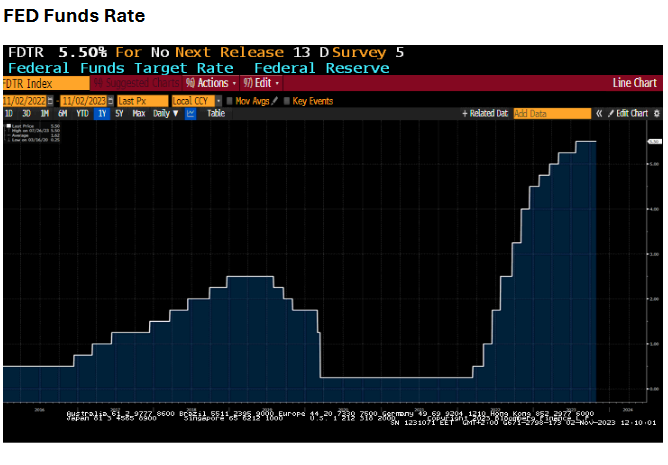
    I follow you really closely. And we’ve been talking about the dollar for a long time. Albert talks about the dollar a lot, and you published a paper a couple of weeks ago about the coming US dollar squeeze. This is really, and pardon me for oversimplifying it, but it’s really a story of interest rates and viable alternatives to the dollar. Obviously, there’s a lot more to it. You outlined a seven-step process. Would you mind walking us through that? I’ve put up a chart on the Fed funds rate to get us started. Would you mind walking us through each of those steps as an overview?
    A screen shot of a graph

Description automatically generated

    Michael Ncoletos


    First of all, it’s great to be here. I also enjoy your work, so I share your thoughts about your work, and thank you for sharing with everyone and love the discussions we’re having. But sometimes you bump into someone by luck. I think we bump into each other by luck. That’s right. I think it was in the came of Ireland, right?

    Tony Nash


    That’s right. That’s right.

    Michael Ncoletos


    I’m Greek and you’re from Texas, right?

    Tony Nash


    Yes, that’s right. Worlds of way.

    Michael Ncoletos


    We met in the came of… That’s-

    Tony Nash


    Not a bad place to me.

    Michael Ncoletos


    How small the world is. A few weeks ago, I was thinking about the dollar, which I’m one of these people who think that the dollar is unlikely to weaken unless the US government or the US Fed decide to do so. And the thinking is we’ve been reading a lot about the US deficits, about the situation in the US and fiscal responsibility. And we’ve seen a lot of people talking about the new currency, the BRX currency that could replace the US dollar as the global reserve currency. So I try to lay out why I think the dollar is not going to go lower. And by lower, I mean it’s going to squeeze higher for a few reasons. After a 13-year expansion of the US balance sheet, which I think the balance sheet reached around $9 trillion, if I’m not mistaken, the Fed decided to stop that and to start raising rates and then to start QT. So in the first phase, the Fed just started raising rates. And by that when you raise interest rates, you effectively drain liquidity from the world in the US dollars because a lot of dollars, as simplified as that can be, are going to go to the currency which has the higher interest rate, assuming that there are no capital controls or nothing else.

    Michael Ncoletos


    So that was the first step. The second step was that the Fed stopped QE. And by stopping QE, stopped reinvesting the treasures that you had bought and the mortgage-backed securities, which again by stopping reinvesting means that these new issuance need to be bought by the market. So when the market needs to buy them and it’s not the US government, more dollars are used for that. You need dollars from the market which would be used for something else to buy these treasures and these mortgage-backed securities. Then the Fed moved a step further and started QT, which means it started reducing its balance sheet. But when you reduce the balance sheet again, which means you need more money from the market to start buying these treasures, more liquidity started to drain. Now to put all this together in an economy that is going through, let’s say, a Cold War, you want to put it this way with China, in a world where there is reshoring and in a world where there are a few wars going around. So there is a supply issue in terms of how inflation is created. You have less oils and oil prices go up.

    Michael Ncoletos


    You’ve had an inflation scare across global which has translated to real inflation. Now, in normal conditions, when you have a supply-driven inflation, the remedy is not to raise interest rates because monetary policy is effective when inflation comes from the demand side, not when it comes from the supplies. The Fed of San Francisco published a research paper a year ago, I think, showing that two-thirds of the inflation in the US was coming for supply reasons. So the question I ask myself is if what I’m saying is correct, and I’m pretty sure the people of the Federal Reserve are pretty aware of it, why are they raising rates and increasing the deficits when this is clearly not going to do much on the inflation side. Okay, we’ve had the pause, we’ve had an inflation coming down, but we need to see where it’s going to stabilize. So the question is, when you have fiscal deficits and fiscal deficits are around seven and eight % of GDP and you don’t have the central bank buying treasuries to fund that deficit, it means that these bonds, which according to a report I read, I think next year it’s eight trillion, eight trillion need to be financed from the US government.

    Michael Ncoletos


    So eight trillion dollars need to be found from the global market to fund that deficit. Now, most people are aware of the dollar and how it works, but most people are not aware of the Euro dollar market. You’ve raised it a few times, but most people don’t understand. The Euro dollar market are effectively all the dollars that are not included in the US M2. We can go into specifics what’s included and what’s not. It’s very technical, but I don’t think it doesn’t make sense to do this discussion on. So all the dollars that are not included in M2 are the euro dollars, which are outside the US, which it’s equivalent in size of the US dollar mark. So M2 is around 20 trillion. Imagine that there’s another 20 trillion or maybe more outside of dollars. So what’s the problem with that? When the dollar goes up, you effectively create an issue, especially on emerging markets. Why do you create a problem in this emerging market? Emerging markets because they do not have hard currencies, tend to issue debt in dollars. They tend to issue debt in dollars, the interest rates go up, their bonds go lower, so they have a funding need.

    Michael Ncoletos


    They either need to put dollars in to bridge the gap or they need to start selling bonds. It’s not as easy as one would think.

    Tony Nash


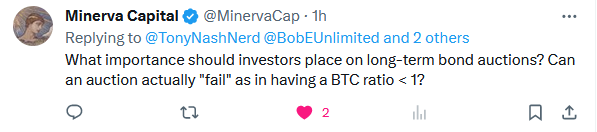
    Michael, let me… Let me just pause there and ask you a couple of questions. You said the US needs to raise $8 trillion in debt next year. Is it possible to have a failed auction?

    Michael Ncoletos


    I guess it could be, but why would there be a failed auction? The rate, the interest rate will go high.

    Tony Nash


    Right, that’s the answer. I hear a bunch of the dollar naysayers go, Well, the US is trying to put so much debt out there, they’re just going to have a failed U. S. Treasury auction. But what you’re saying is, no, they’ll just… The U. S. Will just offer a higher interest rate on that in order to sell that. Is that right?

    Michael Ncoletos


    Yeah. Let me put it this way. There is this chart floating around, especially on Twitter about the liquidity of the U. S. Treasury market. This is ridiculous, and I’m saying it’s ridiculous because the U. S. Treasury market has an average trading volume of like 15 trillion a month. The next one, the next one is the eurozone with six trillion, and then it’s Japan with three and China with two trillion per month. So if US dollar bond liquidity is going down, imagine what’s happening on the other markets. We’ve seen the Japanese bond market are not trading for a day. We’ve seen no… When we talk about liquidity, and I’m not saying that liquidity is going up, I’m saying it’s going down, but it’s a relative discussion. It’s not an absolute discussion.

    Tony Nash


    That’s key. And everyone understands.

    Michael Ncoletos


    What does that mean? You’re going to buy what? Japanese bonds.

    Tony Nash


    Currencies are relative. It’s all relative. And I think that’s something.

    Michael Ncoletos


    That currency are relative. And what’s more important, people need to understand that the dollar disposition is a derivative of the US capital market system. The US capital market system is so efficient, at least in terms of anything else that we see right now in the world. So when a government, whatever government buys trades in US dollars and accumulates US dollar FX reserves, they can buy at the split of a second US treasuries, and they can sell at the split of a second US treasure. There’s no such issue. Now imagine doing the same, accumulating one, for example, or rubles and FX reserves, and then one day needing to sell them, A, there’s no liquidity. B, if you manage to sell them, there are capital controls. You need to take them back. How will you take them back when there’s capital control? So the most… The next most efficient is the Eurozone. And the Eurozone is not one market, it’s Germany, France, Italy. So when we talk about the Eurozone, we’re not talking about the 20 countries. We’re talking about three or four countries within the 20 countries. So again, when we talk about the US dollar, it’s a relative discussion, but it’s also a relative discussion of the capital markets they are representing.

    Tony Nash


    Right. Okay, good. I just wanted to get that out of the way..

    Tony Nash


    The other point I wanted to raise was you said emerging markets need to raise their debt in US dollars. I don’t think that’s really well understood by a lot of people. So if you’re in like an Indonesia or Sri Lanka or whatever, if you need to sell debt to international investors because you’re not really going to raise that in domestic markets, are people overseas going to take the currency risk along with the sovereign risk?

    Michael Ncoletos


    Well, let’s put this. Turkey has interest rates at 30%. They should debt at 30% or are they going to issue debt in dollars, which would be at like 6, 7%, whatever the number is right now. They’re going to try that and they’re going to hope that the economy recovers. And as the economy recovers, their currency is going to become stronger. So the debt repayment is going to be cheaper. In theory, all very nice. But when the dollar goes up, it creates a squeeze on the world, on the growth, on the collateral, on everything, which makes things much worse for all these countries. Unless they have current account surpluses, which once they have, they can sustain that period for a longer term than the others. But again, they’re going to get squeezed as well. There is no hope. So all these countries that raise debt, dollar debt or foreign-denominated debt in the last 10 years because rates were at zero, now are facing issues because what we’ve seen the discussion that happens right now in US banks about the collateral that banks have and that the treasures that they hold have a mark to market loss, as we’ve seen, which effectively that doesn’t…

    Michael Ncoletos


    It’s not the case because the Fed made a…

    Tony Nash


    BTFP.

    Tony Nash


    BTFP, which they accept at face value the bonds. Now imagine what the US banks are facing, countries facing it without the BTFP to protect them at face value and with them needing to refinance that debt at the worst possible time. So if you’re asking me, the squeeze will not go in the liquidity of the US Treasury Bank. The problem would be in Turkey, China, Russia, Indonesia, Egypt, these countries and all the others are going to face Argentina. They’re going to face issues when raising debt because their capital market is not deep. When you buy these bonds, you marry them. If you don’t marry them, you’re going to be selling at a deep discount the day you decide to sell them. Okay, and you have more issues. So we tend to talk about the US. And I want to make a point. The US financial situation is not good. Definitely, and I’m not saying it’s good, but I’m saying the way the world is structured and the US being the global reserve currency, it’s less bad than whatever everyone else is facing.

    Tony Nash


    Yeah. I hadn’t thought about the sovereign debt issues before today, but now that you mentioned that, that’s Silicon Valley Bank all over the world at a central bank level, right? At a finance ministry level.

    Michael Ncoletos


    Let me put it simple. I’ll put it as simple as possible. When you can buy US treasury two year treasure, 4.9 %, 4.92 %. So five %, let’s say five %. You buy 5%, you buy US treasures, the safest asset in the world. You gain 5% a year and you sleep like a baby. So when you invest, you need to think, is there something that’s going to give me a higher return and it will be relative to me sleeping like a baby and gaining 5%? This is as simple as that. Because if I’m gaining 7% and I’m not sleeping at night, it’s not worth it. I need a higher return, and this higher return goes with the countries that are hard to find the finance.

    Tony Nash


    That’s right. Bob, what do you think about this?

    Bob Iaccino


    Well, I think the perfect end to that extremely impressive summary of what’s going on in the global markets is the sleep at night part that a lot of investors seem to ignore when we’ve gone through, let’s just call it multi-years bull markets and equity assets. Because they tend to… Investors tend to forget, and I’m speaking a little bit more to retail because I believe institutional investors know it, but sometimes they don’t. Let’s take the example of the hedge fund, for example. Hedge funds are supposed to perform when equities are performing, and they’re supposed to outperform when equities are collapsing. One of the things I like about this format versus the traditional financial media that unfortunately I’ve been a part of in theory since 1999 is that they tend to have this view that positive performance is the only performance that matters, and outperformance, they’ll put somebody on TV and they said, You’ve outperformed the S&P this past year. The S&P is up 12%, you’re up 15%. But when the S&P is down 24 %, and that particular person is down 18%, they’ll come on and say, Well, you’re down 18% this year. Well, you’re still outperforming to the opposite side.

    Bob Iaccino


    It’s one of the things I talk about a lot, and I’m digressing a little bit, but outperformance to the downside to me is much more important than outperformance to the upside. To Michael’s point, if you can make 5% and sleep at night, that to me is worth an extra 5%. That’s just the way that my internal math works. It’s not some technical formula that I can explain. You need to double my return to take away my sleep at this point in my career is basically what I’m saying.

    Tony Nash


    Yeah. Our traditional investors, are they looking for 30% returns a year? They’re not necessarily looking for 30% returns a year. That’s crypto level, right?

    Bob Iaccino


    When I was part of the investment committee of the fund to funds that I was a principal at, we went into these big investors. I’m not going to mention the fund because it’s dissolved at this point. But we had 10 years of returns where our worst year was down 46 basis points. Our best year was up 8%. That was what the fund was designed to do. But when we went into large, large allocators, they would say, God, I just love your returns, but you represent nothing but risk for me. Why? Well, because you don’t have a lot of money under management at this point, and we worry that allocating to you would affect your performance, which it would have, but whatever, didn’t happen. That stuck with me for a very long time where these large institutional asset allocators are very worried about sleeping at night because their management fee matters more so than beating their last year’s performance by a % or two. That’s something a lot of investors don’t understand. Again, I’m digressing a little bit, but it goes to the point of how much it matters that the safest asset in the world is between four and a half and 5% depending on what duration you put on it.

    Bob Iaccino


    That matters a lot, and that will continue to draw very large capital for a long period of time. That capital won’t necessarily leave those assets for a 25 basis points here or there or 50 basis points here or there.

    Tony Nash


    Interesting part-.

    Michael Ncoletos


    Can I add something, Tony?

    Tony Nash


    Absolutely.

    Michael Ncoletos


    I think we’re 100 % involved. You’re being paid to wait for the first time in your life after 20 years. You’re being paid to wait.

    Bob Iaccino


    That’s a great. Way to put it. That’s a great way to put it.

    Michael Ncoletos


    You’re being paid to wait. For the last 20 years, this hasn’t happened. So you’re being paid to wait. And when there is a correction, if there’s a correction or if there’s a recession, or there’s a depression or whatever, I won’t go into what could happen, you will have money on the side, being paid and being able to deploy it as you wish, having the most liquid asset in the world, which at that point would probably rally, which you’ll be making a couple of gains as well. And you’ll be doing the best thing you can do.

    Bob Iaccino


    If I can add to that, Tony, we have five trading days left in the month of November. Really four. Friday is a lost day, so to speak. We have four or five trading days left in the month. Let’s call it four and a half in the equity markets. You’re about to post your greatest November percentage-wise on record to the upside for equities. The volume is barely half of what it was in October. Now, it’s not going to make up the rest in four trading days. I guess it theoretically could, but it’s not. What does that tell you about the overall stance of the institutional investors? Honestly, in huge dollar amounts, they have not been involved. Because what Michael said, they’re being paid to wait. If you look at the overall makeup of this particular earning season that we’re basically finished with, it’s been good. But we have the weakest buyback numbers announced since 2016. We have the largest negative reaction on individual stocks that have missed earnings expectations since 2011, largest drop on misses. We have the largest cut to estimate since the second quarter of 2020. What does that tell you that these analysts and these investor relations parts of these large companies are thinking?

    Bob Iaccino


    They’re worried. They’re not mentioning recession as much. As a matter of fact, the lowest mention of the word recession, I believe since 2022, but they’re not positive overall, even though there’s beats on the outright figures.

    Tony Nash


    Because the risk appetite is mitigated by what Michael is talking about.

    Bob Iaccino


    By what Michael is talking about, exactly.

    Tony Nash


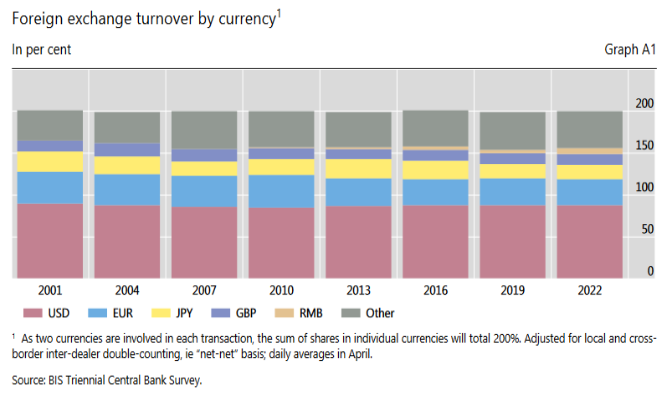
    It’s great. Let’s get back to this USD thing for a few more minutes, and then let’s move on to markets and talk real deep with Bob. Michael, you have chart showing the foreign exchange turnover by currency. Of course, it’s overwhelmingly USD. Of course, we’ve had some growth in CNY since, say, 2010. But on a relative basis, where is that CNY taking market share from? Is it taking from British pound or where is it taking that market share from? Is it from the dollar?
    A graph of different colored bars

Description automatically generated

    Michael Ncoletos


    I think I say mostly from the euro.

    Tony Nash


    From the euro? Okay.

    Michael Ncoletos


    Yes. But again, China has done like 40 swap deals since 2016. They’ve been trying to make their currency more usable, let’s say, as simple as that. But again, everyone who trades in China and Yuan, they will do it at the equivalent of a Barker size trade. They will not do the extra mile to accumulate the FX to zero. So if I’m buying 10, selling 10, I’ll use that 10 to do it in one. But if I’m doing 30 and 40, but the 10 is only the bilateral trade going both ways, I don’t want to accumulate the Chinese.

    Tony Nash


    Right. Here’s one of the key things there that I don’t think a lot of people, a lot of these CNY cheerleaders understand is if people accumulate CNY, they’re trusting the People’s Bank of China, right?

    Michael Ncoletos


    A, and they trust them. They’re going to get their money back when they want it.

    Tony Nash


    Right. But when we look at the currencies on this chart, it’s the Fed, it’s the ECB, it’s the BOE, and the BOJ. Very highly covered, and I wouldn’t say transparent, but relatively revealing on some of the decisions they’re making. I don’t remember the last time I saw a PBOC press conference open where people could ask questions, real questions. Until we can have that level of questioning of a central banker, it’s really hard for a country or a company to accumulate that currency because they have no idea what the policy of that central bank is going to be. Is that fair?

    Michael Ncoletos


    Tony, before you get your… You have to take off the capital controls.

    Tony Nash


    Yup.

    Michael Ncoletos


    The right mind when I accumulate the currency which has capital control. We’re talking about the Bricks currency, okay? There’s a discussion. Two out of five countries have capital controls. Two out of the five have capital controls, and half of them don’t trust the other half within the Bricks. We’re talking that this is going to be the alternative to the US dollar? Okay.

    Tony Nash


    It’s great. Put them in the ring together.

    Michael Ncoletos


    Okay. If you want to believe in Santa Claus, you can believe in Santa. But as things stand now, this is no option. Sorry.

    Bob Iaccino


    Santa Claus, is that real?

    Michael Ncoletos


    Sorry.

    Tony Nash


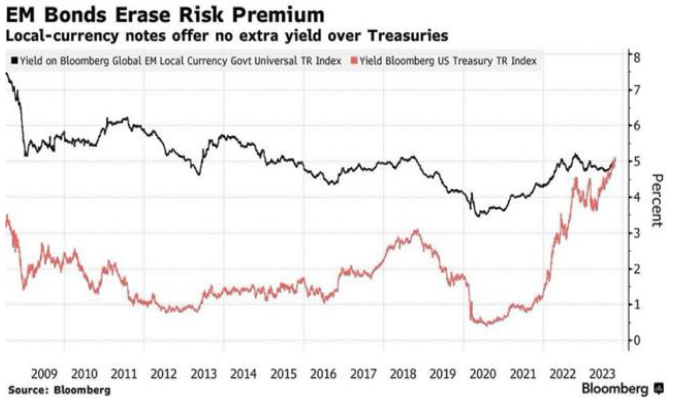
    Yeah. We’re not going to reveal that on this show in case there’s kids watching. Let’s take this full circle to… I know there’s great chart on risk premium from EMs to the US, and I know we covered this a little bit, but seeing that risk premium really disappear, what is that? Effectively, that sucks all the money back to the US. Like you said earlier, what’s the point in investing in emerging markets if you have a guaranteed return, a US dollar denominated guaranteed return?

    Michael Ncoletos


    It comes back to what we talked about earlier. Again, I agree with you 100 %. If you’re getting 5 % for the safest asset, you need to at least get the double in order to get the risk. Okay, obviously it depends on the risk anyone can take. But let me put it this way. When you take risk, you need your upside to downside risk to be skewed on the upside. So if I’m willing to make 5 % to lose 5 %, there’s no point of having the discussion. If I’m losing to make 10 % to lose five %, that’s a two to one or a three to one, then it makes sense for me to make the investment. So a 10 % return is something I’m starting to consider in order for me not to put it at the five % and sleep at night. So to quantify what Bob said easier, I’m thinking in terms of how much you’re going to make in terms of what you can lose. So two to one, three to one, whatever that is. But it should be something bigger. So if it’s one to one, why bother get something riskier with the same return when I can buy something which there’s no risk or at least there’s never no risk, but there’s very small risk.

    Tony Nash


    Right. And the other thing that I try to reinforce with people that is so basic that some people look at me and think I’m stupid by saying this, but interest rates are the cost of money. And if money costs five % in the US, money should cost a lot more in riskier markets, right? That sounds really stupid, but that’s just the basics of it. So –

    Michael Ncoletos


    No, it’s simple. It’s very simple. Unless you’re safer than the US, which safer doesn’t mean only a fiscal situation, which is better. It means you have rule of law, you have an open capital markets, you have a democracy. There are a few things when you say safer. It’s not just numbers. So if you have an overall safer economy, then you should justify a better interest than the US. If you’re not safer than the US, then you need to justify a higher cost of money. As you said.

    Tony Nash


    Okay. Hi everyone. We’ve started our Black Friday sale at Complete Intelligence, and you can subscribe to CI Markets for $99 for the whole year. That’s 80% off our normal price of $500. Starts today, and it goes until November 28th only. Go to completeintel.com/BlackFriday and subscribe to CI markets for $99. Thank you. We always hear about China being in the ascendant. Albert, as we saw that Chinese vessel with smoke coming off of it yesterday, is China a real competitor right now if they don’t have a Navy to enforce their policy?

    Albert Marko


    Nope. Simple question is absolutely not. They don’t have any maritime, naval force to enforce any of their trade activities globally. Everyone points out. I think I’ve seen some charts out there of, Oh, look how many ports that the Chinese own. Yeah, but those host nations can evict the Chinese at any point in time with absolutely no repercussions. So it’s like-

    Tony Nash


    So does DP World out of the UAE, and do they command a world trade? They don’t. They run them out.

    Albert Marko


    They don’t. Yeah, it’s exactly right. These comments of China being a competitor to the dollar or the US in the near term is just a lame argument. It’s silly. I don’t take any of it seriously.

    Tony Nash


    Great. Michael, do you have any view on the timing of this squeeze? Are we in the middle of it now? Is this something that’s coming in a few months? When do you expect the intensity of it to really hit?
    A graph of a stock market

Description automatically generated

    Michael Ncoletos


    Well, the Fed doesn’t need, first of all, to raise rates anymore. You can stay here and the problem will continue. As the deficits grow, more dollars are needed from the market. I guess next year is going to be a bit tricky, unless, of course, because, and I mentioned this in the paper, because we have US elections and because of US elections, you never know what the government will do. Maybe they do another QE. Or if it’s not a QE, it’s something with another name, not to call it QE, and they throw liquidity into the system, this thing might pose. But I think positioning in the dollar in the next couple of years, you’re going to see the dollar much higher.

    Albert Marko


    I agree with that. That falls right into my political outlook, where in order to combat inflation, they’re going to have to keep the dollar high. That’s just either raise rates or keep the dollar up to a level where it just suppresses inflation over the long run. That’s same view as me.

    Tony Nash


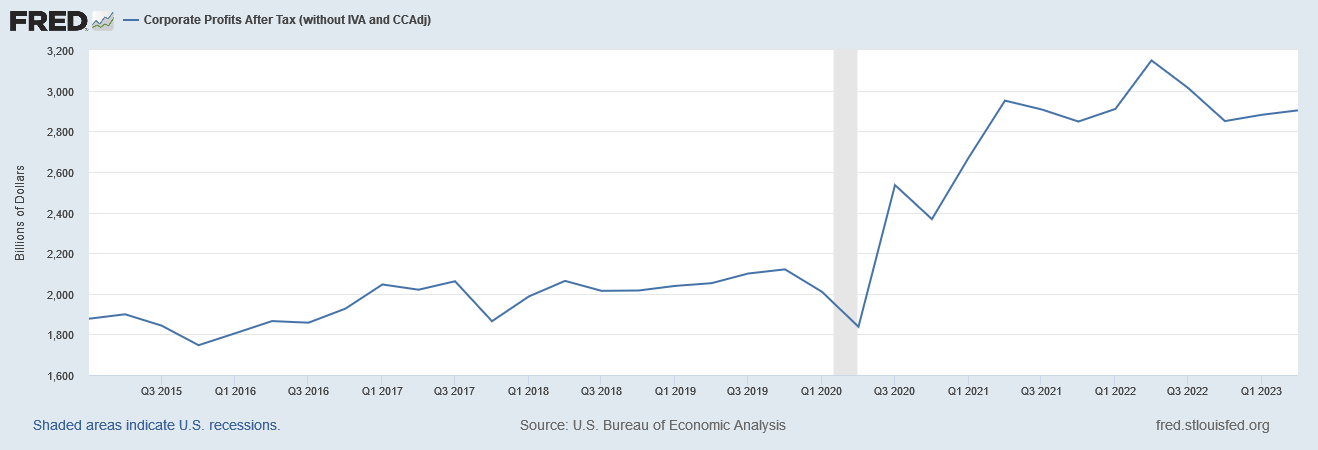
    Interesting. That’s great, guys. Okay, so let’s move on to the next topic on year-end markets. Bob, you already mentioned there’s only a few trading days left in November, and I know you cover a lot of markets every day. I’d really like to get a sense check on where we’re going into the end of the year. We have higher interest rates globally, like we just talked about. Inflation seems to be abating, at least for now, and we can debate the magnitude of that. We have some geopolitical factors, but they seem to be easing, especially US, China, these sorts of things, seem to be easing up a little bit. Of course, there’s the Iran, Hamas thing, but that’s relatively local. Spending seems to be slowing. Us retail sales and all this stuff are down. We’ve had some dire retail outlooks for the holiday period. At the same time, corporate profits peaked in Q3 2022. You mentioned earning surprises and stuff earlier, but they’re slowing. I’ve got a chart up showing corporate profits, and they’re down fairly at a significant level since 2022. What are you looking at as we go into the last month of the year?
    A graph of a person

Description automatically generated with medium confidence

    Bob Iaccino


    One of the things I’m looking at from an equity market perspective is what’s going to break first. The reason I say what’s going to break is because I think it is a matter of what and not if. I think the soft landing scenario, you would have to believe that the Fed was possible of creating a soft landing. They were capable of it, which I don’t in order to. You would have to allow the Fed a victory lap regardless of… I mean, I agree with what Michael said when you have supply-side-driven inflation, the Fed doesn’t really have a lot to do with it. But they have been successful when you look at the data in slowing the housing market, and that’s about it. You need to see others slowing in order to believe that inflation is actually going to get to their 2% target, or they need to accept something higher than the 2% target. Now, whether they know it or not, they left the door open for that a couple of years ago. When Jerome Powell said, Because we’ve been below 2%, I’m paraphrasing, of course, he said, When we’ve been below 2% for long, we may need a little bit of time above 2% in order to reach an adjusted average of 2% inflation.

    Bob Iaccino


    I still don’t know what an adjusted average is. We didn’t learn that in statistics class. We just learned average. He could actually, at some point down the road, say, You know what? We’re between 2.8 and 3.1% is okay for now, which to the point of the elections next year that Albert brought up, and I think that could be one of the things they say going into the elections. They could actually put pressure on the Fed to say, Well, we’re allowing it here for a little while, and we’ll reassess in 2025 to see if we need to do anything more. Also, wages are growing at a rate. When you look at the three-month average of real wages, you’re seeing a level that isn’t consistent with 2% inflation. It’s much more consistent with about 3.2 to 3.8, 3.2 on the core, and you’re pointing it on the headline. So the driving factor for me going into next year really is energy. I’m a little biased because crude oil is the thing I trade the most. But as you mentioned, I look at 29 markets every single day, and when those are boring, I go to individual equities.

    Bob Iaccino


    But energy markets to me are the number one thing because despite crude oil and crude oil is trading at about $74 on NIMEX right now, 78 on Brent, that’s still high historically. We actually talked to Tracy Shuchart, chigirl about that on a recording that will release this coming Wednesday. I’m sorry, this coming Wednesday, but she’s the one who brought it up and it struck me because we tend to think as $70 oil as being, Well, that’s okay, we’re back down below $3 a gallon. But that is still a relatively high price historically. Put that up against the higher interest rates. I got in trouble for on a Bloomberg TV interview about a year or so ago where I mentioned that there were somewhere in the range of 37-40% of C-suite people in the S&P 500. But the last time we had rates this high, they were in high school. Some of them weren’t born. The journalist that was interviewing me at the time got offended because she was in high school the last time rates were at this level.

    Tony Nash


    You could be bragging, right?

    Bob Iaccino


    I know. She should have been like, That’s me. That’s me. And she said to me, Well, they could read, Bob. And I could tell she got offended by that. And I said, I didn’t say that they couldn’t read. What I said was, and I’ll go to the old Mike Tyson quote that I bring up a lot, Everyone has a plan until they get punched in the face. And these people are about to get punched in the face with rates they’ve never had to deal with. You take Silicon Valley Bank as an example. They’re out there having DIE parties, and I’m not judging that, rather than hedging their to maturity interest rate risk, right?

    Tony Nash


    Right.

    Bob Iaccino


    Because they never had to do it before.

    Tony Nash


    Yeah, there was at zero interest rates, there’s really no… You have the nominal, say, punishment for risk, but nothing beyond that. Now, your punishment for risk is multiplied over the nominal cost.

    Bob Iaccino


    You brought up the cost of money, which is a very real thing for consumers as well as investors. We’re going to go into… The holiday season is a big deal to me, and energy prices are a big deal to me. How much more do consumers themselves even at their higher wages? Because while we’re looking at potentially 2.8 to 3.2% inflation next year, that’s on top of the inflation that we’ve already had. The news media tends to do consumers a disservice by saying inflation is falling. That does not mean prices are falling, and the three of you know this. That does not mean prices are going down. That means the $30,000 car that became a $38,000 car is now a $40,000 car. The increase is not as much, but prices are still increasing. You pile on higher energy prices, which is not a guarantee, it’s not a given. I think there’s a lot of trouble going into maybe Q2, Q3 of the markets next year.

    Tony Nash


    Yeah, I’m with you all. I feel like the consumer is really stressed, but I hear this stuff every day with people telling me the consumer isn’t stressed. But I see it in front of my face every day when I go out into –

    Bob Iaccino


    They say they’re stressed. Paul Krugman and put it… I work a lot about it. It was about a month ago, and I just recently found it and retweeted it because of the just complete ridiculousness of his stance, saying that consumers are complaining about their financial position, but it’s not as bad as they think. I’m like, What the hell are you talking about? Somebody says they can’t pay their bills, and Paul Krugman is out there saying, Yes, you can.

    Tony Nash


    Right.

    Bob Iaccino


    Are they talking about?

    Tony Nash


    He pay my bills if he wanted.

    Albert Marko


    Paul Krugman is nothing more more than democratic mouthpiece at this point. He doesn’t say anything relevant to anything economic at this point in time, in my opinion. Every time he speaks, he just says something more ludicrous that is just absolutely out of bounds.

    Bob Iaccino


    I can agree more, and I don’t care that he’s a democratic mouthpiece. Just say you are. Don’t throw yourself in the Nobel Prize-winged economist anymore, even though that’s technically a fact.

    Tony Nash


    I’ll say this in Krugman defense. I had his international finance textbook grad school, and he writes an amazing textbook. We’ve got to give them.

    Albert Marko


    That’s the problem is because the guy knows he’s a smart guy. There’s no question that a smart economist, financial guy. But for him saying these ridiculous things that, Yeah, you can pay your bills, even though everything’s 30% more than it was three years ago, is insane.

    Tony Nash


    Right, and cards are loaded up and all that stuff. I want to ask you about tech. We have a massive concentration of equity risk in tech right now. I’ve got a chart up on the screen showing the relative concentration in tech compared to other sectors. It’s interesting, you mentioned energy, and if anything, people are less concentrated in energy than they were a year ago. Tracy Shuchart actually posted this earlier this week. What are your thoughts on tech? We just saw this OpenAI nest over the last week. OpenAI is the peak of tech right now. The governance in OpenAI is terrifying. We all saw it play out and live. I would submit that the governance in OpenAI is more representative representative the governance in tech than not. We have this concentration of investment in tech, which is risky anyway. Then we have governance issues playing out, and people want to act like that’s not relatively normal in tech. Can you talk to us about your views on tech and what you see? Is OpenAI, do you you reflective of governance in other tech areas?

    Image

    Bob Iaccino


    Well, I have no insight in a company like OpenAI, but what I do like to look at is an equity sector backtest and describe what the four sections of equity market performance look like to me. One of them is recovery, which is faster growth, slower inflation. Another one is deflation, which is slower inflation, slower growth. Then you got reflation, which we went through a bunch of years of with faster growth, faster inflation. Then you have stagflation, which we all know what that is. It’s faster inflation, slower growth. In three of those scenarios, scenarios, is in the top five in terms of their historical returns. Worst-case scenario, they’re in fifth place if you have slower inflation and faster growth. But I think we have a better chance of stagflation or deflation over the medium medium term and performs poorly in deflation, but doesn’t actually perform that badly in periods of stagflation. Now, granted, we haven’t had that many. But the number one one performer faster growth, faster inflation, and faster growth, I’m sorry, faster inflation, slower growth is energy. That’s why, again, I look toward energy because in third place in both of those backtests is technology.

    Bob Iaccino


    If energy is rising and it’s having an effect on inflation to where we have inflation not quitting, I want to be in tech, even though that might point to higher yields. But when you look at a yield equity backtest, the only time when tech suffers is when the yields further out are struggling, specifically the 10-year yield. If the 10-year yield is rising, tech tends to underperform. If the short-term yields are rising, let’s say that the Fed is hiking and the market thinks that it’s going to work, tech outperforms again. It’s difficult for me to see stocks going up without seeing tech going up. But my base case is actually the stocks don’t perform that well in 2024, specifically in the second half of 2024, which would mean stock tech would lead to the downside. Does that make sense?

    Tony Nash


    That makes total sense. Do you think-

    Michael Ncoletos


    Can I add something to that?

    Tony Nash


    Yes, please.

    Michael Ncoletos


    Well, I agree agree 100 with both. Technology mostly the ones that do not have a bottom line are a duration asset. When the duration gets hit, they get hit as well. It’s as simple as that. When they have a a bottom then it’s a DCF, and depending on your discount cash flow or whatever, net present value or whatever you’re doing, then you can assess a value which may be doing better or do well. But again, I think you hit it right on the nail on the head. I view it the same way. I just wanted to add that.

    Tony Nash


    Albert, what are your views on tech?

    Albert Marko


    As long as the higher interest rates are remaining, I don’t know what tech is going to be how they’re going to be able to perform going into 2024. Obviously, the Fed likes to use the Mag Seven stocks to pump markets, but long term, they’re so riddled with debt and they’re holding it and their interest rates are just higher for longer. As long as the market is offside again on this pivot or rate cuts, I don’t see what tech is going to be able to do in 2024. We’re already at stratosphere levels on tech. I think think we have 35 times earnings or something like that. It’s absurd. I agree with Bob. I don’t see much of what tech could possibly do. Would I not want to… I mean, I’d sure as hell want to hold it if the market shifts, knowing full well what the Fed can do. But for me, I don’t see much play here going up.

    Tony Nash


    Sorry, NVIDIA is 116 times earnings. Right now.

    Albert Marko


    Oh, sorry, I was probably referencing 2021 levels.

    Tony Nash


    Just to break that down, as the market is saying that it will take 116 years of earnings to properly value the equity price price That’s what the market is saying right right now, I mean, you guys trade more than I do, so I just want to make sure I have that right.

    Bob Iaccino


    That was the very first definition that was given to me as well. Yeah, the very first one one I’ve ever I’ve always held that in the back of my head because even if you’re looking at 35 EPS during times of bull markets, the things that people are buying are between 28 and 40, and then they get as high as 116, obviously. But to what Albert said and to what Michael reiterated in the simplest of terms, again, thank you for that. When these companies raise money, they like to go to the public markets. And if the public markets aren’t doing well, they are not going to to like the yields do because the vast majority of them are not that cash positive. We’re not talking about the big seven here. We’re talking about the vast majority of the tech sector. Now, how much has to happen for the tech sector to drag the big seven down? Well, I think that’s more a matter of taking profits than anything. One of the biggest moves lower we see in these high flying names, and I’ll throw Apple in there, even though Apple is probably more of a value stock than a growth stock that it used to be, they will sell those because they don’t want to lose on the other positions.

    Bob Iaccino


    They’ll sell them to cover options positions for margin calls, things like that. That’s when those start to get hit. There was the big news story about Michael Burry of the big short short betting against the SOX, the Semiconductor Index. They talked about how he took $47.6 million position. We took it an option, so it’s not $47.6 million. Again, the legacy media doing a terrible job at everything. And by the way, sidebar, legacy media would want us to argue about this stuff rather than agree and have a consensus as to what things are looking like. That’s why I like these formats so much more, because if we do agree, we should be allowed to agree. And it’s part of the reason I got kicked off CNBC for having that fight. But anyway, when you’re talking about moving forward, what can happen to the tech sector, we all acknowledge and understand that tech is going to lead the future of all nations. Nations. So you’re buying a currency, the first definition I learned of buying a currency is you’re buying a share of stock in that country’s economy. Economy. So you’re advanced in tech, the currency tends to benefit from that, hence the US dollar remaining strong for a long, long time, among all the other things Michael mentioned.

    Bob Iaccino


    But when you’re looking at tech falling, tech will be the first thing that people buy dips of. It will also be the first thing that they cover when those buying of dips don’t don’t if yields are higher for longer because these companies will need to manage a lot of their cash flow based on higher yields they have not had to do for two decades. I think that backs up both what Albert and Michael are saying in terms of why yields actually matter. They don’t matter for inflation today. They matter for the condition of the economy 18 months from now, two years from now, and how we adjust to these inflations. Because, again, I don’t even know how many of us on this stream are old enough to remember those rates. I remember my dad dancing because he got 6% on a house. He was thrilled because his first house was at 14% or 12%. This is a very new phenomenon, even rates where they are now. I wonder if the Fed will blink. I don’t know if they will or not. I’m curious about it.

    Tony Nash


    I remember my parents with a double mortgage in the early 1980s. Yeah. We have a lot of treasury people and a lot of CFOs who I don’t think… I don’t know if they’re ready for the… Yes, they can read, but I don’t know if they’re ready for the lessons that they’re…

    Bob Iaccino


    My father literally danced. He had a friend who had an accordion and knew how to play it. He danced the Tarantella for about 15 minutes because he got 6%. I’m sorry, I’m a child of immigrants, and that’s what we live with.

    Tony Nash


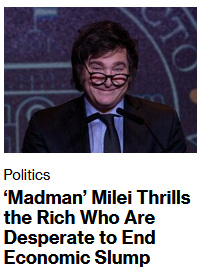
    Fantastic. Okay, great. Thank you for that, guys. Guys. Hey, talk about Argentina for a little bit, but because, of course, we had that big election in Argentina, and we saw a radical radical and according to Bloomberg, a madman, Milei, elected in Argentina. He’s got great hair, of course. This Bloomberg snip that I’m showing on screen right now, evidently, Bloomberg believes he’ll only help rich people and that only rich people want Argentina to end their economic slump. Bob, you’ve made some comments about media, and this is the stuff that we see there.
    A person in a suit and tie

Description automatically generated

    Bob Iaccino


    Turning off Bloomberg as you speak.

    Tony Nash


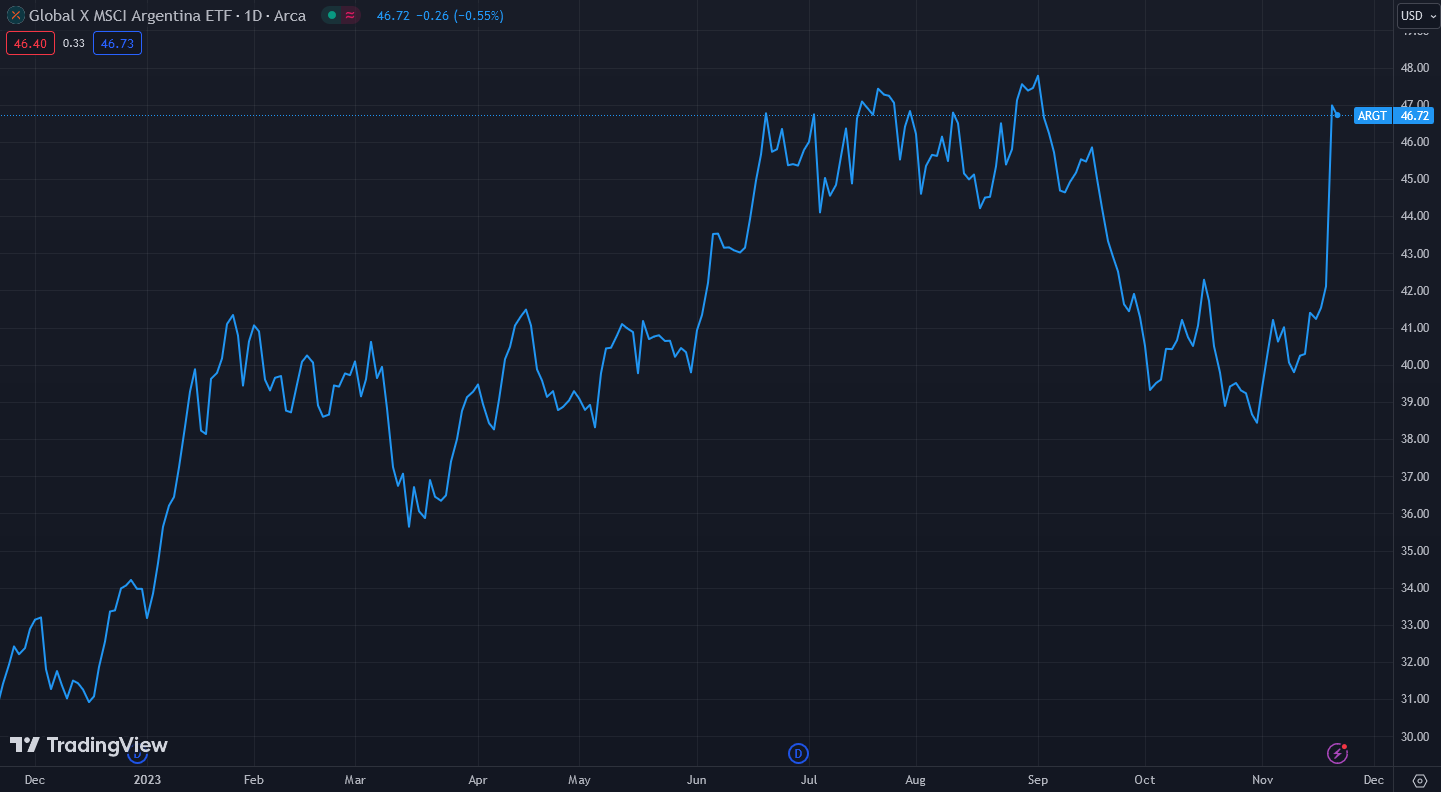
    Yeah. With the Milei win, of course, the MSCI Argentina Argentina rally up 22% since October 31st, which is great. Great. Albert, what can Milei actually change? If you were in charge of Argentina, well, first of all, what could he change? Then if you were there, what would you change?
    A graph on a screen

Description automatically generated

    Albert Marko


    I don’t know what he can change, to be honest with you. Argentina is riddled in debt. I have a suspicion that a lot of the debt is not reported in some special vehicles vehicles whatnot, and they’ll probably find out when they unload that just as as the interest-

    Tony Nash


    Yeah.

    Albert Marko


    -in office. Office. He doesn’t really have… Listen, I like him. He’s quite a character. He says some crazy stuff, some stuff that makes a lot of-

    Tony Nash


    I can see you liking that.

    Albert Marko


    Yeah, and I do. And I like the guy personally. But he doesn’t have a support structure. I don’t know who is going to be in his cabinet at the moment. His rhetoric for elections is far different than actual policy when you’re in charge of things. I don’t know-

    Tony Nash


    I’ve heard it’s hard.

    Albert Marko


    It is hard. And I don’t know what he can actually do. And I’m afraid that if he starts just firing people left and right and all these different institutions, that has to be all rolled up into something else. I mean, you just can’t just eliminate an entire ministry of so and so without some repercussions. I don’t know what he can actually do. I don’t really have a positive outlook for Argentina, regardless of him or anybody anybody else. In charge for the next 12 months. But like I said on Twitter, I like to reserve judgment until I see who his cabinet positions are. Until you see that, it’s really hard to make an assessment on the guy and what he’s going to be able to do for Argentina. He’s talked about dollarizing Argentina. Which in principle I agree with. It would absolutely stop hyperinflation in Argentina. But the reality is with what dollars is he going to do this with? Their debt is enormous and they don’t even have enough dollars to dollarize. It may be a five-year plan, perhaps, but but it’s not going to happen. I’m sure Michael can sit there and tell you more about the dollar and how they could possibly dollarize, dollarize, I don’t see a viable way that his election rhetoric can match up with policies going forward in the next 12 months.

    Tony Nash


    Bringing up Michael is a good point. Michael, you live in Greece?

    Michael Ncoletos


    Sorry, did I understand? In order for Argentina to dollarize, it will need another, like braided Balls type of trick. The US government has to be on board and they need to fund the Argentinean economy and make quite a few deals on this, make a few agreements, which I think is not that unlikely given that we’re also going into a geopolitical conflict, if you want to put it this way. So if you look at the Cold War between US and Russia, you had spheres of influence. I guess we’re going to go through that again. And it feels to me that Argentina is closer to home in terms of the US. The US will want to bring Argentina into their sphere of influence and help the new government in that sense. That’s my feeling. But this has nothing to do with economics, has to do more with a geostrategic view.

    Tony Nash


    Okay.

    Albert Marko


    Yeah, the problem-

    Michael Ncoletos


    I know with other things.

    Albert Marko


    Yeah, the problem with that is is has been notorious of installing leftists throughout Latin America. Look what happened with Brazil and then Colombia. Also. I have a suspicion that Argentina is set up to fail. They don’t want a conservative in there to actually succeed in economic policies.

    Tony Nash


    Can we just ask… Michael, you live in Greece a decade ago or so. They were facing very difficult economic times. When you look at Milei, just your top-level assessment, do you think he can be successful?

    Michael Ncoletos


    Well, Greece had a blessing and a curse. The blessing and the curse was the the in the sense that because we had a hard currency, things did not collapse. That was the blessing. The curse is that because we had a hard currency, it took us 10 years to adjust. So it depends how you want to see it and depends how, as Albert says, what the cabinet will be and what the policies will be. It comes down to pure policies and economics economics how they’re going to deal with this. If they want to be serious, they’re going to get the heat for 24 months and then they’ll be okay. If they don’t want to be serious, this can last for another 20 years and we can be having this discussion every five years.

    Albert Marko


    I’m going to have to agree with option B on that one. I just think that it’s going to take a long time for Argentina to pull out of this. Even with the policies, if he enacts some policies that are good, that’ll probably be credited towards the next leader of Argentina and not the not Milei.

    Tony Nash


    Let me just wrap this up. I know Bob needs to go, and I know we need to give our viewers a little bit of time to digest this stuff. Whenever there’s a win like this, and I’ve heard this in the the over the past couple of of days. Person on the right wants to believe that it’s a signifier of a bigger movement. Like, Milei’s win means that geopolitics is moving to the right, all this other stuff. Do you think think real or do you think it’s just a one-off?

    Albert Marko


    I think that there’s certainly a building momentum for conservative governments out there. But the fact of the matter is a lot of the leftist players control the markets and the media, and it’s hard to actually displace that in the near term. I think it’s going to be at least another… It’s either going to be another decade before conservative government stay gold or they’re going to need some some black swan or economic economic to the point where people are just fed up and don’t want to hear it anymore.

    Tony Nash


    Which is what happened in Argentina, but the question is-

    Albert Marko


    Yeah, we’re talking about a global thing. Yeah, that’s exactly right. We need a global thing. I think a good indicator would be what happens in in Holland. The next election coming up right now.

    Tony Nash


    Okay, just real quickly tell us what’s happening there.

    Albert Marko


    Well, the leftist government has absolutely butchered the economy there, and I think the people are pretty much fed up. But the problem problem is if the Conservatives get in there, do they have enough to actually have a majority in Parliament to lead lead coalition? I don’t even think that’s possible over there at the moment.

    Tony Nash


    Okay.

    Albert Marko


    We’ll see.

    Tony Nash


    Interesting. I think there’s a lot to come come Argentina, as you say. If he doesn’t have the people around him who can help him lead, it’s going to be extremely difficult for him to have much of an impact. I am so grateful for your time and your thoughts. I really appreciate this. Thanks. Have a great holiday weekend and have a great week ahead. Thank you.

    AI


    That’s it for this week’s episode of the week ahead. Please don’t forget to rate us and review on whatever platform you are watching or listening to this. Thank you.
  • The Stock Market. Gone! | Record Oil Demand & Growing Gas Supply | China, US & Geopolitics

    🔥BLACK FRIDAY SALE!🔥 80% OFF CI Markets! Get it for only $99/yr: https://bit.ly/3uscpEI 👈 🔥 Promo ends Nov. 28th ⏳

    Welcome to “The Week Ahead” with your host Tony Nash.

    1. The Stock Market – Gone. Tony Greer provides insights into the current state of the stock market and where it might go before year-end. He also explores the relative levels of the SPX and the VIX, and shares valuable perspectives on where equity markets might head.

    2. Record Oil Demand & Growing Gas Supply. Tracy Shuchart discusses the dichotomy of global oil demand reaching record highs while crude oil prices continue to fall. She discusses the implications of Saudi Arabia’s commitment to supply cuts and the EIA’s projections on LNG export capacity. Why are LNG export facilities concentrated on the Gulf, and what does it mean for global markets?

    3. China, US & Geopolitics. Albert Marko reflects on recent diplomatic victories between the US and China, particularly the reassurance from China regarding Taiwan. He shares the dynamics of US-China relations, the risks involved, and China’s change in diplomatic tone. Whare are the potential geopolitical risks on the horizon and the internal and external challenges facing China?

    Transcript

    Tony Nash


    Hi, everyone. We’ve started our Black Friday sale at Complete Intelligence, and you can subscribe to CI Markets for $99 for the whole year. That’s 80% off our normal price of $500. Starts today, and it goes until November 28th only. Go to completeantel.com/blackfriday and subscribe to CI Markets for $99. Thank you.

    Tony Nash


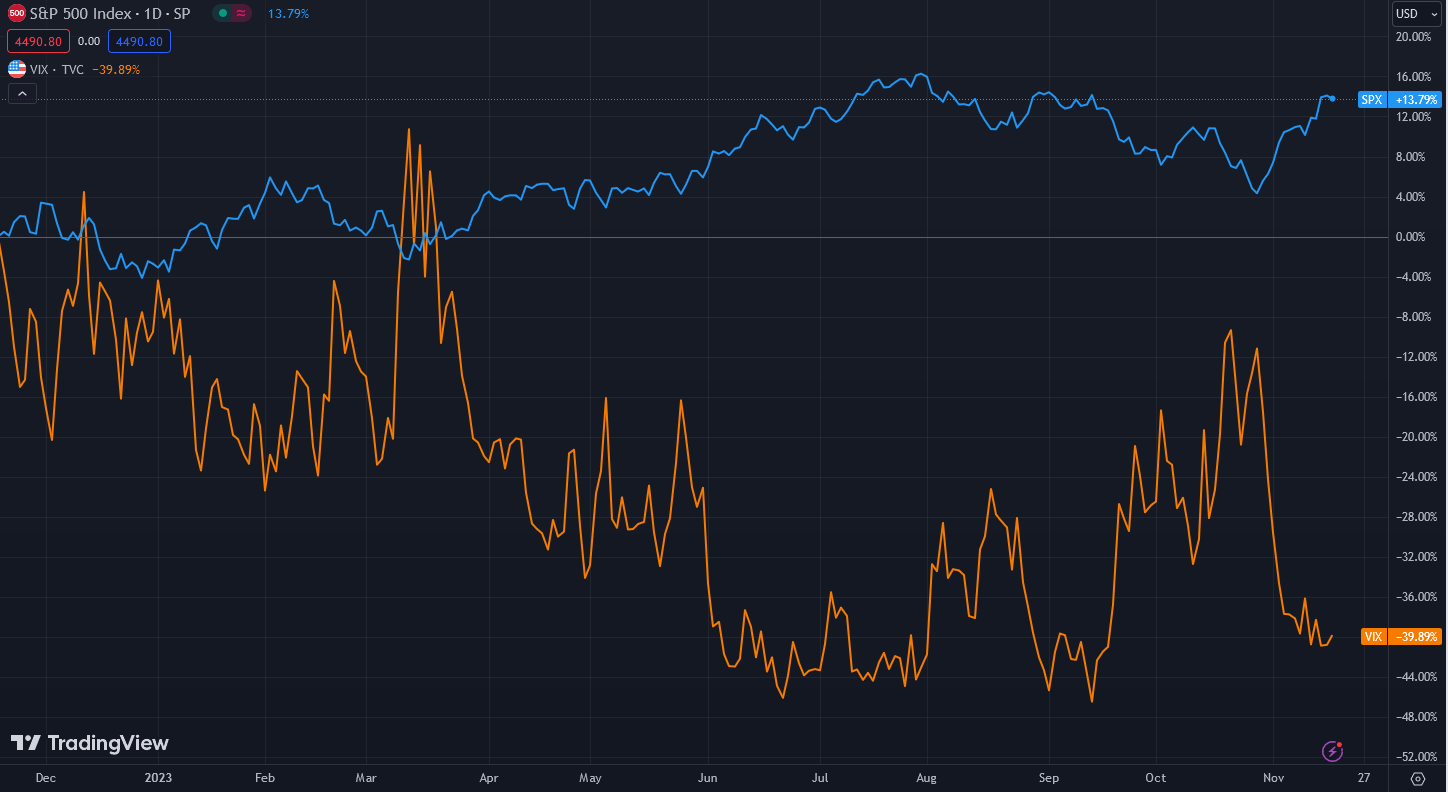
    Hi, everyone welcome to the week ahead. I’m Tony Nash. Today, we’re joined by Tony Greer, Tracy Shuchart, and Albert Marko. This week, a lot of interesting statements. When I contacted Tony Greer about the show, I said, What do you want to talk about? He said, Four words. He said, The stock market gone. That’s what we’re going to talk about today, the stock market gone. We’re also going to talk about record oil demand. We’re talking about growing gas supply. We’re finally going to end with Albert talking about China, the US, and geopolitics coming out of that meeting in San Francisco. Guys, thank you very much for joining us on this Friday. Tony, like I said at the top, when I contacted you, you said the stock market gone. I really want to understand what that means. That was very concise. Can you walk us into what does that mean? What should we be watching right now? Why are you saying that? I’ve got on the screen just a snapshot of the VIX and SPX just so that we can understand what’s going on in those markets as well.

    A graph of stock market

Description automatically generated with medium confidence

    Tony Greer


    I think this week, Ton was… Sorry, I just have an alarm going off for no reason. This week was watershed week for me for observing the stock market. I feel like we have a date that will live in infamy on Tuesday, November 14th. We got CPI data. It was benign. The data wasn’t off by much, but the market clearly, by virtue of its response, responded that inflation is no longer going to be an issue. Right? Bonds rally, stocks rally, both are dramatically oversold. Both have huge, usually negative sentiment. And so they up and take off, right? So what I feel is that the stock market has just gone uncaged because that move broke it out above all major moving averages that day in a major magnitude S&P rally. We had a major magnitude bond rally, huge magnitude bond rallies that day across the curve. New lows in rates. New low closes in rates today. So all of that follow through to me means that the high in Fed funds is in. It means that we are now going to be in a very tight range of Fed funds. And I feel like the market just weathered a very terrible storm.

    Tony Greer


    And so now the risk has changed where the risk to the stock market was the bond market. If we had hairy inflation data, the bond market was going to collapse and scare the crap out of the stock market, stocks were going to go with it. Now that has all been removed. All been removed, all been removed. Then crude oil went down $15 and further removed the idea that there’s going to be any brand of inflation scare coming across the airwaves. With that all said, technically the breakout is intact. I don’t want to take on too long. Go ahead, Ton.

    Tony Nash


    No, that’s great. What people have been saying for the past year or so is higher for longer. The er part of higher is you’re saying is gone. It’s going to remain high for a long period of time, but it’s probably not going to go higher. Is that fair?

    Tony Greer


    Are you talking rates or inflation?

    Tony Nash


    Rates and inflation.

    Tony Greer


    Yeah, similarly. Similarly, headline inflation is gone. It’s not going to be back. We’re not going to see any pops in CPI that’s going to scare the market anymore.

    Tony Nash


    Over ever or, I mean, not ever, but like over the next two years?

    Tony Greer


    Yeah. Well, give it six months to a year, right? Oil price has been buried, gasoline prices are getting buried. The gas price is going to go down in election year come hell or high water. I just think that that removes an unbelievably huge risk that the stock market was pricing in, right? It priced it in right into the Treasury refunding. It priced it in right into the Middle Eastern conflict. We came out of that. And so with.

    Tony Nash


    All of that- That all sounds good to me. That all sounds really good to me. Tracy, you know the rules here. Jump in. Don’t raise your hand.

    Tracy Shuchart


    I’m trying to.

    Tony Greer


    Sorry, Tracy. Sorry I keep cutting you off. I know.

    Tracy Shuchart


    What I wanted to ask is, what do you make of that health insurance print? It was negative 34 % and CPI. I mean, we know they changed the metric, but that’s really what brought down the CPI, right? Because it’s actually included in core.

    Tony Greer


    Absolutely.

    Tracy Shuchart


    What happens if we have a revision or is the market going to care and the market’s not going to care? It’s already-.

    Tony Greer


    I was going to say, Trace, I’ve matured in my thinking to the belief that the market trades off the data that it’s given and takes it totally on its face. Nobody’s reading into… Yeah, the health insurance was something that the micromanagers of the market follow. The rest of the world, CPI point one, doesn’t care, stocks, bonds, gone. That was the statement. That’s what they said. That’s what I’m going with.

    Tony Nash


    Can I comment on that, Tracy? Sorry, go ahead, Albert.

    Albert Marko


    No, it’s right. It’s perception is reality in this market. They don’t care about revisions. They can go back six months from now and say, Oh, yeah, inflation was actually 5%. Nobody’s going to care at that point. It’s done. It’s over and done. These algorithms and trades, they run on the same day. I mean, if you see some decent number, that’s it. It’s gone for the next five business days. It’s just what it is at the moment.

    Tony Nash


    I’ve actually trademarked to wait for the revision if you guys haven’t paid attention on Twitter. I do pay attention to revisions, but I think I’m the only one. It’s obvious that Tony doesn’t care. But what it also tells me with that healthcare change, Tracy, is that the guys who publish the economic data want those numbers to come down and they will change whatever mechanics they need to make them hit the zone that they want so that guys who just look at the top number, they see what they want to see. That’s part of the statistics game, I think. I think, Tony is right. Take it for what the top-level print is. Digging down is awesome for nerds, but it takes too long for traders. Is that right, Tony?

    Tony Greer


    A little bit like that, right? It’s like if we’re not going to trade off of the data that comes out officially, then what are we going to trade off of? I feel like the market already done and dusted, decided that a long time ago.

    Albert Marko


    The only problem I see is whenever they make these ridiculous changes to weighing inflation or employment or whatever data point you want to talk about, just for me, it compounds the looming problem that’s coming with this market. Because they can have clear sailing as long as the geopolitical issues are in check, as long as the data that they can manipulate is in a certain range and so on and so forth. But if something goes wrong and it gets out of their control, that’s when we’re going to have a problem. Do I see that in the next six months? Probably not. I would have to say trade on the data. What else are you going to do?

    Tony Nash


    Yeah, my health insurance didn’t go down 37%.

    Albert Marko


    That was a criminal change. They’re using corporate profits as a metric of CPI. It’s just insane for me. But whatever, we can go on that for hours. But it is what it is.

    Tony Nash


    So slowing inflation is a good thing, but we saw there’s this little company called Walmart. And on their earnings call, their CEO said, We could be facing deflation in a few months. And we also had another CEO come out in their last earnings call saying that we’ve already seen deflation. I’m starting to get the sense that deflation is going to be one of those terms that we’re going to hear a lot in earnings calls for the rest of this quarter and probably next quarter as a justification for shrinking profitability. What do you see with that, Tony? Are you expecting not just inflation to stop or trail off? Are you outright deflation? If that happens, how does that impact markets?

    A screenshot of a message

Description automatically generated

    Tony Greer


    I try to stay away from economic predictions because I’m not a biologist. But if I had to trade off of what I feel like the bond curve and the yields market are telling us, I feel like the curve had a very violent double bottom down at -100, and everybody was convinced the recession was coming. Then the curve went and rifle all the way back almost to zero, two cents. Now we’re somewhere in the middle at -40 basis points, which means that we’re still going to be navigating some waterfalls in the stock market. They’re just going to be a lot more shallow than anybody can imagine. That’s great. Yeah. And just related back to the inflation deflation thing, I would imagine that the narrative becomes a little bit deflationary, which I think is just going to be more fuel for the bond market to get off the lows and get rates back even another 25 basis points lower. I think that’s going to be even better for Mag 7 and any lowering rates in the end of the curve. I mean, it’s going to be good for home builders. It’s going to be home construction is going to rally.

    Tony Greer


    Semiconductors are going to rally. Like all of this stuff is just going to start going. Breakouts are really tradable right now and they’re going to continue.

    Tony Nash


    Interesting. Albert, what do you see?

    Albert Marko


    What are we at? 4,500, 4,500 and change, whatever it is today?

    Tony Greer


    Yeah, 4,500 a quarter.

    Albert Marko


    Where do we go from here? I mean, what are we talking about? 4,800, 5,000 on the S&P? I could see that at the end of the year towards the election. I for sure can see that. But for the next three months, we go to what? 4,500, 4,600? 4,800? Then what? We’re at all time highs for everything across the board at that point.

    Tony Greer


    Breakout City.

    Tony Nash


    Yeah.

    Tony Greer


    Performance chasing, career risk, things. Like that.

    Albert Marko


    Yeah, listen, I don’t discount it. It makes me vomit inside a little bit, but I don’t discount it.

    Tony Greer


    Play the game, man.

    Tracy Shuchart


    You have to think is all these CTA chasers, their model’s just flipped. They’re going long because their models flipped, and they don’t really care what’s happening in the underlying market.

    Albert Marko


    Yeah. For me, it’s like I look at this in a political script way, and if they want to get the market booming by the election time, I think they’re going to have to fake a crisis in February, whether it be banking or something, just to be able to relaunch it back up again. I just don’t think that they can stay in this 4,6, 4,7 area, 4,600, 4,700 area, and keep it there for nine months.

    Tony Nash


    But a couple of months ago, we were talking about S&P at 3,600 or something like that. And obviously, we’re not there, right?

    Albert Marko

    No. They got to lose control first. And they’re in no way of losing control of anything. There’s no China, there’s no Europe. So what’s going to happen?

    Tony Nash


    We went through the regional banking crisis. We went through inflation. We’ve gone through housing, worries about housing. And now everybody says 60 % of people in their homes or whatever, and it’s not a big deal. And we’ve gone through a lot of these concerns. And Powell, I think, is looking pretty smart right now. I mean, everybody wants to snipe at the guy, but he’s actually looking pretty smart right now in terms of managing things and managing the markets pretty deathly. Am I wrong on that?

    Tony Greer


    Trying to close the fucking door.

    Tony Nash


    Right, exactly.

    Tony Greer


    That was the best line. I’m sorry. That was the best line ever.

    Tony Nash


    Oh, yeah, exactly. He showed us he’s a real human being. Which is great.

    Tony Greer


    Yeah. I mean, it was cool as a cucumber for a change. A leader was like, You’re kidding me? Close the fucking door, man.

    Tony Nash


    Right. As a trainer, Tony, when you see the way Powell has acted and continues to act, is he providing a consistent, confident approach that you’re looking for as you look at markets?

    Tony Greer


    I feel like he’s a little bit volatile. I feel like sometimes he exudes pretty good confidence and I can listen to him. Other times I’m like, I feel like this guy is a deer in the headlights and has no idea what to say. He gives me mixed feelings.

    Tony Nash


    Okay. Do you think we’ll look back on him and go, Wow, he was handled things as well as Greenspan, although he didn’t do it as smoothly as Greenspan did, but he handled some tough things and got things back on track.

    Tony Greer


    I was going to say it would be hard to say that Powell made too many enemies during his tenure. He’s trying to help. He’s helped us out of the SVBI. He stewarded that fairly well, I thought, and doing a way better job containing inflation than I ever would have thought possible. But it’s just further proof that if you control the money supply and the narrative, you really control everything.

    Albert Marko


    That’s right.

    Tony Nash

    And puking fiscal doesn’t hurt either. Right. Having a DC that wants to spend a ton of money doesn’t really hurt.

    Tony Greer


    100%. That’s going to be part of the reason why the stock market is going to go up and keep going.

    Tony Nash


    Yeah.

    Tony Greer


    In my opinion. You know what I mean? God forbid the economy gets back on its feet and they still don’t have an inflation impulse to battle. That’s a really bullish cocktail for stocks.

    Albert Marko


    It’s tough because they still have wage inflation hitting corporations at the moment and they’re starting to leak out jobs here and there. So I don’t know. Man, it’s just hard for me to swallow that this economy is going to get back on track when inflation is still 20% above 2019 levels, and jobs are starting to leak away from the publics. Man, it’s just so hard for me to swallow, Tony. It’s hard.

    Tony Greer


    No, I hear you. Jobs going down is part of the volatility. We get a weak economic data, we get a weak print and bonds go off on another leg higher. To me, that could be totally part of the trade.

    Tony Nash


    Yeah, but here’s what I’ve seen. In the recession in ’91, which nobody talks about it anymore, we had huge job cuts. Boom. Everyone fell off in about a month. In 2000, same thing in tech and finance, boom, everything cut off. 2008, across the economy, everything cut off within two, three months. Here we saw Meta, Amazon, Microsoft lay a bunch of people off a year ago. Then over the past couple of months, we’ve seen banks lay a bunch of people off, especially in their mortgage units and their lending units, that thing. What I’m starting to see is clusters of layoffs, not one single economy-wide action. I’m not saying this time is different, but I’m saying a few different things happen by sector over an extended period of time. We could still have that event where a bunch of jobs disappear within a month. But we are seeing big clumps of jobs. We saw this a year ago in tech with a bunch of jobs just disappearing over a week or two.

    Tracy Shuchart


    The only thing that I’m concerned about is that we raised rates so quickly, like faster than almost any time in history. I feel like maybe markets haven’t completely digested this yet. That’s the still what if question in mind.

    Tony Nash


    What does that look like? Markets digesting it. What does that look like to you?

    Tracy Shuchart


    That means that I don’t think it’s really hit the economy yet. We haven’t really seen labor come off. We haven’t… We haven’t really seen those effects, except for maybe, I guess you could call the commercial real estate market, but one could argue that that was already in trouble from COVID and that was just a carry-over and just got worse with rate increases. I just think that I’m just still a little apprehensive or a little skeptical that maybe markets haven’t completely digested this rate increase and that we could be blindsided, well, quote-unquote, blindsided in some respect if things really start to fall apart. I’m just saying it’s just in the back of my mind. I’m not saying it would happen.

    Albert Marko


    The market keeps chasing this Fed pivot and Fed cuts. Now they’re pricing cuts in May, I think that’s what they’re looking at right now, four cuts for all of 2024. That’s not happening if super core inflation doesn’t trend down. That’s simply not happening. I don’t think the market thinks that’s going to… For sure, the market is not looking at that. They’re not contemplating any more rate hikes. I still think we’re going to get one or two in 2024.

    Tony Nash


    Q1.

    Albert Marko


    What’s that? Yeah, I think Q1, Q2, we’re going to get a rate hike, one or two of them.

    Tony Nash


    I just want to tell you, from my college football perspective, since we’re right in the middle of the season, Tony Greer is our quarterback who just snaps back and forgets the last play, just keeps on plugging. Tracy is our offensive coordinator who has a little wider view, a little bit afraid of the defense coming after. Albert’s the GM who’s just taking everything into view and looking for the long term. It’s great.

    Albert Marko


    Yeah, well, quarterbacks wins championships.

    Tony Nash


    That’s right. Yeah, they do.

    Tony Greer


    I just want to play the game right and make sure that I’m on board if there is a seasonality-driven rally that to me seems like set up a picture perfect scenario for that to take place and in magnitudes that people are not going to want to believe and it’s going to be all that much harder to jump in and get position for. And that’s why I think it’s a lasting thing.

    Tony Nash


    Hey, Tony, just for reference, when you look at a position, how long do you usually take a position for? Is it a day or a month or weeks?

    Tony Greer


    I start off with a two day to two week time frame, almost with pretty much everything, Tony. That’s how I address it. And if I live through a two week time frame, then I’m usually just go on cruise control, which is putting in a trailing stop scenario and then let the market take me out. And in those conditions, I’ve been in position for like two years. You just have the trailing stop right up behind you if you get it really right. Okay, great. It doesn’t happen a lot, but it happens sometimes.

    Tony Nash


    Fantastic. That’s really good context to understand because you’re looking at things right now for a relatively near-term trade turnaround, right? I think Albert’s looking at things longer-term, thinking elections and politics and that thing. That’s really interesting. Not that Albert doesn’t go in and out in a day at times, but I think that’s really interesting.

    Albert Marko


    Multiple times in the day.

    Tony Nash


    Exactly.

    Tony Greer


    Speaking of the election, who knows? But Trump was good for the market, right? And if the market starts pricing him in, that’s a bullish scenario that I didn’t even calculate what that will do to the markets because I don’t know if that’s going to be the case, so I don’t think about it yet. But man, I think that would be a bullish scenario. The guy was good for the economy, good for the stock market, right?

    Albert Marko


    Well, you would have a double positive. You’d have the Dems trying to push up the market because they want to look good for the election. And then you’d have some people in the market pricing in Trump because they think he’s going to be good for the election.

    Tony Greer


    I wouldn’t be short stocks if Donald Trump got elected President.

    Albert Marko


    Oh, God, no. Hell, no.

    Tony Nash


    Interesting.

    Tony Greer


    Like, period. Not for a day.

    Tracy Shuchart


    It would be like all in everything.

    Tony Greer


    Yeah, right? I’m saying that day that I was talking. About-

    Tracy Shuchart


    I would triple my energy positions. Right away.

    Tony Greer


    Yeah. Oh, yeah, forget it. Yeah, totally. But on that day, the reason that day was so insane to me is because there were 17 sectors that I follow that had a two-sigma or more, most of them breaking out through moving average resistance. On any given day like today, there’s one stock with a two-sigma move on the board today. On any given day there’s probably an average of 2.3 two-sigma move, stock movers. That day, 17 sectors all rallied in two-sigma fashion. That is the everything rally. That is like if you’re short, you’re dead.

    Tony Nash


    Yep. Wow. Interesting. Let’s definitely keep an eye on that as things move. I’m not sure, Albert, it’s too early to take polls at face value, right?

    Albert Marko


    No, I mean, it’s way too early, and you have all sorts of variables like Democratic and Republican operatives trying to show some narrative in the way they ask questions in the polls, and then you have just voters flat out lying. You have people that are pro-Biden that they want to see Trump get in, so they give Trump extra votes in the polls and vice versa. It’s a mess. Polling is a mess right now.

    Tony Nash


    Right.

    Tracy Shuchart


    Well, it’s not. They used to call you on the phone, or they call people on the phone. I mean, who has a phone anymore? Boomers? I mean, like a landline, right?

    Albert Marko


    Yeah.

    Tony Greer


    Seriously.

    Tony Nash


    And cable. Who has a phone and cable?

    Tony Nash

    Okay, guys. Let’s move on to energy, Tracy. This week you tweeted about global oil demand at season record highs. Since we have crude prices falling, I want to understand what that’s about. We also have Saudi Arabia saying they will continue supply cuts. Why is that? Why is crude falling when we have record demand?

    A screenshot of a social media post

Description automatically generated

    A graph of stock market

Description automatically generated

    Tracy Shuchart


    Well, I think first that data was JODI data, so it lagged too much. That was September data, just to make it clear. But really, if you look at the OPEC monthly report, which just came out last week, they’re still showing demand, very supportive, and that’s only, say, a month lag. But really what we have seen is a lot of length come out of this contract since October to the latest COT report. We’ve seen about 40% of the length come out of that contract. Obviously, it’s going to be more after this week, but we haven’t really seen short positions initiated. For whatever reason, people are jumping out of this contract. Now, my hair, brain theory is that we saw this come out as soon as markets started to rally and we saw the great jump pile in into tech again. That only exacerbated after we had that CPI print. Then after the CPI print, we saw oil go down even more. We saw everybody jumping into that tech trait. I think that’s partially the reason, that narrative where you’re changing from the value to growth scenario. Does that make sense? Because growth stocks, as soon as you hear the Fed wants to pause, that pause narrative that we started hearing right before the last meeting at the very beginning of November, we started hearing a lot of this pause from all of the Fed heads, right?

    Tracy Shuchart


    That’s when we really saw a jump into growth again because that’s what those markets like to hear, because you don’t want higher interest rates and file into growth. In my opinion, that was part of the… That is part of the exodus and the liquidation and crude stocks. But really, it’s not that anybody’s getting short. It’s not that the fundamentals of this market has changed. The market still remains very tight. In fact, our US distill stocks, which are like diesel, heating oil, jet fuel, et cetera, are ending the fall season at their lowest seasonal level since 1982, and we haven’t hit winter yet. We definitely have a problem with the shortage in diesel, and it’s not just in the US. We’re seeing this in Germany as well, which is unbelievable considering their manufacturing has taken a complete dive. Manufacturing definitely takes more distillate. We’re seeing this distillate problem. I think that’s only going to grow as we hit into the winter seasons. Again, what I’m saying is the market is fundamentally still tight. I know that was a lot.

    Tony Nash


    It’s still tight, but prices are down because investors have rotated out of energy into tech. Is that, if I understood what you’re saying.

    Tracy Shuchart


    I believe is slow. I believe so. I think it’s because everybody loves to jump on that growth narrative, the Mag 7. It’s a huge pylon. I’ve been posted a chart on Twitter this week. Basically, 99% of hedge funds are invested after 12% at the beginning of this year. Since then, that rotation into growth pulls a lot out of value stocks. Nobody’s value investing, and it’s not just the energy. We can look at this across all the value sectors.

    Tony Nash


    I mean, a rug pole in tech would really kill a lot of people, right?

    Tracy Shuchart


    Yes.

    Tony Nash


    What’s that?

    Albert Marko


    And then some.

    Tony Nash


    Yeah. I’m shocked to see that number of hedge funds that highly invested in tech right now. But I guess it makes sense. If you’re talking about the rotation. We had another guest on about a month or so ago talking about the rotation out of tech, and we started to see a rotation out of tech, but it almost sounds like those guys have gone back in.

    Tracy Shuchart


    Everybody’s piled in, especially after that CPI print. I mean, it’s a rocket ship.

    Tony Nash


    Yeah.

    Tony Greer


    I’m calling something else that you have to consider in crude oil is Cushing inventories just saw a couple of pretty big builds and put them back into the range they were in over the summer rather than right off of their lows.

    Tracy Shuchart


    Still at historical lows, though.

    Tony Greer


    Yeah. No, I know, Tracy. I’m just trying to circle the fact that WTI this week was the source of the weakness, right? Wti is a five % gas is off one or two, and I think diesel is almost unchanged. I’m saying it was like a purely WTI slide. It was a pure supply-side issue. I mean, front month spread went from 25 cents back to 25 cents contango, and the front price front month dropped $15. That was the whole thing right there, if you ask me.

    Albert Marko


    Yeah, this ridiculous drop in this price. I mean, this is like Bitcoin’s time moves from the oil market. It’s just super suspicious, especially with an OPEC meeting coming up where I think they’re probably going to announce deeper and longer cuts.

    Tracy Shuchart


    For sure.

    Albert Marko


    Yeah. We’ll see what happens. I’m a long oiler. Right now, I’m a long oiler.

    Tony Nash


    You’re long. Okay. Interesting. Okay, guys. Then, Tracy, let’s talk about gas for a minute. We saw this street from EIA talking about LNG export activity from North America. Is this a realistic projection? That’s the first question, but also why are all of the US LNG facilities on the Gulf, which I would assume means they’re serving Europe. Why don’t we have any LNG Asia-facing? Because it looks like Canada is the only one that’s really serving Asia.

    A screenshot of a website

Description automatically generated

    Tracy Shuchart


    Well, because California. They are trying to phase out oil and gas, and so they don’t want any more pipelines. They don’t want any more. They want nothing to do with it. Same goes all down the Westcoast, right? If you’re talking water.

    Tony Nash


    Okay, so we’re not servicing three and a half billion people in LNG.

    Tracy Shuchart


    Right. Because of-

    Tony Nash


    We have the second most abundant LNG in the world or something? Or gas, sorry, in the world. We’re not serving three and a half billion people in Asia because-.

    Tracy Shuchart


    California doesn’t want oil pipelines and they want no oil and gas. Yes, correct. Basically, that is it. They’re trying to phase it out. There’s nothing you can do about it. Environmental groups. There’s too many problems trying to get more capacity through California. It’s just not going to happen. End of story, unfortunately. We do have LNG going to Europe. We do. But right now, the other problem for that is the Panama Canal.

    Tony Nash


    Tell us about that. What’s the Panama Canal problem?

    Tracy Shuchart


    Right now, there’s drought, and what they’re doing is there’s not as many ships can go through and not as many heavy ships can go through, so you have to split things. We saw the same thing in Germany last summer with the Ryan River. We’re seeing in the Panama Canal right now, people are paying on… I think the last figure was somebody paid $4.5 million just to jump the line to get their cars to go through.

    Tony Nash


    Wow.

    Tracy Shuchart


    In the Panama Canal right now. What that is doing is it’s causing prompt Asia prices to rise over European prices right now. That’s out into summer of 2024.

    Tony Nash


    Okay, wow. When I look at this map, the rest of the export facilities, there look to be two on the East Coast. Everything else is in the Gulf. Then we have two from Canada. It looks like there’s one from… No, there’s not one in Mexico. Well, there are a couple in Mexico, it looks like.

    Tracy Shuchart


    Yeah, but they’re not.

    Tony Nash


    Is there a lot of LNG export from Canada to Asia?

    Tracy Shuchart


    No, not yet.

    Tony Nash


    It’s mostly Qatar type of trade.

    Tracy Shuchart


    Yes. They’re building out their export, but it’s a case with Canada that’s a little bit too little too late because the liberal party or the party in charge there was like, We want nothing to do. We don’t see a base case for LNG until US exports started to-

    Tony Nash


    Who would want cheap energy? I mean, it’s terrible.

    Albert Marko


    That’s absurd.

    Tony Nash


    That’s absurd.

    Tracy Shuchart


    They do have capacity, and it’s good for them that they’re building out and they have more capacity coming online, so they don’t have to be as dependent on the US, and that’s for oil as well as gas. But ultimately, everything is focused and everything’s been focused really on the Gulf because we can still get it to Asia and we can get it to Europe from there. All the big companies, LNG, CHK, Oxy, they’re all building out big facilities. In fact, by 2022, we became the largest LNG export facility, and we still have a little bit more in the Gulf. We have the largest LNG export capacity in the world right now. We still have a couple more projects coming online out to 2027. The bulk is majorly done with, but it’s a huge area right now.

    Tony Nash


    Texas is the energy capital of the world and becoming the tech capital of the world. You guys can keep finance on the East Coast, but we’ll take energy and tech.

    Albert Marko


    Maybe if the Canadians priced things in hockey sticks and maple syrup, they’d see the light, but apparently, they don’t understand that whatever.

    Tony Nash


    Okay, great. Hey, let’s move on to this big China meeting that we had in San Francisco this week where US and China met, Biden and Xi Jinping met. It was a… Well…

    Tracy Shuchart


    Brain wreck?

    Tony Nash


    Sorry.

    Tracy Shuchart


    Brain wreck.

    Tony Nash


    It was a train wreck, but I think it’s been portrayed as this amazing shaking of hands and meeting of minds and all this other stuff. But I’m not sure anything material was really decided there. But one thing that was at least lightly committed, and this is where Albert takes his victory lap, is that China has no plans to invade Taiwan. Let’s dig into that first. Albert, on the screen, I have an interview we did with you on February eighth of 2021, where you said, Not going to happen. Taiwan invasion, not going to happen. It’s not going to happen. Since then, you’ve been saying it’s not going to happen. There are all these fear mongers out there, so many of them saying, Oh, China is going to invade Taiwan. It’s that season. It’s October, it’s April. The straits calm, they’re going to invade Taiwan. Now all these boats are lining up. But it hasn’t happened. I just wish that the Taiwan fear mongers would shut up for a little while and realize the dynamics of the China-Taiwan relationship and the US-Taiwan relationship, and I wish they’d listened to you. Take your victory lap, go.

    A screenshot of a video chat

Description automatically generated

    Albert Marko


    Well, first of all, you had it right with their forging slip, but they don’t have planes. They don’t have planes or plans to attack Taiwan anytime in their future. They don’t have the military to be able to… They can bomb the hell out of Taiwan if they wanted to, but they have financial repercussions, both by closing ports down. They also have investments in Taiwan and the semiconductor industry. The CCP elite, they have shadow money in those factories over there. So to make this assumption that China is going to just scroll in there and just burn everything down and take it over and install a new government and so on and so forth. It’s a tired argument, really. I’ve been going at this for, I don’t know, I think it’s like 2013. I love my NATSEC guys. The Pentagon guys are great and all, but they do have to justify budgets and their existence. But until there’s some shift in that area where the Chinese are extremely confident that they can win quickly in Taiwan, I don’t see any plausible way that it materializes. And even Xi comes over here now for this meeting. And initially it started off as him coming here as throwing an olive branch to let’s work together economically and so on and so forth.

    Albert Marko


    But then Biden says ridiculous things. The meeting was rushed and I don’t think really had some real agenda besides just shaking hands and taking pictures and pushing them out to the US and global media. Other than that, I don’t want to see what the purpose is of this meeting at all.

    Tony Nash


    California will have a glass of wine.

    Albert Marko


    It was like… Well, Yeah. Okay, well, sure.

    Tony Nash


    I’ve done work for and with the Taiwan government and the Chinese government. When you talk to people in Taiwan, there really is not a worry about China invading. I know that sounds anti everything you hear in America, panic social media, but the Taiwanese are not sitting on the edge of their seat waiting for the Chinese to invade because they have dealt with it for so long, and the chronic, continual, fear mongering out of certain voices in the US is just tiresome.

    Albert Marko


    Yeah, it is what it is. I mean, you have these World War III type guys coming out there. Even Friedmann at one point said the US is going to attack North Korea in two weeks. Things don’t materialize this quickly. I mean, for China to have serious intentions of invading Taiwan, there needs to be a lot of prerequisites in place economically, politically, militarily that just don’t exist right now. They just don’t.

    Tony Nash


    Right. If they materialize that quickly, if they do materialize that quickly, it’s usually a mistake. Somebody’s made a mistake somewhere and something’s happened.

    Albert Marko


    Oh, absolutely. Something’s happened or it’s either desperation or a mistake’s been made.

    Tony Nash


    Yeah. China does not want a war with the US. Regardless of the rhetoric that mid-level people say, China is not one war with the US. The US does not want a war with China. Regardless of what people say, the US does not want a war with China. And the leadership on both sides knows that.

    Albert Marko


    Yeah, of course not. We’re in this weird symbiotic relationship. China does their thing and they’re the world. The United States does everything else everywhere else in the world at the moment. There’s no reason to change that status quo. Simply there isn’t any.

    Tony Nash


    Okay, let’s talk a little more broadly about the US-China relationship. What do you see as the key risks? And, Tracy, Tony, jump in here too. What do you guys see as the key risks between the US and China right now?

    Albert Marko


    Oh, man. That’s tough. Besides the whole espionage and corporate espionage and that thing, I don’t really see too much risk out there because I don’t really think that China can do anything that would upset the status quo of the relationship at the moment.

    Tony Nash


    Okay, let me throw something out. What about supply chains out of China? China was very inept in handling supply chains through COVID. I get it, global emergency, all that stuff. But the ineptness out of China was shocking. When we had 6, 9, 12-month backlogs for things, this was just shocking. Do you think supply chains out of China are still a risk?

    Albert Marko


    Not really. I don’t think so. I think they’ve learned their lesson and they’re going to learn even more important lesson where Europe is no real economy at the moment. And the emerging markets where they can dump their cheap Chinese stuff is drying up. The only place they’re going to have to look to is the United States and the Middle East. Those are the only two areas.

    Tony Nash


    Okay. So supply chain is off the table as a risk right now from China.

    Tony Greer


    In hindsight, I feel like that was madly, madly hyped up in order to blame inflation on it and to pair that up to be able to say, Oh, look at the supply chain issue. Well, that’s why prices are higher. Don’t say anything about doubling the Fed balance sheet or anything like that or spiking money supply. I mean, look at this. The biggest canal over here is jammed up, and that’s why prices are through the roof on everything. In hindsight, it seems like that was really, really part of the deal.

    Tony Nash


    Okay.

    Tracy Shuchart


    And realistically speaking, I’m just going to say if we’re looking at, say, these transition metals, battery metals, China still has not only are they the largest producer of a lot of these, but they’re the largest processor of a lot of these. They mine this stuff in Africa, they process it in China, then they send it out. Right now, we’re two decades behind. We’re talking about wanting to bring mining to Europe and to the US, but our permitting process is 10 years. Europe’s not that far behind. We’re really 10, 20 years behind China at this point. We’re going to have to realistically rely on them because we just can’t bring the supply online domestically, either in Europe or in the United States to be able to-

    Albert Marko


    No, we have EPA and environmental restrictions that prevent us even making basic things like active pharmaceutical ingredients. It’s a dirty business. That’s why the Indians and the Chinese do it. That’s why we outsource it over there. That’s not going to change.

    Tony Nash


    Yeah, that’s the APIs are… I think APIs are a huge risk for pharma and for the American health care system. That is a massive risk that people talk about it every so often, but then we forget. I think API is a massive risk for us. What about real estate in China and the real estate markets? Could that impact the global economy or do you think that’s pretty isolated in China?

    Albert Marko


    I think it’s isolated and it’s priced in at this point. I mean, we’ve already had Evergrande and other companies go belly up, essentially. What’s it done? It hasn’t really done anything at the moment.

    Tony Nash


    Okay. Then what do you think about China’s relationships in Southeast Asia? For example, the US and Indonesia just came to an agreement this past week about trading nickel and some metals. The US and Vietnam came to a very tight security agreement last month. Do you think the US getting more directly involved in some of, say, the Southeast Asian countries is troublesome and worrying for China and could be destabilizing for the status quo?

    Albert Marko


    Not really. I view China’s actions twofold in the Indian Ocean, and South China sees one is security, obviously, but other one is illegal fishing. They love their illegal fish. They have to. They have to pump out all that fish and feed their population grow. That’s a necessity.

    Tony Nash


    Right. Okay. Although I don’t think a whole lot necessarily happens substantially in the event itself. But I think what it’s allowed people to do is take a deep breath and just go, Okay, let’s just carry on here and try to figure out how we can have a normal relationship. If nothing else was achieved, do you think that was achieved and people will look at China a little less hyperventatively or whatever or like a little less-

    Albert Marko


    Oh, yeah. There’s no question that the US and both Beijing and Washington need some economic partnership or trade deal or something in the next 12-24 months. There’s no question about that. And that’s what I think they’re probably leading up to.

    Tony Nash


    Okay. Do you think that that could be part of the reason markets have calmed a little bit this week as well? Meaning, hey, this China thing is going to be okay. There’s not going to be a war. We take a little inhale, exhale. Do you think market that could add to a little bit of… Well, take a little bit of risk away from market activity?

    Albert Marko


    I don’t think so. I don’t think that’s really… I don’t think you can correlate to at the moment only because a lot of… If China starts rallying that actually takes money out of the US and goes into Asia. I don’t really think that’s much. I don’t think it’s a factor, to be honest with you. I think everything is the US market rallying is what Tony was talking about earlier.

    Tony Nash


    Yeah. That’s part of my question, is the rally partly because the risks and fear of China is off the table at the moment?

    Albert Marko


    I don’t think anybody was seriously considering China war as a risk for the markets, especially the –

    Tony Greer


    The gold market and the treasury market would definitely not pricing in imminent conflict with China. I think that’s fair to say.

    Tony Nash


    Then on the energy side, Tracy, China pretty stalked up with energy. It’s not like there’s no war over energy or worry about energy or anything with China.

    Tracy Shuchart


    No, they’re demand is still high. We even saw their teapot refineries just asked for extra export quotas for the end of the year. They’re doing well. Their demand, despite the property implosion, which leads me to believe it’s a controlled demolition, but that’s a whole other tongue.

    Tony Nash


    Of course, it is.

    Tracy Shuchart


    A whole other story. But we’re still seeing demand very high from them. Again, we have the teapots to ask for additional quotas. They’re using it, they’re selling it. Obviously, we have a diesel problem. That’s one of the reasons why they ask for export quotas because they can’t… The demand was higher than what they could export.

    Tony Nash


    Great. Very good, guys. That’s great. It’s the end of a great week. I think things have ended really well. Tony, I’m really glad to hear your optimism. I think that offsets a little bit of Albert’s wariness from time to time, so it’s great to have you on.

    Albert Marko


    It’s one of those things where I can be wary and we could dip a little bit, and then Tony’s thesis comes into play, and you absolutely have to jump on it. My my negative sentiment is something of an opportunity for Tony’s-

    Tony Nash


    Oh, yeah. This is why we all love markets, Albert. It’s a battle of ideas. It’s a battle of data. I’m not saying you guys are necessarily polar opposites all the time. I just think one day Tony wins, another day you win, another day Tracy wins. I think that’s great, right? Because it’s that battle of ideas.

    Tracy Shuchart


    Yeah. Well, that’s why we have a discussion, right?

    Tony Nash


    That’s right.

    Tracy Shuchart


    There’s a lot of… And so, yeah, you can pick each other’s brains.

    Tony Nash


    So guys, thank you so much.

    Tony Nash


    Thank you. Have a great weekend. Have a great week ahead. Thank you.

    Tony Greer


    Thanks, Ton.

    Albert Marko


    Thanks.

    AI


    That’s it for this week’s episode of the week ahead. Please don’t forget to rate us and review on whatever platform you are watching or listening to this. Thank you.
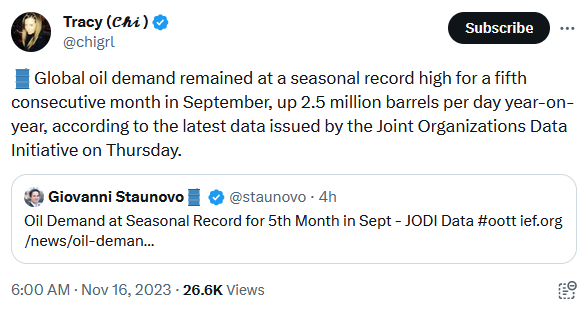
  • Rates & earnings quality; Dollar and elections; and Death of new nuclear power

    Get 40% OFF your CI Markets subscription: https://completeintel.com/save200/.

    Welcome to “The Week Ahead” with your host Tony Nash. In this episode, we discussed three crucial topics:

    1. Rates, market pricing & earnings quality: Bob Elliott discussed various topics including the Federal Reserve’s approach to controlling inflation, the impact of interest rates on the housing market, the challenges of small modular reactor (SMR) projects in the nuclear energy sector, and the outlook for crude oil prices.

    He highlighted the potential for a soft landing in the economy going into an election year, the complexities of the housing market, the difficulties faced by SMR projects, and the favorable risk-return profile for investing in oil.

    2. Dollar, commodities and elections: Albert Marko discussed various economic and financial topics, including the potential impact of fiscal and monetary policies, interest rates, inflation, and the outlook for the dollar and commodities. He also touched on the challenges and prospects of small modular reactors in the energy sector, as well as the implications of energy prices, particularly in relation to crude oil. Additionally, he shared insights on the housing market and the potential impact of political dynamics on the economy.

    3. SMR: Death of nuclear power?: Albert and Bob discussed the potential death of new nuclear power in the US, citing increased costs and R&D as contributing factors. They also mentioned the challenges related to transporting small modular reactors and the regulatory restrictions associated with them. Additionally, they highlighted the difficulties in developing new green energy technologies and emphasized the need for incremental progress and realistic expectations.

    Finally, the conversation shifted to the outlook for crude prices, with Bob Elliott and Albert Marko expressing a favorable view of oil as a growth asset, considering its current pricing and potential for a diversifying bet against economic weakness.

    Join us for a clear and concise analysis of these important topics in plain language you can understand. Stay informed for the week ahead! Don’t forget to like, subscribe, and share for more valuable insights.

    Transcript

    Tony Nash


    Hi, everyone, and welcome to the week ahead. I’m Tony Nash and today we’re joined by Bob Elliott, Tracy Shuchart and Albert Marco. We’ve got a few key things to cover today. First is rates, market pricing and earnings quality. We’ll go in deep with Bob on that. We’ll talk about small nuclear reactors with Tracy and the potentially death of new nuclear power in the US. And then with Albert, we’ll get into elections a bit and dollar and commodities prices through the election cycle.

    AI


    Want to take control of your investments and predict the stock market? CI Markets is the AIPowered platform that provides 94.7% accurate forecasts for over 1600 stocks, ETFs, forex, commodities market indices and economics. With CI Markets, you can manage your own investments with ease and supercharge your trading experience. Sign up for CI Markets today and get 40% off your annual subscription with the code SAVE200. CI Markets predict the stock market and supercharge your trading experience.

    Tony Nash


    So, Bob, thanks again. Really appreciate you joining us again. It’s always really educational. You’re one of my favorite Twitter followers, or Twitter follower.

    Bob Elliott


    Thank you. I appreciate.

    Tony Nash


    Always, always super detailed. I always learn something. So yesterday, Thursday, just poor Powell dropped a bunch of F bombs and killed the melt up. You put out a great tweet about two year rates. Two year is just up a bit, over 5% I believe, right now. And you tweeted this. So it’s come up a little bit. The yields come up a little bit. So can you walk us through the trajectories? Kind of, why are rates here? Where do you expect rates to go and what impact does that have on markets overall?

    Bob Elliott


    Well, I think the basic question that was actually at the center of Powell’s contentful commentary yesterday, rather than foul mouthed rants, was around the fact that inflation is still not durably at the Fed’s target. And it’s not just that it’s not there, it’s that the Fed, at least right now, doesn’t see a clear and convincing path to it, so they can start to ease off the tight monetary policy that they have in place. And so I think one of the things, what we’ve seen obviously, over the course of the last six months is a recognition that we’re going to need higher rates first in order to slow the economy, in order to kick off that moderating cycle, to slow wage growth, which should eventually slow nominal spending and then slow inflation. But that rise in interest rates essentially hasn’t been yet enough to get there in a convincing manner. And I think one of the issues was that the Fed basically said, as of a couple of meetings ago, they were really pointing to the fact that the short rate, or recognizing the short rate really wasn’t the thing that was going to get the job done.

    Bob Elliott


    They really needed that long end to move up. And they got some of that. Until, of course, Janet Yellen wrestled away the tightening that they needed through the shift in the QRA composition, bringing bond yields down.

    Tony Nash


    Yeah, we don’t have a team, right? I mean, they wrestle each other all the time.

    Bob Elliott


    Of course, what I would emphasize is, from a roles perspective, if you actually go back and read about fiscal monetary policy in the. This is not unusual, I would say, particularly in heightened inflationary environments, or in environments where there’s a desire to engage in fiscal expansion and populism, as well as global conflict, to fund global conflict. And so it’s not like this is a shocking move on the Treasury’s part. But I do think it’s an important move because the treasury has been a technocratic institution basically for the last 30 years, and now what we’re seeing is indications that it’s going to be a policy making institution rather than a technocratic implementation institution. That’s a big shift, and you’d be surprised at how much flexibility Janet Yellen has actually to shift the composition of duration before running into any meaningful sort of outliers in terms of the overall debt composition in the US.

    Tony Nash


    Right. And I think we’re all old enough to remember when Janet Yellen was the Fed chair and she was banging on the table saying, hey, we’ve done all this monetary policy stuff, but there’s no fiscal right. So now that she’s know, leading the treasury, she’s doing all this fiscal, but it’s offsetting the monetary policy stuff. So they’re just not on the same page at all.

    Bob Elliott


    Absolutely. I think one of the things that was super interesting about the market action coming out of QRA was that there’s basically a bid on all bonds, right? But what that ended up doing is it created a bid on twos and tens, and that didn’t make any sense, because if these two levers are going to work in opposition to each other, which I think I’d say probably over the next year, we’re going to see opposition between them. What that should indicate is that the Fed needs to be tighter than expected before the QRA, and given that the treasury is going to be essentially easier than expected before the QRA, but instead, the exact opposite happened in the market action, which was Powell got priced in to ease more in 24 as a function of the QRA. And that’s the thing that I think makes no sense, to be honest with you. If we’re in this new world, Powell is going to have to do more in response to the easier long end policy. And so those 75 to 100 basis point cuts that are priced into 24 certainly look vulnerable in that context.

    Albert Marko


    Yes.

    Tony Nash


    Albert, come on in on that.

    Albert Marko


    All right. No, I agree with Bob. We’re certainly in uncharted territory right now. Late 60s style maneuvers by the Fed and the Treasury. There’s no question about that. I think the bigger debate in the near term, six months, really, is whether a soft landing is possible or not. Now, I know Bob’s going to be on the opposite end of me on this one, I get it. But all fundamental guys are. Bob’s a top notch guy and fundamentals and whatnot. But for me, going into an election year and knowing how much power the Fed and the treasury have of working the long bonds and everything, I do think that they’re going to get a soft landing just for this election cycle, after the election tans off at that point. But I think that’s where I really want to discuss is soft landing versus hard landing, if it’s possible in 2024.

    Tony Nash


    What does that look like to you, Albert? A soft landing. Can you paint that picture for us a little bit?

    Albert Marko


    Fake breakdown, the 3800, 3900, and then rally for the election? That would be my soft landing. I mean, obviously, inflation is a persistent problem, and this is a manifestation of the treasury and the Fed with conflicting policies that I just don’t see alleviating. So that’s a wild card in there.

    Tony Nash


    Okay, Bob, what do you think on that?

    Bob Elliott


    I think it’s one of those things where, let’s say from a longer term perspective, I think the core question about sort of soft landing and the durability of a soft landing is, can the Fed bring inflation to its mandate without a meaningful weakening of economic activity? And I think there’s pretty compelling evidence over history that the answer to that is no. The way we will get inflation back to that target is through a meaningful rise in the unemployment rate. So there will be a landing, and it will be hard because that’s what’s necessary to achieve the Fed’s goals. Now, let me pause on that point and say, but that doesn’t mean tomorrow there’s going to be a soft landing. And if anything, tomorrow there’s going to be a hard landing. Like a year ago I felt like a man in the wilderness saying that we weren’t going to have an immediate recession. Right. And the reason why that is, is two, I think, important points. One, macroeconomic cycles, if left to their own devices, not in a crisis mode, but in left to their own devices, frankly, are like slow moving. It’s like molasses, like go back to the 60s cycles go back to the late 80, 90 cycle.

    Bob Elliott


    Even the 2000 cycle took three years to play out. Three or four years to play out. So I think we have a very slow moving economic environment. And you see that, like with payrolls, which are slowing at the pace of molasses. Right. Nothing too exciting. And the issue is that the ability that particularly the treasury has, but also the Fed, has to run inappropriately easy. Monetary policy is absolutely there. They absolutely have the capacity to be able to do that. Right. Even if Janet Yellen actually reduced the amount of coupon issuance over the course of the next year, reduced, we would still only see a bill share in terms of the total treasury debt stock that’s still under 30%. So that’s okay. That’s not prudent. It’s not a good idea. It’s not good to keep stoking these inflationary pressures, but it’s certainly possible, particularly if they’re politically motivated. And so when I’m looking at this overall picture, what I’m saying is I’d rather not bet necessarily so directly on hard landing versus soft landing. I’d much rather bet on where are there opportunities in the market that are underpriced in that context. Right. So for instance, assets like gold and oil don’t look to be particularly priced, that we’re going to have continued inflationary pressures or continued if I’m going to buy a growth asset.

    Bob Elliott


    Oil is the cheap December 24 oil is like the cheapest growth asset that’s out there in the world today. And similarly, if we’re going to have this stimulation, these policymakers extending this cycle, then those December 24 sofers, they’re looking like those rates are probably going to have to rise relative to what’s priced in.

    Albert Marko


    Yeah, I certainly agree on the rates rising. I think that Powell will probably have another two or three hikes going into 2024. In my opinion, the only issue, two or three. Yeah. If they can’t get inflation down going into an election cycle, what are they going to mean? What are they possibly going to know? The issue I have is that both Powell and Yellen has White House and the Senate on their side going in for fiscal stimulus, farm bill that’s going to be coming up, God knows what other juicy little stimulus projects that they’re going to pump in into 2024 and just artificially keep the markets up. For me, knowing how DC works intimately, I can certainly see them keeping this pig up at least through the election cycle.

    Bob Elliott


    And I think that’s one of the questions. In that context, where’s the best way to express that view if you think that that’s, or essentially, where is that possibility underpriced? And that’s where I think it’s a bit underpriced. I mean, I think it’s definitely underpriced in the short rate market. I think it’s moderately underpriced in the long rate market, though, Janet Yellen will probably be responsive if rates were to rise 50 basis points again, she’ll just be a little like even easier in the next announcement. It’s underpriced in commodities, I think. And then if you go over and look at stocks, that’s the place where it looks a little overpriced, where we have earnings growth expectations from analysts bottom up to be almost 12% next year. That’s not like a great, that’s going to be tough even if things work out perfectly. Right.

    Tony Nash


    Let’s get into that in just a minute. The earnings stuff.

    AI


    Heads up for a short break.

    Tony Nash


    Hi, everyone. I want to tell you about a quick promo we’re having for CI markets. This is our forecasting platform for stocks, Equity indices, commodities, currencies, ETFs and economics. We’re having a sale for $200 off the yearly subscription so it brings it down from $500 for the yearly subscription to $300. Go to completeintel.com/save200, and then when you click through, hit the coupon, SAVE200, and you’ll get our annual subscription for $300. Thanks very much.

    AI


    Thank you. And now back to the show.

    Tony Nash


    I want to ask you about some of your earnings tweets. But before we get into that, we had a viewer question, Bob, and they said, what importance should investors place on long term bond auctions? Can an auction actually fail? As in having a bid to call ratio of less than one.

    A screenshot of a social media post

Description automatically generated

    Bob Elliott


    Auctions? The US treasury market is like the deepest, most liquid market in the world. And so can auctions fail? I mean, maybe technically the auctions could fail. I don’t think. That’s not really the big deal thing. I think when you scan across, this is the challenge in the bond market, particularly the US government bond market, which is, will someone buy the bonds? Yes, someone will buy the bonds. That’s going to happen. The question is, at what price will they buy the bonds, and what are the elasticities of all the different players in the market? Now, I went out when bond yields were moving swiftly to five. I was looking at the composition of the bond buyers and I said, look, actually, we’re seeing a lot of yield sensitive buyers coming in and starting to man.

    Bob Elliott


    I mean, there’s a reason why it’s kind of like peaked literally at five, right? It almost looked like there were a bunch of orders in place at five at a 5% yield. They’re just like, buy, buy at 5% yield. Now, look, maybe it has to go higher than that in order to clear all the duration supply. Or maybe Janet Yellen is going to just increase the bill issuance until we get a turn in economic activity, until there’s enough supply demand for duration, because the economy is deteriorating in order to fill the duration supply gap. And so I think a lot of folks are looking at the bond market like when it was at 2% and not thinking about it at 5%. The bond market at 5% is totally different than the bond market at 2%. Totally different supply demand composition, and particularly a reactive treasury. What would I say? Anyone who’s drawing a line to yields to 13, which, to be clear, I was asked, like, a serious person on CNBC asked me whether bond yields are going to go to 13, and I was like, no, that’s not going to happen. You got to be kidding me.

    Bob Elliott


    I almost laughed about it. That claim, are we in the ballpark of what’s going to clear the market at these levels, this amount of duration, supply. Look, we’re in the ballpark. Maybe it’s got to go up 30 basis points or 50 basis points, but it’s not 500 basis points.

    Tony Nash


    Right. And Bob, that’s a good call, not laughing at the CNBC people before, because I’ve done that and they don’t ask me on anymore, so good.

    Albert Marko


    I personally have PTSD dealing with the bond market. The long bond market for me is just like, it’s the size of Apple’s market share, the 10, 20, 30, and tips all combined. So I have a suspicious feeling whenever the market’s about to break down that bonds pump two points and all of a sudden we’re back on the rally terms again. So I personally don’t like to play the long bond.

    Bob Elliott


    I think most of the easy money has just been made in the long bond.

    Albert Marko


    Yeah.

    Bob Elliott


    When yields were in the mid three s and the economy is growing at six to 8%, you looked at it and said it doesn’t make any sense. Right. Okay, so now we’re in the ballpark of five. Like, should it be five and a quarter? Should it be 475? It’s not the business I’m in in terms. There’s a lot more interesting opportunities that are out there. And remember, as a trader, you don’t have to trade every market, right. You don’t have to even have a view in any market. You just say long end bonds like in the ballpark and move on.

    Albert Marko


    Yes, exactly.

    Tony Nash


    Yap, Bob, you had started getting a little bit into earnings, and earlier this week you wrote a tweet about Q three earnings within the context of 8% nominal GDP. So kind of dumb question. You talked about 6% earnings growth within the context of 8% nominal GDP. Can you help us understand why that matters?

    Bob Elliott


    Well, I think the basic question for the equity market is thinking about what’s priced in. And I know at some point sometimes I start talking about what’s priced in and people are like, that’s so boring. Why are we talking about what’s priced in? But when you’re trading the market, you got to trade it against what’s priced in. That’s all there is to it. Analysts are expecting twelve. We’ve had pretty mediocre earnings growth, like at the S&P 500 level. Quarterly earnings has been from a macro guys perspective. You look at the numbers, it’s kind of been flat for two years, basically, right. It means up a little bit this quarter. It kind of wiggled up and down, but basically flat. I’m sitting there thinking, well, my God, GDP growth, nominal GDP growth has been about as good as it will ever be in the rest of our lifetimes in the United States. And earnings are totally flat. And it’s like, okay, well, what happens when things get worse? How are they going to meet that earnings growth expectation that sits in the market in the event that even in the good times, these companies are struggling to generate this type of nominal earnings that would get aligned with the types of expectations that are priced into the market?

    Bob Elliott


    So that’s the gap. That’s the gap that I see. And also, to be clear, from that time we’ve had interest rates rise a few hundred basis points. We’ve had on the short end, on the long end, we’ve had the global economy, Europe and the UK slowing down. It’s not like there’s a boom out there. And the impact on US companies is likely ahead rather than behind related to those issues as well.

    Tony Nash


    Right. So we’ve talked about this before about the margin expansion that companies had over the last two years. That opportunity, that window is closing. It just seems to me that there are a lot of headwinds in terms of earnings growth going forward. Is that kind of what you’re seeing? This nominal GDP you say is as good as it’s going to get? Does it just seem like that window is closing for those companies and we’re in for some difficult quarters ahead?

    Bob Elliott


    Again, from a macro perspective, when you look at it, how do companies make money? Either the top line sales have to grow really well or they have to have margin expansion. And the way that you have margin expansion typically is through borrowing, household in particular, borrowing and spending. Or really what’s happening is their incomes aren’t keeping up with the top line sales growth. And when you look at that picture today on a forward looking basis, it certainly looks like you’ve got a circumstance where nominal GDP growth will be lower in the future than it has been over the last two years because we’ve tightened, because global economy is slowing, et cetera. And then you look at the margin picture and it’s like, well, I mean, the labor markets are pretty tight, wage growth is a lagging indicator. The big reason why those companies were able to get such good margin improvement during essentially like coming right out of the COVID crisis is because it just takes a while to negotiate the wages up. But now we’re in a circumstance where some people say, well, real wage growth is a good thing and I think it’s a good thing for the individual spender, but it’s actually a terrible thing for a company like companies don’t want real wage growth.

    Bob Elliott


    Companies want negative real wage growth. They want their prices of their goods to rise a lot faster than what they’re paying their workers because that’s when their margins expand. So real wage growth from a company perspective, which is driven by the tight labor markets and the flow through of the previous inflation to wages eventually coming through, that’s a bad outlook. So I don’t know. From a macro perspective, it’s not looking good.

    Tony Nash


    Yes.

    Albert Marko


    No, certainly not. Without question that inflation has masked a few of the earnings and boosted quite a few companies earnings as the relative volume has gone down. But it’s going to come back to bite them in the ass sooner or later.

    Tony Nash


    Yep, probably sooner. Okay. Hey, Albert, let’s jump to a little bit of discussion about the dollar, commodities and elections. So there were some elections in the US this week and a Republican presidential debate, which really nobody seemed to care about. Then Joe Manchin out of West Virginia announced that he won’t run for re-election for the Senate in 2024. And you tweeted about this on Thursday. So why is that important? And what could that mean for things like congressional support for, say, Ukraine, for fiscal, for appointments in the next administration, that sort of thing?

    A screenshot of a social media post

Description automatically generated

    Albert Marko


    Well, assuming that Biden still wins in 2024 and Manchin because he’s not going to run. Jim Justice, a lot of question is going to win that seat for the Republicans and the Senate majority is so thin at the moment that this could pretty much spell that the GOP takes over the majority in both the House and the Senate with a possible Biden second term. It’s not going to be good for any kind of fiscal spending. It’s not going to be good for very many bills out there because there’ll just be roadblocks left and right all over the place. Even today, the margin for the majority is so slim that they have problems passing things that are normally easy to pass, like the farm bill. That’s a bipartisan thing that usually every five years gets rubber stamped and shipped off. But even that is looking months down the road before that happens, which going back to commodities is great if you want to buy corn early 2024 because I love corn going into Senate races and presidential elections.

    AI


    40% off our AIpowered forecasting platform for a limited time only. Imagine being able to create and forecast your investment portfolios with access to highly accurate forecasts for over 1600 stocks, ETFs, forex, commodities, market indices and economics. CI Markets can help you make better investment decisions and save money with its personalized dashboards, favorites page, customizable charts, and economic data analysis features. Sign up today and use the promo code SAVE200 at checkout. This offer ends on November 30th, so don’t miss out.

    Tony Nash


    Right. Okay. So with Republicans in charge, it’s unlikely that we’d see like an inflation Reduction act part two or something like that, which could help. Sorry, go ahead.

    Albert Marko


    No, you’re right. We’re not going to see that unless we have some sort of market or economic breakdown where the GOP is getting scapegoated daily in the media, where they’re going to be forced to pass something into an election year.

    Tony Nash


    Right. So that could, I would think, conceptually help to avoid kind of a re, or re-reacceleration of inflation in 2025 maybe. Right. I mean, I don’t necessarily believe the fairy tale that Republicans are fiscally responsible, but I think it would potentially help to avoid kind of a secondary or tertiary kind of reignition of know. And Powell has said that he wants to focus on controlling inflation. So can you help us really think through what that means in terms of obviously the fiscal environment but also the dollar?

    A screenshot of a person wearing glasses

Description automatically generated

    Albert Marko


    Well, I think that the dollar is one of the key tools they’re using right now versus inflation. I do see it going up in 2024. I mean, there’s weaknesses just all over the world. Bob mentioned slow down in Asia, slow down in Europe. The problem is that the dollar.

    Tony Nash


    Japan can’t get itself –

    Albert Marko


    Japan, yeah, Korea, you name it. But the problem I see with the dollar surging over 110, 113, 115 is you start breaking things globally to the point where it transcends back to the United States market. And I don’t think they want to see that. I think it was at 115 like a year ago, and Europe almost broke Europe down below parity. So it’s certainly a problem for the dollar being up that high with the Republicans being roadblocks or in a majority. Everyone wants to say that they’re conservative, fiscal conscious people, but realistically, they have jobs, they have to be reelected and their constituents want to get paid. So I expect more stimulus packages going into the next two years.

    Tony Nash


    Okay. And we’ve got the dollar today. We’ve got the dollar at about 106, up from earlier in the week, last couple of weeks. So it does seem like they are setting some expectations for a stronger dollar already based on.

    Albert Marko


    I mean, it’s crazy.

    Albert Marko


    We’re at 106, 107, 104, 105 for extended period of time, and it’s done anything to our economy. It’s actually quite interesting to see, like Bob was saying 1960, 819, 69. We’re sitting here with all sorts of problems globally and the dollar is strong as ever.

    Tony Nash


    Right. So what would you expect? I mean, we’ve got oil that’s pretty weak. We’ve got commodities that are pretty weak. What other impacts would you expect it to have?

    Albert Marko


    Oh, man. Housing. Housing would be a big issue going into 2024. I mean, the White House and a lot of Democrats want to see housing come down and make it more affordable. I don’t see how you do that. DC wants it, but boomers and other investors certainly don’t want to see that break. So I don’t know how that’s going to pan out. I’m actually quite perplexed about the housing market.

    Tony Nash


    Yeah, it’s pretty sticky. Right. Bob, what are you seeing in housing?

    Bob Elliott


    I think the most important thing on housing to recognize is that the composition of the housing market at a peak or a boom is just like totally different than a freeze. And we’re at a freeze and we’re at like a traditional standoff. Both sides are staring at each other, that being the buyers who want lower prices and the sellers who don’t want to sell. And they’re just kind of staring at each other. And usually what you need in order, you usually need a catalyst in the housing market to start to create that price change. And in 607 we had a catalyst which was, there were a lot of floaters and iOs that basically reset and totally hammered people. Right. And so that was the catalyst back then in this case. And if you go back in previous cycles before that, the catalyst is unemployment. And so the basic question is like, what’s the catalyst today? Well, as long as incomes are okay and unemployment isn’t deteriorating, we can just stand and look at each other and basically have no transactions and have elevated levels of prices until you get to the point where in particular I think, employment starts to deteriorate.

    Bob Elliott


    And then what we’re going to see is it’s going to be a bloodbath, a fast moving bloodbath where the folks who are trying to dump their house onto the market are going to have absolutely no luck. So if you have a house to sell, today’s the day to do it, because tomorrow may be a lot more challenging.

    Tony Nash


    Yeah. And I hear people say it’s kind of Airbnb is going to people selling Airbnb residences, all this sort of stuff that may or may not happen. I think what you’re saying is, well, maybe not what you’re saying, but one way of interpreting that is if we start to see mass layoffs and people have to sell their houses to get cash, then we could really see prices drop pretty quickly.

    Bob Elliott


    Right. And the Airbnb thing, there are a million Airbnb listings in the US. And like. Okay, so what are you talking. Know, most of the people who list their house on Airbnb live in their house or it’s their vacation house or whatever. The number of people who are buying like twelve apartments in Miami on South beach in order to lay it out for an Airbnb is pretty tiny in the scope of 100 million units that are out there in the market. Airbnb will not be the catalyst. Unemployment, that could be a catalyst.

    Tony Nash


    Right. Yeah.

    Albert Marko


    And you don’t even see slowdown in hiring and construction, which would tell you that maybe the housing market is getting soft. I mean, there’s no layoffs in the construction sector.

    Bob Elliott


    Yeah, that’s right. Part of that is the multifamily. There’s also these secular dynamics, which is basically the household formation has been considerably elevated, making us millions of units short relative to household formation over the course of the last 15 years coming out of the financial crisis. And so in some ways, a few Airbnb owners puking out their Airbnbs would actually be good because there’s some young couples who would love to live in those apartments at a slightly lower price than they can right now.

    Albert Marko


    Yeah, well, there might be a microcasm that’s actually watched because New York just banned Airbnb. So I’d like to see what the rental market does there in the next six months, see if there’s some kind of lowering of it.

    Tony Nash


    That’s great. So Albert’s already said that he likes corn going into an election era. We’ve already talked a little bit about energy prices. Bob, you’ve already said commodities are probably a little bit undervalued right now. So let’s talk a little bit about energy. Tracy talked earlier this week. Tracy, one of our guests talked a little bit earlier this week about nuclear power. And last week we talked about wind and solar power projects being pulled because of higher interest rates and higher costs. So we had what’s called an SMR project pulled and I had to look that up. It’s a small modular reactor. These are small nuclear reactors that are apparently much easier to deploy and maintain and this sort of stuff. So I’m not an expert here, but Albert really knows this stuff. And so there’s a company called New Scale that shut down the first SMR project in the US because of costs I think the cost rose something like 50, 60%. And again, this sounds similar to the wind story and the solar story that we talked about last week. So, Albert, why are we seeing these costs elevated in nuclear? And also, is the option to pull these?

    A diagram of a nuclear reactor

Description automatically generated

    A screenshot of a social media post

Description automatically generated

    Tony Nash


    Is it partly because of interest rates, but partly because we’re seeing other energy prices, like crude and Nat gas, continue to drift lower?

    Albert Marko


    Well, I’m sure it’s a combination of it. I mean, I’ve known about these SMRs for like 20 years. These aren’t new, by the way. Mitsubishi had prototypes out there years and years ago. The problem that they have is R and D, debt, cost, interest rates, wage inflation. Even being able to hire qualified people to put these projects into motion is very difficult. I mean, the biggest problem with those SMRs is like, okay, you build them, but how do you transport them? I mean, transporting a small nuclear device is not like putting in the back of a semi and hauling it across to Abilene, Texas. It doesn’t work like that. There’s big problems and there’s actual federal restrictions on with the EPA and whatnot. How do you put that thing 100ft down and how do you regulate it? And who’s going to come out and monitor? There’s so many headwinds for SMRs that I don’t think that’s even a consideration for the next 50 years, in my opinion.

    A graph with lines and numbers

Description automatically generated

    Tony Nash


    Okay. You can’t just put it in the back of a cyber truck and get the kind of green revolution perfection.

    Albert Marko


    Please don’t give Elon any more fuel to go on Twitter and do any more tweets about cyber trucks being nuclear powered. Definitely don’t.

    Tony Nash


    Okay. Last week we talked about wind and solar. This week we talked about nuclear. It almost feels like with the rise of interest rates, we’re going to have to kind of double down on these old hydrocarbon generation feedstocks. Is that where we are? Is that the end game? We’ve seen all this to green over the last 15 years. And is all that just resulting us going back to coal and oil and nat gas?

    Albert Marko


    Well, of course, they’re the most cost efficient and most stable power supply that we have, aside from nuclear. I mean, nuclear is on a different level. But look at Europe. Europe’s an perfect example. They’ve tried wind, solar and whatnot. Germany’s industrial sector was decimated for a few years because the wind and solar was giving fluctuations in the energy grid and destroying equipment. So, I mean, these little calculations are not really thought of whenever people start spinning this stuff up. But it’s not as easy as turning on a switch as saying, oh look, wind and power is on, it’s carbon neutral or whatever catchphrase you want to put out there.

    Tony Nash


    Yeah, I don’t want people to think we’re anti green. I mean, we’ve talked.

    Albert Marko


    No, I’m not.

    Tony Nash


    It sounds almost like we’re antagonistic to green. That’s not the case at all. We’re just taking a very realistic view on, okay, this requires capital investment at the start, right? And without the subsidies, without low interest rates, without other things, we get situations like I think just today or yesterday it was announced that the German government has to bail out Siemens with their wind business. So there’s another green energy company that’s being bailed out by a government. And between the subsidies in China and the subsidies in Europe, and obviously with the IRA, the subsidies here in the US, it’s really hard for those businesses to get moving.

    Albert Marko


    You know, listen, I’m not anti green or anti environment by any stretch of the imagination, but people have to understand that things happen in increments. They don’t just leap forward into some brand new technology or brand new computing thing or whatever technology you want to throw out there. It doesn’t work like that. It takes R&D, it takes time, it takes money, it takes testing and so on and so forth. It’s a progression. And that’s what we should look for instead of jackpots.

    Tony Nash


    Okay, let’s move this back into, say, crude prices. We’ve seen crude prices fall pretty dramatically over the past few months. What’s the outlook through the winter? Do we expect crude to stay pretty weak during the winter? And gas, are we going to see a winter like we saw in Europe last year where things spike? I mean, we’re already in November and things already spiked by last November. But are we going to see that stuff rally back through the winter? Or do you think we’re kind of where we will be through the winter?

    Bob Elliott


    I think probably. If you think just generally what growth assets are priced cheaply versus more expensively, I think it’s pretty clear that oil is priced cheaply in the scheme of things. Is it possible that we could have weaker growth ahead? It’s certainly possible. Weaker global growth, but oil is basically pricing in a pretty bad outcome. And I think, of course, one of the things to recognize is that there is a price sensitive seller in this market who will just start withdrawing supply if we get anywhere close to, frankly much more than a drawdown that we’re seeing in the December 24 Brent Curve. It’s not going to take a ton more before the Middle Eastern folks are going to start bringing oil off the market in order to support prices. And so I think in that risk return profile standpoint.

    Bob Elliott


    Right.

    Bob Elliott


    You’ve got a pretty good profile. If I had to hold a growth asset over the course of the next six months, oil looks like a better growth asset given the range of plausible outcomes than does holding something like stocks.

    Albert Marko


    Yeah. From what I was told is $69 is problematic for US production. So that’s somewhere where I would probably go all in on at the moment. I’m long oil as it is at the moment anyways, but that’s what I’ve heard is 69,

    Tony Nash


    73 today. So like Bob said, there’s not a lot of downside.

    Bob Elliott


    Yeah. And look, it’s a classic example of a macro trade where, look, you trade these things down because there’s certainty that’s going to go one direction or the other.

    Bob Elliott


    Right.

    Bob Elliott


    You’re looking for skewed outcomes. You’re looking for good risk return profiles. You’re looking for a good range, particularly if you think, let’s say you’re a little more concerned about the economy.

    Bob Elliott


    Right.

    Bob Elliott


    You want a diversifying bet against economic weakness. That’s what you’re trying to do. Right. And I think the long oil trade right now, I’m particularly struck below in the something like that out in December 24 looks compelling to me.

    Tony Nash


    Interesting. Very good. So that’s good. Let’s keep it low while we can. Right, guys? Good. I really appreciate this. We’ve covered a lot of ground. Thank you very much for your time. Thanks for your thoughts and have a great weekend and a great week ahead. Thanks, guys.

    Bob Elliott


    Awesome. Thanks.

    Albert Marko


    Thanks.

    AI


    That’s it for this week’s episode of the Week ahead. Please don’t forget to rate us and review on whatever platform you are watching or listening to this. Thank you.

  • Deposit flight, banking and deflation; How broken are wind and solar?; and The “melt up”

    Get $200 OFF your CI Markets subscription: https://completeintel.com/save200/.

    Welcome to “The Week Ahead” with your host Tony Nash. In this episode, we discussed three crucial topics:

    1. Deposit flight, banking and deflation: Hugh Hendry discusses several topics in the episode. He talks about his willingness to buy during a significant market correction and expresses his belief in a potential credit event.

    He also discusses the impact of higher interest rates on government policies, the devaluation of the Chinese yuan, and the relationship between the Federal Reserve and regional banks.

    Hendry mentions the challenges faced by China due to its real estate market and the potential consequences of collapsing property prices. He highlights the fragility of the euro dollar system and predicts the end of the bond bull market.

    Hendry also discusses the impact of green technologies on China’s power generation sector and expresses skepticism about their viability.

    Overall, he shares his perspective on current market conditions and his strategies for investing, acknowledging the uncertainty and potential for significant changes in various factors.

    2. How broken are wind and solar?: Tracy Shuchart highlights how higher interest rates are discouraging people from participating in green initiatives, despite governments wanting to promote them.

    Tracy also mentions the potential for further consolidation in the banking industry, particularly among smaller banks, due to unrealized losses. She predicts that bailouts for more banks may be necessary and expresses concerns about banks not taking on sufficient risk.

    Additionally, Tracy discusses the recent write-downs in the wind and solar industry, attributing them to rising interest rates. She suggests that higher rates undermine investments in the Green New Deal and the Green transition. Tracy also talks about the challenges in the US solar industry, the impact of tariffs or import bans from Asia, and China’s advantage in terms of resources and supply chain.

    Lastly, she mentions her investment strategy in hard assets due to her belief in upcoming problems and emphasizes the importance of old and hard assets in her trading strategy.

    3. The “melt up”: Albert Marko discusses the challenges faced by younger generations in affording homes due to artificially high real estate prices in the US, caused by cash buyers and low mortgage rates.

    He also discusses the uncertainty surrounding the actions of the Chinese government regarding real estate valuations and the potential impact on their credit rating.

    Furthermore, Marko highlights concerns about the banking industry, including the potential for consolidation and the risks faced by smaller banks.

    He expresses skepticism about a potential “melt up” in stock prices and emphasizes the need for caution in the current market situation. Overall, he stresses the importance of monitoring economic factors and preparing for potential market disruptions.

    Join us for a clear and concise analysis of these important topics in plain language you can understand. Stay informed for the week ahead! Don’t forget to like, subscribe, and share for more valuable insights.

    Transcript

    Tony Nash

    Hi, everyone, and welcome to the week ahead. I’m Tony Nash. Today, we’re joined by Hugh Hendry, Tracy Shuchart, and Albert Marko. We’ve had a big week with the Fed meeting and the press conference. We’ve had some results come in. We have some relief in markets the back half of the week. But there’s some pretty critical things we want to talk about. The first thing I want to talk about with Hugh is banking. He’s talked for the last year about deposit flight and banking and potential for deflation in ’24, so I want to talk through that. Tracy has talked quite a lot this week about the wind and solar models being broken. We’re going to talk a little bit through that. Then we’re going to talk about the meltup in equities with Albert. That’s a little bit sarcastic. Let’s get there.

    Tony Nash

    We’re having a quick promotion for our CI Markets platform. This is our platform that forecasts currencies, commodities, equity indices, individual stocks, and global economics. Right now, you can get 40% off of prepaid annual subscription. It’s a limited time deal. That brings the price down from our normal $500 a year to $300 a year. Visit completeintel.com/save200. Use the promo code SAVE200 at checkout.

    Tony Nash

    At the start. Hugh, thanks for taking the time. I really appreciate this. You’re in a beautiful location, and we’re all jealous. You’ve been talking about deposit flight since Q2 from US banks. Of course, this happened because of the duration risk at commercial banks when depositors moved money to money market funds and treasuries. We’re still seeing deposit flight. According to Fed data, this is on a year-on-year basis through I think last week. The gap appears to be narrowing a bit, but how stable is the US banking system given this deposit flight? Can you talk us through a little bit of that?

    A graph showing a line

Description automatically generated with medium confidence

    Hugh Hendry


    Well, it’s a global issue, and it really relates, again, back to there are two agents within the economy which have been caught out, if you will, with the feds very aggressive hiking cycle for the last two years, one being the Treasury. I think the legendary Stan has been out for the last 10 days or so, lamenting on the Treasury’s decision not to extend majorities. And of course, the other was the banking sector or the wider financial sector, because there was something extraordinary in that period, late 2020 and all of ’21 when the majority of the private sector refinanced their rates. And of course, that made the Fed’s rate hiking somewhat impotent, or it certainly took a lot of time. And we’re still digesting the 4.9 % annualized growth. It took a lot of the potency of historic rate hikes out of the thing. But there was a transfer of interest rate risk within the community. So the household sector and corporates have been spared. And of course, that was then put on the balance sheets of insurance companies and those buying treasury bonds. The long dated, the US Treasury has been trading as low as 50 cents on the dollar.

    Hugh Hendry


    So the capital flight was twofold. Mostly, it is the income arbitrage. Why? I said, there’s still trillions of dollars on site accounts earning basis points. And slowly but surely, people need the money, and they either go to their internet account or they do something about it and they transfer, that’s flight. And then the other issue is the impairment. A bank essentially is a hedge fund that either owns treasury bonds or these index-linked securities called loans to the private sector. And we’ve seen a big impairment on the government bond holding. We know officially that’s half a trillion dollars, more than half a trillion dollars. And so that could be motivate a credit flight. That’s been very, very modest. That was only there in March of this year. But of course, here we are. And a lot of smart folk are getting really concerned about a slowdown in Q4, Q1 of next year. And we’ve yet to really see cyclical credit charges rise within the banking sector. So it’s an influx. The regional banks are trading at 40, 50 % discounts to NAB, which is a reflection of that uncertainty. And the only thing is perhaps that uncertainty is going to become less as we roll into the months and quarters ahead.

    Hugh Hendry


    But you’d imagine that the story is going to be adverse.

    Tony Nash


    Sure. We’ve heard people talk about credit events and these sorts of things. You say the uncertainty will become less. Do you think there’s a possibility of a credit event in the near term? Or do you think we’re largely past that?

    Hugh Hendry


    I do. The big thing in my world is Stan Druckenmiller. Stan is a god. I feel very uncomfortable because I differ from Stan in that I still believe in the prevailing cyclical behavior of our economy and the major participant being the Fed, which is to say that this leveraged economy, which needs more and more debt, really, as the dynamic for incremental GDP growth, By repricing the debt dramatically higher, I’ve been of the view that there would be a systemic economy-wide credit event. I still hope to this that over the next 12 months, you will see the Federal Reserve cut rates very, very rapidly and head back to zero. Then in that 12 to 24-month period, we might be talking about the Federal Reserves, but balance sheet again moving to $15 or $20 trillion. I still think there’s one last cycle of that nature stands like, No, no, they can’t do that anymore. Again, but that requires, your central question in the thrust world is the credit event. I’m assuming a credit event. Then lastly, I’m assuming a global credit event because, again, the private US sector largely vaccinated itself against the Fed, but overseas agents and primarily the Chinese government and the Chinese serial fakesh GDP thing, if it worked, the transmission was zero Fed rates, and it clearly doesn’t work.

    Hugh Hendry


    And so the fear that I have more widely and the need for the Federal Reserve to come back down to the SERC region would be a further profound movement, especially in the cross currency, you’re seeing it with the Yen and then the Chinese, the Juan, really seeing the anchor around the 7:30 and heading closer to 8, if not in the direction of 9, I think that would precipitate enormous need for the Federal Reserve to change tack dramatically and aggressively.

    Tony Nash


    Let’s talk about China for a minute, because Albert said, I don’t know, six or nine months ago that if the Fed heads to six, China is going to be in a lot of trouble. We’re at 5.5 right now. From your perspective, why does that cause problems for China? I know we have this big real estate issue in China. We also have commercial real estate issues here in the US. Why is Fed policy such a big problem for China right now?

    Hugh Hendry


    Well, it’s the global over valuation of everything. For a property, we could just as well discuss the private equity industry and these are trillions of dollars large. The last 15 years, Professor Michael Pettis out of Peking University calls it the Bezos. Sometimes fraudulently, but in 90 % of the cases, we just mistakenly over-egged just how rich we were and how good the prospects were. And so assets, typically at the economic level, match the liabilities. So asset values are inflated, which allows a huge amount of debt to GDP. So it’s a collateral. And we start to see collateral in.

    Tony Nash


    Sorry, just a second. You’re-

    Hugh Hendry


    Then you have to, again, my. Oh, heavens, you lost me a bit.

    Albert Marko


    That’s all right. We got you back.

    Tony Nash


    We got you back. Yeah, we got you back. We got you back now.

    Hugh Hendry


    Okay, forgive me.

    Hugh Hendry


    Let me check if it jumps to my Wi-Fi. It should be working. Anyway, the impairment of assets and the need to distribute wealth from the Chinese have pursued that years and they’ve robbed the wealth of the consumer. And now the question of just how much more they can rob the consumer of their wealth because you’re seeing it in severely low sales figures like private consumption. So the consumption to GDP excluding the government sector is astonishingly low. The ability to bring.

    Tony Nash


    You talk about assets being valued very high. We have that in the US with the real estate prices right now. We have that in China with real estate prices, even though things have come off a little bit, I think the hope with rising interest rates was that some of those real estate prices would come down both here and in China. We haven’t really seen it that much. Albert, what do you think? What’s the problem? Why are the prices so sticky right now?

    Albert Marko


    Well, I mean, first of all, you have cash buyers selling from up north and buying the south. And on top of that, you have people with two and three % rates that simply don’t want to or can’t move to any other homes at the moment. There’s no inventory and it’s keeping the prices artificially high. It’s a political problem both ways because the boomers have a lot of cash in the real estate market, which they don’t want to give up. But then you have the youth vote where there are crying that they can’t afford a home and they’re still living with their parents. It’s a problem both ways. I don’t really see how it gets resolved, to be honest with you. As long as you have those cash buyers willing to step in on any type of dip in the rates, I don’t see housing in the United States really crashing per se.

    Tony Nash


    Okay. Do you guys see the Chinese government allowing the valuation of real estate to fall dramatically? Because that effectively takes the savings that Chinese consumers had. And if they collapse real estate prices, then a lot of that savings that the Chinese had really gets disappeared overnight, right?

    Albert Marko


    To be honest with you, it’s over my pay grade because to try to figure out what the Chinese want internally and how it affects their credit rating and their leveraged loans and politically, it’s too hard for me to even think about it.

    Tony Nash


    Hugh, what do you see there?

    Hugh Hendry


    Well, on both fronts. With regard to the US, I would say, I think it’s pretty obvious what happens. If rates stay at this level or higher, property prices and other risk asset prices, I think, could fall 40%, especially in the property. Or rates, they collapse very rapidly and therefore you don’t have that 40% reduction.

    Tony Nash


    Okay, so you’re expecting rates to fall pretty dramatically in ’24. Is it like this? We’ve got a huge demographic of people who are, say, baby boomers and they’re voting and they don’t want their wealth to disappear. We’ve got all of these commercial real estate loans that are being marked down pretty dramatically. The Fed will have to reduce rates so that that big voting block of boomers doesn’t lose wealth and so that commercial real estate valuations don’t fall dramatically. That saves the banking system. Is that where you’re going?

    Hugh Hendry


    I guess where I’m going, we’ve got all of those zombie real estate loans. We’ve got all of those bank holdings of treasury bonds. It’s trading an enormous haircut. We have presently the cyclical credit cost in the bank PNL was really, really low. And then finally we have the diversification model blowing up. Everything correlated. The 60-40 equity bonds thing, everything is correlated. And my guess, again, is if we just stay at this level, it’s going to… There’s going to be a big reveal. There’s going to be more of the March episode where we’re going to see we’re going to see corpses. And I think we’re going to see the economy just sees. And the seizure comes rapidly, bankruptcy and hemmingway. On the China front, regardless of the painting the tape, if you will, by the authorities, Chinese properties, we’ve determined the Chinese Communist Party, we’ve determined that prices haven’t fallen. Their problem is the people have marked it. They’re like, Oh, O’Meard is way below, and it’s not producing anything. And it had the luster because in people’s heads, mentally, they had it. They were factoring in, I don’t know, seven to 12 to 15 % annual price appreciation.

    Hugh Hendry


    And now they’re like, it’s zero, and it’s probably negative if that’s huge. The only, not the only power, but a very powerful force available to the Chinese administration is to revalue the property in dollar terms. Yeah, that’s a very effective way. And you could say, Oh, the domestic population don’t see it. They only see it in renminbi. And that’s the scenario that takes you to a nine-.

    Tony Nash


    A nine to the dollar? Yeah.

    Hugh Hendry


    A nine to the dollar. And that’s profoundly deflationary. Again, that will take you into the zero interest rate. And I just think I’ve been talking about this for two years. I’m running out of rope for that talk. This is a first quarter, first four months of ’24. We got to see it. Then that’s my expectation.

    Tony Nash


    You expect notable deval of CNY in the first quarter of ’24?

    Hugh Hendry


    Yeah.

    Tony Nash


    Okay.

    Hugh Hendry


    That’s very tied to where we are just now, and it’s all coming out of Tokyo and that hitting the 150, the dollar Yen. And in heaven’s do not… I was at the laundry in Gustav here. I was having my chocolate croisson. I was like, there was news out overnight. The Japanese government like, Oh, we got it. Our poles are down. The good folk are taking in the ass with price inflation because the Yen has been very weak. They’re like, Hey, we had this great idea. We’re going to have a supplementary stimulus package. We’re going to spend $200 billion or whatever. And I thought, What is? So my life is I ask myself questions why is sky blue? What is the primary surplus deficit in Japan? I should know, but I was like, you got to revisit that. And really, really, really far. It’s huge the deficit, enormous, and they keep adding to it. And you remember, the Japanese 10-year is 91 basis points, roughly. We hit 500 basis points in the US. Five hundred basis points, if you put… And with short rates in the US being five and a half, being minus 20 basis points in Japan, Japan’s interest servicing in terms of its lean on the budget, 7.7 %.

    Hugh Hendry


    And the US is at 4.4. I mean, imagine if Japan really. The world is a perilous place. But for all the peril, for the good for watching this, you just got to say, the S&P is a remarkably robust institution. It may be reliant on those seven stocks, but it’s also reliant on that flow that comes in all the time.

    Hugh Hendry


    So. When I say I’m looking for a credit event, unfortunately, we live in an over leveraged environment where that’s possible and it’s happening more frequency than 100 years of data would suggest. And that again, speaks to just the quantum of debt that’s outstanding. But it has to be now. It has to be here we are in November, and I’m talking about… I’m still talking about this in April. Closer to me down.

    Tony Nash


    Yeah. You always take a very different perspective on things. What else are you thinking about right now as you look at markets? What are the big pain points that you’re seeing right now?

    Hugh Hendry


    I mean, for all that I’ve said about the rates coming down, the major drama of today is that the what I call the crazy faction, the the Peter shifts of this world. The whole dollar being dethroned. I was lamenting there on the perilous nature of the Japanese fiscal balance sheet. And of course, Druckenmillers and everyone else will tell you that the problems of the thing just stopping, the entitlement, the inflation, which was a 2035, 2040 thing is like, come on, we’ve got to start answering it now because it’s getting closer. But with the rate rise, we’re talking about it being 2025 to 2027. That’s an environment where that would be a hundred years since the denouement of the previous global currency regime, the gold regime, which eventually became gold was replaced by dollar treasury bills. And again, we’re coming back to this notion of impairment in the reserve currency asset and what happens. And so I’m doing a lot of thought about if the whole thing breaks down, what do you want? A lot of people previously have said, Well, you would own the likes of Apple. But actually, Apple doesn’t work because Apple just sells iPhones and services, and it gets dollars, but we could be at a point where who wants dollars?

    Hugh Hendry


    You’ve been an arbitrage. Well, maybe Bill Gates seems to be buying all that agricultural land. Actually, if I’ve got steaks, if I’ve got cattle, that’s not cash, but that’s something you actually need for life. I’m trying to think, what do you own if you get profound impairment in the reserve currency asset is something that’s occupying me?

    Hugh Hendry


    I think that’s the real question, right? Is what is it? If it’s not dollars, what? We’ve been talking about that here on the show for over a year.

    Albert Marko


    Bullets.

    Albert Marko


    You own bullets.

    Tony Nash

    Yeah, exactly.

    Tracy Shuchart


    You know I’m all about hard assets.

    Tony Nash


    Right, you are.

    AI


    Heads up for a short break.

    AI

    Are you using the potential of AI in your portfolio management strategies? With an impressive 94.7% forecast accuracy on average, you can confidently integrate AI into your approach with CI Markets. Visualize the potential volatility of your portfolio over the next 12 months and gain insights into specific assets that might experience fluctuations. This empowers you to make informed decisions on when to buy, sell, or hold. CI Markets covers a wide range of over 1,600 assets, including stocks, commodities, forex, indices, and economic indicators. Imagine running limitless portfolio scenarios to optimize your gains. Curious about the outcome of removing or adding certain assets? Wondering how your portfolio might evolve in the next 3, 6, or 12 months? Ci markets equips you with answers to these crucial questions. Whether you seek a streamlined portfolio analysis, wish to explore diverse scenarios, or aspire to track your investments with precision, CI Markets is the ultimate tool for you. Ready to learn more? Visit us at completeintel.com/markets.

    AI


    Thank you.

    AI


    Now back to the show.

    Tony Nash


    Tracy, you put out a tweet earlier about… Because he was talking a little bit about an event and some difficult things and difficult trade-offs. During the Fed meeting, you tweeted out where Powell had said, The Fed has been working a lot with financial institutions to make sure they have a plan for how to deal with unrealized losses. If we’re seeing this credit event, you tweeted this out saying, read, taxpayers prepare for bailouts. What do you think about the magnitude of that? Do you really think this is coming? Do you really think bailouts for more banks is coming?

    Tracy Shuchart


    Absolutely. I think we’re still set to see a lot more consolidation in the industry. We have still a lot of small banks in the US, like 4,500 small banks. We are seeing more and more consolidation. I think that is set to continue. I don’t think anything… I don’t think what we saw earlier this year with SPV and that mini banking crisis is set to end. I think that we’re still going to see problems within some of these smaller banks, especially with what they are exposed to. Moody’s even came out and said that some of the smaller banks are sitting on 650 billion dollars worth of unrealized losses right now. I think that is going to be a problem for smaller banks, and I don’t think we’ll see further consolidation. This is nothing new. This started in the banking crisis of 2007, ’08 with the fall of Lehman Brothers. We saw a huge consolidation with the larger banks. I think now it’s going to be bigger banks swallowing smaller banks.

    Tony Nash


    More of that. Albert’s told us before that the Fed hates regional banks and they hate smaller banks. Why is that, Albert?

    Albert Marko


    Because it counteracts any type of tightening policy that they’re implementing. The regional banks will do what they’re going to do because they’re at the forefront of mid-sized companies. I’m not issuing loans out. I know they don’t like them. I think what Tracy was saying about bank consolidation is probably right. I think what he was saying about the credit issues is right because, from what I’ve heard, Bank of America is insolvent. That’s a looming problem that I don’t think anybody’s really talked about or addressed. You want to talk about a Lehman moment? Imagine if BSA crashed. They would have a problem there. That’s something I’d want to certainly keep my eye on in the next 6-12 months.

    Tony Nash


    Yeah, but okay, let’s say that’s true, and I’m assuming it is. Does it surprise anybody that a systemically important bank is insolvent? I mean, they’re backed up by the US government. Do they really have any worries?

    Hugh Hendry


    Well, the worry is the what do we call a disintermediation? It’s the banks sponsor and spread economic vitality via the credit transmission. The impairment and them not feeling good about their world means that they are not risk-seekers. Banks get such a… It’s hard being a bank. Everyone hates you when you’re a bank. They hate you because you take too much risk or you take too little risk. You can’t really win. But we’re in an environment where they’re not volunteering to take risk. That just tends to mean that at the margin, the economy will suffer. That’s not a good thing.

    Tony Nash


    Small companies suffer or mid-sized companies suffer because they can’t borrow, right?

    Hugh Hendry


    Indeed. But it’s more than that because we can go, again, esoterically into this matrix like world of the euro dollar system. And Jeff Snyder, who just the locus of all knowledge about the euro dollars and the euro dollar system, he thinks it’s broken. I don’t think it’s broken. I think it’s just that system, which creates unregulated lending. And with infinite leverage is not showing up. That it’s not excited either by the remuneration or by the risk reward payoff from extending new credit. And so, again, we’re at an environment where it feels very fragile, it can break. And we’ve just gone through the most preposterous attempt to restart the credit mechanism via the IPO window. And you look at that and it’s like the scoring being carried across the river by the frog halfway over and the scoring kills the frog. He’s like, What are you dying, croaking words? Why did you do that? Because that’s who I am. It’s like, Why? That’s really the best companies. Birkenstock, Arm, which is just a huge plaster on SoftBank. I think SoftBank is a zero company in my world, and that was a desperate attempt to stave off bankruptcy and the market’s all through.

    Hugh Hendry


    I see credit just being pulled and yanked away everywhere. But then, so how my mind works is I work with irony and paradox. The world’s greatest investor, Stan, and the world’s second greatest investor, someone like Jeff Gundlach, they’ve worked around. Within three to five years, the US Treasury System model doesn’t work. It stops. It stops because of where rates are, it stops because you’ve got a debt multiple. The debt is a multiple of GDP that you’re running deficit. You’re having to borrow more and more every year. It becomes like this S curve. They’ve said, This thing breaks. The dollar breaks within five years. Okay? Stan is like, Yeah, I’ve really bought a lot of two year, but I can’t see how the long end of the market comes down. My mind is a mess, but I work with drama. I think everyone takes their intellectual leadership. Everyone is very fearful. We’ve seen the bonds trade there. They’re getting a rally to four and a half. But I… We’ll see. I just think that the bond bull market that began 40 years ago in 1982 will end in that spectrum that style and emerges with the Treasury.

    Hugh Hendry


    But the people who are either shorting or saying, I won’t own bonds will be the ones who own it when we get that credit event. So my idea is if you look at TLT, it fell from 180 to 80 decline. I think it can go back to 140 to 160. And in that environment, I want to be shorted. Markets are likely to give you drama and irony. When we started the bull market, we were in a profound recession with the Fed hiking rates. And from early 1981 to the summer of ’82, if there was anything going on in your mind, you had to clearly see the visible trace of inflation declining. Michael Steinhardt bought bonds. He bought treasuries, and he was sued by his clients. That’s the crazy stuff. So I’m expecting a crazy, very sharp halt in the economic progress of the US and where it becomes less of an outlaw and it joins Europe and China with their travails, the Fed does something very, very dramatic. And then fast forward two years and we’re talking about, hey, listen, the Fed’s got a $20 trillion balance sheet and the treasury model doesn’t work. It’s the end of the dollar system.

    Albert Marko


    Oh, thank God.

    Hugh Hendry


    We can’t.

    Tony Nash


    Honestly, that’s the most plausible scenario I’ve heard about the end of the dollar system, Hugh. I mean –

    Albert Marko


    Yeah, I would agree.

    Tony Nash


    -cny and other currencies and commodity-based currencies and all this other nonsense. But the Fed doing itself in is the most plausible scenario I’ve heard. Albert?

    Albert Marko


    Yeah, of course, that is. I mean, the issue I have with this is this is a Yellen versus Powell conflicting policies that’s ongoing that’s causing a bigger problem. I think Yellen’s actions certainly would shorten the lifespan of the dollar without question, and you can see that. But Powell was pretty clear that if long rates were to suddenly fall because of Yellen, he’d have to step on the gas and tightening again. That’s the only thing I’ve heard about that during the Fed minutes. Maybe Yellen can get us to 4.7, but that’s going to be hard beyond that. It’s just not going to be enough this late in the cycle to get the equities where she wants them for political optics, in my opinion. They’re definitely going to have to use the dollar, take it down to 100 to rally a market. But that’s just my opinion.

    Tony Nash


    What do I know? They’ve got some good progress over the past 24 hours, right?

    Albert Marko


    Yeah. Oh, God, yes, they did. We were at 4,400 October 18th, 19th, whatever it was.

    Albert Marko


    It was a.

    Albert Marko


    Couple of weeks ago. It’s unbelievable what they’ve done.

    Tony Nash


    That’s right.

    Hugh Hendry


    Okay. I think you give them too much credit. I think these things just pop up. But on that the dollar and all this nonsense that it’s going to be other countries that take it down, the dollar system ends when it’s rejected domestically by the US. When the US says, This is not working for us. That’s how it ends. I think that becomes closer. You’ve already seen a dramatic devaluation by the Japanese. And if that leads into the one, then the will be so great that it’s actually the US that comes and brings global leaders together and says, We got to think of a new way of doing this.

    Tony Nash


    Yep. I think as you talk about Japan and China, I think the best proxy for what’s actually happening in China in my book is Korea. We have to watch the Korean won. We have to watch Korean economy to really understand what’s happening inside of China. It’s a microcosm, very small microcosm, I believe, and I’ve watched it for years of what’s actually happening in China. It’ll be interesting to watch that play out.

    AI


    Heads up for a short break.

    AI

    Want to take control of your investments and predict the stock market? CI Markets is the self-directed trading platform that provides 94.7% accurate forecasts for over 1,600 stocks, ETFs, forex, commodities, market indices, and economics.

    AI


    With CI Markets you can manage your own investments with ease and supercharge your trading experience. Sign up for CI Markets today and get 40% off your annual subscription with the code SAVE200.

    AI


    Thank you and now back to the show.

    Tony Nash


    Okay, so as we watched the wind blow through Hugh’s hair and we all wish we were in Saint Barth’s, Tracy, let’s talk about wind and solar for a minute.

    Tracy Shuchart


    Nice segue.

    Tony Nash


    You like that? We saw some serious write-downs of wind and solar this week. First on Wednesday, we saw Orsted abandon two US offshore wind projects. The estimated write-down was about five and a half billion US dollars. Orsted is the largest offshore wind developer in the world, and they had already received about a billion dollars of subsidies from the New Jersey government. If Orsted can’t make offshore wind work, who can? We also saw Equinor write down $840 million for Offshore New York. Both of those guys are blaming government delays and red tape. But I think it’s a little bit weird that those companies that have benefited so much from government subsidies and regulation are now blaming governments for their losses. I guess the real question is why is this happening now? Probably cost of money, but that’s one of the questions I want to go into. But the irony, if we look at wind, is these next tweets that you put out where one talks about Sunrun taking a $1.2 billion charge, which Sunrun is the largest solar installer in the US. Then in the very next or the previous tweet, you talked about how coal hits a record in India with 16.1% growth in September.

    A person in a suit and tie

Description automatically generated

    Tony Nash


    What’s happening? We’re supposed to be in this green new period. I know that you and Albert and I have a bias against the viability of these business models, but I think we need to try to figure out what’s really happening here and why are these guys doing these huge write offs?

    A screenshot of a social media post

Description automatically generated

    Tracy Shuchart


    Well, I think at this point you have to understand that first you have supply chain issues and all the things that existed before. Obviously, there’s still inflation. But the core of this is rising rates. Because all of these projects take a lot of money and a lot of borrowing to make them come to fruition. With rising rates, these projects become unviable, economically speaking. With inflation rates and such as… Let’s step back a few months when we go Orsted, for example.

    Tracy Shuchart


    A few months earlier, asked, or I think it was mid-October, sorry, they basically said to New York, if you want us to make this project viable, we’re going to have to charge you 55% more per kilowatt, meaning we’re going to have… You’re going to have to pass this on to your consumer, obviously. What are you going to do as a utility company? The utility company just said this is breathtaking enormous. We didn’t expect this whatsoever. And so they denied the request. And that’s really what brought on them bearing down the write down and said, okay, well, then we can’t do this project. We’re going to walk away from this. And so I think that you’re going to find that happening more and more as these projects balloon in price, even with government subsidies, they’re ballooning in price and they’re just not affordable without charging the consumer more and without charging the utility companies more. Nobody want… Even New York, which is about as liberal as you’re going to get, said, No, this is a red line on this project. It’s going to cost too much money. It’s going to cost us too much money. It’s going to cost our consumers too much money.

    Tony Nash


    Okay. Is the Green New Deal and the Green transition, all that stuff really something that only works in a NERP and ZERP environment? Is this a canary in the coal mine of different types of investments in industries that we’ve seen?

    Tracy Shuchart


    Absolutely, I think it is. They’ve only thrived in that environment. As soon as we see rates rise and these projects balloon in price, they become more and more economically unfeasible.

    Tony Nash


    Okay. Because the opposite factor of your coal tweet and your solar tweet was so interesting to me because you just have to wonder, as interest are the cost of money. As money costs more, we can’t spend on these things like wind farms and solar and all this other stuff because the installation cost is so high. Are the running costs high? Maybe, maybe not. I think there’s different data saying different things. But the really cheap cost of coal when money is expensive is really to me on a volume basis.

    A screenshot of a social media post

Description automatically generated

    Tracy Shuchart


    Absolutely, it is. If we take, for example, what just happened this week is that we had the German economic minister basically was approached by one of their nuclear facilities that said, We can bring this back online. We can do this cheaply. They said no, and opted for more coal because that was even cheaper than bringing that project back online. We’re seeing… Higher interest rates are literally doing the opposite of these government’s brand new jobs.

    Tony Nash


    You guys, correct me if I’m wrong, but if I recall correctly, it was 2008 and ’09 after the financial crisis that Spain and Germany spent huge amounts of money subsidizing solar. That really led to China developing a lot of their solar industry. Is that right?

    Tracy Shuchart


    Yes, absolutely. You said you guys, I didn’t know who you wanted to answer. All three of you. Yes, absolutely. Here’s the problem is we’ve seen what’s happening right now is I put out a tweet about what’s happening in the US solar industry, and I got a lot of responses that said, Well, just place tariffs on China, which we have, or ban imports altogether from Asia. Now that’s easier said than done because if we did that, first of all, we’re not that far down the supply chain enough, or we’re not built out enough in the US to cover those needs yet. Manufacturing wise, we don’t produce enough to cover our own needs at this point. Then we also have a problem is that if you cut these people off, you ban this, then you balloon solar project budgets by 10 billion footlong. You’re pricing everybody out of the market. We’re not talking about solar panels for your roof. We’re talking about big commercial projects that are fed into utility grids.

    Tony Nash


    Right. Okay. What does that do for… China makes more solar than anybody. They’re the green leader. They’re doing EV cars than anybody. As money costs more, how does that impact the ability of China to grow their green power generation sector?

    A screenshot of a social media post

Description automatically generated

    Tracy Shuchart


    Well, I think that… I mean, China is going to grow the green power sector, but you have to realize this is coming off of a very, very, very low base. Everybody’s just looking at, Oh, my God, they’ve done X amount, which is really just the rate of change, but it’s not really the biggest part of their entire energy makeup. If we look at what they’re doing, coal is still a majority of their power. They can take the rest of that. The thing with China is that not only do they have the minerals, but it’s easy to produce there. Their permitting process is totally different. They also process these minerals. Because it’s not just sticking them out of the ground, you need to process them. They’ve got the whole supply chain already there, and they’re 20 years ahead of us.

    Tony Nash


    Right. Just for reference, and tell me if I’m wrong here, but I believe coal is still something like 74% of power generation in China. Is that right?

    Tracy Shuchart


    Yeah, correct.

    Tony Nash


    All these green products are being produced by coal?

    Tracy Shuchart


    Correct.

    Tony Nash


    Okay. Go ahead.

    Tracy Shuchart


    Essentially, yes.

    Tony Nash


    Okay. Hugh, what’s your view on this? As green technologies become more expensive to build, those factories become more expensive to build, that thing, what’s the impact on a place like China? Because we just talked about Chinese currency having a deval, all this other stuff. Do you think there’s a major impact on China and their position as the ability to produce green technologies?

    Hugh Hendry


    Well, I thought you were on a pretty sound footing with the cost of money and the engagement with the green technology. Whilst, of course, indigenous or domestic sources of energy are very much from coal in China, at the margin in terms of globally, China dominates solar panels. The Europeans had a goal, but we have a goal. Our economic models require investment on the basis of a return on investment. The Chinese have a different system, again, which is predicated on the Fed being at zero. The Chinese system creates GDP growth, not wealth, because it doesn’t require the reciprocal of a return. But the big issue that we had with the Huawei or no way, the cell station software companies like Ericsson and Nokia, those stocks have disappeared. They’re still quoted, but they’ve fallen 90 odd % in the last 15 years because there’s just no economic vitality, no return, no profit return. Whereas the Chinese dominated because they’re like, We strategically want to own these areas. And so they will own those areas at the expense of a return. And that has serious repercussions for the rest of the world. But for sure, the great capital cost of implementing these huge green schemes into electrical grids in the West, they do not work with the present price of money.

    Hugh Hendry


    And then I have to confess, I’ve been so grotesquely wrong on the uranium sector. And when I say I’ve wanted to participate, I’ve participated in uranium bull markets. And again, I’m suffering from too much drama. People get it. Chemical, I think, was it this week or a week ago? They had results. Stock was zooming, zooming, zooming. People talk about the Magic Seven and the S&P. I mean, look at those uranium stocks. Incredible, right? But I was going to push it back to Tracy or Albert. The capital cost of a new nuclear scheme keeps going up, and at the present, interest rates is really, really hard, and it requires an increasing tariff subsidy from the government, which is unwilling to give it for solar and wind. Is it more willing to give it for nuclear? I’m not so sure. What’s keeping it going? Question.

    Albert Marko


    I don’t know. From personal experience, that was not nuclear, but for oil terminals, I had a colleague of mine looking for financing to build out a terminal for major oil companies, and this financing was minimum 12%. That’s just not doable. That ruins the economics of anything you want to do, whether it be fossil fuels or nuclear or whatnot. It’s just not conceivable, in my opinion.

    Tony Nash


    Minimum 12% for an oil terminal. Imagine what a small company loans are. That’s crazy. Tracy, I want to come back to you on this. We saw wage growth is slowing in the US. Consumers are starting to be fatigued. We’re starting to see companies not able to push margin and price like they have been. Do you believe that US consumers are willing if, say, these green technologies are more expensive and say, the production costs are more expensive for electricity, are there consumers in the US willing to spend more to know that their power is generated by solar or wind or something else like that?

    Tracy Shuchart


    Absolutely not. There’s already been a million studies on this. If you’re seeing utility companies balk at these prices, trust me, the US consumer has already said, We love to be green, but if it’s going to cost me an extra $1,200 a year, thanks, but no thanks.

    Tony Nash


    It’s a nice to have.

    Tracy Shuchart


    Especially, as long as their power is on and they have heat and they have air conditioning.

    Tony Nash


    Right.

    Tracy Shuchart


    Let’s be honest, the American consumer cares in theory, but doesn’t care when it comes to their pocketbook. It doesn’t care when it comes to their budget. Especially when you have inflation ripping. We could talk, food prices are still high, gas prices are still high, utility. Still inflation is hurting the consumer. Obviously, they’re not going to… It sounds nice and all, but when it comes down to it, and again, there have been a lot of polls and studies on this that the American consumers just not. You are feeding my kid lunch.

    Tony Nash


    Even the Germans are opting for coal.

    Tracy Shuchart


    Even the Germans are opting for coal, which is completely crazy to me. But that’s a whole other story, and we’ve talked about that often.

    Tony Nash


    Many times. Okay, great. Thanks for that. Albert, let’s talk about the melt up. We’ve seen it over the past couple of days in markets. They obviously turned since the Fed meeting. Albert reported fairly well on Thursday. We had 78% of companies beat on earnings this quarter. Yet, and it’s hard to imagine, you put out a sarcastic tweet about a melt up saying this was all rigged to crush shorts and squeeze back to 4400. Good luck to Longs thinking the melt up is coming. Why are you killing the melt up vibe?

    A screenshot of a video

Description automatically generated

    Albert Marko


    For me, the Fed and Treasury, they love long rates up here, higher for longer because it’s doing the dirty work for them, so they don’t have to take the political blowback of the markets crashing down or whatever problems that arise from it. Right now I’m glad that I’m a thousand miles away from you because you might punch me at the moment. But I think in 2024, I think they rally long rates hard again. I think equities certainly aren’t pricing in five and a quarter on the 10-year as anything other than a passing phase. With rates rallying again, they bring down the equity back into a range of 4,150 to 4,500, which they seem to love to keep us in this range to crush longs at the high and crush shorts at the-

    Tony Nash


    You’re at the precipice of doom and hope, right?

    Albert Marko


    They’ve been doing this back and forth.

    Albert Marko


    It’s silly. They’ve been doing this back and forth, and it’s killing money. Left and right portfolios are getting absolutely crushed. I’ve run through the numbers. The net buying required for them to move the long end is like the market cap of Apple. It’s not really that big a deal for them to move it back and forth. That includes the 10, 20, and 30 years. My bond take isn’t really bullish equities, simply because I think what they’re using the long rate for the duration of 2024 to keep the market in check. I think after the election, I don’t know what happens after that because they don’t really have the political restrictions involved.

    Tony Nash


    Let’s talk about the Magnificent Seven for a minute. Everyone’s favorite, Jim Cramer, came out and praised the Magnificent Seven. You talk about, if we strip those out, the S&P is in negative territory. Can you tell us about those stocks and how they’re used to goose markets?

    A screenshot of a social media post

Description automatically generated

    Albert Marko


    Well, I mean, there’s no… I mean, I’ve said this for how many years? Three years? Two or three. That they used about a dozen stocks, a dozen tech stocks to rally the market whenever they felt like it. I just think this mag of seven stocks just going into the atmosphere whenever the markets seem to want to break down into the 3,900s or 3,800s, it’s a bit silly. How can you really look at this market with seven stocks holding the whole thing up and saying that it’s a healthy market? For me, I can’t do it. I just can’t do it. I need to see something or a credit event like Hugh talks about or some bank breakdown or something happens where this corrects this market into normal territory. I just don’t like it, to be honest with you.

    Tony Nash


    Okay, so what’s normal territory? Sorry, go ahead, Tracy.

    Tracy Shuchart


    I call this tech trade, this Magseven or Feng or whatever you… Whatever the hot ones are today, the Pav loves dog trade. It’s the tech. It’s that everybody wants to be in the tech sector since 2009. That’s all they can do. You know what I’m saying? They’re just conditioned. Every dip gets bought, not realizing that we’re in a completely different environment than we have been for the.

    Albert Marko


    Last time. I don’t think that rate hikes are to be done with. I think that inflation comes back a little bit over in Q1, Q2, and I think they have to hike again. Could you imagine Powell hiking in 2024? What a disaster that would be.

    Tony Nash


    I think you want to see it, though.

    Albert Marko


    I do want to see it. I like chaos. I might as well see it. It gives you some opportunity, buy or sell, whatever.

    Tony Nash


    Okay. When you say take markets down to normal levels, what does that mean to you?

    Albert Marko


    I think fair value is 3,800 in my opinion.

    Tony Nash


    Okay.

    Albert Marko


    That’s a 3,600. That’s just my opinion. Who knows?

    Tony Nash


    Okay. We could potentially see that in Q1?

    Albert Marko


    I think so. I would love to see that in the end of Q1. I would absolutely love to buy that going into an election.

    Tony Nash


    Great. Okay.

    Albert Marko


    I see Hugh over there pacing already.

    Tony Nash


    Yeah, Hugh and you are on opposite ends of the spectrum.

    Tracy Shuchart


    Oh, yeah.

    Albert Marko


    I’m Waiting for the onslaught.

    Tony Nash


    Right. Come on in, Hugh.

    Hugh Hendry


    I’m the heavens. I was just looking at the so far interest rate expectations curve. And since, was it last Thursday when we had the 4.9 annualized GDP, the markets have now pretty much priced a quarter basis point cut from June of next year at the margin. And you get it in the commentary of the Bill Gross, Ackman, Gundlach, Stan. Everyone’s back channel. Something is just giving and breaking. I’m in the market where I want to buy things. I always give people my confession. I get a bit of a aromatized because I made 50 % in the month of October 2008, made 32 that founding year. But my huge regret is what happened five months later. Because five months later, at the end of March 2009, the S&P had fallen 60 %. I was on a train in China, a slow train. I wasn’t buying that damn S&P. I said to myself, The next time we get a 3, 4 standard deviation type correction in a principal macro asset class, I’m buying it. I’m damn buying it. I’ve been doing that via limited cost call options on the TLT, the ultra-long. The last two months have been, I’ve just stopped using Twitter, to be honest. I’m just-.

    Albert Marko


    Oh, yeah.

    Hugh Hendry


    But if you look at the charts and the bottom where we’re etching into that TLT market, the next step is I want to physically… I want to start buying more and more of it. But to move, I still maintain that for it to move, it moves and it moves rapidly under duress that something breaks in it. That’s just my gut. That’s how I’ve set the world works. But just to clarify, I want to buy things, but in a world where everything is overvalued, I have to buy this grotesque pig-like entity of the US out for long treasury. My expectation is that it probably moves on the basis of some pretty ugly economic events taking place in the next six months.

    Tony Nash


    I think we’re all fairly uncertain, right? Are we all in that place where… I know, Albert, you and Hugh are on opposites, but I think I get to read that we’re all a little bit uncertain.

    Albert Marko


    Well, we are, we’re not. I do think that this market has come down, and I think Hugh does also in some manner, fashion, or whatever triggers it. I think we’re pretty much on par there. We’re just so overvalued. How does it break? What breaks? And does the Fed step in and make this soft landing that they’ve created the narrative of for the past two years now? I don’t know. I don’t know. I don’t know what breaks.

    Tony Nash


    Go ahead, Tracy.

    Tracy Shuchart


    This is why this is one of my myriad of bases for old and hard assets right now. Just going to throw that out there now because I’m the only one that I know that I can trade trade every year.

    Tony Nash


    You can find that back in six months.

    Albert Marko


    For me, it’s just like they haven’t fixed inflation. And if they haven’t fixed inflation, especially with Europe and Asia completely in a zombie status at the moment, I think there’s going to be problems in the next 6-12 months. That’s the basis of where I’m getting at.

    Tony Nash


    Yeah, I suspect, and we’ll close on this. I suspect that we already know what’s going to break, but we just don’t want to let it break yet. That’s my suspicion. I don’t think it’s a big mystery what’s going to break, but we all know what’s going to break. It’s just we haven’t let it break yet. When that happens, then all the things that you guys talk about is going to happen. Does that make sense?

    Albert Marko


    Fair enough.

    Hugh Hendry


    It’s hideous. What’s the thing that’s going to break?

    Tony Nash


    Well, what have we talked about? We’ve talked about banks, we’ve talked about real estate. We’ve talked about Japan, we’ve talked about China. There’s enough out there that we’ve talked about that can break, that can bring about some dramatic change. I don’t know that there’s going to be some mysterious thing that’s going to come to the front of where, Oh, we never thought about that. I suspect we already know what it is. It’s just a matter of us allowing it to break and the timing of it.

    Hugh Hendry


    Yeah, okay.

    Tony Nash


    You don’t accept that?

    Hugh Hendry


    No, I think what Powell said, again, if we just take when the wheel stops, where does it stop? Let’s say it stops on dollar Yen. You’ve gone from something traded 100, 110, now trades 150.

    Tony Nash


    Oh, gosh. It traded ’76 in 2012. I mean, the magnitude of the range of that is huge, right?

    Hugh Hendry


    But the ’76 was when you had the systemic, the tsunami, the nuclear thing of that nature. Without that, and it was a very short, compressed moment. It was 110 for 15 years. It’s now 150. They’re walking back the yield curve control, the movement in the 10 year again. These are standard deviation. These are irregular movements. And your 90 basis points, and like I said, interest and you’ve got the overnight rates are still negative 20. And yet, the Japanese government’s interest expense on that is almost eight % of GDP. We’re saying the US is within five years of breaking. I mean, where’s Japan? And again, what I love about Japan, because my thing is irony, it’s paradox. So Japan was the instigator of quantitative easing. They’re this great bogeyman of the of the consensus, the printing of money, which is really the printing of the capacity to print money. Japan had to do it 27 different ways and still doesn’t seem to print money. What if actually the Japanese quantitative easing, they actually found the resolve to print money, that they actually used all of those JJB bank reserves as collateral to borrow dollars and then to take term and credit risk into China.

    Hugh Hendry


    I’m talking about over the… They did it silently in an invisible manner via the Euro dollar system over the last 15 years and probably powered and contributed to that S curve in Chinese property. And then when the Evergrande thing went over, surprise, surprise, but that’s when the Dollar, Yen, if you will, the Yen strength peaked. And it’s been downhill ever since. Now we’re 150. And I feel like the famous words of Bruce Kovner, when it was at 300 is like, Call me crazy. But market’s whispering in my year 100. It was 100. It’s now 150. Call me crazy. Market’s whispering 300. It’s all there. It’s in front of us. It’s right there. Right there.

    Tony Nash


    Yeah. I really do think it was well laid out. I think we know one of the things that’s going to break and it’s going to happen and it’s not a mystery. It’s just the magnitude and when and it’ll happen. It’ll happen. It’ll happen in the next three months, six months, whatever, but it’ll happen.

    Hugh Hendry


    I think what we’re saying is we can see a profound disturbance in the force.

    Albert Marko


    There’s a better way –

    Hugh Hendry


    Profound disturbance there. But what we don’t know is the knock, how it reverberates, but it’s going to knock something. My estimation will see it knock into the Chinese Remembers rate. And I think that’s perhaps the most systemically important price level just now that the world is confronted with.

    Tony Nash


    I think you’re right. Guys, this has been amazing. Thank you so much for your time. Really appreciate the thought always that you guys put into this. So thank you so much. Have a great weekend. Have a great week ahead. Thank you.

    Albert Marko


    Thanks, guys. Thanks, Tony.

    Tracy Shuchart


    Thank you.

    AI


    That’s it for this week’s episode of The Week Ahead.

    AI


    Please don’t forget to rate us and review on whatever platform you are watching or listening to this. Thank you.
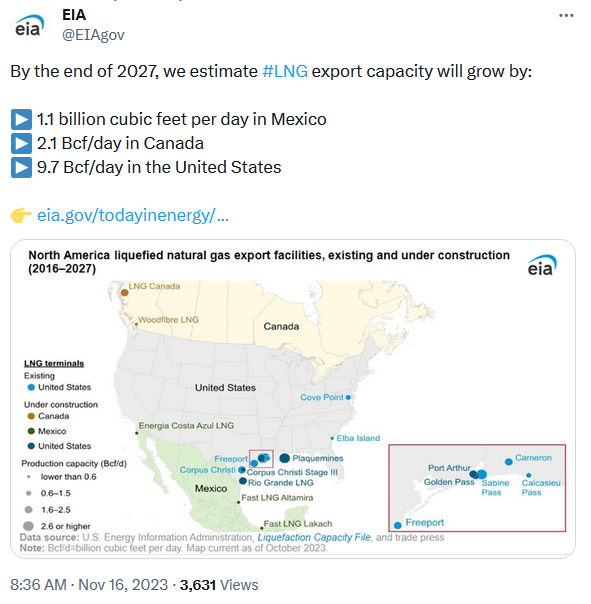
  • Housing: Time to pay attention; Fed & Bond Vigilantes; and Soft commodities gone wild

    Get $200 OFF your CI Markets subscription: https://completeintel.com/save200/.

    Welcome to “The Week Ahead” with your host Tony Nash. In this episode, we discussed three crucial topics:

    1. Housing: Time to pay attention: David Cervantes addresses the US housing market, noting its robustness during the pandemic due to backlogs but predicting a slowdown now that those backlogs have resolved. He stresses the significance of monitoring housing prices, especially rental prices, as indicators of inflation. Cervantes also discusses the frozen state of existing home sales, emphasizing the influence of wages on rents. He highlights the Federal Reserve’s focus on real estate and wage channels to manage aggregate demand. Additionally, he suggests potential investment prospects in the housing sector, including home builders and mortgage real estate investment trusts (REITs).

    2. Fed & Bond Vigilantes: Gary Brode covers various topics in his discussion, including concerns about excessive government spending and monetization of debt. He highlights the impact on the bond market, expressing concern about inflation and the potential slowdown in the economy. Brode also discusses historical income taxes, property taxes in Texas, and challenges faced by the orange crop in Florida.

    3. Soft commodities gone wild: Tracy Shuchart conversation covers a range of topics, from California’s potential as the top orange crop producer to student loan repayment’s possible impact on the housing market. Additionally, she touches on the conflict between monetary and fiscal policies, factors affecting soft commodities, and regional issues in the NatGas market. The discussion wraps up with speculation about the effect of snowfall on natural gas prices.

    Join us for a clear and concise analysis of these important topics in plain language you can understand. Stay informed for the week ahead! Don’t forget to like, subscribe, and share for more valuable insights.

    Key themes:

    1. Housing: Time to pay attention

    2. Fed & Bond Vigilantes

    3. Soft commodities gone wild

    Transcript

    Gary Brode


    The Republican financial plan is like being a waiter and coming to the table and saying, By the way, if you’d like, we’ve got a Republican plan for your dinner. I’m going to put enough poison in your dinner to kill you. The Democratic plan is we’ll offer you more poison than that. Either way, you’re dead.

    Tracy Shuchart


    Court is a really interesting case because it’s the largest orange juice or it’s the largest orange crop producer in the world. For the very first time this year, California is going to beat us.

    David Cervantes


    The existing home sales market is basically frozen shut.

    Gary Brode


    When he’s been screaming higher for longer and the whole market said, He doesn’t mean it. He’s going to pause. He’s going to pivot. We’ve heard all that. I’m like, No, no, no. The reason I believe this is because I think Powell is terrified of being the next Arthur Burns and he wants to be the next Volker.

    David Cervantes


    Rental prices will moderate and chip away at that sticky OER.

    Tracy Shuchart


    Their storage may be 90% full, but that 90% is only 25% of what they use during the whole winter.

    Tony Nash


    Hi, everyone, and welcome to the week ahead. My name is Tony Nash. Today, we’re joined by David Cervantes, Gary Brode, and Tracy Shuchart. Gosh, we’ve got a lot to cover this week. First is housing. And David is telling us that it’s time to pay attention to housing. When everyone was freaking out last year, David had a very cool head, and now he’s starting to pay a lot more attention to it. Gary is going to talk to us about the Fed and bond vigilantes, which I think will be a really interesting discussion. And then Tracy is going to talk to us about soft commodities. We may be able to get a little bit talk about the NatGas stuff that happened this week, but we’ll talk about soft commodities and why they’re rallying so hard.

    Everyone, we’re having a quick promotion for our CI Market Platform. This is our platform that forecasts currencies, commodities, equity indices, individual stocks, and global economics. Right now, you can get 40% off of prepaid annual subscription. It’s a limited-time deal. That brings the price down from our normal $500 a year to $300 a year. Visit completeintel.com/save200. Use the promo code SAVE200 at checkout.


    The deal is designed to help you better plan your portfolio and see the forecast of your investments and global markets. It’s our way of saying thank you for being a part of the Complete Intelligence Community. Again, visit completeintel.com/save200 and use the promo code, SAVE200, to check out.

    Thank you. Guys, thanks so much for joining us. Gary, thanks for joining us for the first time this week. I really appreciate the time you guys take for this.

    Gary Brode


    Thanks, Tony. Great to be here.

    Tony Nash


    David, you remained fairly bullish on housing, or I would say not as bearish as many people last year when it got a lot of attention. You kept your head. You saw housing backlogs really as a key driver there. Lillie, you’ve really started to rethink that a bit. Part of this is based on the permits data, which we’ve got some of that on screen right now, both the % change and the total permits, which were down pretty hard in September. You say the backlogs are pretty played out. Can you walk us through what you’re looking at in housing now and what you think will play out in the near term?

    A screenshot of a chat

Description automatically generated

    A graph showing a line

Description automatically generated with medium confidence

    A graph on a screen

Description automatically generated

    David Cervantes


    Yeah. First of all, thanks for having me. Glad to be here with everyone. Let’s just take a step back into the initial thesis and how that evolved. I think when the housing market started freezing up, mortgages rates started mooning and sales started collapsing, a lot of people conflated that for the impact or for actual economic activity. In reality, that’s just paper shifting. When people buy a house, there’s no new wealth created. I mean, maybe for somebody, but it’s zero sum. It’s a wealth transfer maybe, but there’s no new net wealth created. It’s like buying stocks. In any case, I was focused on actual economic activity that goes into national accounts for GDP accounting. What really matters for the cycle is construction spending and construction employment. Due to the backlogs, those were at all-time highs. Despite sales falling off the cliff and mortgage rates moonshotting, actual economic activity that made it into national GDP accounting remains strong. In addition, fixed residential investment was down, I believe, in Q3, 26% and Q4, 22 %. And I hypothesize, well, it doesn’t need to get necessarily better, it needs to get less bad. And I figured if it got less bad, we could get a growth impulse later in the year.

    David Cervantes


    And that’s exactly what happened. Fixed residential investment went from detracting from GDP to becoming mildly additive to GDP. We just got the GDP report yesterday. Q3 expectation was for it being 19 basis points additive to GDP came in line at additive 15 basis points to GDP. Now that’s all in the past. I think now with the backlog cleared out, we need to start paying attention to the data that we used to pay attention to, but that became noisy and muted due to the backlogs. So with the backlogs out of the way, I think that some of the signal in things like permits is going to start to matter more now because there are no backlogs to fill that gap anymore, or there’s less of them rather to fill that gap. So the expectation that I have is that with that impulse out of the way, we will see some deceleration not only in the sector, but also in the general economy. In fact, today, Atlanta Fed GDP, just a few minutes ago, I posted on Twitter, came out with a 2.3 expectation for the fourth quarter of this year. Yesterday came out saying 2.5 was my estimate.

    David Cervantes


    That was 20 basis points off. This is a fluid thing, but that’s where we’re starting from, is that we are already baking in a slowdown from the toward pace of growth we saw in the last quarter.

    Tony Nash


    Okay, so 2,3 is more in line with, say, a slightly above trend growth for the US, right? So 4,8 or whatever it was yesterday, obviously way ahead of where we should be where we are right now as an economy. I know you’ve been very bullish on economic growth all year, which is great, and you’ve called this excellently. With housing, so you’re saying even with the backlog is clear, do you expect housing, say, construction jobs to continue to decline? Is that what you’re saying?

    David Cervantes


    The answer is on the residential side, yes. Right now, it’s a huge market. There’s industrial construction, there’s manufacturing construction, and there’s a lot of IRA money that’s going to go into those sectors. But for purposes of tracking the economy, I really pay attention to the residential side. The reason is that’s the most volatile of the construction sectors, and that is what typically leads into and out of a recession. Seven out of 11 post-war recessions have started with a significant drop in fixed residential investment. That’s been the historical experience. I’m watching the residential side. That’s the answer.

    Tony Nash


    Can we talk a little bit about meeting house prices? If we look at meeting house prices, they started to fall in Q1 of this year. Of course, that’s local markets. San Francisco would be the same as Houston, Texas or whatever. Q2 and Q3, that decline accelerated. Can you talk us through what do you have expectations on, say, median house price to go in line with your housing thesis?

    A graph showing a line

Description automatically generated with medium confidence

    David Cervantes


    The answer is not really, and here’s why. Again, house prices aren’t in and of themselves economic activity. But I still watch them for this reason. Rental prices lag, housing prices with the 12-18-month lag. As we know, the real sticky part of inflation has been OER. I forgot the. I’ve had a brain fart now on the acronym.

    Tony Nash


    Owners equivalent rent.

    David Cervantes


    Exactly. Thank you. Owners equivalent rent. That’s been sticky and still at a high single-digit level. I believe it’s 7.8, the last reading, but tomato, tomato, give or take, a few basis points. It’s still high historically. I think as long as house pressure prices have continued to moderate, either outright declines or at least increasing at a slower rate, I do think that rental prices will moderate and chip away at that sticky OER. For me, that’s really why I’m watching house prices. Not for any tells on the economy per se, but on the inflation front.

    Tony Nash


    Okay, so I want to come back to that in a second, but I want to also talk about this information we have about home sales, which came out this week. Actual home sales in September in the US were 759,000. The expectation was 680,000. Year on year, it’s 12.3% growth where it was… Sorry, that’s month-on-month, 12.3% growth. The expectation was a negative 8% growth. With housing prices falling, are people going in with cash to buy those houses? Or why do we see this a little bit higher than expectations?

    A screenshot of a social media post

Description automatically generated

    David Cervantes


    Well, I think that’s a really good thing you bring up. Here, I think, is part of the issue. The number you referenced was for new home sales, not for existing home sales. The existing home sales market is frozen. There is no action. Whether it’s sellers that have a 3% mortgage and don’t want to leave it or they just can’t pull up the funds for a different, I don’t know, for whatever reason, the existing home sales market is basically frozen shut. And so we’re seeing a lot of that activity shift to new housing, especially with the larger home builders. They’re offering the rate buy downs. They’ve got the balance sheet, they’ve got the institutional wholesale funding to buy down these mortgage rates. Because of that dynamic, a lot of this is just shifting from existing to new.

    Tony Nash


    Okay. Let me open this up a little bit. If we go back to the rent discussion and we look at how price is declining, especially with rent, as rent starts to fall, does that have an impact on service industry inflation? Meaning, is the pressure on hourly wages, the upward pressure on hourly wages, is that alleviated a bit if rents start to fall?

    David Cervantes


    I think the answer is no. Wages come first and wages drive rents. What we’re seeing now, what we are seeing though, is a decline in the rate of growth of wages. I believe that the most recent one came out at 4.3. It was previously at 4.5. The Atlanta Fed does have a wage tracker. If you pull up a graph of that, you will see a precipitous decline in wages over the past few months. Okay. That’s actually what the Fed is. They have different economic linkages that they’re targeting. One of them is the real estate channel, the other one is the wage channel. They’re trying to address both of those so that they reduce aggregate demand. Ultimately, reducing aggregate demand is what they’re trying to do.

    Tony Nash


    Right. Gary, did you have something on that?

    Gary Brode


    Yeah, David, I want to ask you a question on one part of what you were talking about related to the residential market. I agree with you that people, if we’re going to say trapped with a 3% mortgage rate, they have an incentive not to sell. That’s kept inventory off the market. It’s kept housing prices very high in an 8% mortgage environment where affordability has plummeted. The question I’ve got for you is don’t you think one of the things that will help bring this in equilibrium, meaning more transactions at lower prices, is people will often sell houses for non-financial reasons. Like a death or a birth or somebody ages and they’re going to assisted living or change a job. This is one of those things where people might be able to hold off for a while, but at some point, life circumstances mean you have to dump the 3% mortgage and deal with whatever your current life situation is. Don’t you think that ends up bringing more inventory on the market and bringing prices more into equilibrium? By equilibrium, I mean more transactions at lower housing prices, particularly with 8% mortgages.

    David Cervantes


    The answer is yes, but that’s a slower moving… The answer is yes. It’s a question about what rate. And does that happen in time to unlock that market to make it economically beneficial? So all these things you mentioned are life things that you can probably kick the can on for a year or a year or two. Eventually, yes, you got to face reality. If you’re an empty nest or your kids are off to college and you just don’t need that 4,000-square-foot-Mid-Mansion or whatever it is you have. Yeah, at some point reality kicks in. But to make it cyclically important, I think we’re at a different bind right now for that to make a difference.

    AI


    Heads up for a short break.


    Are you using the potential of AI in your portfolio management strategies? With an impressive 94.7% forecast accuracy on average, you can confidently integrate AI into your approach with CI Markets. Visualize the potential volatility of your portfolio over the next 12 months and gain insights into specific assets that might experience fluctuations. This empowers you to make informed decisions on when to buy, sell, or hold. CI Markets covers a wide range of over 1,600 assets, including stocks, commodities, forex, indices, and economic indicators. Imagine running limitless portfolio scenarios to optimize your gains. Curious about the outcome of removing or adding certain assets? Wondering how your portfolio might evolve in the next 3, 6, or 12 months? CI Markets equips you with answers to these crucial questions. Whether you seek a streamlined portfolio analysis, wish to explore diverse scenarios, or aspire to track your investments with precision, CI Markets is the ultimate tool for you. Ready to learn more? Visit us at completeintel.com/markets. Thank you and now back to the show.

    Tony Nash


    Can I ask you guys another probably weird question, but with the amount of money on credit cards in the US, could credit card debt push a segment of the population to sell their homes? Because that’s been rolling around in my head for a few months, and I’ve never really looked into the research on that. But could that be something that could move the housing market? Yes, somebody has a 3% loan or a segment of the population has a 3% loan, but they’ve had to put so much on credit cards over the last two or three years, and that’s bursting at the seams. Could that be something that pushes the housing market or is that just too on the edge that it’s really not going to impact that much?

    David Cervantes


    I would think as long as employment stays low or unemployment stays low, employment high, I think it’s a non-issue because as long as people can service their debt and hit their monthly or whatever, but look, a lot of houses are owned free and clear. I don’t know what the number is. I know it’s at a historical high where there’s a lot of equity. Granted that with rates aren’t where they are, that cost of equity is expensive, but it’s probably cheaper than your credit card debt. So I think at the macro aggregate level, there’s a ton of housing equity that can cover any shortfalls for a while as long as the employment picture stays okay, which right now it’s still a hot… By all definitions, it’s still a hot labor market.

    Tony Nash


    Okay, great. Go ahead. Go ahead, Tracy.

    Tracy Shuchart


    I had a question, Mario, on this. Do you foresee any problem right now with repayment of student loans and say, new first time home buyers and/or renters coming onto the market and having that cost some ripple in that market, in the housing market?

    David Cervantes


    I know. I think the student loan issue is overblown from a macro standpoint. Again, looking at the numbers sound big and scary, but my heuristic is take whatever macro doom problem you have divided by nominal GDP and you probably get a really small number. Typically it’s not big enough to really make a difference at the aggregate level. This is a $27 trillion nominal economy. It is huge. Last quarter, in one quarter alone, we grew the size of New Zealand’s GDP. Just to let that sink in for a moment, how big this economy is. When you take a problem like student loans, I don’t know exactly what the number is, a couple of hundred billion and you divide it by an auto GDP, you end up with a small number.

    Gary Brode


    David, I agree with you. One thing I’d add to that as well is for all the talk about our very high credit card debt, and granted, it has gone up a lot, but one of the things people don’t add to their evaluation of that is inflation. If we go from a certain level of credit card debt to a higher level, part of that, yeah, it’s more nominal dollars, but what does that actually represent as a percentage of household budgets? The issue that you’re talking about, how much does this matter in terms of GDP, that also plays out at the household level as well. How much does this play out in terms of our assets or our high income? Again, in nominal dollars.

    David Cervantes


    Right. It puts consumers in the privileged position of being a debtor in a higher than normal inflation regime, which means it deflates. Your debt is nominally fixed, but as long as inflation remains high, it gets deflated over time, especially if your wages rise. If your wages continue to rise, that real burden falls over time. It’s like what governments do all the time: deflate their debt.

    Tony Nash


    Okay, so great info on housing. What action can I take as a result of that? What are you watching as a result of where housing is right now and what’s happening in housing markets?

    David Cervantes


    I’m actually watching The Home Builders. I had a fantastic trade lap first half of last year. Killed it. Took off risk in middle of August. It was partially I got vibes and partially I was on vacation and I don’t like having a risk on when I’m on vacation. I got lucky, partly. But since late summer, housing stocks have been hit hard. But I think once we see some normalization in the yield curve, anything that any trade that involves borrowing low and lending high, a normalized yield curve is going to potentially do really well. Though, home builders being very leveraged to the economic cycle, home builders using their institutional buying power to buy down rates and deal with that. I think once we see some normalization of the curve, and we’re starting to see that, once we see some normalization of the curve, I think the home builders could be at play again. I’m looking at that. I’m also looking at Annaly Mortgage and REM, similar type of business that the Mortgage REITs. They’re basically just levered, borrow near, land-high operations. I think those trades could do really well.

    Tony Nash


    Perfect. That’s great. I love it when an extraordinarily smart person attributes their success to luck. It’s just it’s so humble. Thanks for that. I love it.

    David Cervantes


    I’ve burnt my hand on the stove enough times to know that I don’t know all the answers.

    Tony Nash


    Yeah. I’ll take luck over intelligence any day of the week. Let’s move on to the Fed and bonds. Gary, one of your recent tweets says that the Fed has lost control. I want to hear about that. Your tweet about this saying that Powell acknowledges that the bond vigilantes are in control. Can you talk about that? Why is that important and what near-term impacts do you expect?

    A screenshot of a social media post

Description automatically generated

    Gary Brode


    Sure. Thanks, Tony. The key thing is, at the last Fed meeting, the Fed kept interest rates flat. They basically paused three months ago. One of the things he acknowledged, which I think is accurate, as he said, the bond market is doing a lot of the Fed’s work for him. He’s right about that. If we go back three months to the last time the Fed raised rates, we had the yield curve where it was. In the three months since then, the short end of the curve, the Fed funds rate through the three-month treasury have all traded about flat. Well, the Fed funds rate has been completely flat. But the long end of the curve, the 10 year, the 20 year, the 30 year have all traded up about 100 basis points, and roughly half of that move has come in the last month, the last four weeks. What he’s recognizing is that the bond market is starting to price the long end of the curve at a much higher yield than it was despite the fact that the Fed hasn’t done anything. He’s saying, Wait a minute, the bond market is going to slow down the economy for me.

    Gary Brode


    We don’t need to do as much. I think he’s right about that. But to me, the key point is let’s take a look at why the bond market is reacting the way it is. We got this great question. I forget who it was, but somebody on Twitter asked this brilliant question, Wait a minute. We’ve got higher bond yields and gold and Bitcoin are going up. What in the world is going on here? My assertion is that all three of those markets and Powell are all watching Congress. We have a situation now where we had this budget deal back in June, July, where both sides pretended that there was this horrible, long, bitter, six-month fight. But we all knew the end result was going to be a solution that just guaranteed more and more and more spending. They agreed on a solution that would result in an excess of $4 trillion of spending in the roughly year and a half between then and the next election. It’s always amazing to me how they always finance it through the next election. Because, of course, we’re not concerned about our jobs. We’re not being selfish or self-interested where this is what we’re doing for the American people. Okay, great job.

    Tony Nash


    They’re all on the same side.

    Gary Brode


    I completely agree. I completely agree. We have one party. One of the things that I’ve said is the Republican financial plan is like being a waiter and coming to the table and saying, By the way, if you’d like, we’ve got a Republican plan for your dinner. I’m going to put enough poison in your dinner to kill you. The Democratic plan is we’ll offer you more poison than that. Either way, you’re dead. What’s the difference? If there’s anybody in Washington, the people that are serious are saying, We’ll give you your poison with dessert and acting like that’s a favor. What’s happened here is they’ve agreed to overspend by $4 trillion over less than two years. This is all happening with higher interest rates. Let’s just take that $4 trillion of spending, they’re going to monetize. It was just a fancy way of saying there’ll be more currency units created. If you assume a 5% rate on that, great. That’s another more than $200 billion over the next two years. That’s just the interest on the excess spending for the next two years. Add to that the fact that we’ve got 10-year securities rolling off with a rate of less than 1%.

    Gary Brode


    They’re replacing that with 5% paper. What we’re looking at is a situation where interest expense for the federal government was $400 billion a decade ago. It was $600 billion a couple of years ago. It’s now a trillion dollars heading for in the next couple of years, somewhere between 1.5 and $2 trillion. Let’s add that to the calculation. Basically, Congress is going to monetize another maybe $5 trillion over the next year and a half, and that’s assuming they’re on budget. Anybody wants to take the under on that, I will take that bet right now. What happens now is you have more currency units being created. In this case, it’s the dollar, the Fiat dollar, and it’s chasing the same amount of goods in the economy. All we’ve done is replace the meme that we’ve had over the last decade. We’ve all seen the meme of Powell and the Fed making the money printer go bur. Well, great. Now it’s Congress. What’s happening right now is the bond market, the Federal Reserve, the gold market, and the Bitcoin market are all watching Congress. Yeah, we’ll watch Powell’s press conferences and we’ll be interested in what they do next.

    Gary Brode


    But the truth is, at this point, it’s the bond market that has control, and they’re watching Congress. Tony, as you’ve pointed out, there is other than Rand Paul, there is no one in Congress even making noises about being fiscally responsible. There’s just going to be unlimited currency creation.

    Tony Nash


    Okay, so let me take a step back and ask a couple of questions, and David and Tracy jump in here. You started out talking about the Fed and the bond guys taking over, David talked about how the service wages are going down and other indicators that the Fed has managed are moving in the direction. The Fed has handed off some of their work to these bond vigilantes, whether they wanted to or not. Service wages are coming down as a result. From my perspective, although I don’t love to love these guys, it sounds like the Fed’s job is being done. Is that fair?

    Gary Brode


    I think what created the problem was more than a decade of zero or near zero rates.

    Tony Nash


    Of course. Yeah. I’m talking about.

    Gary Brode


    Their job- Right now. -let’s say.

    Tony Nash


    Over the past 2-3 years.

    Tony Nash


    Their job is being done. We don’t want to acknowledge that and we don’t want to say we like the Fed, but their job is being done. David, do you agree with that?

    David Cervantes


    I mean, beauty is in the eye of the beholder. It’s a question of what do you think their job is? If you take the- The inflation right now. Yeah. We’re experiencing a disinflationary impulse. There’s no argument there. The question is, what does the future look like based on what Gary said? I respect what he said. I’ll just take it as truth. Then maybe not. If they’re not doing their job. If you look at nominal… My favorite metric is nominal GDP. Right now, as of yesterday, 8.5%. It’s not in line with their target. Their target is around four, four and a half %. Five would be in the high side, but we can probably excuse that away. If you use a nominal GDP as a metric, the answer is no, they’re failing. That’s the answer. It really depends. What’s your metric?

    Tony Nash


    Okay, that’s great. That’s perfect.

    Gary Brode


    David, I would add one thing to what you’re saying, which is a huge part of nominal GDP right now is government spending. We have this really weird quirk in the way we calculate this where government spending is additive to GDP, nominal or adjusted, whether it creates value or not. We’ve all heard the constant example of you pay half the country to dig ditches, the other half to fill in ditches, and if the government pays for it, we’re adding that to GDP. I agree with you, Tony, that the Fed has done the right thing right now. The problem is everything the Fed is doing, Congress is undoing, and they have diffuse responses responsibility. My belief and one of the reasons why I have believed Powell over the last two years when he’s been screaming higher for longer and the whole market said, He doesn’t mean it. He’s going to pause. He’s going to pivot. We’ve heard all that. I’m like, No, the reason I believe this is because I think Powell is terrified to be the next Arthur Burns and he wants to be the next Volker. He does not want to have his last job in the public sphere being the next guy who failed on inflation.

    Gary Brode


    The issue he’s got is he’s now fighting Congress and they have to diffuse responsibility and they will blame everybody but themselves for the inflation that will inevitably come when they monetize the next two, three, five, six trillion dollars of currency units. They’ll blame Vladimir Putin, they’ll blame greedy corporations because corporations only became greedy in 2021. They didn’t want to make profits before that. I think they’ve done the right thing, but they’re like the Bank of Japan. I know you guys were talking about this in a recent episode. They’re stuck. There’s nothing they can do to go forward or backwards and whatever they do is being undone in Congress right now.

    Tony Nash


    Okay. Tracy, you keep nodding yes.

    Tracy Shuchart


    Yeah, I’ve been saying that, and I think this problem is going to get worse headed into an election year because this administration is going to do everything they can to avoid a recession. Obviously, nobody wants a recession. They want to get reelected. I know everybody says, Yeah, but we have the House that’s dominated by Republicans, but they’re wishy washy.

    Tony Nash


    They spend as much as everyone else.

    Tracy Shuchart


    Let’s call a spade to spade. I just think this problem is going to get worse and we’re going to still have monetary policy butting up against fiscal policy, in my opinion.

    Tony Nash


    Let me ask all of you. Guys this-

    Tracy Shuchart


    Maybe, Gary, we can expand on that.

    Tony Nash


    Yeah. David’s talked about nominal GDP, not overheating, but accelerating. We’ve got a disinflationary environment. Gary’s talking about the Congress doing trillions of dollars of additional spending, but unless we have a recession or an emergency, how are they going to justify a multi-trillion dollar spending plan?

    Gary Brode


    Well, they’ve already done that.

    Tony Nash


    Additional.

    Gary Brode


    That’s where we are now. We had a situation where we had GDP growth, insanely low unemployment, rising wages, an economy that was in really good shape and high levels of government spending. Remember, every time we’ve had a so-called emergency, we ramp up spending and then that’s the new baseline. We saw that in 2008. We took the baseline spending from the TARP plan and a trillion dollars of supposedly shovel-ready plan. All of that was the new baseline. Then we had COVID spending. That was a one-time emergency. That’s now the baseline. They’ve passed $2 trillion dollars of hilariously named inflation reduction as if the government pouring another $2 trillion of currency into the economy was going to lower prices for people. We’re already at insane levels of spending and nobody’s showing any signs of slowing down. Here’s the better question, Tony. Who in Congress is going to stop the next big spending bill?

    Tony Nash


    Well, okay. That’s a great question, but if this is going to happen anyway, why should we worry about it? I mean, I hate to be so fatalistic, but if we know this is going to happen anyway, why does it matter?

    David Cervantes


    I think it matters because if you have a situation with fiscal dominance, if we move to a regime of… We’re already in a regime of fiscal dominance. The question is, does monetary policy offset that and try to keep nominal and real GDP at a sustainable level? Or does the Fed have to do a monetary offset? I’m sorry, do they avoid monetary offset? And then policy goes off the rails. To Gary’s point, I don’t think that would happen because Powell is concerned about his legacy, and I think he cares about the institution as well. I think he’s trying his best as a public servant. I think if fiscal dominance does overreach, I think the Fed will deliver monetary offset. The way that will express itself will be in the yield curve. We’ll see even higher for longer.

    AI


    Heads up for a short break.

    AI


    In the fast-paced world of investments, staying informed is the key to success. Introducing CI Markets Free, your source for AI-powered forecasts. With our free version, you get access to powerful tools that help you make informed decisions. Join a community of savvy investors, analyze market trends, plan your investments strategically. Stay ahead with monthly forecasts, compare assets effortlessly and download data for your analysis. Don’t just take our word for it. Our users love the valuable insights CI markets provides. Get started today with CI Markets Free. No credit card required. CI Markets, your source for AI-powered forecasts.


    Thank you and now back to the show.

    Tony Nash


    Higher or for longer? Okay, great.

    David Cervantes


    With lots of ERs at the end.

    Tony Nash


    Exactly. It’s like Abenomics from 2012 until whenever. It just became more and more intense. We could have something similar here. Gary, just back to your report that you sent me, inflation targeting is something that obviously is talked about, and one of your reports talks about that. Can you talk about how changing the inflation target would matter in an environment like this?

    Gary Brode


    Yeah. So it’s a great question because what we’re seeing right now are a large number of people saying, Oh, well, we can fix the problem by changing the inflation target. Right? I mean, this is like you’re a marathoner and you get to the 24-mile mark and someone’s like, close enough, let’s just stop. Okay, great. But that’s not effective. Tony, you’ve been, in my opinion, correctly critical of the Federal Reserve. I’m 100% with you. Let’s talk for just one second about the danger of the existing discussion. Everybody accepts 2% as the correct reasonable, moral, fine inflation target. We all just… It’s and it’s only 2%. You pay a dollar for something one year and it’s a dollar two next year and who cares? It’s small. Okay, this is theft. Because over a 40-year working life, and most people have a 40-year working career, a 2% inflation rate, people forget about compounding, destroys 55% of the value of your money. That is value that is going from you to the government and the ability to do that is called senior. Just a fancy word for stealth stealing by the government. People say, Oh, well, you know what’s the big deal?

    Gary Brode


    We’ll just move the inflation rate to 3% or 4%. Okay, well, let’s talk about the implications of that. A 4% inflation rate over that same 40-year working life for people takes 79% of your money. Four out of every $5. There are people-

    Tony Nash


    What you’re saying is I get to keep 21% of it.

    Gary Brode


    Yeah, right. Congratulations. Fiat economics. It’s phenomenal for everybody. Part of the problem is they only steal a little bit at a time. By the way, that’s assuming you believe the CPI. I don’t. The CPI is hugely understated. OER, which you and David were talking about earlier, is a huge reason why that’s a big part of it. But because they’re stealing slowly and quietly and no one really knows who to blame and Congress can blame everybody, people, they let it go. But the real correct moral rate of inflation is zero. Two % is itself obscene, but going to 4 % and you’re losing, like you said, you get to keep 21 cents out of every dollar you make over your working career.

    Tony Nash


    Pre-taxes.

    Gary Brode


    Yeah, exactly. They’re stealing from you in a lot of ways, but at least taxes people know who to be angry about. Inflation is stealth stealing. What we’re seeing, one of the things that I think is really interesting is last week, one of the leading candidates in Argentina promised his people no taxes. This was not a President Bush, no new taxes. This was no taxes. He’s not offering to cut the massive size of the Argentinean government. Basically, what he’s saying is we will pay for 100% of our spending in inflation. The Congress, rather than viewing that at the US Congress, rather than viewing that as a warning, is saying, Oh, wait, that’s a great model. We can tax people an unlimited amount with this and we won’t get voted out of office. We can now be the Santa Claus of free stuff. We can be the Santa Claus of low taxes and we can blame inflation and everybody but ourselves. It doesn’t matter. It still ends in disaster either way. To anyone listening to this, I would strongly suggest that the next time you hear somebody talking about, Oh, just raise the inflation rate and that’ll solve the problem, push back on that.

    A white text with black text

Description automatically generated

    Gary Brode


    Help people understand that inflation is the way a government harnesses the currency to take money from you without you noticing, but it’s still theft.

    Tony Nash


    Yeah, but it’s just 4%, Gary.

    Gary Brode


    By the way, here’s the best one. We remember every time a taxing authority, whether it’s a state or the federal government in the United States, income taxes, it always starts at 1% and it’s temporary. That worked its way up to 90% tax rates at one point, and nothing is ever temporary. I promise you, if we don’t hold the line on this and we say, Okay, fine, we agree to 4%, does anyone here think it’ll stay at 4%, there’s no way in the world. Tracy, what’s next? 6, 8, 10?

    Tracy Shuchart


    Exactly.

    David Cervantes


    Sounds like my property taxes, I think they’ve doubled since we moved into the suburbs.

    Tony Nash


    I live in Texas, we have very high property taxes. No state income tax, but we make up for it in property tax. Okay, Gary, that’s all great. Thank you for all of that. Let’s move on to commodities. Tracy, we have seen a lot of upward pressure on soft commodities, really since the pandemic. Things like cocoa, orange juice, sugar, cattle. What’s happening with these soft commodities to push up those prices?

    A screenshot of a graph

Description automatically generated

    Tracy Shuchart


    Well, I mean, I think you have to look at each one of these individually because they have their own unique set of problems you’re having. So for cocoa, for instance, we have most of those crops are located in West Africa. West Africa crop is doing poorly. Obviously, bean deliveries and ports on the Ivory Coast are about 16% behind this season. I won’t go into total details, but again, it’s a weather issue as well. El Niño is threatening dryness in West Africa, et cetera. That’s because so cocoa is really because the crop is really in one specific area. A lot of the crops are in one specific area. If we look at sugar, for example, we have a deficit that’s grown as a result of poor Indian Thai crops, which are huge. We also have issues in Latin America right now in Colombia and also in North America, in Mexico. We’re having issues there. If we look at cattle, I think cattle was on your thing, but it’s not a soft, so let’s move to OJ. If we look at… Florida is a really interesting case because it’s the largest orange juice or it’s the largest orange crop producer in the world.

    Tracy Shuchart


    For the very first time this year, California is going to beat us. Really, we have had our worst orange crop in the last 70 years. This is due to several problems that are really unique. Well, one, hurricanes, that’s not. We’ve had weather-related issues. We also have a deadly disease called citrus screening, which is an invasive Asian bug, essentially. But what is unique to Florida and really different is that what is happening is as people are moving into the state, those properties are actually being sold. Those crop properties are actually being sold to residential home construction. This is what is happening in particularly the Orange juice market in Florida.

    David Cervantes


    Hey, Tracy, I have some questions for you. You mentioned California. California has been a drought for a long time. Up until I believe it’s last year, they’ve gotten so much rain, they are no longer in drought conditions. In fact, some of the areas where I grew up in the Central Valley, some of the lakes that were drained and dikes and levees were put up for the irrigation system have returned. You’ve got these-

    Tony Nash


    Really?

    David Cervantes


    Yeah. Lake Tilare, I believe it’s called, was filled in the 1800s and it’s now refilled and yet farmers… This whole system was developed around farmer interests and looks like Mother Nature just took over instead. Too bad. But is the causality of California getting more involved in the secretion market due to the rehydration of the state or is that just some other factor? I’m just curious.

    Tracy Shuchart


    Yeah, I think it’s definitely helping. But we really haven’t seen the results of that yet. We really won’t know for a couple more seasons how that really pans out. Yes, their crop, their 23, 24 crop is much larger than it’s been, but I think we need to give it a couple more seasons to see how really those weather patterns filter into actual production.

    Gary Brode


    Tracy, any thoughts on fertilizer? Because you’re talking about these increases in prices. There have been fertilizer shortages. I know Russia has declined to export to certain parts of the world that we would care about in this case. Where do people get fertilizer now and how much is that impacting all of the issues that you’re talking about?

    Tracy Shuchart


    Yeah, well, I think right now, obviously, we saw that big run-up in 2021 to 2022 where we had a lot of shortages. We saw a big spike in prices. Everything’s come back down to normalized prices now because that might calm down a little bit. But I think what we really need to focus on right now is the drought situation in the Mississippi River, because what’s happening is that’s impacting not only what farmers, which farmers use that Mississippi River to send their goods to the Gulf Coast to be exported elsewhere, which is huge. With lower river levels, that means that you either can’t pass through and/or higher shipping costs because you need to split your product to make your vessel lighter. We’re also seeing problems with that in shipping fertilizer. Then again, in Florida, Florida is a huge fertilizer producer, has also been impacted over the last two seasons during hurricane season. We need to keep an eye on it. I’m not that worried about it right now, but it’s definitely worth keeping an eye on, especially if we start to see some rise in natural gas prices, which if you look at the weekly chart right now, we’re just about starting to break out.

    Tracy Shuchart


    We could have problems in Europe this winter. If we see a spike in natural gas prices again, you’ll probably see a spike and corresponding spike in fertilizer prices.

    Tony Nash


    As well. Okay, before we go on to NatGas because I do want to ask you some bonus questions on NatGas. But I do want to say that whenever I see AG prices spike, the first thing that I think of, you know what it is? Coffee prices.

    Tracy Shuchart


    You’re like, I could do it.

    David Cervantes


    I know why. I know why. I know why. I know why. I know why.

    Tony Nash


    Much to my relief, coffee prices are down 40% from the peak. We’re not seeing the run-up in coffee prices like we are with some of the other softs, which is such a relief. Tracy, can you talk us through some of the NatGas drama that’s happened this week? I know there’s been a lot of noise about it. I just want to help people understand what’s happening in those markets.

    Tracy Shuchart


    Well, we’ve had… Well, first of all, the obvious-obviously being the Israel-Hamas conflict, and they shut down the Tamar Field right off the Coast of Israel. However, I will say that’s relegated to being a regional issue more than a global issue, being that Jordan is the main importer of Israeli gas from that particular field. They’re more impacted than anything else. There is a pipeline to Egypt, so that means less exports out of Egypt. But again, I think the problem is mostly regional. I think we saw a kick-up in prices initially, obviously because of the region. We saw a kick-up in oil prices as well. Then we had the first cold snap in Europe, and I think that got the market a little bit jittery. I think that’s what the market is reacting to right now. But I do think Europe is not out of the problem. You have to realize their storage may be 90% full, but that 90% is only 25% of what they use during the whole winter. It’s not like their storage, We’re 95% full, so we’re good all winter long. No, it’s not really how it works. If we do have a colder winter, they’re still not out of the woods yet.

    Tracy Shuchart


    If manufacturing picks up for some reason, I don’t know what that would be, but if it does, then you’re also going to have a bigger problem. It’s definitely a market to watch right now. If we’re just looking at it from a technical standpoint, this market is very short. Any breakouts you could very easily see a short squeeze.

    Tony Nash


    Just for reference, NatGas is up over 10% today on Friday. The price right now at 350 is about half of what the price was a year ago at just over seven bucks.

    Tracy Shuchart


    Yeah, you have to… We just spent almost nine months flat.

    Tony Nash


    Exactly. We were-

    Tracy Shuchart


    In consolidation.

    Tony Nash


    -260 or something like that. This rise is really coming on fast. I don’t know, do you think we’ll get to the levels that we were at last year, or do you think we’re going to pass that?

    Tracy Shuchart


    Well, I’m not a weather expert, so I have to see it is a Linear year. Who knows what could happen? Who knows what could happen geopolitically. Those are all things that you need to watch. I think right now, if experts continue out of the Middle East because everybody wants to do business, as usual, even with BombSquad, we’ve seen that in the past. In Texas.

    Tony Nash


    They can always do business in Texas. That’s good.

    Tracy Shuchart


    They can always do businesses in Texas. But I could see a squeeze at $5, $6 easily. I don’t know about hitting the highs. But again, I don’t want to be a person that….

    David Cervantes


    Hey, Tracy. I’m an armchair weatherman only because I’m a snowboarder and I plan my snowboarding trips far in advance. I know it’s going to be a really good season. There’s already snow in Jackson Hole. There’s snow in Mountain hood, Washington. I don’t know if it’s the El Niño effect or some other effect, but it’s going to be an epic snowboarding season. I’m getting my stuff ready. I don’t know how that impacts natural gas prices, but I’m looking forward to the weather.

    Tracy Shuchart


    Okay, I’m with you.

    David Cervantes


    Snowboarder or skier?

    Tracy Shuchart


    I’m a skier, but I’ll tell you. Great.

    Tony Nash


    All right, guys. Hey, this has been fantastic. Thank you so much for all the stuff that you guys have talked about. This has really been really educational for me. I know you guys put time into it and a lot of thought, so I just want to thank you so much. Have a great weekend. Have a great week ahead. Thank you.

    David Cervantes


    Thank you all. Take care.

    Tracy Shuchart


    Thank you.

    Gary Brode


    Thanks. Bye.

    AI


    That’s it for this week’s episode of the week ahead. Please don’t forget to rate us and review on whatever platform you are watching or listening to this. Thank you.
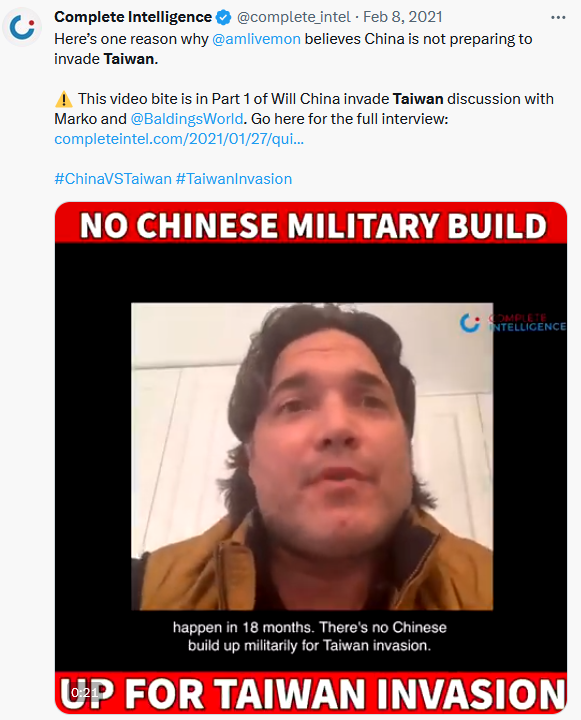
  • Supply Chain Risk: Middle East Conflict; Geopolitical Dovishness; and Risk Or Recession Back On?

    Supply Chain Risk: Middle East Conflict; Geopolitical Dovishness; and Risk Or Recession Back On?

    Try CI Markets for $10/month. No long term commitment.

    Welcome to “The Week Ahead” with your host Tony Nash. Key themes for this discussion are:

    1. Supply Chain Risk: Middle East Conflict

    Ross Kennedy leads this segment, diving into the critical issue of supply chain risk amid the current Middle East conflict. He explores the US’s supply chain capabilities in the face of geopolitical risks, including the historical context before WW2 and analyzes US political realities in Washington, D.C., and its intelligence gathering capability.

    Ross also examines the US’s share of container shipping, the challenges of distance, and dependence on different shipping carriers and discusses the inhospitable nature of the Suez Canal and Eastern Mediterranean.

    Further, Ross assesses the US’s reliance on European “commercial navies” and considers the potential impact on various commodities over the medium term due to ongoing political risks in the Middle East and beyond.

    1. Geopolitical Dovishness

    Albert Marko takes the lead in discussing geopolitical dovishness. He examine how dovish statements by Fed speakers have unfolded in response to recent geopolitical events, such as those in Israel. Albert also analyzes the elevated PPI and CPI reports and their impact on market dynamics, including fluctuating yields. He also gave insights into the future of the Federal Reserve and Treasury activities, and how we can discern the direction they’re taking.

    1. Risk or Recession Back On?

    Michael Belkin guides us through this segment and explores the dynamics of the tech trade and the recent resurgence of shares in companies like META. He takes into the intriguing analysis of a potential recession following a series of rate hikes and a 19-month lag.

    Understand what he expects as the economy slows. What factors contribute to this scenario regarding the VIX (volatility index) and whether its movement is primarily influenced by recession expectations or other factors.

    Transcript


    Tony Nash


    Hi, everyone, and welcome to the week ahead. I’m Tony Nash. Today, we’re joined by Ross Kennedy, Michael Belkin, and Albert Marco. It’s quite a lot happened this week on the geopolitical side, so we’re going to start there and we’re going to move into markets. The key themes this week, first are supply chain risks, looking at Middle East conflict. We’re also looking at geopolitical or the possibility of that. And then we’re looking at risk or recession, which one is back on.

    AI


    Shout out to the week ahead, viewers. We’ve got an exclusive CI Markets deal just for you. Get 40 % off our prepaid annual subscription. That’s a limited-time deal, bringing the price down to just $300 from the regular $500. Visit completeintel.com/save200. Use the promo code SAVE 200 at checkout. This deal is designed to supercharge your investments, and it’s our way of saying thank you for being a part of the Week Ahead community. Visit completeintel.com/save200 today and use the promo code SAVE 200.

    Tony Nash


    So, Ross, thanks for coming on again. It’s a great week to have you on. I know you’ve probably had a lot of discussion with your clients this week, given the current level of geopolitical risk. So, given that does the US have the supply chain capability to weather the storm of the current geopolitical environment or potentially even more intensive geopolitical environments?

    Ross Kennedy


    Short answer, yes and no.

    Tony Nash


    Good.

    Ross Kennedy


    And it’s really scenario-dependent. Like any good analyst, there’s a wide range of outcomes that you look at and you say, What’s my confidence that one scenario will emerge versus another? As things stand right now, we’re talking about a significant amount of naval traffic and activity happening on water, of course, primarily very close to the Suez Canal. There’s obviously already been a significant amount of disruption to particularly the grains and the energy supply chains coming out of the Black Sea region since the Ukraine-Russian conflict kicked off February last year. So in a sense, you do have a bit of a one-two punch. A lot of it comes down to what happens next. We saw these just really horrific videos and accounts emerge over the weekend seemingly out of nowhere. Depending on the story, Israel was either caught flat-footed in some way or there were some other factors potentially at play. But at the end of the day, the claim that the situation is contained now, this does follow patterns that we’ve seen in the past. Certainly to my criminal mind, if you will, you could easily be seeing a situation where you have a surprise attack.

    Ross Kennedy


    You suck, allied and other assets into the region with the intention of creating more significant widespread follow on destabilizationment. So in a scenario where Hezbollah begins emptying their pretty substantial arsenal of anti-ship missiles and making it rain in the Eastern Med, now we have a real startling situation. Egypt will do everything they can to avoid the closure of the Suez Canal. They’ve deployed or called up very significant portions of their military to ensure that that scenario doesn’t happen. But the Sinai has not exactly been the most stable either, going back 20 years. It doesn’t get a lot of press here in the US, but that’s certainly been a challenge, if you will. And then given the conflict between ISIS and the Sinai, Hamas, very much at war with one another two on the border region of Gaza and Egypt. It is a powder keg.

    Tony Nash


    Okay. If we assume that the situation stays as it is right now, Israel and Hamas, West Bank, that thing, and there isn’t a wider conflict. Are there issues with, say, ags and supply chains and other stuff? It stays local. Is that risk fairly contained? I know that’s a big assumption to make, but we see the terrible footage on the news, our heart breaks. But does that impact supply chains, agriculture, energy, that thing?

    Ross Kennedy


    Not to a great extent. Rude certainly won’t be, I guess in my view, that impacted. Certainly the disruption we’ve already seen to the net gas fields in the Eastern Med is a major challenge. That’s something that other players in the region, whether it’s Turkey, whether it’s Saudi Arabia, Israel, Egypt, all of them have some skin in the game, particularly on the NatGas issue. So we could see some potential disruption there, even if hostilities don’t escalate further. Infrastructure becomes obvious targets in the event of a larger theater-wide escalation. That’s really where we go from zero to 60 on the risk calculation. As it stands right now, not bad.

    Tony Nash


    Okay, so let’s go to that. We go out concentrically. Now, you don’t have to go too far to have major issues. First is you go north and let’s say, Hizbollah gets involved in the north. What are the issues?

    Ross Kennedy


    Well, you’re talking about certainly a significant disruption to commercial maritime traffic in the region. All risk and insurance on vessels and war clauses and things like that only go so far. So you’re certainly, I think, going to see a lot of commercial carriers elect away from obviously Port calls in Haifa, Alexandria, Piraeus in Greece. And that’s just as the situation stands now. If we’re talking about a really significant disruption to maritime traffic in the med, you don’t have to blockade the Suez Canal to begin to see a significant portion of freight that moves on water through that corridor, whether it’s grains going south, crude going north, certainly manufactured goods out of the Indian subcontinent, things coming out of Africa that tend to move north. That two-way traffic slows even if you don’t close the canal just by virtue of the risk inherent in the med. Really, the other shoe I’m almost waiting to drop on the premise that a lot of this is sponsored by and organized by Iran.

    Tony Nash


    Hold on, hold on, hold on. Let’s not go there yet. Let’s not go to Iran yet. Let’s just stay on the north. When you talk about if things escalate north of Israel, that can have significant impact on the med. We saw, for example, say, grains coming out of Ukraine, restricted because of issues with Russia, Ukraine. Turkey really tried to get that trade moving. How much of an impact could Turkey have if things go north and you start to see issues in the, say, the northeastern men?

    Ross Kennedy


    Turkey gets negatively impacted by the fact that most of their major commercial ports from where they export a significant amount of heavy equipment, minerals, manufactured goods for industrial uses. They do face a risk to their. Turkey benefits, though, opportunistically from the ability to pretty expediently open overland corridors to and from the Black Sea, being able to provide some level of guaranteed safe transport away from the risk of conflict in Lebanon and Syria, and being able to get things on water if they can obviously defend their own waters as it will and provide that safe passage north of Cyprus between Greece. On net, I say Turkey probably has the ability, if they play it smart to benefit more from this than less or be negatively impacted. We’ve seen they’ve been pretty savvy over the last 20-something months and how they’ve managed the Black Sea corridors by using the Montreux Convention.

    Tony Nash


    Absolutely. It’s really easy to forget the impact that trip can have if things go north, right? But they actually really do have a lot of impact. Now, let’s go southwest. Let’s say things boil over into the Suez nightmare scenario. What happens then?

    Ross Kennedy


    Well, at that point, you’re talking about anywhere from 10-12 % of everything manufactured in the world transits to Suez Canal. Every year you’re talking about 30-50 vessel passages a day going through there. There’s really two key domains that I’m looking at there from a negative impact standpoint, because oil and that gas have the optionality of pipelines at some level through Saudi Arabia, up in Egypt. TurkStream is always available as well. So from an energy standpoint, it’s probably not as crippling. However, Saudi Arabia does have a pretty significant amount of extraction and refining and transload capacity to bulk carriers on their Western shores, which is inside the Red Sea. At that point, those vessels get redirected, flows begin to redirect as well anything that’s moving north. There’s also the issue of food in Africa in particular. We saw that and have continued to see that be a pressing issue from a food aid standpoint because so much of that traffic moves to the Suez and terminates in the Horn or in the Red Sea. The third challenge is going to be to the Indian subcontinent. The Suez is the major corridor for trade between India and the Middle East, India and Europe, and India and the United States.

    Ross Kennedy


    We’re talking about Navasheva, one of the largest container ports. It’s right outside of Madras. In all of Southeast Asia or the Indian subcontinent is located there. 90 % of something that’s vessel traffic is going to go that way. It’s going to move northwest into the Suez. So India has some real skin in the game on this issue too, not only because of its connections commercially and from an energy standpoint to Iran and to Russia. Iran is more tenuous. They’re pretty tied at the hip to Russia in a lot of ways. So India’s calculus in this is that right now they lose the Imek for sure, the Indian Middle East economic corridor. That’s a dead letter at this point until things change. But for them, a significant amount of their export trade is with Europe and with the United States. They face a dramatically negative impact because the only alternative options are things like double-trans shipments of containers through Singapore, you go west, you’re talking a 60-day transit now versus about 35, or they have to go around the Cape. You’re talking adding 10-14 days to your vessels there too.

    Tony Nash


    This part is fascinating. So talk about Turkey’s impact if things go north, talk about India’s impact if things go down to the Suez. India has positive relationship with Iran. They have positive relationship with Israel. They have positive relationship with Russia. They can pull some strings. I think the US in particular needs to stay close to India on this issue, and Turkey, of course, so that all of this stuff can be positively impacted, right?

    AI


    Heads up for a short break. Are you using the potential of AI in your portfolio management strategies? With an impressive 94.7% forecast accuracy on average, you can confidently integrate AI into your approach with CI Markets. Visualize the potential volatility of your portfolio over the next 12 months and gain insights into specific assets that might experience fluctuations. This empowers you to make informed decisions on when to buy, sell, or hold. CI Markets covers a wide range of over 1,600 assets, including stocks, commodities, forex, indices, and economic indicators. Imagine running limitless portfolio scenarios to optimize your gains. Curious about the outcome of removing or adding certain assets? Wondering how your portfolio might evolve in the next 3, 6, or 12 months? CI Markets equips you with answers to these crucial questions. Whether you seek a streamlined portfolio analysis, wish to explore diverse scenarios or aspire to track your investments with precision, CI Markets is the ultimate tool for you. Ready to learn more? Visit us at completeintel.com/markets. Thank you and now back to the show.

    Tony Nash


    Sticking specifically with the med, can you talk to me a little bit about… I heard you make some comments about the US being dependent on European commercial navies for activities in the med. Can you talk a little bit about how the US doesn’t really have the capability there to move things if needed?

    Ross Kennedy


    Absolutely. At one time, particularly in the first 20-30 years of PAX Americana, we had the largest commercial fleet in the world. And we were a shipbuilding powerhouse. Liberty Ships taught us how to make vessels that can move fairly fast and carry cargo. Quantity has a quality all its own. We’ve really eroded that advantage with the advent of steamship lines. We begin to optimize more for outsourcing, and so our shipbuilding capacity, our maritime, sea lift capacity, so vehicles, manpower, all of that has eroded not just the commercial fleet, not just the tanker fleet, were a shadow of what we once were. And so the reference to commercial navies is really the big three ocean carriers in the world are MSC, domiciled in Geneva, but owned by an Italian family, the Apontes, and then Maersk, based in Denmark, and CMA CGM based in France. And given that in the case of MSC is really an independent player, but certainly Maersk and CMA are major participants in US maritime trade, significant parts along with Hapag-Lloyd out of Germany, the auxiliary, essentially our ability to call up US flagships with these carriers and press them into service. But to the extent that we have the ability to have the optionality to be able to put our own stuff on ships with our own sailors, we don’t really have that.

    Ross Kennedy


    Not at any scale that can defend the supply chains in the US from major disruption, particularly in the med.

    Tony Nash


    Before we get to Iran, because I know that’s a sweet, juicy thing that you and Albert are going to dig into. Hey, Michael, what are you seeing in terms of transport? Does it look like appealing to invest in European transport companies or is there too much risk there?

    Michael Belkin


    I’m agnostic. I’m not familiar with some of the names that he just mentioned, but in terms of global shipping, Maersk and Hapag-LLoyd are the two big ones listed in Europe. They’re shorts for me, but not very high confidence. But that’s something else. That’s not Middle East. That’s just global trade is not doing well and freight rates are falling and ships are not being booked as heavily. So agnostic, but slightly negative on the only ships I follow.

    Tony Nash


    Okay, perfect. That’s great to know. Thank you. Okay, so Ross and Albert, given that these aren’t major oil and gas producers, but we also have the US SPR at a very low level, and we have already crude exports that have been accelerating over the past couple of years. Aside from the $6 billion that was announced, I think, earlier today that the US is going to hold back with the Qatari government. Do you think there’s a possibility of seeing new sanctions on Iran? Is that a possibility? And what would have to happen for that to be a possibility?

    Albert Marko


    I do think new sanctions will most likely be enacted by the US on Iranian oil. Do I think it’s going to matter much? Probably not. They do ship-to-ship transfers all the time by turning off transponder. God knows how much oil they mix in Basrah with Iraqi crude. So sure, we can pay lip service to that, but I don’t think it’s going to make much of a difference.

    Ross Kennedy


    Yeah, I’d concur with as much as I love a good fight with Albert or anybody else, hey, I’d probably lose. But certainly on both the premise and I think just the factors that are in play here. Do I think sanctions are coming? Yeah, absolutely. It’s an absolute layup for an administration that’s been rightfully dragged through the mud over the fact that they released $6 billion in funds to buy seven Americans back. It’s the obvious go-to move. It’s the last option, not a very creative one, but it’s the last option. But Iran has already demonstrated like Russia, significant capacity to actually move sanctioned material. But more than that, it represents a significant buying opportunity, particularly for China, who does not give a crap about anything that the US State Department or Commerce Department does with regards to sanctions. I think it’s inevitable if we sanction them. All we do is we simply depreciate the price of Iran and crude and increase the amount that we will see moving between Iran and the Pacific Rim.

    Tony Nash


    I mean, crude is on sale for Asia, right? Most of Iran and crude goes to Asia anyway, right?

    Ross Kennedy


    Absolutely.

    Tony Nash


    India, China, other places.

    Albert Marko


    I’m actually more keen on finding out what Turkey is going to end up doing with Iraq since that oil pipeline has actually been blocked to the Mediterranean for many reasons. They say earthquake. The other ones say a lawsuit, but it’s many reasons. I think that that thing is going to probably be important in negotiations going forward, especially in terms of the crude oil market.

    Tony Nash


    Interesting. In Iraq, Turkey pipeline?

    Albert Marko


    Yeah. Well, they already have it, but they shut it down because of lawsuits.

    Tony Nash


    Okay.

    Ross Kennedy


    It’s interesting that, Albert, I’ll interject real quick. It’s not quite on script. But there is a real dark horse factor here with the broader Kurdish population that occupies that region. It’s the only population that is spread out at scale in Iran, Iraq, Turkey, and Syria. And yes, there are factions within it and all of that. And yes, to some extent, they’re insulated from the larger conflict to the extent they don’t get sideways with one of the main governments. But the ability of these very substantial Kurdish minorities in all of those countries definitely could impact anything from a logistics and supply chain standpoint. Certainly, that has to transit on rail or transit over land. They sit right in the middle of the new Silk Road corridor that China and others have been cooperating on to connect Chinese trade on land through the Eurasian continent. So that definitely bears watching because depending on how each of these parties responds, the calculus of the Kurdish populations in these countries changes too.

    Tony Nash


    Interesting.

    Albert Marko


    A lot of the oil is out of the Kurdish area right now because the pipelines are shut down, it’s trucked back and forth into Turkey and whatnot. But like you said, if the Kurds decide to act up, that’ll get shut down pretty quickly. Those are definitely something to… I wish you didn’t say anything about the curves. It’s a whole Pandora’s box.

    Tony Nash


    Yeah, we can do a special segment on that.

    Albert Marko


    I really just…

    Ross Kennedy


    That’s its own episode.

    Albert Marko


    I want to allow Michael Belkin to actually talk to me.

    Tony Nash


    Right, exactly. Guys, let’s get into… Albert, I’ve been wondering, given what we saw the Fed and Treasury say earlier this week within the context of these events, we saw Fed speakers out early making very doveish comments early in their week. But we also saw elevated PPI and CPI reports this week. Yields fell for most of the week, but then came back up later in the week. What’s ahead? Given the geopolitical backdrop and given what we’re seeing with CPI and PPI and other prints, and then we saw some consumption data out today where consumption is down, US consumers, what’s ahead for Fed and Treasury activity? And how do they balance this?

    FRED Graph

    Albert Marko


    How do they balance? They haven’t been able to do anything properly in the past, so I don’t know how they’re going to be able to balance this. I mean, the auctions have been absolutely atrocious. They obviously knew what CPI and PPI and the Michigan sentiment was going to be because they had every single person they could throw out into the media say, inflation is over, like Krugman and whatnot, or this is a success. They know what they’ve been doing. They know that they’ve been making mistakes. Yellen, I think two weeks ago, was at a staff meeting, screaming of why isn’t the bond market bondholders paying attention to problem? Why aren’t they listening to me? Well, you got a geopolitical event, and now they’re going to listen to you. The auctions aren’t good. The economy is certainly not good. Inflation is starting to kick back up no matter what they do.

    Tony Nash


    Sorry, let’s go back. You said the auctions aren’t good. Can you walk us through that?

    Albert Marko


    Well, there’s no bids in the bond market, especially the long bonds. Nobody wants them at the moment. There’s no bids. The only people that are bidding on it is the government itself.

    Tony Nash


    Why are there no bids?

    Albert Marko


    No confidence? No confidence of what’s going on specifically policy-wise in this country? Why would you bid on it?

    Tony Nash


    Okay.

    Albert Marko


    From there, it’s just like I don’t see how we get out of this situation without a recession and a pretty sizable recession. I know they talked about soft landing and whatnot, but they’re going to really need a recession and unemployment to tick up to even start denting inflation going forward.

    Tony Nash


    Okay. In the background, I’ve been seeing headlines of Company X lays off 1,500 people, Company Y lays off 5,000 people, other things. That seems to be happening pretty quietly so far. We’re not really seeing the recession. We’re too much out there. Given where consumption, those consumption numbers that came out today and given the need, I hate to say it, but the need for a recession, do you think that the news of layoffs will be more prominent in headlines so that we start to see the table set for some of these Fed and treasure actions to really be appropriate?

    Albert Marko


    I really think that a lot of the corporations are trying to slow out these layoffs because they don’t want to catch the IRA of the Biden administration calling them and arguing a wireline of people. But I just think that the margins because of wage inflation just getting out of control is going to take over to the point where companies are going to face either bankruptcy or lay enough workers. And neither one of them are actually neither one of them are a good thing to happen and going into an election year. I don’t know who wins, to be honest with you. Until I see earnings start dropping and unemployments going to go up, I don’t see how the economy is going to be able to get itself right.

    Tony Nash


    Okay, so if you could architect a recession, when would it happen to be the most politically ideal for a presidential year?

    Albert Marko


    Right now. Before Christmas.

    Tony Nash


    Right now.

    Albert Marko


    Yeah, right now. Going Q4 maybe into Q1 and get it over and done with and try to rally the markets and the economy going into the election. That’s what I would do. If I was an architect.

    Tony Nash


    Okay. So Q1 recession. Again, we’re not saying this is going to happen.

    Albert Marko


    No.

    Tony Nash


    In your ideal plan, Q1, Q2, new stimulus plan, Q3, it gets out there. It’s in everyone’s pockets. Then election, everyone’s happy, right? Yeah. That would be an ideal runway.

    Albert Marko


    That would be an outline that I would play.

    Tony Nash


    Okay. What do you think will actually happen?

    Albert Marko


    I think they’re just going to try to maintain the facade that the economy and the market is doing great and slow walking into a soft landing. I think at some point something’s going to break or it just gets out of control for them. Whether that’s in 2024, I don’t know. But certainly after the election, they’re going to have problems.

    Tony Nash


    Okay. Great.

    AI


    Heads up for a short break. In the fast-paced world of investments, staying informed is the key to success. Introducing CI Markets free, your source for AI-powered forecasts. With our free version, you get access to powerful tools that help you make informed decisions. Join a community of savvy investors. Analyze market trends. Plan your investments strategically. Stay ahead with monthly forecasts. Compare assets effortlessly. And download data for your analysis. Don’t just take our word for it. Our users love the valuable insights CI Markets provides. Get started today with CI Markets free. No credit card required. CI Markets, your source for AI powered forecasts. Thank you and now back to the show.

    Tony Nash


    Speaking of things breaking, Michael, let’s get into some data and whether we’re looking at risk on or recession on. You’ve told us for a while that the technology trade is pretty played out. We saw shares like Meta earlier this week just rise pretty dramatically. There were all-time highs, I think, on Wednesday and Thursday. Why the pop this week? What’s happening there?

    Michael Belkin


    Okay, good question. Let me just set the stage here. The consensus believes that inflation and higher interest rates are the biggest threat to the stock market. I think that’s over. The downward impact of monetary tightening on the economy is arriving with a 19-month lag. The US money supply, M1, is declining at a 10.5% annual rate. That’s the biggest ever on record and Federal Reserve data. Same thing in Europe. European M1 declining at a -10.4%. That was the chart. We’re probably going to show that.

    Tony Nash


    Yeah, no, charts up on the screen.

    Michael Belkin


    Okay. So these M1 money supply declines suggest central banks are driving economies into a depression, not a recession. This is 1930 stuff. And blowback is the unintended consequences of a policy mistake. The 9 % CPI inflation rate and 11 Fed rate hikes are blowback from unnecessary stimulus that they did in 2020, COVID stimulus, way over did it. The blowback we are about to experience is an economic slump caused by monetary and fiscal tightening that they impose to rectify their previous policy error. It’s a doom loop of overreacting to previous policy mistakes. The stock market investors are so far from realizing this, it isn’t funny. Wall Street, Robot, trading machines, and individual investors firmly believe central bank interest rates cuts are bullish for the stock market. Nothing could be further from the truth. In the last two major Federal Reserve rate cut campaigns that was starting in early 2000 after the TMT bubble and then 2007, the credit bubble, the S&P 500 fell by 50 %, more than 50 % from peak to trough while the Fed was cutting interest rates. Why? Because the economy and corporate earnings collapsed in recessions. Tell that to the algorithms, this is how I’m finally getting around to answering your question here, who dominate day to day stock market trading.

    Michael Belkin


    Those who programmed the Algoes seem to have skipped the stock market history class. The ingredients of a global risk off moving financial assets are falling into place. In the last few weeks, emerging market currencies, EM debt, EM equities, junk bonds, and cyclical stock market sectors have toppled. The Israel attack comes at a vulnerable time. This was already happening before that. Let me be a little more specific here. One of my clients is an Alpha-captured fund. I hate to boast, but it’s a reality check because we have a 100-70, 180 contributors on there. I was number one in last quarter of 19 % market neutral. I’m also number one right now to moving target, up 4%. And what I am is I am short crappy tech stocks. Not so much Meta, but the Shopify, these really overvalued software stocks, Carvana. That has heavy short interest, but the list goes on and on. We don’t have time for the whole list. I don’t want to disclose it. But we have 50 positions on there. And what it tells me… The reason I say that, again, not to boast because boasting comes before a fall. But I can tell what everybody else has on that my competitors in this Alpha Capture Fund, I watched my ranking go up and down according to the market.

    Michael Belkin


    So earlier this week I was down, I was number 10 or 20 or something and I saw these others. So what I know is it’s a feeling of consensus. Everybody’s still buying the same crappy stocks. The same stocks that blew up Tiger Global. Of course, they’re buying the Magnificent Seven and everything too, and those aren’t going down that much yet. So beneath the surface, these lousy tech stocks are going down and I think they’re shorts. So this is not a quick flip for me. I think I’ve been saying this for a while. These positions are on. I think you should be shorting on balances like we had earlier this week. Sell in short. Don’t get squeezed and say, Oh, God, it’s going up. It’s time to cover my shorts. I need to go long. That’s a trap. I think the market is going down big time. Just to final note on that. I was hired into Solomon Brothers. My background came out of UC Berkeley Business School, Staff Department. I developed… Everything I do is based on this quantitative model algorithm that I developed, which is a forecasting model based on time series analysis. I was hired into Solomon in 1986, right before the ’87 crash.

    Michael Belkin


    In ’87, what happened is the bonds sold off, Greenspan came in as the new Fed chairman, raised rates. The bond sold off about 24%. The stock market went up all summer, peaked in August, sold off, rallied back in September, and then crashed. We’re following… Nothing’s ever exactly like anything else. I hate overlaying one chart without another chart, expecting the same exact thing. Never works out exactly. But we have something history, rimes. So this year, the TLT, T-bond ETF is down 22 % since I think March. It looks like it may have bottomed last Friday. The thing that would make a crash happen is a major asset allocation shift out of stocks into bonds. When the consensus is super hyped up and bullish on stocks and overloaded, when they get squeezed and then all of a sudden they push the sell button and then bonds start to rally, you get this huge gyration where bonds go up and stocks go down just because of asset allocation flows. I think we have the potential for that. I’m not standing out here saying the market is going to crash. It could potentially happen.

    Tony Nash


    When could that potentially happen? Tomorrow or April?

    Michael Belkin


    Soon. So here we are in early Friday the 13th, right before solar eclipse on tomorrow. Not that it has anything to do anything, but I think it’s setting up for that. Basically, it has to do with sentiment. Another one of my clients is a big hedge fund. All they care about is sentiment. When people are too bullish or too bearish, and I just think I don’t get it. A little digression here. So the definition of psychosis is when you think you’re the only smart person and everybody else is crazy. I worry about that because that’s what I think. I think everybody else is out of their minds for after 19 months after the Fed has started tightening, the money supply is shrinking and people can’t get enough stocks to buy? Hello? Have you ever heard the Don’t fight the Fed. I don’t understand where this ebullient, excessive exuberance comes from. I just think it’s misplaced timing, misplaced from the what’s going on underneath the surface of the market. By the way, one other little point here. We went really… In the Alpha Capture Fund and also in the Belkin Report, I’m long defensive sectors, which nobody likes, which have been underperforming until this week.

    Tony Nash


    They liked them on Monday. They were up 10% on Monday. Are you talking about Fed stocks or defensive sector?

    Michael Belkin


    No, defensive. I’m talking about utilities. So things that nobody wants to touch with a 10-foot pole. Anybody that’s really bullish on the market, utilities, forget about it. They wouldn’t even think about it. So utilities, up 4% this week with the S&P up one. So 3% alpha. TLT, the T-bond ETF, up 3% this week. So it’s outperformed the index by S&P by 2%. Here’s another one for you, GDX, gold stocks, and gold. So gold is up 5% this week, GDX up 8% this week. That’s up 7% more than the S&P. We’re getting this risk-off move into defensive stuff, GDX, utilities, and bonds and then the VIX you probably want to… We’re going to talk about that in a minute.

    Tony Nash


    Let’s talk about the VIX. You are expecting a higher move in the VIX or a move higher in the VIX. Is it largely due to recession expectations or what are the factors you expect in that?

    A graph on a graph
Description automatically generated

    A graph of a stock market
Description automatically generated

    Michael Belkin


    My model gives direction, position, intensity. It’s a 12-period forward forecast based on my studies of Fourier and Box-Jenkins in the UC Berkeley Statistics Department and the business school. Nobody else was looking at this stuff when I was doing it. I was not happy with what I learned in economic forecasting. It wasn’t very powerful. So I developed my own algorithm. So that says direction up, intensity strong, position just starting. And again, it’s another one of these things where the bubble people, as I call them, whoever they are, whoever they are, love to bomb the VIX. The market goes up, the VIX goes up, out of the woodwork comes huge selling and they knock the VIX down almost every time until that right tail kicks in. All of a sudden, the VIX is not… They can’t do it anymore. And then the VIX goes up in their face and the ball sellers get squeezed out of existence. So I think that’s the potential where the VIX could go up. So when it’s down, by the way, options are cheap. And this is very complicated and I don’t have all the answers. So now there’s these zero-day options, and the institutions are selling those things and retail investors are buying them.

    Michael Belkin


    So options selling tends to depress the VIX, and option buying tends to increase it. But options are still relatively cheap. I would say put options on the Nasdaq, which I think is like 20, 30 % too high just for starters. I like put options on QQQ, put options. I think they’re cheap. I think it’s a good entry point. I think the index goes down, so the value of the option goes up and the volatility goes up. You get a double kicker. Is it going to happen this afternoon or today, tomorrow or next week? I don’t know, but soon. I think it’s setting up for that in the model forecast.

    Tony Nash


    Fantastic. Albert?

    Albert Marko


    I like that. No, I like his idea. I hear people trying to short the two and 10-year, which I think is lame trade, to be honest with you. If you think that 10-year is going to end up going to five and a half to 6%, you might as well just shorten Nasdaq and some of the tech stocks. I mean, you get more juice doing that. Michael’s right. I don’t really see how this market can stay so elevated with so many just policy errors and bad sentiment out there. It’s just crazy to me.

    Tony Nash


    Given the policy errors, and I know we’ve talked about this a few times in the last couple of months, but it seems to me also that what both Michael, you and Albert are saying is that a lot of these companies, their margins are really compressing. Is that part of the reason you’re seeing this rotation into these other segments?

    Albert Marko


    Is that me, Tony? The only thing I have about margins and earnings is inflation does inflate earnings, at least with the headline numbers and temporarily. But I just don’t… Like I said before, margins are getting tight and wage inflation is getting out of control. It’s an inevitable thing. Historically, you’re going to see this market retract to something where it’s fair value, whether that’s 3,200 or 3,900, I don’t know. I can’t answer that. I’m out of my league.

    Michael Belkin


    Okay, so margins are one thing, but top line is another thing. In my scenario, so we’re moving into earnings reporting season and the banks were supposedly good today. But if the economy is going to do what I forecast it will do, then we’re going to see warnings. So basically in the rear view mirror, it shouldn’t be too bad. Q3, right? You can say, Okay, good. That’s okay. Worked out great blah blah. Going forward, I think it’s going to be bad. And the way this works is the companies say we’re downgrading our forward revenue. Our sales are going down. You can see it across the board in retailers, industrial companies, things like that already. It’s not so much tech stocks yet. But if they say, Well, all of a sudden at the end of Q3, beginning of Q4, our orders started to fall. Then you get these Wall Street analysts downgrading the stocks. And then you get this Pi Piper thing where all these long only managers that only listen to Wall Street analysts and consensus earnings forecast all of a sudden say, Oh, you mean Micron, semiconductor sales aren’t going to be that good. Maybe I should sell.

    Michael Belkin


    So you get this snowball effect, right?

    Tony Nash


    Sure.

    Michael Belkin


    The brokers announce the portfolio manager starts selling, and then it turns into the snowball thing. And one final point on that. So today somebody mentioned this in passing, EM consumer sentiment down from 67.3 to 63 in early October. So that’s anecdotal evidence of what’s happening. So when consumer sentiment falls, willingness to spend falls, and if you look at the rate on car loans and and stuff like that, forget about it. I’m also short on home builders. Home builders had enormous rally rolled over a month or two ago. They’re declining. Auto makers, they’re not the greatest short. They’re not up a lot. I would prefer to short something. But anyways, the point is the financing cost for a house and auto sales are off the map. It’s unaffordable for so many people now, particularly subprime lenders. So that feeds into the financials, the banks. So we heard, JP Morgan, the city bank, and Wells Fargo today were okay, earnings are supposedly good. Let’s wait until we hear what’s happening with the regional banks, which are short for me. I think that we’re in for another round where the regional bank start going down liquidation, they start warning of loan losses, deposit outflows, all the same stuff as last time.

    Tony Nash


    Okay. We have geopolitical risk, rising geopolitical risks. We have rising market sector risks. We have risk with a Fed mistake. Sounds like a lot going on out there. Michael, this has been really enriching, just hearing how to apply this broader stuff within specific market segments. So guys, I really appreciate this. You’ve really helped us sort through a lot of the noise and action this week. So thanks very much for all of this. Thanks, guys. Have a great weekend and have a great weekend. Thank you.

    Ross Kennedy


    Thank you.

    Albert Marko


    Thank you.

    AI


    That’s it for this week’s episode of the week ahead. Please don’t forget to rate us and review on whatever platform you are watching or listening to this. Thank you.

  • Price Disinflation Recession; Crude Tumbling; and DC Drama & Markets

    Price Disinflation Recession; Crude Tumbling; and DC Drama & Markets

    Register for a CI Markets account for FREE! No credit card required: https://completeintel.com/markets.

    Welcome to “The Week Ahead” with your host, Tony Nash! In this episode, we engage in thought-provoking discussions on a range of critical topics:

    1. Price Disinflation Recession: Our expert panel, featuring Seth Golden, challenges conventional wisdom by analyzing the rise in manufacturing volumes and its implications for the economy. Are we on the cusp of a period where valuation multiples could expand once again?

    Also, discover differing perspectives on inflation and disinflation as our panelists share their views on the deceleration of inflation rates and concerns about wage inflation and political policies. Explore the impact of interest rates on the housing market and the potential for lower prices due to disinflation. We also shed light on the critical role of diesel prices in the economy.

    2. Crude Tumbling: This discussion, led by Tracy Shuchart, dissects the secondary impacts of rising gas prices and the global dynamics affecting fuel prices. Stability in oil prices becomes a focal point as we examine the intricate interplay of factors like global demand and export policies. Comparisons are drawn between OPEC’s influence on energy markets and the Federal Reserve’s impact on equities.

    3. DC Drama & Markets: Albert Marko led this discussion and he doesn’t shy away from discussing the lack of unity within political parties and the need for stable economic and fiscal policies. The panel raises concerns about wealth accumulation among politicians and calls for a reevaluation of the system.

    The discussion also touches on the significance of the Speaker of the House in US politics and potential candidates for the role. Learn why an efficient speaker is vital for the productivity of the legislative body as we wrap up our discussions.

    https://open.spotify.com/episode/7JT3tk5PSBOrUUEwHukFqW?si=86fa46e3680e431f

    Transcript

    Tony Nash


    First is the Price Disinflation Recession, Crude Tumbling, which has… It dovetails with Price Disinflation, DC drama, and the relevance to markets. So… Hi, welcome, everybody. Welcome to the week ahead. I’m Tony Nash. This week, we are joined by Seth Golden, Tracy Shuchart, and Albert Marko. We’ve got some key themes this week. First is the Price Disinflation Recession, which is a really interesting concept that Seth’s been talking about. I just want to talk about crude tumbling, which dovetails with Price Disinflation. And then we’re going to talk with Albert about DC drama and the relevance to markets.

    Tony Nash


    So before we get started, I want to let you know about a new free tier we have within CI Markets, our global market forecasting platform. We want to share the power of CI Markets with everyone. So we’ve made a few things free. First, economics. We share all of our global economics forecast for the top 50 economies. We also share our major currency forecasts as well as Nikkei 100 stocks. So you can get a look at what do our stock forecast look like. There is no credit card required. You can just sign up on our website and get started right away. So check it out. CI Markets free. Look at the link below and get started ASAP. Thank you.

    Tony Nash


    Seth, thanks for coming on. First time, really appreciate it. It’s great to have you. I’ve been following you for a long time, and I love your Twitter presence. I saw your tweet about the NOPE index and rising PMIs. Your expectation is for a price disinflation recession, which is at odds with what Albert’s baseline hypothesis, I think, but not a volume-based recession, price deflation-based. Can you walk us through that? I’ve got that tweet up on the screen now. If you can walk us through your NOPE index tweet.

    A screenshot of a computer
Description automatically generated

    Seth Golden


    Yeah. The NOPE index was actually developed by the Leuthold Groups, Jim Paulsen, who retired recently. But it essentially tries to strip out the sentiment factor within these soft data. The ISM is a survey-based report. And I think what becomes a greater magnitude in these survey data is what’s happening at the most basic level in price. So what the NOPE index does is it takes the new orders, that’s the NOV part, and then the price, which is the P part, and it basically takes the new orders and subtracts it from the price. Because when you look at the questions within the survey, the ISM, whether it’s the manufacturing survey or the services survey, there’s never any good price. There’s always this underlying bias within the ISM that is lower bound as opposed to above 50 or expansionary. Jim Paulsen created the NOPE index, which just says, hey, focus on this. It’s already soft data. But let’s see what’s really going on in the economy. So if you take the actual new orders and you subtract them from the price, whatever the reading is, if it’s above zero, you actually typically have a better manufacturing situation, then maybe the overall index is implying, the ISM manufacturing index is implying.

    Seth Golden


    The threshold or line of demarcation, if you will, in the NOPE index is zero. So a reading above zero is typically expansionary, and typically that is good for the S&P 500. The forward S&P 500 returns on an annualized basis when the NOPE index is above zero is about 13%, I believe. It’s a good gage, not only of what’s going on in the economy, but what could possibly foreshadow market performance going forward. I know that we’ve had this seemingly recession in the manufacturing sector, but there’s various data that says not even close. If we look at just the ISM, if we look at the S&P also, their measure of manufacturing, they’re both under 50, which technically is a recession in those particular industries within the economy. But the reality is if you look at, let’s say, the St. Louis Fed, the total manufacturing output in the United States has been booming. We’re out the from 2022 and through this calendar year. But we’re not getting the manufacturing inputs that we usually do get, which are driving this manufacturing expansion. Usually it’s the refining capacity, and usually there’s some various variables of goods production that is taking place, textiles or otherwise that are driving the ISM and S&P manufacturing data.

    Seth Golden


    But we have this dynamic since ’22 where it’s actually construction manufacturing, as well as electronics manufacturing that is driving this boom in the total manufacturing here stateside. So I’m not necessarily looking for a recession based on this NOPE index or what have you, I’m just trying to define what is actually going on through the NOPE index. Is it a real recession in manufacturing and or services, or is there underlying strength that just isn’t being realized by the ISM or the S&P manufacturing indices?

    Tony Nash


    Okay, so you’re saying that the manufacturing volumes are continuing to rise?

    Seth Golden


    Correct. That’s the most important thing about this. The NOPE index is that it strips out the price sentiment, basically. It gives you what’s actually taking place in new orders. Because if you subtract the price and you’re above zero in the NOPE index, you still have an expansion situation in manufacturing. You don’t really have a recession.

    Tony Nash


    Okay, so let’s take a look at that.

    Seth Golden


    Let’s take a look at the actual price that is influencing how respondents are actually answering the questions in the survey.

    Tony Nash


    Okay, so let’s look at this second chart you sent me, and I want to talk about that. I also want to put the price layer on that because I want to make sure that that’s not missed. You sent me this chart, recent rise in US manufacturing construction driven by computer, electronic, and electrical sector. Since these two acts were signed, the CHIPS Act and the IRA signed, we’ve had a spike in computer, electronic, and electrical manufacturing, right? That’s good, right? That’s good for US manufacturing.

    A graph of a company's production line
Description automatically generated

    Seth Golden


    Right. Yeah, you’re getting a lot of transactional volume through that fiscal policy initiative, getting a lot and minimal. I mean, there is some price appreciation in there, but it’s nowhere on the scale of, let’s say, what we see in refining prices through that manufacturing capacity.

    Tony Nash


    Okay. Where do you pick up the construction or manufacturing?

    Seth Golden


    Yeah, you’re getting materials. That’s another way that you can validate that this is… Those aspects or industries where we are seeing electronics and computing and construction, we know construction materials and whatnot have actually been disinflating for more than a year now. Whether it’s lumber, sheetrock, concrete, all of those necessary construction inputs are actually disinflating for more than a year, but the transactional volume is basically superseding the price disinflation. Hence, you’re still getting this boom in manufacturing overall.

    Tony Nash


    Okay. Based on your thesis, so in ’22 and the first half of ’23, we saw manufacturers and services firms able to grow their margins because of the inflationary tailwinds. They could add margin, they had their top line growing, they had their bottom line growing. And they didn’t really care about the volume of transactions in many companies because they were still hitting top and bottom line numbers that were better year on year. Now you’re saying that because of disinflation, that margin is collapsing and those volume of transactions matter as much or more than the price itself.

    Seth Golden


    Right. Yeah, that’s a great way to summarize it because when you have this volume, you get this a reading in the total manufacturing layout. But it’s in sharp contrast to what we’ve seen in ISE because there’s no price situation that is ever really good for the respondents. Take, for example, we had an inflation boom. We got the ISM up to 60. It was there for what? One month before it collapsed? Because the respondents know this can’t last forever. I can’t push my cost onto the end producer and then the consumer. I’m going to start responding negatively because I know there’s an inevitability in this inflationary boom. Well, okay. Then the reading starts coming down. There wasn’t even in inflation times, that’s only going to live for so long. Then you get into disinflationary situation. Again, will prices keep coming down? Now, my profit margins, as you are alluding to, are also coming down. I’ve got to rely on volume, but how do I increase demand? The number one problem for a CEO, every single morning he’s always thinking about, I wake up every morning, I’ve got to figure out how to increase demand. So these ISM readings, they’re so sentimental and it’s always focused on price.

    Seth Golden


    One way or the other, price is bad always. So the note model does a great job of distinguishing the true strength and what the trend is in manufacturing, overall.

    Tony Nash


    Okay. Albert, I want to bring you in here in just a minute, but I have just a couple more things with Seth that I want to put on through. Okay, so we’ve gone from a very low interest rate to a significant interest rate rise over the past year. We’ve gone from very nice margins on marginally lower transaction volume to thinner margins on transaction volumes that may or may not be increasing. When we take those two worlds and we look at the valuations that companies have had, we had really nice valuations in a low interest rate environment with high margins. Now we’re in a higher interest in the environment, and I assume a higher for longer environment where we have lower margins and the transactions may or may not be increasing. What happens to valuations under your hypothesis, what happens to equity valuations in general? Without talking about specific sectors, but what happens in general?

    Seth Golden


    All right, yeah, if we just use the benchmark S&P 500, the consensus is that valuation should compress level. So far as the margins are concerned, there’s a bit more nuance there because while the actual margins per sale may indeed decline, the total profitability may not follow suit or the earnings per share may not follow suit because we have this dynamic of higher rates where part cash, be it households or corporations, is earning millions upon millions and billions every single month. So you have this free cash flow that also has to work itself way into the valuation model. Again, the consensus belief is that higher rates, higher for longer, should compress the earnings multiple. When in reality, that has been the exact opposite. If we go back to, let’s say, 1960s, 1970s, all the way up to the early 1990s, the S&P 500’s multiple was actually higher over a good 23-year span. I think it was 17.7 times from the late ’70s to the 1990s in that higher rate environment than even where we are today after the Federal Reserves program here. And now we’re at 17.4. But of course, we won’t know where we’ll be going forward.

    Seth Golden


    But there’s not hard and fast data suggesting that the multiple should compress because we’re not even where we were back in the ’70s or ’80s when it comes to the federal funds rate, let alone, let’s say, the benchmark 10-year Treasury yield. I don’t fall into the camp that aligns with a compressed multiple. If you look at the PE multiple, if you look at the CAPE ratio, they do nothing but expand over time. That’s the history of multiples. They expand over time, mostly because for every dollar that goes toward wages or whatnot, we get that much more productivity, so we have that much more cash flow. With that being said, the common pushback is no multiples don’t look at the peak. We still haven’t made it back to the peak of the dot com period. Okay, so fine, X dot com, that hyperbolic event or parabolic event, multiples indeed expand over time. So who’s to say that we are not in that new period, this post-pandemic period, where we once again jump the shark? Because there’s always this jump the shark moment when it comes to PE expansion. In real time, we shun it, we belittle it, we berate the multiple expansion.

    Seth Golden


    It’s only in hindsight that we realize, Oh, we just took a leap.

    Seth Golden


    That’s how I look at it secondarily, I say, if you look at the long term history of yields, they go lower over time. We might be in this vacuum moment where we’re becoming prisoners of the moment given the monetary policy initiatives. But in hindsight, again, we look back and we say, well, of course, the 10-year yield is lower over time. It’s just a matter of when it finds that new lower, low bound territory. So I’m comfortable with saying… And if, in fact, we finish at a 20-time multiple here this calendar year over the trailing five-year period, the S&P 500 forward PE multiple will have averaged 20 times for the first time in history, hence the jump the shark moment.

    Tony Nash


    Very interesting. All very sophisticated. Thank you so much for this. Albert, I know you are not well. I suspect you were not in line with the disinflationary underpinning of Seth’s hypothesis. Can you walk us through that?

    Albert Marko


    Yeah, Nope.

    Seth Golden


    I’ve been wrong twice before. No, I’m on you.

    Albert Marko


    I don’t even want to discuss this inflation until wage inflation is under control, and that is nowhere near getting control at the moment. On top of that, inflation in the last year and a half has only shown that companies can earn more. Put earnings through the roof. Until I see wage inflation actually coming down, I don’t want to talk about this inflation, to be honest with you. I can’t see it. Even the CPI prints have been completely nonsensical. Goods are just still 17%-20% higher than they were pre-COVID. Energy, as much as they want to push it down, energy is just bursting at the seams to go back to 100 on the Brent. I can’t see a pathway for disinflation. But of course, I’m only talking for the next 6-12 months after that. That’s just a different era, in my opinion.

    AI


    Heads up for a short break.

    AI


    Are you using the potential of AI in your portfolio management strategies? With an impressive 94.7and 10.7% forecast accuracy on average, you can confidently integrate AI into your approach with CI Markets. Visualize the potential volatility of your portfolio over the next 12 months and gain insights into specific assets that might experience fluctuations. This empowers you to make informed decisions on when to buy, sell, or hold. CI Markets covers a wide range of over 1,600 assets, including stocks, commodities, forex, indices, and economic indicators. Imagine running limitless portfolio scenarios to optimize your gains. Curious about the outcome of removing or adding certain assets? Wondering how your portfolio might evolve in the next 3, 6, or 12 months? CI Markets equips you with answers to these crucial questions. Whether you seek a streamlined portfolio analysis, wish to explore diverse scenarios, or aspire to track your investments with precision, CI Markets is the ultimate tool for you. Ready to learn more? Visit us at completeintel.com/markets.

    AI


    Thank you and now back to the show.

    Tony Nash


    Seth, do you have a timeline on yours? Are you thinking ’24? What are your thoughts on the timeline?

    Seth Golden


    So far as getting to the Fed’s target?

    Tony Nash


    No, getting to this disinflationary environment that you’re talking about.

    Seth Golden


    Philosophically, obviously, Albert and I disagree. I understand where… He’s absolutely right. We have absolute inflation. That’s all we actually ever have. But in terms of what’s being measured by CPI, PCE and PPI, consumer price index and producer price index, they measure rate of change. So it’s the month of the month or year over year. So philosophically, I think we agree on the fact that there’s always inflation, but it’s a matter of what’s being measured is the rate of change of that inflation. So do I see that deceleration continuing? Yeah, I would suggest I see that disinflation or deceleration in the inflation rate continuing through the end of this year and at least for the better part of 2024. And so far as the wage inflation is concerned, we are starting to see an increase in the labor participation rate, which will facilitate some of that, at least to some degree, that deceleration in wages. This morning’s report may be a prime example, or the last two monthly reports, in fact, might be a prime example of an increase in the labor participation rate, working in favor of reducing that overall wage inflation.

    Tony Nash


    Right.

    Albert Marko


    Yeah, I just don’t take those numbers at face value. I’m just over the fact that CPI is at whatever, 3.3%. They’ve changed the weighting of it. They use the BLS deflators to manipulate the numbers on unemployment. The revisions come in every 3-6 months later that shows that it was actually worse than they were reporting. Like I said, until wage inflation, in my opinion, gets sorted out and they actually have political policies to address the oil and gas and energy markets, I don’t want to even discuss this inflation in my opinion.

    Tony Nash


    Interesting. Seth, I do think that your thoughts about the volume of manufacturing will be very interesting. I’m really intrigued by the disinflationary underpinning of it and how that could drive things. I think that’s very, very interesting. Definitely not a consensus view right now.

    Albert Marko


    If you get disinflation, like he’s saying, six months later, we’re just going to have another inflationary event because people are going to go out and buy everything. I mean, houses, goods.

    Seth Golden


    Yeah, I agree. One of the caveats or antithesis that I put into my models does center on the resilience of the consumer, the strengthening the labor market being what it is. And just the monthly, and I think it gets just way overlooked in terms of people that have been calling for a session since last year. The Fed is actually stimulating while it’s trying to ease the economic situation by tightening. We’re not as rate-sensitive as we used to be. Probably the least rate-sensitive economy as a whole, households and corporations in history. You have all these people that have fixed rate mortgages at three and four %, so the Fed raises to 550 basis points. What do they care? It’s not really affecting them to any monthly bill payment degree. Now they take that, their savings and they put it into a money market fund for 5 and 6% of monthly income coming. The Fed is tightening while these people are actually seeing the benefits of the tightening cycle. Unless you say, Well, the service industry, that’s where the real inflation is. I would totally agree. You go to any restaurant. You go to even some of the lesser Darden Restaurants like an olive garden, you can’t get a chicken parmigiana for less than $25.

    Seth Golden


    Your boy likes chicken parmigiana. I’m trying to feed a family of four out at the olive garden for dinner, and you get a bill for 150 bucks and you’re like, Whoa. I’m the consumer spending.

    Tracy Shuchart


    You also can’t forget what the government is doing, right? Fiscal policy is doing. I mean, the IRA act, which is very inflationary, for me. It’s butting heads. I just don’t see disinflation either at any point soon, except for maybe what the Fed is looking at in their core. But it’s hard for me to get on board with this disinflation theory.

    Albert Marko


    For me, it’s like a double-edged. Everything that Seth says is most likely correct. But the flip side is there’s double-edged swords everywhere. If you have disinflation, let’s say housing starts coming down or they have rate hikes coming down, mortgage is coming down.

    Albert Marko


    You have such low inventory of homes in certain states that they get snapped up like this because people are just cash rich at the moment. They sold whatever they did or their stock market. They’ve had calls on NVIDIA, made them 10 million bucks, and they come back and they start buying things cash. So you’re right. They don’t care about rates at all. They don’t care about it.

    Tony Nash


    I was talking to Morgan’s broker earlier this week, and I said, How is your business doing? Has it slowed down? And they said, Oh, yeah, a lot. It’s slowed down a lot. But they said, Most of the buyers that we’re seeing are cash buyers. So what you’re saying, Albert, is right, is people are not taking out a mortgage. They’re using their cash to buy a home. Has the volume declined? Yeah, it has. But I think that what the Fed has done with interest rates is working because you have these guys with two and three and four Airbnb’s who are not seeing the occupancy that they saw a year or two years ago. Because of the higher mortgage rates, those houses are eventually going to have to come on the market because it can’t service those mortgages. Those will come on at a lower rate. Will they get stopped up for cash? Maybe they will. Maybe they’ll stay on the market for a while longer. But I do think that the game that the Fed is playing is a medium term game, and it’s slow to get to where it’s going. So I don’t want Seth to feel like he’s being hanged up on it. I’m actually –

    Seth Golden


    Oh, no. No, no. I always do. I’m fine with the constraint.

    Albert Marko


    It’s good to test your theories on the other side. It’s not important to have that.

    Tony Nash


    I think one day in ’24, we could wake up, and the disinflationary part of our hypothesis could be very true. It could be or Feb, sorry, April, May, something like that. We got the the boob in this this disinflationary and people are just like, Wow, we’ve got high rates, but we’ve got my olive garden dinner is now 15 bucks instead of 25 bucks. Maybe that happens, right?

    Albert Marko


    I think that Seth is right. I just don’t know about the timing. I don’t buy it for the next six months for sure. On the next 12 months, 50-50. 18-24 months, absolutely. That’s-

    Tony Nash


    50-50, so that’s a win. Take the win.

    Albert Marko


    Because it’s an election year, right? It’s an election year, and political policies always want to be… They’re always inflationary. Food, corn, energy, all that stuff, and then mixing them up.

    Seth Golden


    No president has been reelected when there’s been a recession.

    Tracy Shuchart


    A recession, exactly.

    Albert Marko


    Yeah.

    Tracy Shuchart


    So they gonna do everything they can to halt that recession.

    Tony Nash


    Interesting. Tracy, I want to bring you on on this… While on some of this first topic. You had a great tweet about US manufacturing, rebound stretching diesel supplies and pushing up diesel prices. With Cess Hypothesis about the manufacturing volume coming back, which is great, how much of an impact do you think diesel prices will have on overall inflation readings? Is that a big driver of inflation in the US?

    A screenshot of a social media post
Description automatically generated

    Tracy Shuchart


    Well, I think that diesel runs the economy, period, end of story. It has everything to do with manufacturing, transportation, with agriculture. It is at the heart of what makes the economy go around, essentially. If you want to move anything anywhere, if you want to produce anything, you’re going to need diesel. Of course, that’s going to make a big impact on inflation. That said, that energy is not part of what the Fed looks at conveniently. That may not figure into their metric when they’re looking at for inflation, so to speak. But does that impact the consumer? Absolutely, that impacts the consumer because those costs are obviously passed on to the consumer.

    Tony Nash


    Yeah, there are secondary tertiary impacts, of course, that are passed on to consumers or that service industry people need higher wages, gas prices are higher and so on. Last night here in Houston, I noticed our gas prices were under $3 for the first time in a long time.

    Seth Golden


    Here in Florida, well, north where we are as of last week, $2.99, at one of the local stations.

    Tony Nash


    Yeah. If you’re on the Coast, I’m sorry, guys, but…

    Tracy Shuchart


    I’m like, Sir, our gas is not there yet, but it has come down, obviously. But we’re not really having a gasoline issue so much as a distillate issue, and people have to seem to separate those two because it’s it’s not doesn’t run the economy, Distillates.

    Tony Nash


    You’re right.

    AI


    Heads up for a short break.

    AI


    The fast-paced world of investments, staying informed is the key to success. Introducing CI Markets Free, your source for AI-powered forecasts. With our free version, you get access to powerful tools that help you make informed decisions. Join a community of savvy investors. Analyze market trends. Your investments strategically, stay ahead with monthly forecasts, compare assets effortlessly, and download data for your analysis. Don’t just take our word for it. Our users love the valuable insights CI Markets provides. Get started today with CI Markets. No credit card required. CI markets, your source for AI-powered forecasts.

    AI


    Thank you. And back to the show.

    Tony Nash


    Let’s look at those fuel stocks. You sent me a chart from Morgan Stanley and the EIA looking at fuel stocks in the US. They look to be at definitely lows within a a five-year range for ’23. That’s the dark blue line on the chart. Can you talk us through, since we do have low stocks, if we see this rise in the volume of manufacturing in the US, would it be almost this bullwhip-y rise in diesel prices because of that surge in demand?

    A graph of a price of oil
Description automatically generated with medium confidence

    Tracy Shuchart


    Absolutely. Obviously, you’re going to see knock-on effects of that. Even though we’ve seen prices come come back, just had Russia this morning decide they’re going to allow diesel pipeline exports. That’s not all of their diesel prices. Remember, on the 21st, they said that we are stopping all gasoline and diesel exports, which really affects Europe more than anything. But they did come out this morning and say they are going to allow pipeline diesel exports, but still no gasoline gasoline That did alleviate some of the pressure across global markets. You saw some of those fuel prices come down, those diesel fuel prices come down globally. But that said, there’s still a global crunch. If we look at countries that are reporting, reporting, so OPEC countries, for example, because because they’re The US reporting is the best, but they’re next. If we’re looking at what they’re selling, their light sweet barrels will take Nigeria, for example. Their light sweet barrels are not really selling. There’s a lot of pressure on on light right now because all you can make from that is gasoline, essentially. But if you look at their heavier barrels right now in countries that produce crude oil that can be cracked into diesel fuel, those are selling for $8 or $9 above Brett prices right now.

    Tony Nash


    Russian are the selling you $9 above Brett.

    Tracy Shuchart


    No, not Russian. Other countries, because Russia obviously has a price cap, et cetera, but they are selling for it about $85 for their heavier crude distillates. But Russia is a totally different story because of the price caps and things of that nature, because they’ve had a very large discount to Brett. But I’m talking about other OPEC countries that are selling. In fact, we just had Saudi Arabia come out this week and they’re selling OSP, which is their official selling price is above above brand. Selling that across Europe and Asia and to the US.

    Tony Nash


    Yes. That is a perfect segue into our next subject, which is tumbling crude prices. As you were just talking about, as we’ve talked about for several weeks, our most visible discussion about this was crude not hitting $100. That was about a month ago. We’ve seen seen crude fall ten this week, I’ve got the light, sweet futures on the screen. In addition to what you were just saying, can you tell us what’s happening and how far do you expect it to go?

    A graph on a screen
Description automatically generated

    Tracy Shuchart


    Well, I think it’s because we had such an initial… Every reaction creates an equal and opposite reaction. We had that that kick to almost $100 on Brent, $95 on WTI. That was just a major… That was a major chase push-up, CTA following people got on the trade, etc, etc, and then it’s a momentum. It’s a Mo-mo trade, right? When you have CTA traders, they tend to jump on any momentum no matter what product that is. That pushed prices to what levels that were where they really probably shouldn’t have have been? I mean, don’t need to be that high. High. That’s terrible. When we saw prices push up to $95, that is terrible for refiners. We saw margins collapse. You knew immediately these prices were too high and that we would have to see oil prices come down again because it was just awful for the industry in general. It’s horrible on emerging markets, especially with the dollar pushing up and you have dollar-denominated debt and then you have the pressure of oil prices being high. It’s a terrible scenario. It’s not surprising that we have seen a pullback. Has this pullback been more exaggerated than it likely should have been?

    Tracy Shuchart


    Probably. But I think what we really need is stability in oil prices because what happens is when you have this volatility in oil prices, this does not encourage producers to go out and spend money on new wells and new production, etc, where they’re all going to hold up. In the end, then this is going to hurt us in the long term because they’re going to be like, Oil prices are too volatile. We’re not going to invest. We’re not going to invest in new production right now. We just can’t. We don’t know what our oil prices will be tomorrow. In the long run, this adds to the theory that there’s higher oil prices for later because we’re going to see demand increase regardless if we see demand decrease in the we’re still seeing demand increasing in, in, again, emerging markets, Asia in particular. I think right right what we really need is some stability in oil prices. That encourages producers to at least start producing a little more to keep up with with so it’s not becomes crushing later on.

    Tony Nash


    Okay. How do we go and what is that stability oil price? Because I don’t think those two numbers are the same.

    Tracy Shuchart


    Well, I think $80, $90 range for right now is great. I think OPEC would be thrilled with that.

    Seth Golden


    That’s what I’ve been saying, OPEC, I think that’s-.

    Tracy Shuchart


    Would be thrilled with that. How low does it go right now? I don’t know how long. We’ve seen this drastic sell-off reside over the last couple of days. We’ve seen oil prices here stabilizing a bit today and yesterday, even though we had a little bit more of a a I don’t know. I think if you’re looking at $79, I would be a long-term buyer there for swing higher.

    Tony Nash


    Higher. I thought it was drilling.

    Tracy Shuchart


    I’m not saying that it can’t. Here is not a bad level either. I think the way… The oil markets are telling you that because the oil markets have stabilized again over the last couple of days. Yeah, we’re moving sideways over the last couple of days, but that drastic sell-off is over. I think people are done.

    Tony Nash


    So, OPEC’s happy where we we are mid 80’s. Low to mid 80’s. Dollar is happy where we are, 106. Is the world happy with where the dollar is? No.

    Albert Marko


    No.

    Seth Golden


    I mean

    Tracy Shuchart


    I’ll leave the dollar up to Albert.

    Albert Marko


    I would love to see oil go back down to 75-77.

    Seth Golden


    That’s my call. I think if I were a step aside long enough to get it down there.

    Albert Marko


    Yeah. I just don’t buy into these… I mean, last week we were talking to a couple of guys, and everyone last week was like, 120 coming, 150 coming. I don’t buy into these extreme moves, especially when you have OPEC and the Fed playing all these games. They’re not stupid. Saudis don’t want it over 100. The US doesn’t want it under 65. So you pick a range 75-90, 95. We’ve been talking about that for how long, Tracy? A month. A year almost. That’s such a nice sweet spot for everybody. They can do whatever they want with their CPI prints of crushing it down to 75. They’ll make the Saudis happy at 90, ping-pong back and forth. I just see sitting there for quite a long time, to be honest with you.

    Tony Nash


    That’s good. We need that. We need some stability, right? Some –

    Tracy Shuchart


    Absolutely.

    Albert Marko


    It’s crazy, though, because you look at these 6% drops the other day.

    Tracy Shuchart


    It’s ridiculous.

    Albert Marko


    What is that? Bitcoin? Is that what we are now? Oil is the Bitcoin market? Yeah, 6, 7% drop is insane.

    Tracy Shuchart


    You need stability in the oil market. I think think if you’re looking at oil equities in particular, if you’re trading those, that’s what you need to see. You don’t need to see this this volatility, does not help investors and it does not help producers.

    Albert Marko


    It doesn’t even help the shipping. By the time you ship something two months later, you can have a drastic swing of like $15. That’s way over my head, but I’ve heard complaints where traders had to hedge because they have ships out to sea.

    Tracy Shuchart


    Oh, absolutely.

    Tony Nash


    Yup.

    Seth Golden


    Think of OPEC just like the Fed. OPEC with these announcements that made more frequently this year than I can recall in the more recent past. It’s helped to create, I should say, volatility in the energy market in the same way that the Fed. With their ongoing, every day of every week post an FOMC meeting, we just get these wild swings in the equity markets. It’s realized volatility in the equity markets, not so much in the VIX, which is implied. But that’s how we’ve had these 6% positive swings include in in and then you get the adverse effect as well, mean reversion. But both of these entities with their press conferences and their press releases here and there and interviews with Saudi members and what have you, it’s helping to sustain the volatility that really does not need to be there and is not productive.

    Tony Nash


    And not helpful for for consumers, Right. People freak out about oil for a few few or gasoline prices, petrol prices for a few weeks, and then they’re relieved. And then they freak out and then they’re relieved. And it’s just uncertainty at the consumer level. Okay, so good. Thanks, guys. So let’s change the topic to a completely ridiculous one, which is a clown show that we call Washington, D. C. We’re going to talk about DC drama and markets. We’ve seen a lot of drama drama in this week. Us politics just doesn’t seem to make sense to foreigners, really. But Americans are in the middle of this. Government closures, House leadership contests, all this stuff. We care, but we don’t care. I could be wrong on on that, I think with every day, we’re just washed over with this news. I don’t know that it really makes that much emotional sense to us anymore. Can you tell us why the Speaker of the House is such an important role in Congress. Let’s dig into that a little bit. Also, where is the American mind on this? Because we have some people from overseas who watch watch and they’re hearing that this this the first speaker of the House that was let go outside of an election in 150 years or something.

    Tony Nash


    I don’t know. But I don’t know that most Americans really care all that much because of the drama that’s coming out of DC every day.

    A person standing at a podium with a microphone
Description automatically generated

    Albert Marko


    Yeah. I mean, McCarthy was hated from both sides. It took him like two dozen votes to get elected to the speaker the first time around. It was a deal between seven or eight GOP members with McCarthy saying, do this, otherwise we’re going to vacate you. And McCarthy thought, and actually a lot of the congressional members that I talked to thought that he was going to be able to survive this. And last week, I’m a senator for shutdown because I didn’t think think would be that dumb to work with the Democrats and face vacation. And so all his famous tweet, bring it on, they brought it and he’s gone and not going to run again. And this is is worse than a shutdown, in my opinion, because now we have a contentious speakership of between three individuals, Scalise, which is basically McCarthy 2.0, Tom Emer, I’m not a big fan of him and his ridiculous Bitcoin antics. I don’t even know who else would be.

    Seth Golden


    Jordan.

    Albert Marko


    Jordan is not going to make it. He’s not going to make it. I would probably say Scalise or Emer are the top two guys.

    Tony Nash


    You know who is? I pay attention to this stuff.

    Albert Marko


    Yeah. I would say it’s problematic because the speaker is used as the mechanism to bring floor votes to whip up the majority, find the the and pass bills. We have eight appropriate… Well, seven Appropriations bills that need to get get passed. One has to be reworked all before 40 days comes up and a new shutdown deadline looms. The house is not even in session for another week. Take 10 days of that out of the way. You have 30 days to somehow get get bill that funds the government through. Like I said, this is so much worse than a shutdown at the moment. I would rather have a week’s shutdown and some compromise has been found and then get back to the the table get back to work, rather than now we have a speakership race between three monkeys that really shouldn’t even be there in the speakership saying ridiculous things and throwing out Trump’s name left and right. This is just an absurd clown show that we’re having at the moment.

    Tony Nash


    Is it feasible that Trump becomes a speaker? Yes or no?

    Albert Marko


    Absolutely not. I don’t want to even hear that stupid.

    Tracy Shuchart


    I wanted to add that, Tony.

    Tony Nash


    Tony. Sorry, sorry.

    Seth Golden


    I think you are potting, Albert,

    Tracy Shuchart


    The Twitter for the last two days have been like…

    Albert Marko


    You guys are just trying to give me a heart attack. That’s the color of that.

    Tony Nash


    I have a question about it.

    Albert Marko


    Trump has no chance to be a speaker nor should he even be a speaker. He doesn’t know anything about the mechanism about being a speaker. It would be nothing more than a campaign ad for the next seven months.

    Albert Marko


    This is a stupid idea put on by stupid griifters that we were trying to get into Trump’s favor for the 2024 election. That’s all it is.

    Tony Nash


    I was just talking about this yesterday with somebody in Asia. Americans see someone like Dianne Feinstein who made made salary for whatever, 35 years in the Senate, but passed away with $110 million estate. That is, I think, a perfect example of how Americans view people in Congress, House or Senate, and how they go to Congress as relatively normal people and then emerge these multi-multi-millionaires. So the frustration —

    Seth Golden


    It looks extortionist.

    Tony Nash


    Exactly.

    Albert Marko


    Don’t vote him in.

    Seth Golden


    They’re extortionists. Well, any time —.

    Albert Marko


    If you have a problem about your congressional member making $10 million every five years, don’t vote vote in. I don’t understand what the people are talking.

    Tony Nash


    My congressional member is Dan Crenshaw.

    Seth Golden

    What are we going to do about MTVs rock to vote then?

    Tony Nash


    Right. My congressional member —.

    Albert Marko


    Dan Crenshaw is a moron.

    Tony Nash


    I complain about that.

    Albert Marko


    Dan Crenshaw is nothing more than a corporate chill. He’s a corporate chill.

    Tony Nash


    That’s right. I can’t get used to it.

    Albert Marko


    Don’t vote him in.

    Tracy Shuchart


    But why do people keep voting these people in? This is what what it all mentions, Nancy.

    Tony Nash


    Because every election they vote.

    Tony Nash


    We were doing our civic duty.

    Tony Nash


    Every election that he says maybe —.

    Seth Golden


    Every time we get to the conversation of politics, I always go back to the same thing. When was the last two-party system that has succeeded in perpetuity for its population might drop? Because it should be be after that. We get to a certain tipping point, if you will, where the structure of the system just doesn’t work to the benefit of the average person. The other aspect of, and why, in my opinion, it’s become so contentious in the turn of the century is I think if you go back to the great financial financial crisis, were already in the deficit, but that compounded the deficit. And then you get the pandemic. And there’s no win here for politicians. When you have a deficit that is entrenched, what can you really do? You’re really just just a that guy who appeases that guy. It’s all a chain of appeasement at this point because we’re not paying our bills one way or the other at the end of the the day. Come out of this to what? $31, $32, $33 trillion. So it’s who can I appease best and can I amass a certain population of people where I can get elected?

    Seth Golden


    But then it’s just still about appeasement. And at some point, it just becomes unsatisfactory to the general population. And we’re at the point where there’s no such thing as as on a real continuum. It just doesn’t work.

    Albert Marko


    Bipartisanship is dead. It’s dead.

    Tony Nash


    Okay, Albert, given what Seth said, does whoever the speaker is even matter?

    Albert Marko


    Not really. Not in this day and age. It’s more about groups within each party that are controlling something. I mean, the democrats-

    Seth Golden


    It’s It’s too much within the parties.

    Albert Marko


    Yeah. I mean, the Democrats are more unified than the GOP at the moment because it’s the Trump GOP versus the rest of the GOP. They’re simply not unified, nor are they going to be unified.

    Tony Nash


    But I’ll argue you even have have I don’t believe we have a two-party system. I believe we have parties within parties. He’s going to be able have the party and all that stuff. You even have people like Marjorie Taylor Greene who are at odds with Matt Gaetz or at odds withand and these are all Trump people. So not necessarily two parties. There are are Bolsheviks Menshevik within each party. Sorry for that.

    Seth Golden


    You get stalemates. You get Mexican standoffs and and in perpetuity, year after year after year.

    Albert Marko


    I would gladly take stalemates with this clown Congress. Gladly. Because honestly, if you’re a corporation and you’re trying to do a five-year to 10-year outlook, I would rather have stable stalemates than extreme policies on the left and the right every time a new Congress gets elected in.

    Seth Golden


    You could just take line items out of the budget. You could just take line like they did with the Department of Weight and Measures. When was the last time you saw the Department of Weight and Measures in the congressional budget line items? It just hasn’t existed since 2014. Why hasn’t it existed since 2014? Because Amazon literally pays fines to equate to their entire budget. Just find other companies that will satisfy that as well.

    Tony Nash


    I had no idea about that, Seth. That’s amazing.

    Tracy Shuchart


    Me neither. That’s insane.

    Tony Nash


    Okay, so Albert, What happens? So is this intractable environment, one that actually creates some stability for, say, the private sector?

    Albert Marko


    No.

    Tony Nash


    No.

    Albert Marko


    No. Only because we don’t have normal, logical, economic, fiscal policies in act right now. We have insane things going on at the Fed and the Treasury and out of the White House. So we don’t have anything normal happening. So why would we… We have no chance to fix it. That’s the problem that I’m seeing going forward. We have dumb EPA rules, we have dumb immigration rules, we have dumb foreign policy, we have dumb economic policy. So until we actually have a decent congressional opposition to the White House, nothing’s going to get fixed, nothing’s going to get resolved.

    Tony Nash


    Does this change before, say, 2030? Is this a generational thing where we’re waiting for baby boomers to-

    Seth Golden


    I think we have to lower our expectations.

    Albert Marko


    No, baby boomers are checked out. They’re checked out. They’re cashing out of this market.

    Seth Golden


    We’re just still going to –

    Tracy Shuchart


    We need GenX to step up people.

    Albert Marko


    Boomers are using these market rallies. Boomers are using these market rallies for exit liquidity on the backs of millennials and Gen Z, where the GenX are going to have to step up and run the show for whatever’s left until the Marxist progressives are coming out of college and run things. That’s just the way it is. It’s a cyclical thing. I’m not even complaining about it. It’s It’s a thing. It happens in every society, every government. You have extreme right, extreme left, and then it falls back in the center a decade or two later.

    Tony Nash


    Okay, so there will be a speaker, right? It will not be done with someone, but we will have a a speaker.

    Albert Marko


    For sure. Sure. Two weeks.

    Tony Nash


    That will happen happen –

    Albert Marko


    Two weeks.

    Tony Nash


    -two or something, right?

    Albert Marko


    Yeah.

    Tony Nash


    Okay. Okay. And person is just really a tool to serve as a traffic light for things to work in the house. That’s all they do.

    Albert Marko


    That’s right.

    Tony Nash


    Okay. So once that is in, we have… I like a legislature that can’t do that much. Much. So does that mean when this person is in? Are they full scheme ahead, making legislation that we all can’t stand? Or is it a minimalist legislative body where there’s so much disagreement that very little gets through?

    Albert Marko


    It depends on who’s running the show. If it’s Jim Jordan, nothing’s going to happen at all whatsoever. If it’s Scalise, it’ll be status quo for what McCarthy was doing. Yeah, we’ll get some stuff done here and there. If it’s Tom Emer, yeah, I think it’s probably a little bit more efficient from the GOP side.

    Tony Nash


    Okay. Not who do you want to win, but who do you think would be the best to win for the functioning of that legislative body? Is it Tom Emer?

    Albert Marko


    No, I think it’d be Scalise. As much as I don’t like it, it’s Scalise.

    Tony Nash


    Okay.

    Seth Golden


    It’s status quo.

    Tony Nash


    It’s status quo. Okay.

    Tracy Shuchart


    Better the devil you know than the devil you don’t know.

    Albert Marko


    Well, the thing. That’s always the case. With Russia and Putin, the DOD guys say, Oh, we can get rid of him. Well, who’s coming next? You have no idea. I know what Scalise is going to do. I don’t know what Jim Jordan is going to do. God knows what he’s going to do. Do. So just the reality of it.

    Tony Nash


    Interesting. Such as American politics. Guys, thank you so much for this week. This is great. I appreciate your thoughts. Have a great weekend. Have a great weekend. Thanks, guys.

    Albert Marko


    Thanks, guys.

    Seth Golden


    Take care.

    AI


    That’s it for this week’s episode of The Week Ahead. Please don’t forget to rate us and review on whatever platform you are watching or listening to this. Thank you.

  • How low will TLT, SPX and Gold go? Tradeable bottom? Government shutdown?

    Register for a CI Markets account for FREE! No credit card required:

    Hosted by Tony Nash, this week’s panel of experts includes Dale Pinkert, Tony Greer, and Albert Marko. Together, they discussed critical topics that matter to you:

    1. How low will TLT, SPX, and Gold go?

    One of the burning questions today is the trajectory of TLT, SPX (S&P 500), and Gold. With the S&P 500 approaching the 4200 mark and bond yields on the rise, the panel discussed the numbers. TLT’s descent to levels not seen since 2006/2007 is interesting. Do these trends present unique opportunities or do lingering uncertainty clouds the horizon?

    1. Identifying the Tradeable Bottom

    Tony Greer explores the VIX and SPY, examining whether we’ve reached a point where markets are poised for a rebound. Gain insights into the indicators he watches closely to signal a potential tradeable bottom and what lies ahead for the S&P 500.

    1. Government Shutdown Implications

    With the specter of a government shutdown looming, Albert Marko takes the stage to analyze the potential consequences. Governments’ actions can have a profound impact on financial markets, and understanding these dynamics is crucial for investors. Discover what he foresees in the event of a government shutdown and how it could affect your investments.

    Transcript

    Tony Nash
    Hi, everyone. Welcome to the week ahead on Tony Nash. Today, we’re joined by Dale Pinkert, Tony Greer, and Albert Marko. Guys, thanks for taking the time on this Friday. It really means a lot. Today, we have a number of key themes. We’re going to talk to Dale about TLT. We’re going to talk to Tony Greer about tradable bottoms, and we’re going to talk to Albert Marko about the government shutdown.


    Before we get started, I want to let you know about a new free tier we have within CI Markets, our global market forecasting platform. We want to share the power of CI markets with everyone. So we’ve made a few things free. First, economics. We share all of our global economics forecast for the top 50 economies. We also share our major currency forecasts, as well as Nikkei 100 stocks. So you can get a look at what do our stock forecast look like. There is no credit card required. You can just sign up on our website and get started right away. Check it out. CI Market’s free. Look at the link below and get started ASAP. Thank you.


    Dale, really glad to have you here today.


    Thank you so much for taking the time. It’s your first time, and we’re really glad that you’ve made the time for us.

    Dale Pinkert
    Great to be here, Tony.

    Tony Nash


    Thank you very much. We’ve seen the XPX approach 4,200 and bond yield spike and continue to rise, and TLT continues to fall, of course, as yield spike. We’re seeing TLT hit levels we haven’t seen since 2006, 2007. It seems to be one of those times where people are saying, We’re at levels we haven’t seen since X, in a lot of ways. How do you see this going? Is this an opportunity? Is there’s too much uncertainty? Where do you see that debt and equity environment?

    A graph on a screen

Description automatically generated

    Dale Pinkert


    Well, on other broadcasts and people have been following me know that I’ve been looking for the October Low in TLT to be taken out. On the weekly chart, it was a confirmed low market to rarely bottom when momentum is confirming price. And all we did was move sideways. Took care of that low a few days ago. We’re not confirming this time. I won’t be pressing the short side of bonds anymore. I think that yields are in a peaking process, and it’s most likely to be a growth scare that generates lower yields, a lower again. And even though the path of living response would be to buy equities, I think equities are part of the weakness that would go along with that.

    Tony Nash


    So when you say growth scare, what do you mean by that?

    Dale Pinkert


    Just the employment report that we would have gotten next week, I was looking for that to cement it. As Albert said, the feds can be using different stats to judge it, and we won’t know that number. I expect this to last at least a couple of weeks into the eclipse. Don’t call me a kook, but I’ve seen a lot of astronomical things be turning points in the markets over the years. And eclipses are something that people that do planetary stuff, it can be a time of, like the ancients believed of famine, war, not good omens. And plus we had the—I’ll steal the deal—we had that comment with the Green Tail that hasn’t been around since 1623. I don’t know what we were trading in 1623, but that’s-

    Tony Nash


    Tulips?

    Albert Marko


    Tulips.

    Dale Pinkert


    Yeah. So there are a lot of things, messages in the heavens besides our charts. Price action is king, but I pay attention to things.

    Tony Nash


    Like that. Dale, I don’t think you’re a cook for mentioning astronomy because have you ever seen a technical trainer? I’m kidding, but so – I.

    Tony Greer


    Was going to say, Dale, you have an astronomy ticker on Bloomberg that I could start watching.

    Tony Nash


    Exactly. So, no, seriously –

    Dale Pinkert


    Hey, you could join me in my pyramid and put on a tinfoil hat anytime, Tony.

    Tony Nash


    No, look, I love it. People trade based on different things, right? And none of it’s crazy because we can infer causality or whatever from anything we want. So I want to go down that kook trail for a minute because I think that’s really interesting. From the astronomy perspective, tell us about the eclipse and what that means. I know this to people who are watching this may seem a little bit weird, but I’m actually really interested in this.

    Dale Pinkert


    Okay, well, this is the first time ever, which is a long time, that people are going to be able to see an annular eclipse with the Ring of fire. It’s going to be a long time before another one shows up. So yeah, there’s another sign. I learned about things like this from others. There’s nothing new under the sun. I have to give Chris Carolyn a tip of the hat for tuning me into lunar things and tides and eclipses. And I always had an interest in a vibe from them anyway, and I paid attention to them. I’ve seen a lot of turning points on eclipses. I’ve seen them in the dollar. I’ve seen them in metals. And I just think that the technical set-ups are being confirmed by what’s happening, the other signals that we’re getting that most people are oblivious to.

    Tony Nash


    Okay, that’s interesting. I have a lot of Indian friends for those of you who know me or people who watch my feed. My son is Indian. I spend a lot of time in Indian culture, that thing. I’ve had several Indian traders tell me that they look at Star Charts as a part of their trading strategies. Again, these things may sound kookie to people, but people look at this stuff. And so in terms of a change, like a turning-

    Dale Pinkert


    Art Crawford, he was another guy that I used to be interviewed with on CNBC and FNN before it became CNBC. He’s another planetary guy. I’m sorry I interrupted you.

    Tony Nash


    No, no, that’s great. What is the turning point that you expect? You’re expecting yields to fall a bit? What is that turning point you’re expecting?

    Dale Pinkert


    Yeah, I’m expecting everyone that was wrong-footed about six months ago looking for the pivot are on the other side of the fence now. I know we can’t show our charts now, but the tenure did what I call is a throw-over, where it trades above a return line and then re-entered it yesterday, and I think that yields are peaking because of market events, not because of the Fed, but because there’s going to be some fear. I know for a long time, the flight to quality trade hasn’t worked, so most people are discouraged from even attempting it. But I think that even if it doesn’t work, the bonds will not be as vulnerable as equities may be. We’re already seeing it in certain markets. Look at silver. From being up to 70 cents to being down 40, you know what that tells me? We have a problem with market structure and liquidity for silver to put in the day it put in today. Because I know Tony’s been trading a long time and Albert, and you, when’s the last time you saw a range like that in silver? Without any news.

    Tony Nash


    Tony Greer?

    Tony Greer


    There’s nothing you could tell me that happened in Silver that would shock me. You know what I mean? It is and has always been a rich man’s casino. People make big bets in Silver. They underestimate what one person’s liquidity does to the market, meaning when one participant decides that they’re getting in or getting out, that has a holacious effect on markets nowadays that are largely electronically driven and front-run and all that. So nothing would shock me in terms of what I would see in silver. I mean, that is an anomaly. It doesn’t happen very often, but yeah, silver is a beast of its own.

    Tony Nash


    So since we’re talking about silver, can you also talk to me about gold as well? Because a couple of months ago, everyone was on the gold bandwagon. Gold was resurgent. Everyone was moving toward gold. And now it’s just can’t get a bit. It’s way down. A lot of problems. Miners are seeing it, everything else. Can you, Tony, Dale, Albert, can you guys talk to us a little bit about what’s happening in gold?

    Dale Pinkert


    I’ve been looking for 1800 for months. Okay. And I’ve been bullish to dollar that’s been part of it. I think that around 1800 to 1780 and Silver 2040-ish is going to be a place where I’m going to be getting long. And you bring up the miners, Tony, that even gold bugs—and I’ve talked to Tony about this, we talked a week or so ago—that even the gold bugs that were trying to avoid losses and equities by going to the miners lost it in miners. And they’re so disgusted, people are so disgusted with the miners that they’re throwing up their hands and surrendering. I think that’s a multigenerational low coming in here, around ’24-ish in GDX. I’ve promised people I work with, I won’t talk about the short side of gold and silver once we get down there for a couple of years.

    Tony Nash


    Really? Okay. Albert, what are you thinking about gold?

    Albert Marko


    There’s not much more I can add to what Dale said. I agree with Dale. I think 1800, I could even see it going to 1700. The gold would be an excellent long position. For me, I was never a fan of the whole narrative of gold is going to replace the dollar and so on and so forth. I’ve always been apprehensive of even touching gold. But Dale is right. That 17, 1800 is probably a very good long position at that point.

    Tony Nash


    Yeah, we even saw Chinese gold sell off earlier this year.

    Albert Marko


    Well, everyone needs dollars, Tony, so they’re going to sell everything under the sun.

    Tony Nash


    Yeah, exactly. Tony Greer, what are you thinking about gold?

    Tony Greer


    Gold chart looks like crap. I’m out of reasons to be bullish. I mean, it just does. There’s a triple top. That is one of the scariest triple tops I’ve seen. And they say that there’s no such thing as a triple top. We’ll show them this gold chart right now with a triple top at 2100 and a pullback to 1850 right now. But I like Dale’s position where it looks like 1800 is in the cards here. It’s one of those things where people pile into a little bit heavier during inflationary scenarios. And once they’re in, you have the story, the narrative of the central bank buyer versus the producer seller. And what it looks like is maybe some of the central bank buyers got filled and the producers keep selling. And so it’s been a while where gold has been outperforming real rates tremendously, where gold could have pulled back a long time ago. So maybe this is just gold’s pull-back-into-line moment. Quite honestly, I thought that it was going to have a chance to break through that top or we failed again. And now I don’t even know what to say to be bullish.

    Tony Nash


    Okay. How much-. Go ahead, Dale.

    Dale Pinkert


    All right. Well, March was a very important time frame. We had a low in the S&Ps at 3,800. We had the gold low at 1,800. We had dollar peaks, which a dollar is now surpassing. I’m looking for a reset in all of these markets to revisit the March lows. I think the S&P will hold above it, around 3,900 after the market makes a stand at 4,200 but fails. I’m thinking that happens into the eclipse.

    Tony Nash


    Okay, great. Now you mentioned the dollar, and is this gold issue more a function of dollar strength? And where do you expect the dollar? Because it was almost two years ago in, I think, SEPA ’22, where gold was at what, $1,250 or something? No, sorry, the dollar, or DXY was at $1,150 or something like that.

    Dale Pinkert


    Okay.

    Tony Nash


    Do we see more dollar strength coming in the next month or so?

    Dale Pinkert


    It’s a little trickier now because we’re getting to FIBs. We’ve retraced that decline from 114 to 99 and a half. We’re almost at the 50 %. 61, eight is about 109 in the ballpark. And if you want to get real bullish, well, then you drink milk shakes, if you want to be real bullish. But 78, 6, about 111, I’m thinking around 109. And I think Tony could verify this. Gold can rally with the dollar going up, but it’s very difficult to find an example where silver thrived without a bear market and the dollar. So if I’m correct and this is a failing rally in the dollar up towards 109, then I think that’s going to be the sacrificial lamb to bring things back, is the dollar and letting the dollar go. And so that’ll bring back everything, even in nominal terms, will bring back the market.

    Albert Marko


    It’s fascinating, Tony, because I have almost the exact same levels and set up, as Dale mentioned, but for almost entirely different reasons. Because for me, I look at what the political atmosphere is doing, and then I make assessments talking to my individuals and saying, Okay, well, 109, 110, which I’ve been calling for for quite a long time, and the dollar was most likely our top, and 3,800 is probably where we’re going to have to go back to reset to get another rally into the market, but for entirely different reasons, which is quite fascinating.

    Dale Pinkert


    Well, I’m going to turn off that camera you have in my office, Albert. Anyway, you know what? That gives me more conviction about what I’m saying here. I really love confluence of… I interview a lot of people, and I get it’s almost like a confirmation. From people who someone may be an elitistician, Tony does pattern recognition, and when people from different disciplines are coming to the same conclusion, I think it’s a higher probability outcome.

    Albert Marko


    Yeah, and the dollar from my point of view, is like you start going into the 110, 115 area, things are going to break overseas-

    Tony Nash


    The instruction.

    Albert Marko


    -systemically destroyed. And the Fed and the Treasury know this, and they’re not stupid enough to keep it up at and have Europe meltdown or have all of Asia meltdown. They’re just not going to do something like that.

    Tony Nash


    Okay, so dollar 109, 110, right? Then it turns around. S&P at 3,200?

    Albert Marko


    No, I don’t think it’ll go that far.

    Tony Nash


    Did you say 3,800? Sorry.

    Albert Marko


    3,800, I think. 38, 39 is where they want to probably come back to and then reset and relaunch.

    Tony Nash


    Okay. Does that sound about right, Dale?

    Dale Pinkert


    I’m looking for to rally back to 4,250 or so because that’s a pivot. 4.2 is a big number, and I think there are tiers under 4.2. Also, when everyone looks for one number, I’ve noticed over the years—you can tell I’ve been trading for about a thousand years. It either never gets to the number, doesn’t achieve it, or the number doesn’t matter and it melts through it. Actually, I think this is going to be more prolonged, and my longer term target is 3k S&P. It’s taking out the October low by the first quarter of next year.

    Tony Nash


    3k. Okay, interesting. Tony Greer, what do you think about that?

    Tony Greer


    I have an opposite view. I don’t get too terminally bearish in the S&P. I think it’s going up. I understand that there’s been a real eight % pullback from the highs here that could very well get steeper. I’m not calling like a bottom. Don’t quote me on that at all.

    Tony Nash


    Right.

    Tony Greer


    It seems like sell-offs are going to be managed. The economy refuses to dump into a recession, which is why the stock market is going to be able to handle higher yields. Now, I do think that yields are going to work their way higher. I just don’t think that it’s going to necessarily break all of the bull markets that exist within the S&P. And I’m talking about the AI bull market within technology, the home construction market. And I understand that we got some weak housing data and there’s some struggles with mortgages and stuff like that. But people always adjust. And I just feel like I can’t just decide that rates are going higher and jump in and have a consensus view that the stock market is backing off. I just don’t see it that way. Like you said before, like we mentioned, I look to trade bottoms, and I think that we’re getting close to one here. Whether it’s another 200 points from here, I don’t know. It’s going to depend on behavior and whether or not we get a real capitulation, which we haven’t seen even close to, but I’m hoping for. If we get that, then I’ll be putting some chips on the table for a run substantially higher in the next six months back to the S&P highs.

    Tony Greer


    Then we’ll see from there.

    AI


    Heads up for a short break. Are you using the potential of AI in your portfolio management strategies? With an impressive 94.7% forecast accuracy on average, you can confidently integrate AI into your approach with CI Markets. Visualize the potential volatility of your portfolio over the next 12 months and gain insights into specific assets that might experience fluctuations. This empowers you to make informed decisions on when to buy, sell, or hold. CI markets covers a wide range of over 1,600 assets, including stocks, commodities, forex, indices, and economic indicators. Imagine running limitless portfolio scenarios to optimize your gains. Curious about the outcome of removing or adding certain assets? Wondering how your portfolio might evolve in the next 3, 6, or 12 months? CI Markets equips you with answers to these crucial questions. Whether you seek a streamlined portfolio analysis, wish to explore diverse scenarios, or aspire to track your investments with precision, CI Markets is the ultimate tool for you. Ready to learn more? Visit us at completeintel.com/markets.

    AI


    Thank you and now back to the show.

    Tony Nash


    Hold on.

    Tony Greer


    Let’s stop.

    Tony Nash


    Before we get too far into that. Let’s give a perfect segue to our next topic of tradable bottoms. You and Tracy Shuchart, who’s a regular guest, of course, had a really interesting exchange about VIX and SPY saying we haven’t hit a tradable bottom yet. So can you talk us through what you look for in a tradable bottom?

    A screenshot of a social media post

Description automatically generated

    Tony Greer


    Yeah. I literally have an account in my trading account that sits in cash until the VIX trades 30, right? And that’s one of the basic ideas is just when there’s blood in the streets and total panic happening, that’s when you have to keep your head and be able to put money into the markets. And ideally, you get there on a slow burn up towards, say, call it 30 or 30 something, and then all of a sudden, you walk in on a Monday morning, there’s bad news out. The S&P is dangling at a new low. The VIX has bid a new high, and everybody’s like, Oh, my God, what is about to happen? That’s an in hell, stock in-hell, risk moment for me every time.

    Dale Pinkert


    Thirty-two is a March low too, Tony. I mean, the March high in VIX was 31, 32..

    Tony Greer


    Yeah, I knew you were talking about that. I think that that’s where you want to see some reach in volatility, which would coincide with a spill in stocks. Now that the S&P is back down here, the 200-day moving average, I get less and less bearish, and I called for a little bit of a move lower. This is something that’s totally manageable to me. But you need one more thing. You need to see the real panic in the VIX. You need to see huge tick index prints on the downside that show that everybody’s hitting bids, consecutive red days in a row. You want to see the fear and greed tip to extreme fear. That’s the stuff that gives you confidence to buy and very little else. That’s why I’m not sure that what we just saw over the last several days was a tradable bottom in the S&P. There was just no heave. That’s my point.

    Tony Nash


    Okay, so you’re looking to VIX at 30. So just for the people who don’t really understand the technical aspects of the VIX, the VIX is telling you the expectations for the S&P 500 over the next 30 days, the next option, right? And so what it’s telling you is there’s so much capitulation in the market over the next 30 days that it’s time to get in. The VIX doesn’t necessarily reflect the market today. It’s the expectations over the next option role, right? So –

    Tony Greer


    But the VIX expands when there’s buying in volatility, which is people trying to hedge the downside of their portfolio. Right. And once the last guy comes in to hedge the downside, that’s when the move lower is over.

    Tony Nash


    Right. And so that’s why some people think the VIX reflects the market right now, and it’s not that. And the reason it’s so important is because it looks over the next month. And so that next month is telling you how broad the capitulation is, right? And so a tradable bottom for you is VIX at 30ish.

    Tony Greer


    Yeah, you know –

    Tony Nash


    It’s very simplistic terms.

    Tony Greer


    It depends on the situation. But yeah, ideally something north of that where it’s gapping to that level and the S&P is gapping to to a new I’m a big fan of trading red to green days. When you see a potential reversal day, that’s always a potential trade for me, depending on the setup. When it’s a big picture S&P setup that includes a reach for volatility, all those negative days in the row, maybe the biggest negative day that gaps open lower, that’s going to be everybody out by the opening. A lot of times that’s when the last of the selling is done and the whole market can recover. I mean, we’ve seen that over and over.

    Tony Nash


    Okay, so Dale and Albert have made clear that they think S&P is headed to 38. You don’t necessarily think so right now. No. No. Okay. Do you expect that we’ll hit a tradable bottom? Do you have a general idea? Not that you’re saying, saying, it’s going to be November 32nd or whatever. You don’t have an expectation of the timeline. You just know what the signals are.

    Tony Greer


    Are. Yeah. I’m looking for one now. Now. And we close to putting one in on Wednesday when the S&P traded down below the 200-day moving average and came back and closed that the gun changed on the day, that was close. But would have been a lot better is if it opened below the 200-day moving average and then closed above the previous day’s high, up 3 or 4%. That’s a signal where it’s like, oh, okay, put my money on the table and my stop loss below the recent low and make them come and get me because that’s a high probability bounce of a situation.

    Tony Nash


    Okay. But just to be clear, you’re not looking for the S&P to go down to 3,800 before you’re looking for a tradable bottom?

    Tony Greer


    No, I don’t think it goes that. I do see see dipping. I don’t see it dipping that steeply. No, I’m a guy that I think it stays above 4K. Maybe it trades 4,200. Maybe it breaks that briefly. We are within, in my opinion, opinion, 100 or two points of a tradable bottom. I’m looking for that panic to come alongside it. I haven’t seen it yet. So we’ll see what happens.

    Tony Nash


    Okay, that’s very interesting. Dale, did you have-

    Dale Pinkert


    Could I ask Tony something? Absolutely, yes, please. All right, Tony, so you pay attention to the VIX. People have made a fortune being short volatility. Even during the bear market, people made more money selling Val than owning Val when we peaked at the end of ’21. Don’t you think that their day is coming from picking up quarters off the sidewalk, that they don’t see a a steam roller coming going to exacerbate the move and fix?

    Tony Greer


    No, because usually if there’s a real panic and a real, like lockdown type of sell-off, I’m not taking my eyes off the tape for when the Federal Reserve is going to come to the rescue like a white white.

    Dale Pinkert


    The Bazookas.

    Tony Greer


    Yeah, pick your choice of exactly what their their might be. Whether they flood the markets with liquidity, whether they start talking about dropping checks, helicopter money, whatever it is, the Fed is that’s where at some point the Fed put is real. So no, I don’t think really that selling volatility gets old. I think the market positioning gets way too lopsided at the wrong time and sometimes heavier than you think. And the reality is that there’s still so much cash on the sidelines. I mean, everybody that I talk to is in some way, shape or form involved in enjoying five % yield in the two year note. Whether they’re a fund manager, a family office, wealth managers, that’s what these guys are parking cash in right now. God forbid we get a steep enough dip, that money is going to come into the stock market at some point because it’s going to be a better option. That’s why I don’t get fatalistic about a curl-over-crash. I think the S&P is fairly well put together to withstand that. The system is put together to withstand that. I see a lot of reasons to be bullish.

    Tony Nash


    Great. Very interesting. Okay, speaking of helicopters and Bazookas let’s start talking about the government shutdown.

    AI


    Heads up for a short break. In the fast-paced world of investments, staying informed is the key to success. Introducing CI Markets free, your source for AI-powered forecasts. With our free version, you get access to powerful tools that help you make informed decisions. Join a community of savvy investors. Analyze market trends. Plan your investments strategically. Stay ahead with with monthly Compare assets assets effortlessly download data for your analysis. Don’t just take our word for it. Our users love the valuable insights CI Markets provides. Get started today with CI Markets free. No credit card required. CI Markets your source for AI-powered forecasts.

    AI


    Thank you and now back to the show.

    Tony Nash


    Albert, give us the the story. We have had had media about government shutdown for the past two weeks. There’s talk of something happening over the weekend or whatever to rescue it. First of all, is it possible to avert a government shutdown?

    Albert Marko


    Unlikely. It’s almost a 100% bet that we’ll be shutting down over the weekend. The Senate has a continuing resolution going for funding, but I think it has 70 votes. But the House Republicans are simply not going to accept even looking at or even talking about it. There’s complexities within the the GOP of Gates wants to be leader versus McCarthy and so on and so forth. There’s a little bit of jostling of positions there, but we’re definitely going to be shutting down.

    Tony Nash


    Okay, so can can for people outside of the US who think that we have a failed government system who like to say things about government shutdown, we didn’t really have government shutdowns before about about 1994, 96 right?

    Albert Marko


    Yeah, that’s about right.

    Tony Nash


    And it became a feature of the US system. It’s almost a planned political activity really to polarize the electorate. Is that fair to say?

    Albert Marko


    Oh, absolutely. This is nothing more than weaponization of narratives for the opposition party versus the one that’s in charge. Simple as that.

    Tony Nash


    Right. This isn’t necessarily a failure in government. It’s just a victory of partisan politics. That’s all.

    Albert Marko


    It is. That’s exactly right. But the danger is here and why I think that we’re probably headed down down is because of the way that the Fed and Treasury and the Biden White House like to talk to one another, they’re going to pin the blame right on the Republicans for a shut down whether on the market dropping. They control the 10-year bonds all the way up, and they can sit there and manipulate the market to come down on a sell-off. Then once a funding solution comes in, they’ll relaunch this thing right back up to to 42, 43, 44, 4700 Who knows by the time the election comes around? This is nothing more for me than political optics of like, who is better for the the Is it us or is it them? And there’s only one party right now that has their foot on the gas and happens to be the Democrats in the Biden White House.

    Tony Nash


    Okay, so Monday comes around, anti-Janet comes out out and says sky is falling and the government is not open. What happens?

    Albert Marko


    I think there will be a lot of risk off just because of media narratives and algorithm is starting to trade, but nothing more. It’s not some critical everything shuts down and nothing in the government works anymore. People still go to work, the government still works, and they’ll just get their checks two, three weeks later, but they’ll still be working. Now the data, the Fed has this cute little commentary saying, Well, we’re not going to be able to get the normal data that we rely on to make policy decisions, so we’ll have to look at private data.

    Tony Nash


    From where?

    Albert Marko


    Larry Fink? What are you guys talking about here? That’s what’s interesting to me. I think a little bit of risk off and then a little bit of hand-wrangling and deals being cut and back to the bull market again.

    Tony Nash


    Yeah. Does the Fed even trust the preliminary prints of those data? I mean, nobody trusts that stuff, right? You look at it maybe directionally. But nobody cares.

    Albert Marko


    It’s perception. It’s perception as reality. Whatever the prints say is the reality for that moment. Nobody cares about the revisions, Tony. Those happened months later, and we can say, Aha, we were right but so what?

    Tony Nash


    Yeah, exactly. Exactly. Going to go to B of A, CPI or something like that, or they’re going to go to Larry Fink, something like that. Right, exactly. What does that mean, though?

    Albert Marko


    They’ll be able to control the narrative, whatever they say. If they say that the economy is great and the unemployment is great, inflation has been defeated, and that’s what those prints are going to show, and that’s simple as that.

    Tony Nash


    Okay. I guess, is this an opportunity for the Fed to say they’re relying on private sector data and the private sector data says that they’ve conquered conquered.

    Albert Marko


    Yeah, I would absolutely assume that that’s going to happen.

    Tony Nash


    Okay. And so then will they not produce the government data once the government is back from running they’ll just produce it late and nobody will care?

    Albert Marko


    Yeah, they’ll produce it late and then November, there won’t be a rate hike, and then all of a sudden, December, when inflation is still stuck around, another rate hike comes.

    Tony Nash


    Okay, so that’s what you think is going to happen with the Fed over the next couple of months. Months.

    Dale Pinkert


    I think they’re going to have a hard time convincing people that inflation has been beaten, either by the people who pay five bucks for a cup of coffee at Starbucks or anything else that they pay for, or someone who has to pay $1500 to rent a room in the house to keep a roof over their head.

    Tony Nash


    Right.

    Albert Marko


    Yeah, everyone knows this at the moment. Even now—I mean, eggs and food is still elevated. It’s still 20% more than what we were paying pre-COVID. It’s just this is nothing more than political optics in the media that’s being talked about inflation is dead. It’s back to 2% or 3%. It’s only slowed down. It hasn’t gone down at all in two years.

    Tony Nash


    Just to give you guys just a Texas view of inflation, rent a plot for a mobile home in rural Texas is $1500 a month.

    Albert Marko


    Oh, my God.

    Tony Nash


    I mean, this is a mobile home plot. This isn’t anything else. You supply the mobile home. It’s $1500 a month in rural Texas. It’s that expensive to find a place to plunk down your mobile mobile home, right? So everyone is feeling it. Albert, I think we talked a few weeks weeks and I asked you, do you think the Fed will really push toward outright deflation to normalize people’s price price Do you think that it’ll come to that?

    Albert Marko


    No.

    Tony Nash


    No. Okay.

    Albert Marko


    No, because it’s giving giving tail –

    Tony Nash


    So pricing level, it’s going to stay at that pricing level.

    Albert Marko


    Yeah, because it’s giving tailwinds to earnings for companies and boosting the market. Why would they get rid of it? It? You all they have.

    Tony Nash


    Okay.

    Albert Marko


    But I do think that the shutdown is probably somewhere close to a temporary bottom that Tony wants to trade. I think it absolutely is. Whether it’s 4,000, I don’t know. I’m thinking 3,800 because because of I don’t know. Don’t quote me on numbers, but I think…

    Tony Nash


    You just did.

    Albert Marko


    I just think these next 2-3 weeks is most likely going to be like some a bottom for a while.

    Tony Nash


    Okay. So the government shuts down, come back Monday, there’s no government. Half the country is celebrating that there’s no functional government. Half the country is upset about it. So how long does it last? Does everybody panic next week and they rush? And then, I don’t know, Matt Gaetz or somebody is portrayed as the bad guy.

    Albert Marko


    That’s always the case. I mean.

    Tony Nash


    Right.

    Albert Marko


    Always panic. Everyone panics in the beginning, but I think they panic and then settle down unless it goes two, three weeks, which I think it’ll go two weeks at least.

    Tony Nash


    You think it’ll go two weeks?

    Albert Marko


    Yeah, I think so.

    Tony Nash


    Okay. We’ll go until mid-October at least. What’s the downside? We start getting stories about how our military doesn’t function and how people can’t can’t get Social Security checks and all that that Within a week, we’re going to get that stuff.

    Albert Marko


    Of course.

    Tony Nash


    What’s the real impact on the government over two weeks? Is there any major impact?

    Albert Marko


    Not really. Not really. Like I said, they’ll come out with some weird headlines saying the sky is falling, but no real impact.

    Dale Pinkert


    The impact is for people who look at their draw downs on their IRAs and everything else. At 3,900, they’re going to be calling their conquer and say, Get this over with. You’re ruining my retirement.

    Tony Nash


    Okay. Does this also provide an opportunity for a dollar depreciation?

    Albert Marko


    Afterward, yeah, I would assume so.

    Tony Nash


    Okay. People have less confidence in the Fed through the US government. Dollar falls below a 100, DXY falls below 100, something like that.

    Albert Marko


    Oh, I don’t know about under 100.

    Tony Nash


    Okay. So tell me about that.

    Albert Marko


    I don’t know about 100. I think we definitely like go close to to like 101, but I don’t think we’re going to sub 100 of the rest of the world. This is even worse shape than we are.

    Tony Nash


    By end of October, we could have Dixie at just over 100.

    Albert Marko


    Yeah, I can easily say that.

    Tony Nash


    Tony Greer, what do you think about that?

    Tony Greer


    About what?

    Tony Nash


    Dollar. You think we’re near dollar highs? You think by the end of October, we have have a, Dixie that’s 101, 102, something like that?

    Tony Greer


    Man, it’s hard for me to prognosticate. I had been bearish. The dollar went literally neutral when it went into the moving averages and then then said looks like it can run. I have no idea how far, but we’re still in the middle of that run. And I really just use the dollar as a speedometer for the risk that I have on tone. It’s not like I’m going to place any bets on it. Right. So the way I see it is it still looks like there’s a need for dollars, and it still looks like if US rates are going to go higher, that money is going to flow this way. They just is a tailwind that I see continuing. I can’t really pick where the high is going to be. I’m not an expert.

    Tony Nash


    Okay. Right. Where else is it going to go?

    Albert Marko


    And Tony, remember, we’ve always said that… I’ve always said that the dollar is always range-bound here. It’s just stuck in 100-110 range, and it’s just it is what it is.

    Tony Nash


    Yup. Okay. Now, Albert, since we’re here, I do want to ask you a little bit about crude markets as well, because there’s been some noise over the past couple of days about the Saudi and other people putting more supply on the markets, that thing. How possible or likely is that? And how much of an impact would that have on, say, retail US gasoline prices, that thing?

    Albert Marko


    Well, retail gasoline prices need to come down. It’s a political problem at the moment. From what I hear from my people is the Saudi storage tanks are full. So yeah, they probably will be dumping oil into the markets relatively soon. And I don’t even know if the the really want want oil $100. It creates problems for them anyways.

    Tony Nash


    Great. What do you think about that? What do you see happening with crude prices and gasoline prices?

    Dale Pinkert


    Are you asking me, Tony?

    Tony Nash


    Yes, sir.

    Dale Pinkert


    I’m looking at potentially one more high. I have what’s called a three-drive formation. I just want to get back to the dollar for a second. For your viewers, take out your weekly chart of the dollar. They say FX is one of the best technical trending markets. For 12 weeks in a row, we’ve had green in the dollar. I challenge people to find 12 weeks in a row red or green anywhere else. So definition of a trend is what just happened in the dollar. Okay, as far as crude is concerned, find me a bear, I guess, Albert. There are no crude bears out there.

    Albert Marko


    No.

    Dale Pinkert


    I think it’s really crowded the long side of crude.

    Albert Marko


    I don’t like these extremes where people say, Oh, $200 $200 oil or oil, $60. I don’t like these extremes.

    Dale Pinkert


    People are talking talking super again.

    Albert Marko


    Yeah, of course. You know what happened last time they talked talked super spikes? Right down to 70,65 dollar from 130 I don’t like this. And I know for a fact that the Fed and even Tony Greer, we talked about this previously, I know that the Fed will act. I know that they use futures options to crush oil for political reasons, and rightly so for the US consumer. I don’t see a super spike happening, and I see probably us drifting back down to the high ’70s, which I would love to get along in the mid ’70s of oil. I’d love to.

    Tony Nash


    Okay, great. Great. So you think by the end of the the we could be in the mid ’70s?

    Albert Marko


    I don’t know. I don’t know about the end of the year, but possible. We shot up $20 in a month, so who knows?

    Tony Nash


    Yeah. Tony Greer?

    Tony Greer


    No chance. There’s no oil. There’s no oil. There’s been no investment in the sector. Saudi Arabia and Russia have taken a ton of oil off the markets. There’s now cushing is getting drained down to dangerously low levels. The SPR is not at a level where they can sell much more. That was the seller. Albert, I think you had your chance to buy it in the ’70s. I feel like that was it. We spent six months in that range while it was Joe Biden’s SPR versus OPEC saying they’re going to cut. And then we got the output cuts. We got them to say we’re going to cut whatever is necessary. There’s no Biden SPR for sale at all. And now there’s no oil and cushing. And I feel like that’s a really, really toxic cocktail for upside. I think we’re going to break above once we get above 93, then I think the range will be like 95, 105 for a little while. Also that everybody’s betting on a recession happening, and that is also in their mind necessarily, bearish crude oil. And I would would point to probably probably 80 of the last recessions that we lived through where gasoline demand is indented.

    Tony Greer


    So best where I see that we have a consistent politically structural energy inflation here in our country, and I think that prices are going to work their way way higher.

    Tony Nash


    Interesting. Okay, that’s great, Tony. Even with the whispers about Saudi putting more supply on the market, you still see things going higher?

    Tony Greer


    Yeah. I don’t think that they’re going to put enough on the market to tip this rally over. I mean, this is a beautiful technical rally that we’re in the middle of now. It could break down for all different kinds of reasons. Then I’m going to ask you where where are going to get the oil from. Who’s filling up Cushing? How is that going to happen? I need to know.

    Tony Nash


    Well, if you listen last week, it’s definitely not Venezuela.

    Tony Greer


    Right.

    Tony Greer


    Good Point. But But that’s what the bulls have to that’s what the bears have to answer to. We’ve got oil, gasoline and diesel all floating down to the bottom or below their five-year average inventory levels. So where it’s coming from? Unless there’s another lockdown, I have no idea.

    Tony Nash


    Right. That’s scary.

    Albert Marko


    Government shutdown lockdown like everybody everybody their homes.

    Tony Greer


    I’m in emergency lockdowns.

    Tony Nash


    Yeah, I hope not. Guys, thank you so much. This has been really amazing. We’ve gone everywhere from astronomy to crude markets, and it’s been fantastic. Fantastic. Dale, thanks for joining us. This is really fantastic. Tony, as always, we love it. And Albert, really appreciate appreciate you, as always. So, thanks very much. Have a great weekend and have a great weekend. Thank you.

    Tony Greer


    Dale, wake us up that there’s a big dipper pattern or something that we really need to know about, please.

    Dale Pinkert


    I’ll tweet it. I’ll tweet it.

    Tony Greer


    Thank you.

    Dale Pinkert


    And don’t be pulling any moons.

    Tony Greer


    Good point. All right. Take care, guys. Thanks very much, Tony.

    Tony Nash


    Thank you.

    Albert Marko


    All right, thanks. Bye.

    Tony Greer


    Bye.

    AI


    That’s it for this week’s episode of of the week ahead. Please don’t forget to rate us and review on whatever platform you are watching or listening to this. Thank you.

  • Central banks breaking things; Diesel & refinery alerts; and Venezuela migrants & crude supply?

    Central Banks Breaking Things; Diesel & Refinery Alerts; and Venezuela Migrants & Crude Supply


    Register for a CI Markets account for FREE! No credit card required: https://completeintel.com/markets.

    Welcome to the Week Ahead with Tony Nash. In this episode, we discussed three crucial topics:

    1. Central Banks Unveiled: We’re joined by Arno Venter to unravel the mystery behind central banks’ actions and their impact on trading. Is the European Central Bank lagging in the fight against inflation, and what does it mean for the market?
    2. Diesel and Refinery Challenges: Tracy Shuchart enlightens us on the increasing troubles faced by aging refineries in the U.S. With a 53% rise in unplanned mechanical issues, we explore how this contributes to rising gasoline prices. Plus, find out which markets are hit hardest by Russia’s ban on gasoline and diesel exports.
    3. Venezuelan Migrants and U.S. Elections: Albert Marko discusses the Biden administration’s decision to extend protection to a significant number of Venezuelan migrants in the U.S. We dissect the motives behind this move, whether it’s election-year politics or a strategy to boost oil supply amid Saudi Arabian cuts.

    Join us for a clear and concise analysis of these important topics in plain language you can understand. Stay informed for the week ahead! Don’t forget to like, subscribe, and share for more valuable insights.

    Key themes:

    1. Central banks breaking things
    2. Diesel & refinery alerts
    3. Venezuela migrants & crude supply?

    Transcript

    Tony Nash

    Hi, everyone. Welcome to the week ahead. I’m Tony Nash. Today, we’re joined by Arno Venter from South Africa, Tracy Shuchart and Albert Marko. We had a big Fed meeting. We’ve had some really interesting things happening with POJ this week. And so, of course, we’re going to talk about central banks breaking things today. Arno is going to talk us through that. Tracy is going to walk us through diesel and refineries. There is quite a lot happening there and some things we’ve talked about for a long time, but it’s a good reminder of what’s happening in those markets. And then we had a big announcement in the US about Venezuelan migrants. I want to dig into that a little bit and understand what is happening there. Before we get started, I want to let you know about a new free tier we have within CI Markets, our Global Market Forecasting Platform. We want to share the power of CI Markets with everyone. So we’ve made a few things free. First, economics. We share all of our global economics forecast for the top 50 economies. We also share our major currency forecasts, as well as Nikkei 100 stocks.

    Tony Nash

    So you can get a look at what do our stock forecast look like. There is no credit card required. You can just sign up on our website and get started right away. So check it out. CI Market’s Free. Look at the link below and get started ASAP. Thank you.

    Tony Nash

    Guys, thanks so much for taking time out of your week for this. Arno, it’s great to have you on. Thanks for coming. I’ve got a tweet on the screen. You pretty much called how the Fed would move this week and said the reaction would be a nightmare to trade. Can you talk us through that? Why is it a nightmare to trade?

    A screenshot of a computer
Description automatically generated

    Arno Venter


    Well, to be honest, I wish I can take credit for calling the outcome, but the tricky outcome I was actually looking for was a Fed that decided to drop the 2023 dot to show no more hikes for this year and then ramp up the 2024 dots to above 5 %. So that was actually what I was going for. And my thinking with that was that if we got that, it would have been a nightmare for the markets to digest because you would have a doveish outcome on the 2023 dots, because no longer seeing scope for November, but then obviously ramping up to 2024. And I just thought that would be the worst case scenario for markets out there, because you would have so much to a volatility. But I mean, in the end, they actually delivered quite a hawkish message. I expected them to move up that 2024 one, but it was… I didn’t expect them to do 2025. I thought that was quite hawkish. That was quite a strong message from them saying that not only are we going to hike November, but we’re going to follow through with… We only see scope for 50.

    Arno Venter


    And if you think about it from a timing perspective, the fact that they had 100 priced in for June, that meant that cuts could have potentially happened somewhere, let’s say, quarter two as early as that. If you think of four hikes making room for that within their meetings, the fact that they went 50 probably pushes that all the way back to the second half of next year and then only the first half of 2025. So that was pretty hawkish stuff. Definitely not what I expected on that 2023 dot. For me, it’s like that last hike, does it really matter at this stage in the cycle? I think they could have let that one out and just still gave a signal that listen, hire for longer is here to stay. But that last hike, I just don’t know whether it’s worth it at this stage. We also had Powell kind of alluding to the same thing. They asked saying, Listen, why not just hike then now? Why do it a month later? It doesn’t really matter. He even said, Listen, maybe one more hike doesn’t matter. But anyway, yeah. I wish I could take credit.

    Tony Nash


    That’s interesting. Why do you think they’re waiting? Do you think they’re spooked? Do you think they’re looking at markets and they’re a little bit worried about things?

    Arno Venter


    I think what happened is I think they… Their communication, we know they don’t like to surprise when it comes to the rate decision itself. They would often surprise with the statement and the language and the tone, et cetera. What they don’t like to do is spook us on rates. And we had, what was it, four or five or six of the FMC members coming out, basically telling us they feel it’s better to pause in September. So I think the only reason why they pause this time round is because they told us they were going to do it and they don’t want to spook the markets. We went into blackout. They couldn’t really change that view. But I mean, it’s silly to this whole skip thing. If you’re going to hike anyway, just hike. Get it over with, get it up to that level. I know they would say that they don’t have a level in mind, but we know they have a level in mind. Just get to that level and then keep it there. But this flip flopping is just… But it is what it is. I mean, that’s central.

    Tony Nash


    Getting to six always seemed a little bit extreme, right?

    Arno Venter


    Yeah. I mean, look, inflation was very scary. I mean, it’s still scary looking at what’s happening now in commodity markets. I think they’re getting a little bit of a wake-up call. It was quite interesting to hear Pal talk about their forecasters saying that they’ve got the best in the business. I’m not sure about that. But anyway, 6% we’re so close to it that I think we were going to get close to six when they started. I didn’t think so. But inflation was just… It’s been on a rampage. So the level makes sense, but doing this whole skip thing for me is just a waste of time.

    Tony Nash


    Yeah, I used to work for two of the forecasters they rely on, and they’re really good talkers.

    Albert Marko


    Their problem is simply inflation. They’re trying to sit there and be cute about, Oh, data-driven, so on, so forth. But because of the political policies that are countering any Fed policy, they’re stuck between a rock and a hard place. I’ve always said that they’re going to get to six %. One way or another, they’re going to get there. That’s mainly due to inflation, and it’s not stopping. It’s reaccelerating. Oil has been on a rampage. They can sit there and put out whatever dot plots they want. But I don’t even take those seriously, to be honest with you. I think last year, their dot plot said they’d be down to 1%. I mean, that’s a joke.

    Tony Nash


    It’s good for sell-side research, right? I mean, it’s good fought for sell-side research.

    Albert Marko


    Yeah, that’s fine. You want to talk to fundamental guys and data-driven traders? Sure. You’re going to look at all that stuff because it moves the markets in the short term. But if you look over the long term, their political policies have gotten in the way and this is where we are.

    Arno Venter


    It was quite clear from what he has to say that they’re not really sure of anything right now. They gave us these dots and yes, it was much more hawkish than I thought it would be. But it doesn’t seem like they really know where it’s going. I think when he says we are taking this meeting by meeting, they really mean it this time because they have no clue. Listen, when we get to November, we’ll make a call and see whether that’s the right one type of thing.

    Tony Nash


    I think- Go ahead, Albert.

    Albert Marko


    Yeah, there’s no question. Arno is absolutely correct. They’re taking a meeting by meeting. They’re forced to take it meeting by meeting. They’re forced to take a meeting by meeting. Now there is no long-term strategy that the Fed has or policy or tools in the toolbox that they can use to bring inflation down to two % again. That is a pipe dream. It’s not going to happen. And more importantly, you’ve actually seen some Fed research come out recently talking about, Oh, well, maybe 4% should be the standard going forward. They’re already starting this narrative, Tony. They’re already starting it. Now, I don’t think that we’re going to say the Fed say 4% is the target, but don’t be surprised if 2.75 or 2.5 and then three comes along in a year or two and so on and so forth because there’s just no possible way we’re getting back to 2%.

    Tony Nash


    They’ll work on inflation bands like they work on rate hike bands within 50 basis points or something like that. They’ll be right technically, but will they really be right precisely? Maybe.

    Albert Marko


    Yeah, that’s right, Tony, because most of the markets… We had 9% inflation here in the United States last year. That means $100 item is 109. 3% this year or 4% this year doesn’t mean that you’re paying 104. It means you’re paying 113 for items. So you’re still 13, 14% up from pre-COVID.

    Tony Nash


    Do you think that they’re trying to get parts of the economy into a deflationary position, groceries, things like that?

    Albert Marko


    Yeah, of course. That’s whatever politically advantageous it is for the 2024, that’s what they’re going to target.

    Tony Nash


    They’re looking for deflation in certain aspects, in certain segments.

    Albert Marko


    Yeah. I just don’t know how they’re going to do it.

    Tony Nash


    Okay.

    Tracy Shuchart


    Have to bring up that I do think that they’re very unsure and don’t really know what’s going on right now. Because even during that presser, some reporter asked, Would you call a soft landing expectation plausible? The first thing out of Powell’s mouth was, no. Then he went off and he backtracked with some garbled words out.

    Tony Nash


    How to destroy a year and a half of narrative.

    Tracy Shuchart


    Right. Again, and I just felt the whole time, I had made notes that he was just very contradictory and came off very unsure.

    Tony Nash


    He did. I felt that same thing, that he was very hawkish, but he wasn’t confidently hawkish. And it tells me that they’re a little worried, I think. And I think the data that comes in in October, we really need to be looking at some things falling over. So here’s just an anecdote that I know about. I have a friend who runs a shop, and they had to hire people over the past year at a certain wage. They’re now offering new people a much lower wage than they paid last year. They’re looking at cycling out those higher wage people with lower wage workers. That is one way to get services wage deflation, I think.

    Albert Marko


    Yeah, but productivity goes down. There’s a double edged sword here.

    Tony Nash


    Maybe. It might. I don’t know. But I think the people on the front lines who are managing shops, who are managing landscaping firms, who are managing a lot of this stuff, they’re really looking at how do they bring down their hourly wage because their customers can’t take any more price hikes. And so for these services firms, they’re trying to figure out how to bring that down by 10 %, 20 %, something like that. That so that they don’t have to continue to pass price hikes onto their customer because their customers, they just can’t take it anymore. We’re at that point in the cycle, I believe, where the consumer is fatigued. Now, there are plenty of people on social media who would tell you the consumer isn’t fatigued, all this stuff, but the American consumer, I think, is very fatigued.

    Albert Marko


    We’re certainly getting there. Certainly getting there. You can even see it in the luxury items market where you go, Just go to a mall, walk into a Gucci store. A year ago, it was filled to the brim with everyone buying $800 juice. Today you go there and there’s maybe two people in it. You can see it on the ground. I don’t need data numbers to look at it.

    Tony Nash


    Right, exactly. Arno, look… Go ahead.

    Tony Nash


    No, go ahead to add to that.

    Arno Venter


    I think the other thing that is also a canary in the coal mine is all of the strikes happening. You don’t see that happen unless people are really getting squeezed. I think that is a very good barometer to show us that, listen, even though spending has held up okay, the consumer is getting squeezed right now, and they won’t be doing all of this strike action if it’s not hurting at this stage.

    Tony Nash


    That’s right. Exactly. We are at that weird point where there has to be a turn somewhere. I think we’re going to start seeing in the data and we may have a month in the next couple of months that really surprises to the downside conveniently, but it might be true too.

    AI


    Heads up for a short break. Are you using the potential of AI in your portfolio management strategies? With an impressive 94.7% forecast accuracy on average, you can confidently integrate AI into your approach with CI Markets. Visualize the potential volatility of your portfolio over the next 12 months and gain insights into specific assets that might experience fluctuations. This empowers you to make informed decisions on when to buy, sell, or hold. CI Markets covers a wide range of over 1,600 assets, including stocks, commodities, forex, indices, and economic indicators. Imagine running limitless portfolio scenarios to optimize your gains. Curious about the outcome of removing or adding certain assets? Wondering how your portfolio might evolve in the next 3, 6, or 12 months? CI Markets equips you with answers to these crucial questions. Whether you seek a streamlined portfolio analysis, wish to explore diverse scenarios, or aspire to track your investments with precision, CI Markets is the ultimate tool for you. Ready to learn more? Visit us at completeintel.com/markets.

    AI


    Thank you and now back to the show.

    Tony Nash


    Let’s talk about other central banks, Arno. We’ve seen the ECB continue to go into rate hikes. They’re slightly behind the Fed, I think, in terms of hikes. Now, even though the ECB continues to hike, the euro continues to weaken against the dollar. We have a chart here that shows one year, USD against the euro. Is the ECB still… Do you believe the ECB is still behind the US in terms of inflation fighting?

    A graph of blue lines
Description automatically generated

    Arno Venter


    Absolutely. We’re almost 2% difference on the headline over a percentage difference on the core. The problem that we have in Europe right now in terms of inflation is that they, unlike the US, they don’t produce. So they are in a much tighter situation right now. You can obviously add in China into that mix as well. But sticking to inflation, they’re definitely behind the curve, definitely behind the Fed. But the big difference here is that they don’t have the economic data right now to back up more tightly. If you take a look at US data, even though there is definitely showing up, I mean, Atlanta Fed GDP, I looked at this earlier, we saw a full spot, nine %. I know that’s going to be revised lower, but growth is holding up much better. So growth is okay in the US. There’s been that whole US exceptionalism narrative running around. And I think that’s been the biggest negative driver for the euro right now. But in terms of the ECB, where they are right now is a much bigger rock and a hard place compared to the Fed, because they actually have the growth data that is so dismal.

    Arno Venter


    I mean, if you take a look at today’s French Flash PMI data that came out, it’s pretty dismal. The German data was better than expected, but we’re still below 40 on manufacturing. So it’s looking bleak. I just don’t think they know they’re behind. Everybody knows they’re behind. But the growth data doesn’t allow them right now to be as hawkish as they should have been. They should have gone much more aggressive earlier, but where they are now, they can’t anymore. They should have done it earlier, but now it’s like a rock and a hard place. And again, if you take a look at what commodities are doing right now, that whole reacceleration and inflation narrative, it’s something… I didn’t think they would even mention it, but I was quite surprised that all of these central bank meetings, all of them mentioned the recent moving commodity prices. You would think they would try and steer away from it, but they actually all said, Listen, this is something we’re watching. It’s a concern. But what can they do? If they continue hiking right now, if Germany is already in a recession, how much worse can it get for them?

    Arno Venter


    They’re in between a rock and a hard place right now.

    Tony Nash


    Given the economic data prints, do you think the ECB has overtightened given their performance?

    Arno Venter


    No, I don’t think so. I think the cycle just caught up to them a little bit earlier. I think the big difference between, I would say, Europe and the US in terms of the hiking cycle is a big component of their problem, I think, was China. Everybody was expecting China to do okay. And I mean, that narrative has just been completely smacked out of the park. So I think for them, the cycle caught up a lot faster because China, that massive exposure to China was a big influence for them. And obviously, they are more exposed right now to all of the other geopolitical concerns going on. In terms of whether they’ve overtightened, I think they could have done more. They should have done more a lot earlier. The one thing that I think is quite interesting, is that even though most of the data is probably made up that we get from China anyway, but if we get data in Q4 that looks slightly better than expected, at some stage you would expect things to start looking okay, even if it’s not real numbers. And I do think that the sentiment when it comes to the Euro or the Eurozone right now has been pretty pessimistic for good reason.

    Arno Venter


    But if China does start showing some signs of recovery, whether that’s real or not, that could feed into some sentiment for the Eurozone. And if the data starts looking slightly better, maybe there’s a scope for them to potentially hold rates higher for longer as they plan to. If that doesn’t happen in China tanks, we probably looking at the first central bank to cut rates in terms of the ECB. But I do think quarter four could be a little bit of a wild card looking at China right now.

    Tony Nash


    Okay, interesting. So you don’t think Europe is necessarily done. They’re just in a data-dependent hold pattern, it sounds like.

    Arno Venter


    I think if growth held up, they wouldn’t have called a pause last week, or at least signaled that they are done. I think if growth looked better, like the Fed, they would have rather opted for maybe one or two more hikes. But we know that from a political perspective, Germany, so Germany is so important for their decision making. When you look at German data, it’s like that’s the elephant in the room. Everybody is looking at Germany when you want to make a policy decision. I think that’s where the problem comes in is they have to talk more garbage for the sake of the growth story. If that wasn’t the case, I think they could have done one or two more. They should have. If you think of what they’re doing.

    Tony Nash


    I get the sense if we had a German ECB head, they would have hiked earlier and sharper. But because we have a French ECB head, it’s been slower and more moderate. I could be wrong, but that’s the way it seems to me. Can we talk about Japan for a little bit and BOJ and some of the dilemmas they’re facing? We have this BOJ chief who’s relatively new. He’s been in the seat for about six months. We’re standing pat on policy. We’re not necessarily taking action either way. Is that really a function of the Japanese economy? I mean, the PMIs came in pretty weak, even weaker than expected this week. Imports are way down, like double-digit down in the same way it was last quarter when they had that stellar GDP growth, but it was just stellar GDP because of the import adjustment. The BOJ is obviously very important in terms of obviously Asian trade and money markets. So what is the BOJ thinking right now? And do you think they’ll move soon or do you think they’ll just continue to play it safe and sit where they are?

    Arno Venter


    I think their biggest problem has been history. Time is not on their side. I think that whole deflation narrative that we’ve had in place for what’s a three decades, I just think that that whole thing, they’re not able to shake that off. There’s some positive signs in terms of wages. It does seem like they’re really trying their best, at least from a policy perspective, to try and boost wages and try and get inflation of that way. But I think one of the… Let’s just assume wages do go up decently. Will they be able to change the Japanese consumer’s mind, their whole mentality that’s around spending and not being as frugal? Unless you change that and unless you change the demographics, they’re always going to have this type of tail problem following them. So I don’t know. Everybody got excited a couple of months ago about them potentially moving. And look, inflation, I think they could have taken a shot at it. With inflation where it is, just try something different maybe for a change. You’ve tried this for three decades. It hasn’t worked. You haven’t stimulated the economy at all. So maybe try something else.

    Arno Venter


    But I think for them it’s really… I don’t think they’re going to move soon. They should have done it already. They had the chance, but I don’t know, this bank, I think, is just stuck in that mentality. It’s going to be difficult to, I think, persuade them otherwise.

    Tony Nash


    Because they’re so integrated with China, do you think they’re caught given China’s downturn? Do you think they’re caught between, say, the US running a little bit hot and China running pretty cold? Are they caught in the middle, you think?

    Arno Venter


    I don’t think it’s necessarily a caught in the middle scenario. A couple of months ago, they had a good chance to move away. The markets gave them that leeway as well. If everybody was prepped for them to start moving away, I think they should have taken that chance when they could. And you know what? A couple of quarters later, they could have maybe said, hey, we made a mistake because growth is slowing down. But I mean, growth has been anemic for three decades. They oscillate between no growth and very little growth. So it’s like maybe they should have moved ahead of… But at this time, I think regardless of China or the US, they need to make a decision to move away from this type of policy. And if they don’t take the shot now with inflation at the highest levels in four decades, I’m not sure what’s going to convince them. I mean, growth, I don’t think at this stage, growth should be their driver. I think at this stage, they should look at inflation as you know what, let’s just hike interest rates and see what happens. Obviously, there’s a lot of concerns with the amount of JJBs they’re holding.

    Arno Venter


    There’s a lot of losses in store for if they move yield. So maybe it’s more a case of the balance sheet. Maybe that’s the concern. Maybe they would… But how can you reverse that? After you’ve bought, I think they’re sitting on what, 51 or 52 % of all JJBs in circulation.

    Tony Nash


    And the to the apps, right?

    Arno Venter


    You have to either stop and then start getting rid of that, unless I don’t know. I don’t know what they can do. They’ve dug a big hole for themselves.

    Tony Nash


    Albert, what do you think about BOJ? Do you think they should move a little bit more hawkish?

    Albert Marko


    I think they should to head off inflation. I think they do have a wage inflation problem on coming. I think because of China’s slowdown and their manufacturing has been increasing slightly, I think that they are going to have a problem with inflation. I think they should move right now, but who knows what they’re thinking behind the scenes, and who knows what Yellen and the Treasury are asking them to do on the back end. I agree with Arno, they should move, but they’re probably not going to.

    Tony Nash


    Tracy, with Japan’s import data down so dramatically, are they importing less energy? Is that a part of a component of it?

    Tracy Shuchart


    They were at one time. They are the largest importer of natural gas in the world. They were just surpassed by China. We did see a little bit of slowdown, but we also have seen some projects with Russia that are new in the Arctic to secure supply. That dynamic’s changed a little bit, so they’re now a partial owner of that. But we are seeing what’s really interesting in the energy sector that we’re seeing in Japan is them reigniting their nuclear capacity and opening up and extending nuclear facilities. That’s been very good for the uranium market.

    Tony Nash


    Great. I noticed you said partnering with Russia. Let’s just hold that for a minute. Okay, Tracy, let’s move on to energy. You put out a brilliant tweet earlier this week about aging refineries in the US. We’ve talked about this many times before, so this should not be news to any regular week ahead watchers. You said unplanned mechanical issues are up 53% from last year. How much has this stuff contributed to higher gasoline prices in the US?

    A screenshot of a social media post
Description automatically generated

    Tracy Shuchart


    Well, certainly it does add a problem because when you have demand that is still high and increasing into the year, we have a demand for gas is 6.8% higher than it was this time last year. We have increasing demand and obviously we have a shrinking or stagnant refining capacity in that in itself is obviously going to be a problem. Now you add on more downtime for these refiners due to mechanical problems and that just exacerbates the situation.

    Tony Nash


    When you said 6.8%, is that the price or the volume? Sorry, I missed that.

    Tracy Shuchart


    6.8% demand, higher demand than we were at this time last year.

    Tony Nash


    Okay, great. Can you help me understand? You also posted about Russia’s ban on gasoline and diesel exports. What markets would that impact the most? Turkey or the EU or India? I’m not really sure.

    A screenshot of a social media post
Description automatically generated

    Tracy Shuchart


    It’s going to impact… Well, Turkey obviously is their largest buyer, and therefore the EU. The EU purchase a lot of diesel from Russia, even with the sanctions, because there’s loopholes, obviously, if it goes through Turkey, that’s fine, or if it’s by ship, that’s fine as well. That’s going to really impact the EU, and that’s why we saw… What day was that? That was just yesterday. Oh, my God. I’m losing track of-

    Tony Nash


    Long week.

    Tracy Shuchart


    But I know. Oh, my God. Anyway, yesterday, if you saw, what happened was we saw diesel refiners in the US spike. That was the only bright spot in oil and oil equities all day. But that’s because US refiners should likely benefit from the EU seeks alternatives. We still have a lot of refining capacity. They already do buy from us. We already do buy from them as well. I think it’ll be good for diesel refiner, certainly with all of that off the market. That’s just globally because they export a lot of diesel globally.

    Tony Nash


    Okay, But if we have refinery downtime and capacity impaired, how are we going to do… How is the US going to do that?

    Tracy Shuchart


    Well, but this is a global problem. We have Pyrenees and the Netherlands has gone down three times already this year. They have aging refining problems in the EU as well, and that’s the largest diesel refiner in all of Europe. We have a global refining capacity problem is really what it boils down to. Nobody wants to put money into refining capacity when you have governments telling you we want you disappeared by 2030.

    Tony Nash


    Right. We’re all going to be driving electric cars by.

    Tracy Shuchart


    2030, right? Right, exactly. This is really a global problem. It’s been a global problem, and it’s not going away anytime soon.

    Tony Nash


    Yeah. Okay, so you had some subtle points there, and I’m seeing a trend here. Japan is doing projects with Russia on the gas side. Europe is dependent on Russia for diesel still, as long as it goes through Turkey. Are these sanctions doing anything? It feels like this is just really a stupid fig leaf.

    Tracy Shuchart


    Well, if you look at it from the perspective of has Russia suffered from oil and gas sanctions as far as how much money they make? No, absolutely not. Price cap’s been exceeded? Yes. Has their economy been hurt in other ways? One could argue a little bit because if you look at all the stimulus measures they’ve put in place this year, which is very different for them, for their people to stimulate the economy as far as we’re going to give you money for kids, the more kids you have, we’re going to give you. There’s a lot of stimulus measures that did out there. But really, if we’re just looking at oil and gas sanctions and perspective of has it hurt them financially? No.

    Tony Nash


    Tracy, they don’t have McDonald’s anymore.

    Tracy Shuchart


    I know. Or Starbucks.

    Tony Nash


    Or Starbucks, right. They must be suffering. Okay. In terms of supply, I want to turn to Albert and talk about this Venezuela migrant issue and work that into potential supply angles. Albert, this week, the Biden administration extended protection for 472,000 Venezuelan migrants in the US. This is about the same size as the entire city of Raleigh, North Carolina, or Atlanta, Georgia. Imagine adding another one of those cities in one signature. It’s a significant number of people on the screen. I’ve got cities in the US that are about that size. 38th to 40th size of city is what the Biden administration just accepted into the US. I want to ask first on the political side. Why are they doing this? Is it election your politics? What is the American electorate feel about these types of immigration, illegal immigration issues?

    A screenshot of a computer
Description automatically generated

    Albert Marko


    Well, obviously, immigration has become a hot topic ever since the sanctuary city issues in New York City is faced by, I think it’s only 100,000 migrants. Specifically with the Venezuelan move by the Biden administration, of course, is political. I think they’re miscalculating the political aspect of it because the Hispanic community in America is not unified. This is a fundamental flaw in their thinking for so long. You have Venezuelans, Puerto Ricans, Cubans, Mexicans, so on and so forth. They don’t like each other, first of all. For whatever reason they have against each other, they don’t even like each other. The Venezuelan move is, in my opinion, it was probably three-fold in their minds. One would be the political aspect of appeasing the Hispanic and immigration, the pro-immigration lobby. Two, Curry favor with the Venezuelans to probably get a little better deal on the Chevron or other waivers that they have for oil-producing contracts. The other issue is labor market. Accepting these amount of people probably helps the labor market fill in some of the gaps from the boomers leaving the market, from leaving the workforce. I think that’s what their calculations were. I don’t think any of them are going to work.

    Albert Marko


    I think it’s a complete miscalculation in that front.

    Tony Nash


    Let’s tackle the labor market first. What segment of the US population does that hit? Are those new workers going to take down the rate that white-collar consultants and finance people can charge? Of course. They’re largely going to hit lower wage, hourly workers who are already having trouble making ends meet, right?

    Albert Marko


    That’s correct.

    Tony Nash


    I don’t understand if that is the traditional Democrat voter, then how is this helping their base?

    Albert Marko


    In the blue-collar… Listen.

    Albert Marko


    The Democrats have a problem with blue-collar workers leaving the party. There’s no question about that. Ever since Trump came in, he’s siphoned off numerous votes from that party. They have a problem with that. They’re trying to offset it with the Latino votes in certain areas of the country, mainly urban areas like DC, Philadelphia, Houston, so on and so forth. Like I said, this is a miscalculation on their part. This is probably going to anger a lot more blue-collar families that are most likely going to lose jobs or at least get their wages cut down.

    Albert Marko


    Yeah. Of course. Right now, plumbers are making unbelievable amounts of money. But as these lower-wage workers enter the workforce, I’m not saying maybe in a year, but four or five years, entrepreneurial Venezuelans will start hitting those markets, hitting the plumbing, electricians, and so on and so forth, and it’s going to be a problem.

    Tony Nash


    Arno, from your side of the world, I don’t know how much US immigration hits the news there. I know you don’t speak on behalf of entire nation, but what does it look like from outside of the US when you hear about US immigration issues?

    Arno Venter


    Well, I think for me, the biggest… How can I put this? I think the funniest thing is where it comes from. I think the country that it has to deal with, I think often you don’t have to be in the US to know when it’s purely politically motivated. So when you have Venezuela and stuff like that, you immediately know it’s going to be all about oil. So I think what’s interesting is the motives around it. It seems like every single thing is, and of course it is, but it seems like everything is just it’s a means to an end. But it does seem like from the outside, it seems like very little people that you talk to is happy with these decisions. Even those from the Democratic Party, it seems like everybody you talk to is just not happy with the way that these things are going. So it seems like it feels like they are doing their best to anger everybody on either side of the aisle. But yeah, it just looks all motivated from this side.

    Tony Nash


    Okay, interesting. Okay, Tracey, so if this is energy related, how much capacity does… First of all, why Venezuela? The grade of oil works well in US refineries, right?

    Tracy Shuchart


    Well, yes. But the-

    Tony Nash


    Okay, then if the grade of oil works well in US refineries, then is their crude capacity to come to the US?

    Tracy Shuchart


    No, that’s therein lies the problem is this government seems to think or this administration has this idea in their head that they can… Venezuela has the largest oil reserves in the world. They used to produce 4.5 million barrels a day. They’re at 700,000 per day from 4.5 million, let’s just put it that way. What they’ve had is years and years of mismanagement and degradation of their facilities. If the US really wants oil from Venezuela, they need to pour billions and billions and billions into infrastructure because it’s just not possible to get blood from a turnip, so to speak.

    Tony Nash


    Okay.

    Tracy Shuchart


    Think they’re completely delusional if they think that they can get any real capacity from venezuela at this point.

    Tony Nash


    We do have Jennifer Granholm as our energy secretary. That probably.

    Tony Nash


    Is the reason for the flawed thinking.

    Albert Marko


    A lot of trust in that one. But the other thing that I’ve always found hypothetical about the United States’s stance with Venezuela and the oil industry is there’s such huge climate warriors here in the United States, but they completely ignore that Lake Maracaibo has more oil in it than they’re probably exporting. That goes to what Tracy was saying about the infrastructure being so dilapidated there that it needs to get addressed. This is ridiculous. To work with a country that has oil directly spilled into Lake Maracaibo is unbelievable. I’m not a climate war and I’m not some hardcore climate, so on and so forth. But there’s certain things that you can’t sit there and dictate to the world and then completely ignore when it suits your interests.

    Tony Nash


    But it’s not here.

    Albert Marko


    I understand that.

    Tony Nash


    Is it feasible, Albert and Tracy, that the US could end up spending billions and billions of dollars on Venezuelan upstream infrastructure in order to export more to US refineries as a counterweight to Saudi Arabia and OPEC?

    Albert Marko


    No, that would fall to… I’ll let Tracy go on more, but it’ll fall on Chevron and Exxon and others.

    Tony Nash


    Okay, so those guys would spend the money?

    Albert Marko


    Yeah, and what the United States backfills them later, who knows?

    Tony Nash


    But that’s going to take 10 years, right? It’s not.

    Tony Nash


    Something they can whip up.

    Tracy Shuchart


    Oh, no. Yeah, this is not going to come online at all. You need to completely rebuild these facilities. You need to rebuild their refines. You need to rebuild everything in that country. You’re not going to get away. The problem is it’s a black hole. You can pour all this money in this country and it’s all going to bribes and it’s all going to corruption and the government is still going to steal from the oil companies. It’s filling a black hole.

    Albert Marko


    What about the brain drain, Tracy? What about the brain drain of all the engineers that were qualified that most likely left to Iran or Iraq or something?

    Tracy Shuchart


    Oh, yeah, absolutely.

    Tony Nash


    Yeah. I was once working with a certain Asian government who was spending a trillion dollars on infrastructure. I was trying to encourage them to have transparent tendering. I asked them the question, How much are you willing to fall off the table to corruption? 10%, 20%, 30%, 40%. They wouldn’t answer the question. I don’t think particularly Americans understand how much socialist… I mean, of course, it happens in the West too, right? But how much money falls off the table to corruption in these centrally planned economies. If the US were to spend $50, $100 billion on the upstream in Venezuela, we could write 50% of that off, and it would not be focused on the upstream at all. It would be focused on going into different pockets. 30% is a small amount to siphon off to corruption.

    Arno Venter


    They should come and visit us here in South Africa to see what happens to all of those funds, all of these amazing projects.

    Tony Nash


    Tell us about it, Arno. Where does it go?

    Arno Venter


    Well, if you take a look at our biggest success story in terms of trying to sort out the electricity mess that we’re in, they are going on 10 years now, something that they should have spent, I think they should have spent two or three years on it. We’re going on 10 years now. It’s still broken. It’s still down. There’s still load shedding. Every single time that Western governments pour money into South Africa or economies like South Africa, it’s a fairy tale to think those things are going to go to those projects. Like you said, the correct wording is it’s a black hole. You are just going to keep on feeding money and it’s not going to give you the result you need.

    Tony Nash


    Okay, so we can conclude that a rational person may decide that the Venezuela move is not about upstream infrastructure, and it’s not about crude capacity coming to the US. It’s not about a counter to OPEC and Saudi Arabia, right? It has to be about labor cost, right?

    Albert Marko


    It has to be. There’s no other reasoning. I would say two-thirds labor cost, one-third appeasing the Hispanic vote. If I was supposed to give odds, that’s what I would say.

    Tony Nash


    Okay, interesting. It’s not just the Fed fighting inflation, it’s also the executive branch through immigration policy.

    Albert Marko


    Yeah, it’s coordinated. I mean, inflation has been a top issue for the past two years now. It’s not going away, it’s just getting worse. Of course, we’re going to have to try to address it one way or another.

    Tony Nash


    But it’s hurting the very lowest-end earners in the US economy. That’s the tragedy in this, is that, yes, it’s alleviating some stress, but it’s hurting the lowest-income earners in the US economy. Does that help services wages? Like in what time frame? Does it help in three months, six months, a year?

    Albert Marko


    Year.

    Tony Nash


    A year.

    Albert Marko


    Okay. Yeah, about a year.

    Tony Nash


    Okay. It’s going to take some time still.

    Albert Marko


    Especially in the hospitality sectors, I would definitely look at that come June, July, August of next year and could see it come down.

    Tony Nash


    Okay. All right. Well, we’ll wait a little bit right in the middle of election season. We’ll start just-

    Albert Marko


    Yeah, imagine that.

    Tony Nash


    What timing? -imagine that. Really interesting timing. Perfect. On that note, guys, thank you so much for your time. I really appreciate it. This has been really insightful. Thanks so much. Have a great weekend and have a great week ahead.

    Albert Marko


    Great day. Thank you.

    Tracy Shuchart


    Thank you.

    Arno Venter


    Thanks, guys.

    AI


    That’s it for this week’s episode of the Week Ahead.

    AI


    Please don’t forget to rate us and review on whatever platform you are watching or listening to this.

    AI


    Thank you.

  • Reacceleration of inflation & its impacts; Peak oil by 2030? LOL; and Election year investments

    Register for a CI Markets account for FREE! No credit card required: https://completeintel.com/markets

    Welcome to “The Week Ahead” with your host, Tony Nash https://twitter.com/tonynashnerd. In this episode, we’re joined by a panel of seasoned experts:

    🔵 Markets & Mayhem – https://twitter.com/Mayhem4Markets
    🔵 Tracy Shuchart – https://twitter.com/chigrl
    🔵 Albert Marko – https://twitter.com/amlivemon

    Join us as we dig deep into three important topics in markets:

    1. Reacceleration of Inflation & Its Impacts: Mayhem takes the lead in discussing the resurgence of inflation, impacting sectors, and the broader economy. With retail sales surging and job openings dwindling, what lies ahead? Are we missing critical signals from the bond market?
    2. Peak Oil by 2030? LOL 🤣: Tracy Shuchart tackles the eyebrow-raising prediction that fossil fuel demand will peak by 2030, as stated in the recent IEA report. Amidst rising crude consumption, OPEC’s response, and soaring energy prices, we scrutinize the report’s assumptions and the history of peak oil predictions.
    3. Beneficiaries of US Election Year Largesse: Albert Marko explores the intriguing dynamics of election-year spending. From corn to other sectors, we discuss which industries may benefit from politicians’ efforts to woo voters with taxpayer dollars.

    Join us for an engaging and insightful discussion that simplifies complex economic topics for everyone to understand.

    Key themes:

    1. Reacceleration of inflation & its impacts
    2. Peak oil by 2030? LOL
    3. Election year investments

    Transcript

    Tony Nash


    Hi, everybody. Welcome to the week ahead. I’m Tony Nash. Today, we’re joined by Markets & Mayhem, Tracy Shuchart, and Albert Marko, guys, thanks so much for joining us. We’ve got a lot to talk about today. The first is the reacceleration of inflation we saw at CPI, and we want to talk about that reacceleration and the impacts on markets and other things. We’ll talk about that with Mayhem. Next, we want to talk about peak oil. There’s a note out this week about peak oil by 2030. We want to talk with Tracy about that and how realistic that is. Then finally, we want to talk with about investments that you need to keep an eye on going into an election here. Albert’s obviously well-versed in both elections and in markets, and it’ll be important to have that discussion with him. So before we get started, I want to let you know about a new free tier we have within CI Markets, our global market forecasting platform. We want to share the power of CI markets with everyone. So we’ve made a few things free. First, economics. We share all of our global economics forecasts for the top 50 economies.

    Tony Nash


    We also share our major currency forecasts as well as Nikkei 100 stocks. So you can get a look at what do our stock forecast look like. There is no credit card required. You can just sign up on our website and get started right away. Check it out. CI Market’s Free. Look at the link below and get started ASAP. Thank you.

    Tony Nash

    Guys, thanks everyone for joining us. Mayhem, I want to talk with you first. We’ve talked about the reacceleration of inflation in Q3 for a long time on this show, and we’ve started to see it again, most acutely with energy prices, of course. Retail sales came in stronger than expected. CPI came in line. At the same time, we’re seeing Jolt’s say down below nine million, which it’s still eight and a half something, still pretty good. We’re seeing pressure on things like residential real estate. We all know about the pain in commercial real estate. So a few questions for you. First, how do you expect the reacceleration of inflation to impact the sector rotation? You tweeted a chart out about this. So can you talk us through that?

    Markets & Mayhem


    Yeah, sure. I mean, we’re in the early stages of what might be a reacceleration of inflation. We’re seeing a little bit of that. Of course, commodity prices are leading the way, but the PPI print we got yesterday, the biggest contributor was energy, and the biggest contributor from energy was diesel fuel. Diesel is used to move everything everywhere, so it’s a pretty big deal. When that price starts to go up, it has secondary impacts that can boost prices elsewhere. I think that’s something to keep an eye on. We got import prices today. They came up 0.5% month over month, which was greater than the 0.3% expected and much higher than last month at a 10th of a %. You annualize that, that would be a 6% run rate, which would be unacceptable for import cost rising. This is all in the back of a rising dollar. It’d be interesting to see what that looks like if that wasn’t the case. Nevertheless, I think that in terms of the rotation that it could spark, I think that old economy companies come back into favor, particularly energy stocks. We’ve had a really robust run in crude.

    Markets & Mayhem


    I want to say it’s up above, it’s at 52 week highs or close to 52 week highs. It’s certainly at 2023 highs yesterday with the pricing that we saw. I think that we’re starting to see some areas where supply in elasticity is becoming a bigger problem because demand is starting to creep up. I think for energy stocks who had a pretty bad quarter two in terms of their earnings, we’re seeing the exact opposite backdrop this quarter, where prices of energy are rising. So margins for these companies should be rising and I think that presents an attractive opportunity for some of the better run companies, for investors to look at the ones that have better margins, clean balance sheets as an opportunity here moving forward.

    Tony Nash


    Great. It’s interesting. I think this is the third week in a row where people have talked about the rotation into energy. Of course, Tracy and Albert have been saying this for a long time that we’d see prices reaccelerating Q Three and that we’d see energy rise into the end of the year. This is really, it’s really consistent and it’s what we’re seeing out there. I want to understand your expectation of, say, a recession. Tracy put a tweet out about this earlier this week around bonds. Is a recession your baseline view? How would that impact some of the credit risks we see out there, meaning real estate and other things? Can we talk through this with respect to say, the 10-year and then around recession. Then what are your expectations around credit risks?

    Markets & Mayhem


    Sure. In terms of the 10-year, there’s a pretty decent positive correlation between the 10-year note yield and the price of oil. I think as long as the price of oil is moving higher and people are becoming more concerned about forward risks for inflation, there is some upward pressure on rates that can still exist and still push these rates higher from where they are right now. Now, if that view starts to shift to one where people are more concerned about a recession, about a looming economic slowdown, and they are about the rate of inflation, then we can start to see a bit of a different dynamic there. We also have some big unknowns. We have a huge basis trade with the largest amount of net short exposure to treasuries, which could add some fireworks into the mix. Now, granted, these folks are all long fixed income, but they have some positions that could work against them, that could add some volume, and the Fed and Treasury are looking at this with a little bit of concern. Now, moving into the idea of a recession, I think it’s something that becomes more likely. It’s like a it’s for stalled, but not canceled scenario.

    Markets & Mayhem


    I don’t believe that the soft landing is the most likely outcome for how this credit cycle resolves. I still think we’re still in that older credit cycle that the Fed and other central banks are doing what they can to end. I don’t think that we can get rid of the inflation bogeyman without some of that pain. I think central bankers are motivated. I don’t know that we’re going to see a hike next week, but I think November, December is likely. In terms of what that looks like, I’m going to have to look at really first quarter next year, where I think we start to see more evidence of that becoming a scenario that plays out. I think we’ll see some tell-tale signs in the fourth quarter leading into that. What that looks like to me is actually a slowdown in the economy that amplifies credit risks. I don’t think it’s going to be the other way around. I think it’s going to be that the economic slowing that we’re seeing is going to boost up delinquency and default rates across a variety of different instruments. That’s going to increase pressure, and that’s where you’re going to start to see some of those problems percolate.

    Markets & Mayhem


    If we look at, for example, the bank term funding program, we can see that it’s now surging again, that borrowing by banks is on the rise because longer duration has lost value. We’ve seen bond yields creep up to the highest levels this year, and in some cases, the highest level in decades. There’s a lot of pain on regional balance sheets, and they’re going to that window again, telling the Fed, Look, we need 100 cents on the dollar because we’re in a situation where we might have a bit of a liquidity crunch. But on the other side of it, the terms of borrowing from that window are actually somewhat favorable in an environment where they can lend out at 7 % mortgage or 10 % auto loan or credit cards or otherwise on even higher interest rates. So we do see bank lending actually coming back in an environment where the bottom 50 % of consumers don’t even have a thousand dollars or even 400 dollars in a rainy day fund. So if things slow down more, I think that’s where you start to see that domino effect that can hit credit markets. But I think it’s going to be more of the unemployment rate rising, the jobless claims rising, and the services industry breaking that really leads us down that path.

    Markets & Mayhem


    So my roadmap is I’m looking for jobless claims at 300K a week. I’m looking for unemployment to rise meaningfully above 4%, and I’m looking for the services industry to go into some multi-month contraction. We don’t have any of those things in play yet. That’s why I’m looking forward towards the first quarter of next year with some eye on whether this path has manifested or not to qualify the probabilities of that playing out. But if you look at the yield curve inversion, if you look at leading economic indicators and other things that have been pretty accurate in forecasting prior recessions, all of them still say game on.

    Tony Nash


    Right. Tracy, that was your tweet. Do you think about that in terms of Mayhem’s order of events?

    Tracy Shuchart


    As far as what? The yield curve inversion? I know that everybody’s looking at that. What I think that we should at least keep in mind here is that this time may be different because the last… I mean, it’s forecasted pretty much every recession to 2008, but the 2008, right after that is really when we put the pedal to the metal as far as quantitative easing and printing all of this money. We’ve never had a balance sheet this large and dealing with the yield curve inversion at the same time. This really is not my forte, to be honest with you, but I’m just thinking maybe that’s why it’s been prolonged for over 200 days or what it is the longest in history. Or perhaps maybe this time it is different and we do get a soft landing. We’ll have to see.

    Albert Marko


    Yeah, Tony, the one piece of data that I actually looked at today, this morning and just smirked was the import prices increasing. Because the entire argument for some people criticizing our re-inflation argument for months now has been, Oh, well, we’ll just import deflation. Well, that’s just certainly how not happening at the moment. Prices across the world are increasing. Price of oil across the globe is increasing, demand is increasing everywhere. The notion that we’re going to be able to import deflation for the next two years is absolutely ludicrous and completely wrong.

    Tony Nash


    Right. I think- Go ahead, Tracey. I also.

    Tracy Shuchart


    Think we need to pay close attention as far as the inflation scenario goes right now is this United Auto Workers strike, because really, depending on how long that lasts, that puts 24,000 cars at risk of production a day. We all know what happened in 2020 when we had the COVID shutdowns that led to automobile shortages, which led to run up in prices. I would just be keeping an eye on that to see how long this actually lasts. A week, fine, but if this goes into some prolonged strike, that also could be automobiles could be another inflation factor.

    Albert Marko


    That’s also assuming that they make cars that don’t get recalled every month.

    Markets & Mayhem


    But that’s a good point on cars too, because cars have become unaffordable for a lot of people where they are at current pricing because people don’t look at cars by price. They look at cars by monthly payment. Monthly payments have never been this high. So most people are already priced out of this market. You add in that scarcity that Tracy is talking about from a supply disruption, and that gets a lot worse and it definitely passes through to inflation as well.

    Albert Marko


    It’s interesting because I paid less for my G-Wagon than I know that some people pay for a Hyundai Sonata, which is absurd. Absolutely absurd.

    Tony Nash


    Yeah, if you’ve got a loan- You’ve got a great deal.

    Albert Marko


    -if you’ve got a loan within the last year, I think you’re paying closer or slightly above what I pay for my payments.

    Tony Nash


    Mayhem, you made an interesting comment about cars. You said people are priced out of the market. I’m hearing that more and more that people are priced out of the market. But then we see things like retail sales and consumption numbers that are higher. Are those numbers really just coming in based on nominal price increases? Or is it really a volume of transactions? Because at these levels, I really do get worried about a lot of people being priced out of markets.

    Markets & Mayhem


    Yeah, I think that’s a great question. I think we have a pretty staggering chasm between the bottom 50 % and the top 20 %. And I think that accounts for some of what we’re seeing. You’ve got some folks who have never been doing better and they have no constraints on their consumption. They’re the minority. But then you have the majority and they’re priced out of housing, and they’re priced out of automobiles, and they’re priced out of the lifestyle they used to enjoy. I think that that’s the dichotomy, the K-shaped, if you can even call it recovery, at least outcome, is playing a big role here. I think that’s something that we have to keep an eye on because that bottom half, that’s where the risk is and that’s where the risk continues to be amplified. You see it in auto dealers. They’re continuing to make concessions to sell cars. They continue to cut prices. They continue to do whatever they can. They’ll also buy your car at a higher price, just whatever they can do to massage the numbers to keep cash flow coming in. And the same thing is happening with home builders. They’re making massive concessions.

    Tony Nash


    So if you’re the Fed and you’re seeing that the bottom 50 % are being kept out of market, what can you do?

    Markets & Mayhem


    I mean, Powell has spoke to this repeatedly saying that the Fed’s price stability mandate compels them to keep rates high for a long period of time to try to ameliorate that pressure. I think that there is some truth to the fact that you’re not going to be able to quell inflation by just destroying demand, but you can temporarily subduit. So the Fed can sit there with the limited set of tools they have, and they can try to induce below trend economic growth, which is a polite way of we’re running a higher risk of a recession to try to get the monetary policy outcome that we want to happen. On the other side of that, though, longer term, they don’t have any tools to fix this. Once we get into inevitably a new credit cycle and structural inelasticity is still out there, as demand firms up, prices too will firm up and from probably a higher baseline. I think that that sets us up for a bit of a vicious cycle of the Fed having to come in earlier and tighter, but also not ease as much into the next credit cycle full well being aware of those dynamics, unless and until we have some, and good luck with this, but legislative and executive sanity on the matter of supply.

    Tony Nash


    I’m sorry to laugh.

    Markets & Mayhem


    About that. No, we have to laugh or we’re going to cry.

    Tony Nash


    Right, that’s true. Zerp is dead in our lifetimes.

    Markets & Mayhem


    I don’t know that it’s dead in our lifetimes, but I think it’s dead for the next five or ten years unless things go really abysmally wrong.

    Tony Nash


    Okay. Albert, do you think the Fed is out of tools?

    Albert Marko


    No. Do I think they’re out of tools? No. Are they running out of runway? Yeah, I do think they’re running out of runway.

    Tony Nash


    When you say running out of runway, what do you mean?

    Albert Marko


    Well, the tools that they can use are diminishing at the moment. For instance, oil, I know that they use futures options, SPR releases to manipulate the price of oil to bring down CPI numbers. Obviously, the SPR is being drained over and over again. They come up with a 2.9 million-barrel purchase, and then a week later, the Biden administration says, Oh, well, we might release some more SPR. They’re running out of runway at the moment. This is mainly because they’ve misjudged pretty much everything from day one. The accumulation of wealth, specifically from the boomers in terms of housing and whatnot, just runs ruin for all Fed policy. They can’t account for it.

    Markets & Mayhem


    That’s actually an interesting point, too, in terms of labor scarcity because the boomers have been the biggest component of the labor workforce. Just during COVID, they said, I’m not going to go to work anymore, and many never went back. The whole tightness in the labor supply, it’s not really that tight. If those folks came off the bench and really, sadly, there have to be some wealth destruction to encourage them to do that, the labor force scarcity issue would be largely ameliorated for at least three to five years.

    Tony Nash


    Okay, interesting. Albert, are you also looking for a session that’s going to come? Are you also looking at, say, Q1 of ’24?

    Albert Marko


    I would say the latest of Q1 of ’24, and It don’t think it’s… I do actually think it’s going to be a soft landing in terms of just the data alone. I don’t know about the reality of the situation, but in terms of data, I think it’ll be a soft landing and pretty brief going into an election year.

    AI


    Heads up for a short break.

    AI


    Are you using the potential of AI in your portfolio management strategies? With an impressive 94.7% forecast accuracy on average, you can confidently integrate AI into your approach with CI Markets. Visualize the potential volatility of your portfolio over the next 12 months and gain insights into specific assets that might experience fluctuations. This empowers you to make informed decisions on when to buy, sell, or hold. CI Markets covers a wide range of over 1,600 assets, including stocks, commodities, forex, indices, and economic indicators. Imagine running limitless portfolio scenarios to optimize optimize your gains. Curious about the outcome of removing or adding certain assets? Wondering how your portfolio might evolve in the next 3, 6, or 12 months? CI Markets equips you with answers to these crucial questions. Whether you seek a streamlined portfolio analysis, wish to explore diverse scenarios, or aspire to track your investments with precision, CI Markets is the ultimate tool for you. Ready to learn more? Visit us at completeintel. com/markets.

    AI


    Thank you and now back to the show.

    Tony Nash


    Interesting. Okay, great. Let’s move on to crude markets. Tracy, you put a tweet out about peak oil or peak fossil fuel demand by 2030. We had an IA report recently saying that the world would hit peak fossil fuel demand by 2030. It’s hard, given the demand that we’re seeing, it’s hard to say that with a straight face, but they actually published it. We’ve got crude growth consumption, we’ve got OPEC supply cuts, we’ve got high crude and petrol prices. OPEC responded this week. It wasn’t pretty. It included words like, quote, such narratives only set the global energy system up to fail spectacularly, which is, as you say, shots fired. Can you walk us through this? Are there realistic assumptions underlying the IA assertion that fossil fuels will peak by 2030?

    Tracy Shuchart


    No, absolutely not. They’ve been wildly wrong for the last 10 years.

    Tony Nash


    What assumptions are they using? Let’s figure.

    Tracy Shuchart


    That out. They’ve been wildly wrong about demand numbers for literally the last 10 years and supply numbers for even longer than that. They’ve always had supply way higher than it’s ever been, and they’ve always misjudged demand numbers. Now, this really came into play during the Paris Accords when the IEA decoupled itself from being an independent actual energy agency and latched itself onto the bureaucrats that run Europe and the United States essentially. That was at the Paris Accords. Then became an affiliate or allied with the WEF in 2016. Since then, obviously, their demeanor has been towards Green Energy Clush. A lot of their reports of, I think they said EVs would be 50% of global consumption by now, back in 2016.

    Tony Nash


    By now?

    Tracy Shuchart


    Yeah, which was wildly often. They go back and they make revisions, but you never hear about the revisions because they quietly make their revisions. Right now, I think they’re not credible right now. I think they have an agenda and they’re pushing that agenda. I think, unfortunately, even OPEC last year basically kicked them out of being a secondary source of information, demand information in their monthly reports and said, You’re just not a credible agency anymore. We can’t have you as a secondary source.

    Tony Nash


    OPEC doesn’t trust the IAEA anymore.

    Tracy Shuchart


    Correct. 100%.

    Tracy Shuchart


    If you look at this last report where they said, We’re going to hit peak demand, basically their assumption was global oil demand is only going to grow by three million barrels per day out to, I think it was 2028 or 2030 is when they said that we were going to hit the peak demand. However, if you look at the historical norms, oil demand has been growing at over 6 million barrels a day. To suggest that from here on out, we’re going to be at half of that in global growth is a little bit unbelievable. Because you’re just cutting oil demand in half for no real reason, especially when we look at emerging markets and where we’re still seeing demand growing. In fact, as a whole, if we look at emerging markets, it’s starting to surpass developing nations.

    Tony Nash


    If 2030 really was peak oil, what would we be seeing by now?

    Tracy Shuchart


    Well, you would have to see not a breakdown in green energy technology that we’re having right now. You just had a bunch of wind companies say, This is not feasible, economically feasible for us to do, or said in the United States to big wind farms. They said, We can’t do this unless we raise our prices by 63%, which obviously goes to the consumer. They also said they’re willing to walk away from that project. No problem. It can’t be some solution. That solution, i. E, would be a bunch of government subsidies, i. E, your tax dollars. You have that. Then you just have Germany come out and say that over 15% of their solar panels are in severe degradation. That’s quicker than they initially thought it was going to be. We’re seeing these problems, and this is what I’ve been talking about this whole time. You can’t frog leap technology. You can’t just make a leap to technology that’s just not there yet. We’re finding out now that this technology is more expensive than we thought, and it’s in degradation a lot sooner than we thought. We’re going to have to need to see a huge technology shift or fusion to come into light, really to be able to change this narrative at this point.

    Tracy Shuchart


    Because it’s just we’re not there yet. They’re trying to push something and it’s just not there yet.

    Tony Nash


    We talked last week about NatGas in Asia and how that’s becoming a preferred feedstock in Asia. We saw this week about how in Niger, the government there is changing the basis price of selling uranium to France. It’s going to be up, I don’t know, 300 times or something because France was getting just a heck of a deal. Some of these things, the demand is increasing rapidly, say, for NatGas, and the basis price for some of the nuclear because of this Niger development could be changing for some of these countries. Does that help us get beyond peak oil or does that prolong it because we already have the installed base for peak oil.

    Tracy Shuchart


    Yeah, I know. I think in peak oil, they include NatGas in that. They include NatGas in that. They take fossil fuels as a whole. So yeah, nuclear would be fantastic. We are seeing more nuclear projects come online. We’re seeing a lot of muffled, particularly in Japan, a lot of muffled facilities come back online. That’s great news. Except for if you’re talking about new projects, you’re talking about giga projects, major nuclear projects, those take years. You’re not really going to see those in the West where you already have projects that started years ago coming into use case within over this next decade, particularly in Asia, there’s a lot of buzz about the new SMRs. That technology is great. They’re faster to build. That’s excellent. It’s really-

    Tony Nash


    Sorry, what’s an SMR?

    Tracy Shuchart


    The small nuclear reactors. Okay. A small modular reactor.

    Tony Nash


    Okay.

    Tracy Shuchart


    Actually the acronym. That’s great, but still those projects still take time to come online. You’re still not getting away from fossil fuels, particularly as you’re trying to win a lot of these emerging markets off a pole. You’re going to go to NatGas, you’re going to go to… Because again, you can’t leapfrog to technology. Yeah, they want to build wind and solar, but they’re going to run into the same problems that the west is coming and so on.

    Tony Nash


    Can’t subsidize as much. What does that mean for markets? We’ve talked for a long time about how there’s under-investment in the upstream. We really haven’t had upstream investment since what, 2014 or something? I can’t remember the year that you’ve told us. Do predictions like this just serve as justification for upstream companies to delay investment in the upstream?

    Tracy Shuchart


    I don’t think that it serves as an incentive to delay. But again, you’re facing these problems that you’re having governments tell them, We don’t want you to be around in five years. Why are you going to invest all of this capital in something that the government keeps telling you we want to get rid of? There’s a ton of obstacles that the Biden administration and the EU Commission has set on fossil fuels in Europe and in the US. It’s just becoming more and more difficult. These companies want to keep investors. How do you keep investors? Dividends, stock buybacks. And things of that nature. They want to keep investors around. There’s just not a lot of incentive right now to vote for CaPEx.

    Tony Nash


    Okay. Short term impact or shorter term impact. Short to medium term impact on, say, energy companies or energy prices. Do you think this IAA prediction has any impact in, say, the short to medium term, meaning one month to, say, three years. Will this have any impact over the next one month to three years on crude prices, net gas prices, the value of XLE or something like that?

    Tracy Shuchart


    No, absolutely not.

    Tony Nash


    Okay. Albert, what do you think?

    Albert Marko


    I don’t really have much more to add, so Tracy pretty much nailed that one. For me, it’s just like the notion that we’re going to be in some peak oil demand is just silly. I don’t think it’s.

    Tony Nash


    Yeah, we have to talk about these things, though, right? Because this is what’s out there in markets and we have to… Is this real or is this. Just a desirable-

    Albert Marko


    But, I mean, like Tracy says, a lot of it’s political nonsense that they just spit out there because they have a narrative to tell. But saying that peak oil is going to be 2030 is just… I mean, that’s years and years away. We don’t know what’s going to happen after the US election. A lot of it has to deal with how policy gets implemented from here on out. If we have a conservative government in the United States, things change drastically. At that point.

    Tony Nash


    Having been in forecasting businesses for almost 30 years, if you’re going to make a forecast or prediction that’s that far off of reality, you typically want to make it 15-20 years out so nobody remembers it when it happens. They’re saying 2030, which everyone’s going to remember, and in 2030, they’re going to point back and go, Oh, those guys were crazy.

    Albert Marko


    It’s silly. We have no idea who’s going to won the US elections. The policy can change on a dime.

    Tony Nash


    Right, Mayhem. What do you think about this? Kind of these long or well, not even longer term, peak oil by 2030. Are you seeing any reflection of this in markets?

    Markets & Mayhem


    I think it’s a fantasy. I think the peak oil we have to be concerned about is supply, not demand. I think that the biggest problem that we’re confronting here is that policymakers are leading with fantasy and not reality. We want a green revolution. That’s great. Let’s see how we can make that happen without enough oil. Every single part of everything they’re talking about involves using hydrocarbons. I mean, even solar panels, they need quartz mined out of the earth. They need coal mined out of the earth. You’ve got to combine these in really hot furnaces just to make that silicon surface. Everything. I mean, the components of the wind turbines, the magnets, the metals, the sheer magnitude of this stuff. There’s so much hydrocarbons involved with building any of this so-called bridge to a renewable future that it’s pure fantasy to say that we’re going to be seeing peak oil within the next decade or two, in my opinion.

    Tony Nash


    Okay, so I’ve had this belief for a while, but I want you guys to tell me if I’m wrong. Seems to me that a lot of these fantasy visions of the green future are largely driven by zero interest rate policy and negative interest rate policy. When there’s no cost of money, we have subsidies and we have investments going into things that don’t have a near-term payout. If we continue to have an interest rate environment like we have now, do you think that these green energy plans will continue? Or is my thesis completely wrong?

    Tracy Shuchart


    No.

    Albert Marko


    No, It’s not wrong. They pile up debt for research, development and implementation. Anything from wind to solar to name your green technology is just laden with debt, and they can’t take that on if we have interest rates this high.

    Markets & Mayhem


    I think it’s an interesting burden when we’re looking at solar technology that takes less than a quarter of the photonic energy that is exposed to and converts it into electricity. That right there is a huge problem that we’re not more efficient because we can’t hope to power anything from solar, given how intermittent it is, how far the storage technology has to go, and how we’d have to build really a modular grid. You can’t really have centralized solar power at any conceivable scale that you’re not going to start dealing with impedance issues for the amount that… Because then you start saying, Okay, we’re getting less than 25 %. Well, by the time you get to the end user, maybe you’re getting 12 % of that photonic energy into electricity.

    Tracy Shuchart


    Maybe.

    Albert Marko


    That’s exactly- I used to run a solar cell research firm out of the Republic of Georgia years and years ago, and opened my eyes to a lot of the nonsense that comes out there. We have not made any headway and solar technology. We still use silicon cells, which are 22% theoretical max. Once you put on the filters and all the degradation, you’re at anywhere between 10 and 15% at max when it comes to commercialized products. The stuff that you see that come out and say, Oh, well, we got 44% in the lab. Yeah, that’s for two milliseconds under 300 suns before the thing gets blown up. You know what I mean? It’s just complete nonsense. If we really want to get into the whole solar thing, we really need to put in a lot of money and a lot of subsidies, which I don’t think is feasible at the moment.

    Tony Nash


    It’s just not affordable anymore, right? No. It’s real money. Money costs money now. Money used to not cost money, and now money costs money. Okay, great. Thanks, guys. Let’s move on to the beneficiaries of election year, Larges. Albert, you are the man to talk to you about this.

    Albert Marko


    My favorite topic, Tony.

    Tony Nash


    That’s right. Of course, we’ve got election coming up here in the US. I’ve been told that maybe, just maybe some US politicians like to use legislation to give money to key voting blocks, allegedly.

    Tony Nash


    As we head into an election year, what sectors can we expect to benefit from legislators spending the American taxpayers money to get re-elected?

    Albert Marko


    Well, this is interesting because it only happens really in the set circumstances when there is a majority of senators in a certain area being up for re-election like we have in 2024, like we had in 2020 at the same time, actually, we had sorry, 2018 in the midterms. But in the Rust Belt, pretty much actually all the way from Montana to Pennsylvania, up north, there’s a lot of senators that are up for re-election. And in those areas, if you want to win a Senate seat, you have to address the rural vote. To address the rural vote, you need votes from the oil sector, and you need votes from the agricultural sector. And Corn, I’ve been on here before, and I’ve mentioned, Corn is one of my favorite plays, is if you want to get the rural vote, you better make sure that those corn fields are profitable at the moment. They’ve done a good job of suppressing corn, but going into 2024, you’ll start seeing a lot of legislation with a lot of subsidies, perhaps ethanol waivers, which is one of the favorite, which boosts up corn prices. That’ll get done probably in March, April, May of next year.

    Albert Marko


    At least they’ll start talking about it. That’s one of my favorite trades in an election years. Wait till corn gets absolutely crushed in early February, March of 2024, and put a play on a position for a long position going into September, October, November.

    Tony Nash


    Interesting. Okay, so Corn is number one. What else are you looking at?

    Albert Marko


    Honestly, probably the auto industry at the moment because it’s such a big headline and there’s a lot of demographic voters in those areas. I think that they’ll get some subsidies going forward into next year. I don’t like playing the actual manufacturers. What I do like to play is the logistics. As long as the parts have to get delivered to get the cars made, I think ParkOhio is one of my favorite little companies that does that. I think that’s where I would position myself in.

    Tony Nash


    Great. Okay. We’ll revisit this from time to time. Mayhem, do you have any thoughts on favorite investments or favorite sectors that politicians are going to goose going into the election?

    Markets & Mayhem


    I don’t. I haven’t spent a lot of time thinking about this, but if I had one area that I think may be a potential beneficiary, it might be digital advertisers that will see a surge in demand during that period of time.

    Tony Nash


    Okay, that’s really interesting. Okay. And, Tracy, I would assume, I could be wrong, that there’s going to be a lot of political pressure to reduce energy prices, especially gasoline prices here in the US before the election. First of all, is my assumption true? And second of all, could that harm some of these refiners?

    Tracy Shuchart


    Obviously, they’re going to try. Now, the thing is that the Republicans have no incentive to really help them in that situation. They love to see high gas prices going into an election, so they obviously can say. I think it’s going to be really difficult. Again, what Albert was talking about is they’re running out of runway. There’s really not a lot that they can do right now. You’re really going to have to suppress oil prices, which actually is better for refiners. That’s actually better. They are able to… Because if you reduce oil prices, that’s less that they have to pay, and then they’ll charge you more. I just think it’s nice and all for Biden to come out last night and say, I will reduce gasoline prices. Okay, well, give me a solid plan for that, because there’s just not a lot of options out there. I think going through this election, I think oil companies are still going to remain… I think oil companies are going to remain strong because, again, like I said, there’s just no incentive from the opposite, from the other side of the aisle to really help on that.

    Albert Marko


    Yeah, I think their best chance for getting oil prices down back into the mid-70s is for recession fares to start popping up, and that’s not until Q1 really.

    Tracy Shuchart


    And that doesn’t help them either, right?

    Markets & Mayhem


    And it’s funny too, because with all this draining of the SPR to levels we haven’t seen since 1985, the price of gasoline for the average American consumer is up over a buck and a half during the Biden presidency, from just about two bucks to over 350.

    Albert Marko


    This is mainly due to policy problems. They sit there and cut off pipelines. They agitate domestic production. They push and they scream and yell narratives against the oil industry. I don’t know what they expected.

    Markets & Mayhem


    They tell the oil industry, We don’t want you anymore, but we need your fuel.

    Tracy Shuchart


    I know, right? Yeah.

    Tony Nash


    Well, so the one thing we can guarantee is that politicians will spend the American people’s money to get reelected.

    Markets & Mayhem


    Absolutely, yes. 100%.

    Albert Marko


    I guess they will.

    Markets & Mayhem


    If there is a way to bet on that, we’d all be millionaires for sure. Right?

    Tracy Shuchart


    I don’t know. Maybe predicted, I’ll have it.

    Albert Marko


    Yeah, corn. Corn. You want to do it? Play corn.

    Tony Nash


    Perfect, guys. Thank you so much for this. This has been an excellent show. Thank you so much. Thanks for your time. And guys, have a great weekend and have a great week ahead. Thank you. Thanks, guys. Thank you.
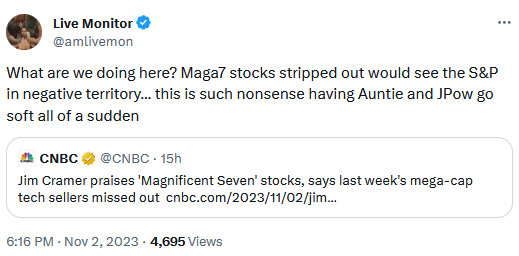
    Markets & Mayhem


    Thanks, everyone. Take care.

    AI


    That’s it for this week’s episode of the week ahead. Please don’t forget to rate us and review on whatever platform you are watching or listening to this. Thank you.